Economic Pulse Net | Sources: World Bank World Development Indicators, Government Sources | 2026
Key Takeaways
* Financial Hub Status: The Cayman Islands remain a pivotal jurisdiction in the global financial architecture, driven by a robust service sector rather than traditional manufacturing or agriculture.
Political Nuance: As a British Overseas Territory listed as non-self-governing by the UN, the islands operate under a unique constitutional framework established in 2009 that balances local autonomy with UK oversight.
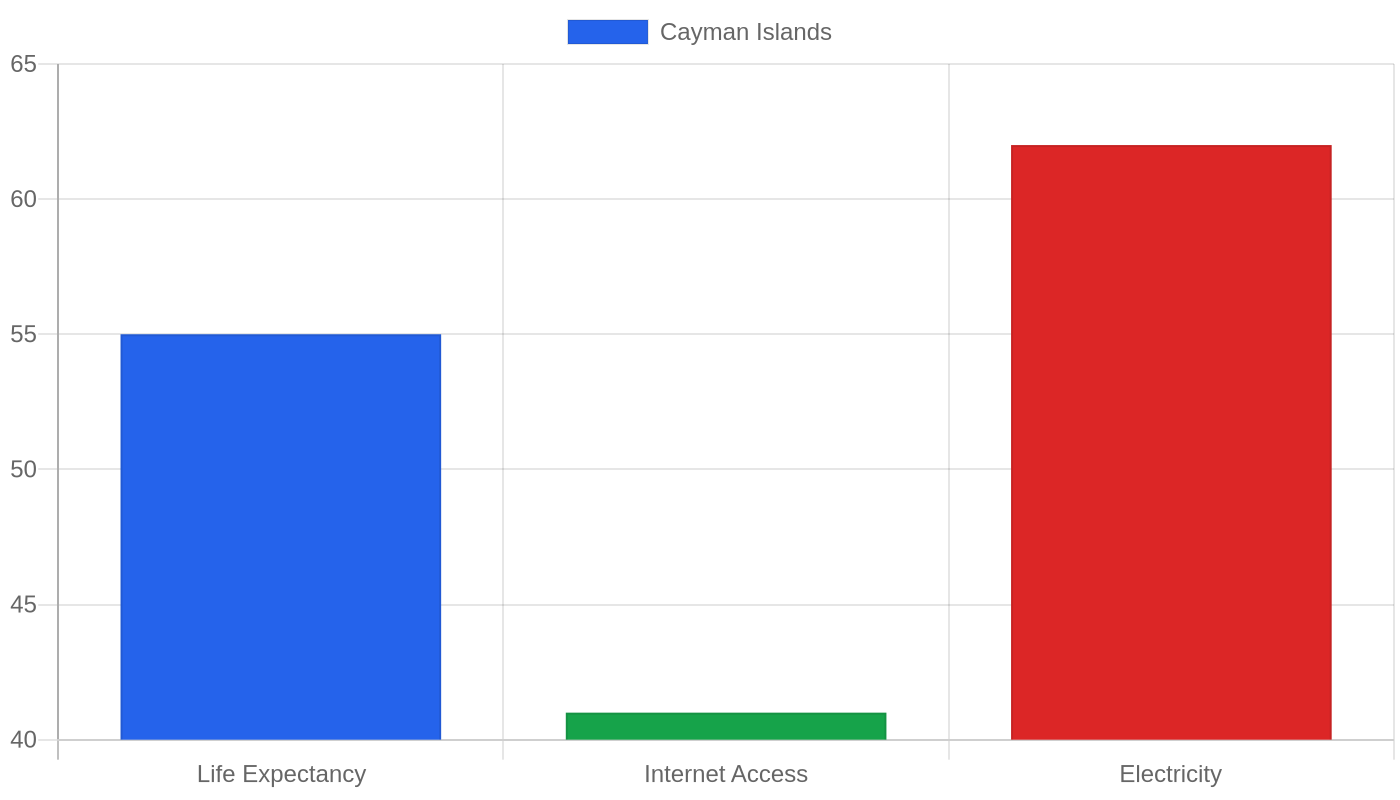
Data Transparency Gap: While economically significant, specific macroeconomic indicators such as GDP growth, inflation rates, and unemployment figures are not currently disclosed in standard World Bank datasets for this territory.
Constitutional Governance: Domestic affairs are managed by an elected 19-seat Parliament, providing a stable political environment despite the territory’s colonial classification.
The Invisible Engine: A Financial Powerhouse Without Traditional Metrics
The economic narrative of the Cayman Islands is defined less by what is produced and more by what is managed. As a senior economic journalist reviewing the available data, one must acknowledge a striking anomaly: the World Bank lists GDP growth, inflation CPI, unemployment, total GDP, and per capita income metrics as “N/A.” This absence of data does not indicate an absence of economy; rather, it reflects the specialized nature of a territory whose primary output is financial services and offshore capital management.
Unlike industrial nations where manufacturing output drives measurable gross domestic product fluctuations, the Cayman economy thrives on intangible assets—fund administration, insurance, and reinsurance. The lack of published aggregate figures suggests a high degree of privacy and a business model that prioritizes confidentiality over public statistical reporting.
For investors and policymakers, this opacity requires a different analytical lens, focusing on regulatory frameworks and corporate registrations rather than traditional macroeconomic health checks. The stability of the territory relies on its reputation for legal precision and fiscal neutrality, making the “invisible” nature of its economic data a feature, not a bug, of its strategic positioning in global finance.
Navigating the High-Cost Ecosystem
Living in the Cayman Islands entails navigating a cost structure that is inherently elevated due to its geographic isolation and import-dependent lifestyle. While specific consumer price indices and housing costs are not quantified in the provided dataset, the general consensus among observers is that the expense of living is substantial.
Daily expenses, including food, utilities, and transportation, are significantly higher than regional averages found in neighboring Caribbean nations, primarily because nearly all consumer goods must be imported. Housing markets are similarly constrained, with rental prices and property values reflecting the demand from the international professional community employed in the financial sector.
This creates a dual-tiered economic reality where expatriate professionals enjoy high disposable incomes relative to local wages, yet face steep entry costs for basic amenities. The absence of detailed inflation data makes it difficult to track year-over-year changes in these costs, but the structural pressure on household budgets remains a constant consideration for residents and businesses alike.
Understanding this high-cost environment is crucial for anyone considering relocation or investment, as operational margins can be quickly eroded by overheads that dwarf those in mainland economies.
Corporate Landscape and Business Climate
The business environment in the Cayman Islands is characterized by a concentration of power within a few key sectors, predominantly financial services. Although the specific list of top companies is not provided in the current data, the economic landscape is dominated by multinational corporations utilizing the jurisdiction for fund formation, captive insurance, and special purpose vehicles.
These entities benefit from a tax-neutral regime and a legal system based on English common law, which provides certainty for international contracts. The absence of direct taxation on income, profits, or gains is a central pillar of this appeal, attracting capital flows that seek efficiency and regulatory clarity. However, the reliance on a narrow range of industries means that the local economy is sensitive to global shifts in financial regulation and geopolitical tensions.
Businesses operating here must navigate a sophisticated compliance environment, particularly regarding anti-money laundering standards and international tax transparency initiatives. The political stability afforded by the 2009 Constitution further supports this climate, offering a predictable legislative backdrop for long-term corporate planning.
Safety, Politics, and Social Stability
Safety and political stability are cornerstones of the Cayman Islands’ attractiveness as a jurisdiction. Crime and safety indices are currently listed as “N/A,” which prevents a precise quantification of security risks, but the territory generally maintains a low crime rate compared to many other destinations. This sense of security is reinforced by the political landscape, which, while complex, offers a degree of democratic participation.
The Cayman Islands are a British Overseas Territory, notably listed by the UN Special Committee of 24 as one of the 17 non-self-governing territories. Despite this classification, internal governance is largely autonomous. The current Constitution, ordained by the United Kingdom in 2009 and incorporating a Bill of Rights, establishes a 19-seat Parliament elected by the people every four years to handle domestic affairs.
This elected body manages local policies, while the Governor, appointed by the Crown, retains responsibility for external relations, defense, and internal security. This bifurcated system ensures that while the islands maintain their ties to the UK, they possess the legislative freedom necessary to tailor regulations to their specific economic needs. The result is a stable social fabric that supports both residential life and corporate operations without the volatility often seen in emerging markets.
Current Affairs and Constitutional Evolution
The most dynamic aspect of the Cayman Islands’ current affairs revolves around its constitutional development and its evolving relationship with international bodies. The ongoing dialogue surrounding its status as a non-self-governing territory continues to influence policy discussions, particularly as the UN committee reviews progress toward self-determination.
Locally, the focus remains on the efficacy of the 2009 Constitution, which has served as the foundational document for domestic governance for over a decade. Recent political discourse likely centers on how the elected Parliament balances economic interests with social welfare, given the stark disparities inherent in a financial hub economy.
There is also ongoing attention to how the islands adapt to global pressures for greater financial transparency, even as they maintain their competitive advantage in secrecy and tax neutrality. The interplay between the locally elected officials and the UK-appointed Governor creates a unique diplomatic dance, where domestic priorities must align with broader imperial responsibilities.
Observers should watch for any amendments to the Bill of Rights or shifts in the balance of power between the Parliament and the Executive, as these changes could signal new directions in economic policy and civil liberties.
The Bottom Line
The Cayman Islands present a paradox for traditional economists: a major global financial center with minimal public statistical footprint. Investors and analysts must look beyond standard GDP metrics to understand the true scale of its influence, which lies in the volume of assets under management rather than consumer spending. The territory remains a safe, politically stable, and legally robust haven for capital, supported by a clear constitutional framework and an elected government.
For those willing to navigate the high cost of living and opaque data environment, the Cayman Islands offer unparalleled opportunities in the financial services sector. It is a jurisdiction best understood through its regulatory strength and corporate density, rather than its macroeconomic aggregates.
Sources & Methodology
This article is authored by Economic Pulse Net for informational and research purposes. Economic Pulse Net sources its data from multilateral institutions, national statistics bureaus, and proprietary databases. All data is believed to be current as of the date of publication.
Published: October 03, 2026 | Category: Research — Cayman Islands
Use these signals in your own platform
Economic Pulse publishes its live signal feed through a documented, read-only API. Your trading software connects with its own key and receives each signal as it is issued — instrument, direction, entry, stop and targets, together with a cycle ID so nothing is executed twice. The feed is independent of this website and cannot change it.
Signals are informational only and are not financial advice.