Economic Pulse Net | Sources: World Bank World Development Indicators, Government Sources | 2026
Key Takeaways
* Resilient Expansion: Brazil is projected to achieve a GDP growth rate of approximately 2.29% in 2025, signaling steady economic momentum despite global headwinds.
Inflationary Pressures: The Consumer Price Index (CPI) stands at roughly 5.02%, indicating that while price stability is maintained, it remains a focal point for monetary policy.
Labor Market Strength: With an unemployment rate hovering near 5.97%, the labor market continues to absorb workers, supporting domestic consumption.
Industrial Diversity: A robust industrial base spans agribusiness, utilities, and telecommunications, anchored by major players like AmBev and Algar.
Political Continuity: Under President Luiz Inácio Lula da Silva, the democratic federative republic maintains a presidential system focused on cabinet-led governance.
Economic Engine: Navigating Growth and Stability
Brazil’s economy is demonstrating a capacity for measured expansion, with projections indicating a GDP growth rate of 2.2857464902475% for 2025. This figure suggests that the world’s largest economy in Latin America is not merely surviving but actively growing, albeit at a moderate pace that reflects both its size and current structural constraints. The total Gross Domestic Product is estimated at $2,279,920,092,492.13, underscoring the sheer scale of financial activity within its borders.
However, this growth occurs against a backdrop of inflationary pressure; the Consumer Price Index (CPI) is recorded at 5.01675279604836%. For policymakers, this number is critical because it dictates the trajectory of interest rates and consumer purchasing power. If inflation remains sticky around the 5% mark, it could erode real wages and dampen investment sentiment.
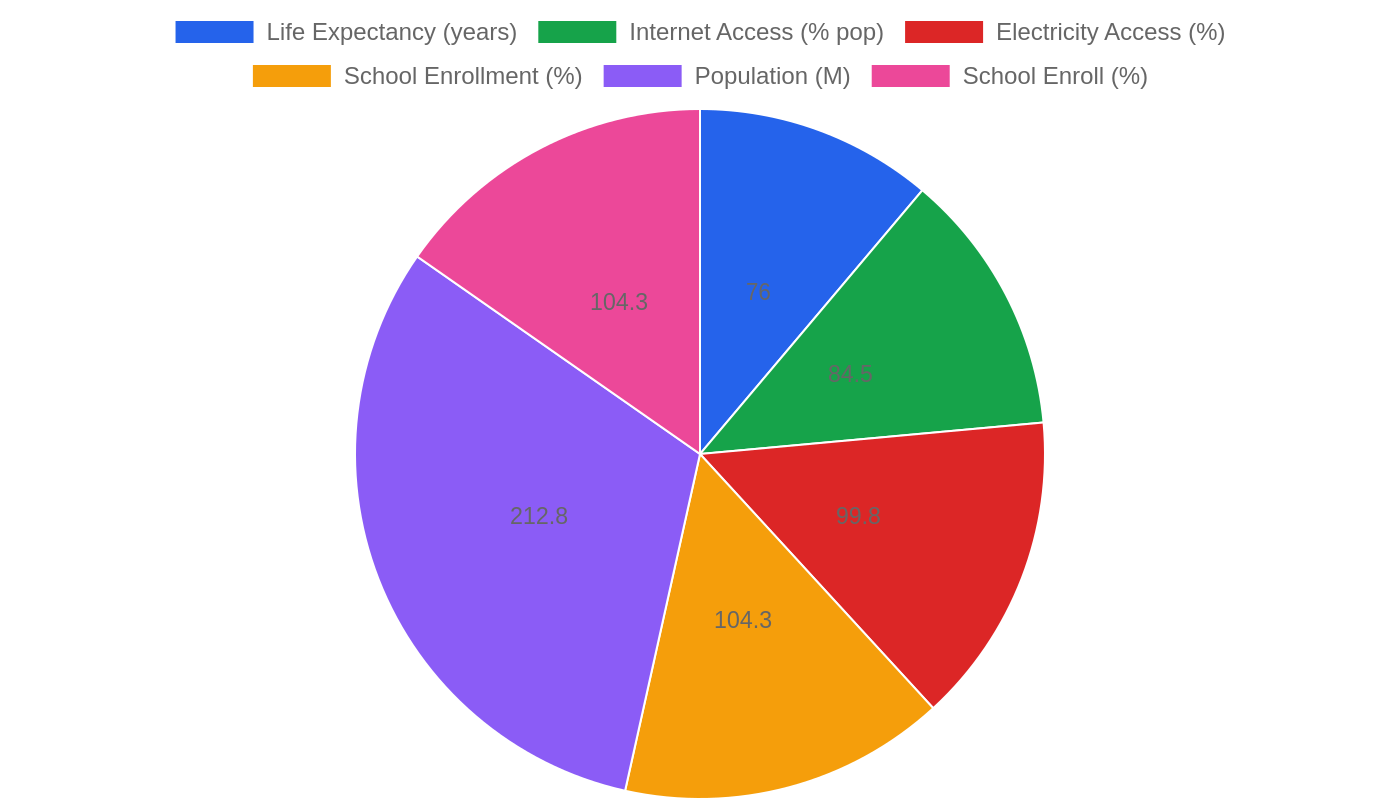
On the employment front, the unemployment rate of 5.97% provides a buffer for social stability, ensuring that a significant portion of the workforce remains engaged in productive activity. When viewed alongside a GNI per capita of $10,550.0, these figures paint a picture of a nation that is middle-income but striving for higher efficiency.
The population of 212,812,405 people represents a massive domestic market, yet the GDP per capita (PPP) of $23,433.2897595431 highlights the disparity between nominal wealth and adjusted living standards. Ultimately, the interplay between modest growth and controlled inflation defines the current economic narrative, requiring careful balancing acts from the central bank and fiscal authorities to sustain this delicate equilibrium.
Cost of Living: Daily Realities for Residents
For residents and expatriates alike, the cost of living in Brazil is shaped by the interplay of moderate inflation and diverse regional pricing structures. While specific housing indices are not detailed in the current dataset, the general CPI of 5.02% implies that daily expenses—from groceries to transportation—are subject to gradual increases that affect household budgets.
A GDP per capita (PPP) of $23,433.29 suggests that when adjusted for purchasing power parity, the standard of living is relatively accessible compared to developed nations, though it varies significantly between urban centers like São Paulo and rural areas. The high population density of over 212 million people creates intense demand for services and housing in major hubs, which can drive up local costs beyond national averages.
Consumers must navigate a landscape where essential goods are influenced by global supply chains and local agricultural output, making food prices a volatile component of the monthly budget. Furthermore, the GNI per capita of $10,550.0 indicates that average income levels may struggle to keep pace with rising service costs, particularly in the telecommunications and utilities sectors.
Therefore, financial planning for those living or investing in Brazil requires a keen awareness of these inflationary trends and their impact on disposable income.
Investment & Business Climate: Sectors and Giants
The business environment in Brazil is characterized by a diverse array of established corporations that dominate various sectors of the economy. Investors looking at the industrial landscape will find opportunities in agribusiness, where companies like Amaggi Group play a pivotal role in global commodity supply chains. The consumer goods sector is equally vibrant, led by giants such as AmBev, which commands significant market share through extensive distribution networks.
In the utilities and infrastructure space, firms like Alupar and Airship do Brasil provide essential services that support industrial growth and residential needs. The telecommunications industry, represented by Algar, is crucial for connecting a vast and populous nation, driving digital transformation across regions.
Additionally, basic materials companies like Aperam South America and Aracruz Celulose highlight Brazil’s strength in resource extraction and processing, offering stable returns for long-term investors. Even conglomerates like Andrade Gutierrez demonstrate the complexity of the Brazilian corporate structure, spanning multiple industries to mitigate sector-specific risks.
For foreign direct investment, the presence of these top-tier companies offers a level of market maturity and regulatory familiarity that can reduce entry barriers. However, investors must remain vigilant regarding political developments and their potential impact on regulatory frameworks and tax policies.
Safety, Politics & Quality of Life: Governance and Security
Brazil operates as a democratic federative republic with a presidential system, a structure reaffirmed by a 1993 referendum that solidified the separation of powers. President Luiz Inácio Lula da Silva currently holds the dual role of head of state and head of government, elected for a four-year term with the possibility of one successive re-election.
His administration relies on a cabinet of Ministers of State who assist in governing and implementing policy, creating a centralized executive branch that drives national agendas. Regarding safety, current data does not provide specific Crime or Safety Indices, leaving a gap in quantifiable security metrics for international comparisons. This absence of data suggests that prospective residents and businesses should conduct localized risk assessments rather than relying on national averages.
Political stability remains a key theme under the current leadership, with the focus on maintaining institutional integrity and economic management. The quality of life is further contextualized by the large population of over 212 million, which creates dynamic social environments but also places strain on public services. Understanding the political landscape is therefore essential for navigating both personal safety concerns and broader societal trends.
What’s Happening Now: Current Affairs and Policy Shifts
The freshest developments in Brazil center on the ongoing implementation of President Lula da Silva’s policy agenda within a structured democratic framework. As the president appoints his cabinet, the government is likely prioritizing economic stabilization measures to address the 5.02% inflation rate observed in recent data. These efforts are aimed at curbing price volatility while sustaining the projected 2.29% GDP growth for 2025.
The business community is closely watching how administrative decisions impact major industries such as agribusiness and telecommunications, where companies like Amaggi Group and Algar are expanding operations. Simultaneously, the government faces the challenge of managing a labor market with a 5.97% unemployment rate, ensuring that job creation keeps pace with population growth.
Recent news cycles often highlight debates over fiscal responsibility and social inclusion, reflecting the complex priorities of a nation with a GNI per capita of $10,550.0. Stakeholders are also attentive to any shifts in regulatory approaches toward basic materials and consumer goods sectors, which are critical for export revenue. The interplay between political continuity and economic pragmatism defines the current news cycle, with every cabinet decision carrying weight for market confidence.
The Bottom Line
Brazil presents a compelling case for investors and analysts seeking exposure to a large, diversified emerging market. Its steady GDP growth and manageable unemployment rate suggest a resilient economy capable of weathering external shocks. However, the persistent inflationary pressures and lack of detailed safety indices require careful due diligence and localized research. Those interested in agribusiness, utilities, and consumer goods will find a mature corporate landscape with significant growth potential.
Ultimately, Brazil remains a country of immense opportunity, provided one navigates its political and economic complexities with patience and insight.
Sources & Methodology
This article is authored by Economic Pulse Net for informational and research purposes. Economic Pulse Net sources its data from multilateral institutions, national statistics bureaus, and proprietary databases. All data is believed to be current as of the date of publication.
Published: October 02, 2026 | Category: Research — Brazil
Use these signals in your own platform
Economic Pulse publishes its live signal feed through a documented, read-only API. Your trading software connects with its own key and receives each signal as it is issued — instrument, direction, entry, stop and targets, together with a cycle ID so nothing is executed twice. The feed is independent of this website and cannot change it.
Signals are informational only and are not financial advice.