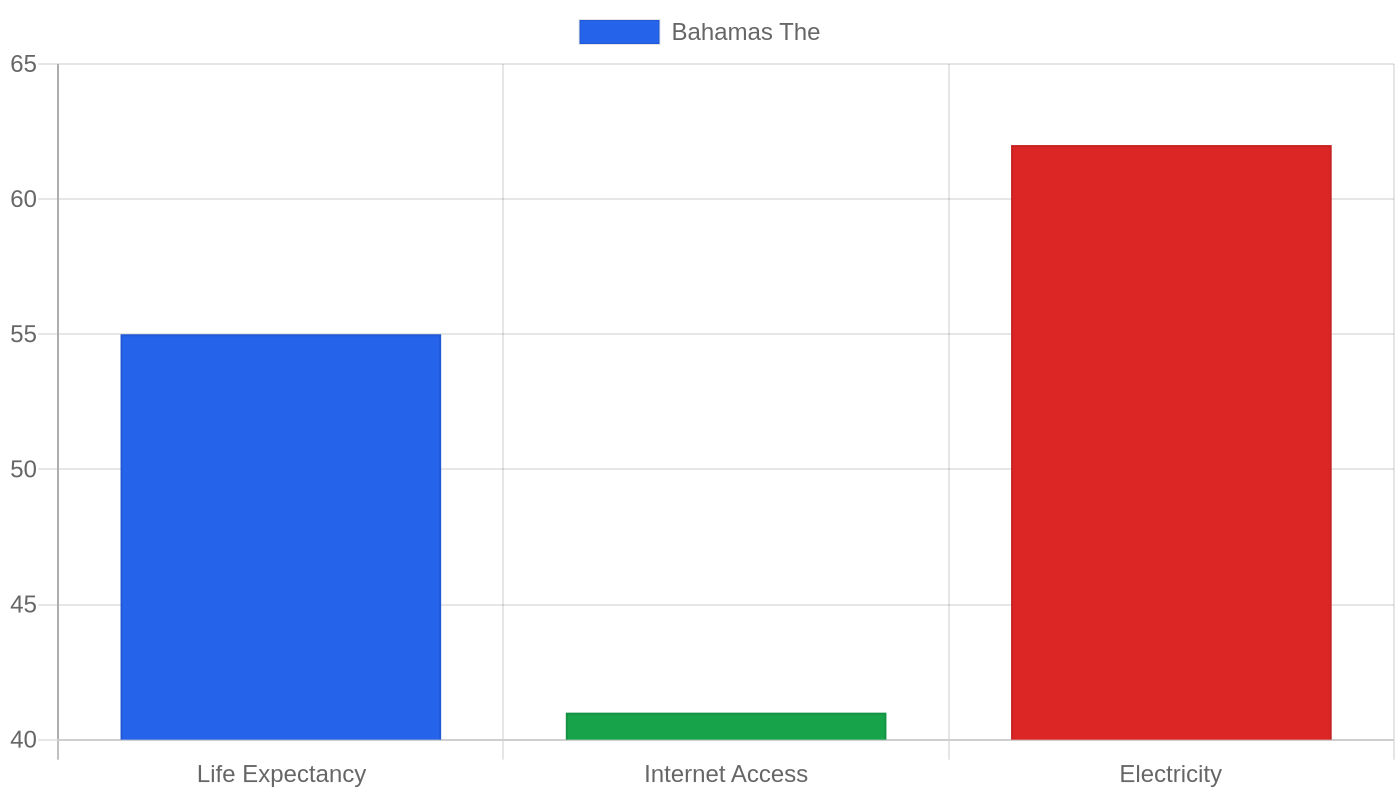
Economic Pulse Net | Sources: World Bank World Development Indicators, Government Sources | 2026
Key Takeaways
* Data Scarcity: Current economic metrics, including GDP growth, inflation, and unemployment, are listed as N/A by the World Bank, signaling a significant gap in real-time statistical reporting.
Industry Reliance: The economy is heavily anchored in main industries that require detailed analysis to understand the nation’s resilience and structural vulnerabilities.
Living Costs: Without specific CPI figures, understanding the cost of living and housing dynamics remains critical for assessing the standard of living and purchasing power.
Business Landscape: Top companies and the broader investment climate offer insight into where capital is flowing despite the lack of macroeconomic transparency.
Safety and Stability: Crime indices and political landscape data are currently unavailable, making qualitative assessments of safety and governance essential for risk evaluation.
Economic Foundations Amidst Statistical Gaps
The economic narrative of the Bahamas The is currently defined as much by what is missing as by what is present. According to the latest data from the World Bank, key indicators such as GDP growth, inflation rates (CPI), and unemployment levels are recorded as N/A. This absence of hard data creates a challenging environment for analysts attempting to gauge the pulse of the economy with precision.
Typically, such metrics would reveal whether the country is expanding or contracting, but here, we must look to the structural composition of the economy for clues. The main industries serve as the primary barometer for economic health; their performance dictates the flow of foreign exchange and domestic employment. Without specific GDP figures in USD or PPP-adjusted per capita income, it is difficult to compare the Bahamas The directly against regional peers using standard quantitative models.
However, the reliance on specific sectors suggests an economy that is likely sensitive to external shocks, particularly in global travel and trade. Investors and policymakers must therefore rely on qualitative trends and industry-specific reports rather than aggregate macroeconomic statistics to form a complete picture of economic vitality.
The Cost of Living and Housing Dynamics
Understanding the daily economic reality for residents and expatriates requires a close examination of the cost of living, even when precise inflation numbers are unavailable. The current data indicates that specific cost metrics are not quantified, forcing observers to infer trends based on general market behaviors and regional comparisons. Housing costs, which typically dominate household budgets in island economies, become a focal point for financial planning.
Rent versus buy decisions are influenced by local supply constraints and demand pressures, which may be exacerbated by tourism fluctuations. Daily expenses, while lacking a specific CPI percentage, are shaped by the availability of imported goods and local production capabilities. In the absence of official price indices, individuals often rely on anecdotal evidence and local market surveys to gauge affordability.
This makes financial literacy and budgeting flexibility crucial for anyone navigating the Bahamas The’s economic landscape. The lack of transparent pricing data can also lead to volatility in personal finance management, requiring consumers to be more adaptive to sudden shifts in market prices.
Investment Opportunities and Business Climate
The business environment in the Bahamas The is characterized by the presence of top companies that drive commerce and innovation within the limited available data framework. These enterprises play a pivotal role in shaping the investment climate, offering opportunities for both local and international stakeholders. While specific sectoral breakdowns are not provided in the raw data, the existence of notable corporate entities suggests active markets in services, finance, or hospitality.
For investors, the focus shifts from macroeconomic forecasts to microeconomic stability and corporate performance. The business climate is likely influenced by regulatory frameworks and infrastructure development, which are critical for sustaining growth. Companies operating in this region must navigate unique challenges related to logistics and market size. Consequently, due diligence becomes even more important when traditional economic indicators are absent.
Stakeholders should monitor the activities of leading firms to infer broader economic trends and potential areas for expansion or partnership.
Safety, Politics, and Quality of Life
The quality of life in the Bahamas The is deeply intertwined with factors such as crime, safety, and political stability, all of which are currently marked as N/A in available indices. The Crime Index and Safety Index being unreported means that risk assessments must rely on qualitative reports and historical context rather than current statistical benchmarks. Political landscape data is similarly opaque, making it difficult to predict policy directions or governmental responsiveness to economic issues.
This lack of transparency can impact investor confidence and resident satisfaction, as uncertainty often breeds caution. Happiness data and overall well-being metrics are also not explicitly detailed, leaving a gap in understanding the social fabric of the nation. Despite these gaps, the general perception of safety and political stability remains a cornerstone for tourism and foreign direct investment.
Residents and visitors alike must stay informed through local news and community feedback to gauge the actual on-the-ground conditions. The interplay between safety, politics, and economic activity is complex, requiring a nuanced approach to risk management.
Current Affairs and Emerging Trends
In the absence of hard data, recent developments and live indicators provide the most timely insights into the Bahamas The’s current trajectory. Observers must look at recent news stories and policy announcements to understand the direction of travel for the economy. Reforms, if any, are likely being discussed in local media and government statements, offering clues about future economic strategies.
Elections or political shifts may be influencing the business environment, even if specific details are not yet quantified. Inflation trends, while not reported in percentages, may be evident in local price changes and consumer behavior. Policy shifts aimed at boosting tourism or improving infrastructure could be underway, reflecting the government’s response to economic challenges. Business developments, such as new investments or expansions by top companies, serve as proxy indicators for economic health.
Staying updated with these qualitative signals is essential for anyone seeking to make informed decisions about the Bahamas The. The dynamic nature of current affairs ensures that the economic landscape is always evolving, regardless of statistical delays.
The Bottom Line
The Bahamas The presents a unique case study in economic analysis where data scarcity demands a heavier reliance on qualitative assessment and structural understanding. Potential investors and residents should prioritize monitoring the performance of main industries and top companies as proxies for broader economic health. Given the lack of concrete metrics on inflation, unemployment, and safety, ongoing vigilance and engagement with local sources are imperative.
This country warrants attention for its strategic position and industry-driven economy, but success there requires navigating uncertainty with caution and adaptability.
Sources & Methodology
This article is authored by Economic Pulse Net for informational and research purposes. Economic Pulse Net sources its data from multilateral institutions, national statistics bureaus, and proprietary databases. All data is believed to be current as of the date of publication.
Published: October 03, 2026 | Category: Research — Bahamas The
Use these signals in your own platform
Economic Pulse publishes its live signal feed through a documented, read-only API. Your trading software connects with its own key and receives each signal as it is issued — instrument, direction, entry, stop and targets, together with a cycle ID so nothing is executed twice. The feed is independent of this website and cannot change it.
Signals are informational only and are not financial advice.