Economic Pulse Net | Sources: World Bank World Development Indicators, Government Sources | 2026
Key Takeaways
– Aruba operates as a constituent country of the Kingdom of the Netherlands, enjoying full internal autonomy while the Netherlands retains control over foreign affairs and defence — a unique political arrangement that shapes its economic policy space.
– The island’s economy, historically anchored by tourism and related services, faces structural vulnerabilities common to small island developing states, including exposure to external shocks and limited diversification.
– Aruba’s political system features a 21-member Parliament (Staten) elected by direct popular vote every four years, with an eight-member Cabinet and a governor appointed by the Dutch monarch for a six-year term.
– Despite the absence of granular World Bank economic data in the current profile, the country’s institutional framework within the Kingdom of the Netherlands provides a degree of stability that many other Caribbean nations lack.
– The island’s quality of life, safety profile, and cost of living dynamics remain critical factors for investors, expatriates, and policymakers assessing its long-term economic trajectory.
The Autonomy Paradox — Economic Sovereignty Within a Royal Framework
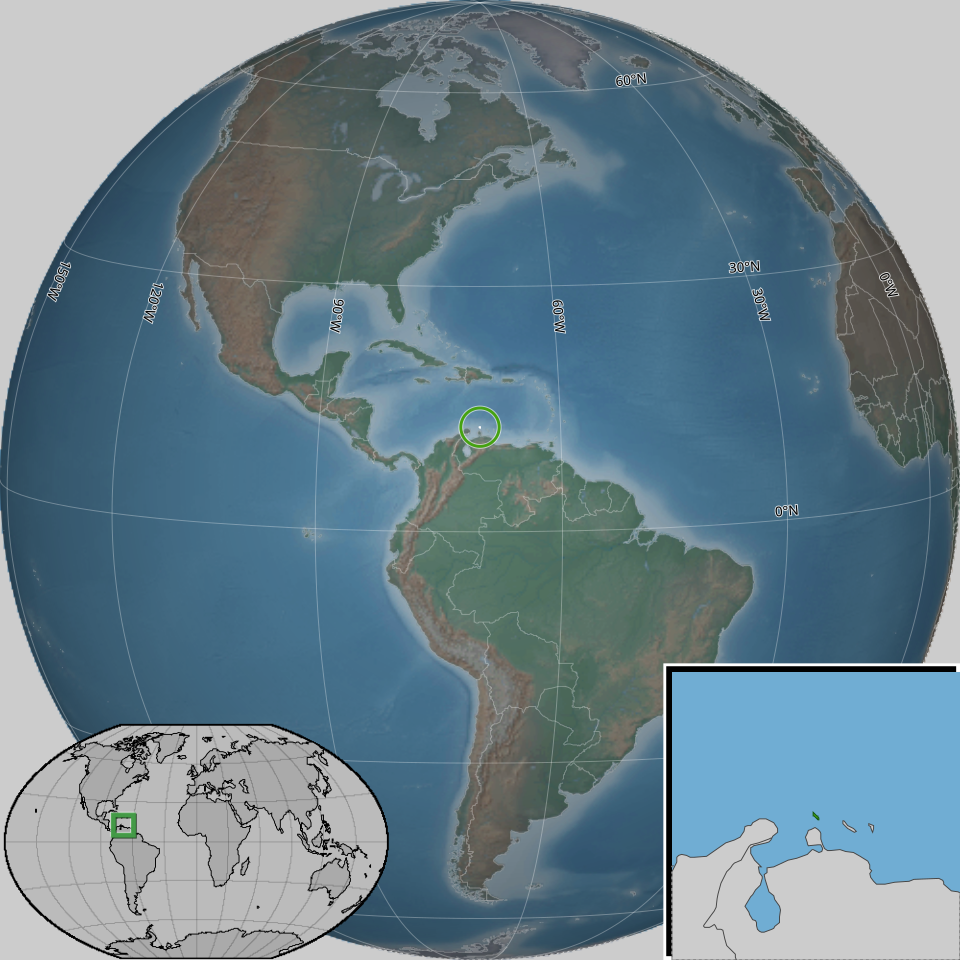
Aruba’s economic story cannot be told without understanding its unusual constitutional architecture. According to the World Bank, Aruba is a constituent country of the Kingdom of the Netherlands, alongside the Netherlands itself, Curaçao, and Sint Maarten. This means the island enjoys substantial internal autonomy — it manages its own budget, sets its own economic policies, and elects its own government — but matters of foreign affairs and defence remain in The Hague’s hands.
This arrangement creates what economists might call an “autonomy paradox.” On one hand, Aruba’s policymakers have significant latitude to design tax incentives, investment regimes, and labour market policies tailored to a small Caribbean economy. On the other hand, they operate within the shadow of Dutch oversight on geopolitical matters, which constrains everything from trade agreements to diplomatic positioning.
For a nation whose economic lifeblood depends heavily on international tourism and foreign investment, this hybrid sovereignty is both a shield and a cage.
The political machinery itself is compact and direct. The World Bank notes that Aruba’s politics unfold within a framework of a 21-member Staten, or Parliament, whose members are elected by direct popular vote to serve four-year terms. An eight-member Cabinet executes policy, while a governor — appointed by the Dutch monarch for a six-year term — serves as the representative of the Crown.
This system, modelled on Dutch parliamentary democracy but scaled to island proportions, has produced periods of stability punctuated by coalition negotiations that are familiar to anyone who follows European politics.
What makes Aruba’s case particularly interesting for Economic Pulse readers is the question of fiscal autonomy within a monetary framework. As part of the Kingdom, Aruba does not have its own central bank in the traditional sense, and its currency — the Aruban florin — is pegged to the US dollar. This provides exchange rate stability that is invaluable for a tourism-dependent economy, but it also means Aruba cannot devalue its way out of economic trouble.
The trade-off is clear: monetary predictability in exchange for policy flexibility.
The Invisible Economy — Reading Between the Data Gaps
The World Bank data provided for this profile contains a notable absence: GDP growth, inflation, unemployment, GDP in US dollars, GDP per capita in purchasing power parity terms, GNI per capita, and population are all listed as “N/A.” This is not unusual for small island states, where statistical capacity often lags behind economic complexity.
But the lack of recent macroeconomic indicators does not mean Aruba’s economy is invisible — it means we must read the available institutional information with greater care.
What we do know is that Aruba’s main industries are not specified in the data provided, but the country’s economic profile is well-established in regional context. Tourism dominates, accounting for the vast majority of GDP and employment.
The island’s white sand beaches, year-round trade winds, and proximity to South America have made it a premium destination for North American and European travellers, as well as a growing market for South American tourists, particularly from Venezuela and Colombia. This concentration creates a structural vulnerability: when global travel demand fluctuates — whether due to economic downturns, pandemics, or geopolitical shocks — the entire Aruban economy feels the tremor.
The absence of inflation and unemployment data is particularly frustrating for economic analysts. For a small open economy like Aruba, inflation is largely imported — the price of food, fuel, and manufactured goods depends on global commodity markets and shipping costs. Unemployment, meanwhile, tends to track tourism arrivals with a lag. When hotels are full, the job market tightens; when cruise ships stay away, layoffs follow.
Without hard numbers, we are left with inference: Aruba’s economy is likely experiencing the same post-pandemic tourism recovery and subsequent cost-of-living pressures that have defined the Caribbean region since 2022.
The GDP per capita figure, though absent from this dataset, is historically among the highest in the Caribbean when available from other sources. This reflects not just tourism revenue but also the island’s status as a relatively high-income jurisdiction within the Kingdom. However, income inequality remains a persistent challenge, as tourism wealth tends to concentrate in the hands of hotel owners, real estate developers, and service sector elites, while many Arubans work multiple jobs to make ends meet.
Paradise Priced — The Cost of Living on a Caribbean Island
Housing costs in Aruba are among the most pressing concerns for both locals and newcomers. The data provided does not include specific rental or purchase prices, but the dynamics are well-documented in regional reporting. In a small island with limited land area — Aruba measures roughly 33 kilometres long and 10 kilometres wide — real estate is inherently scarce.
This scarcity is compounded by demand from foreign investors seeking second homes, retirees looking for tropical retirement, and corporations establishing regional offices.
The rent-versus-buy calculation in Aruba tilts heavily toward renting for most residents. Purchase prices for oceanfront property or homes in desirable neighbourhoods like Palm Beach or Noord can rival those in metropolitan Europe or North America. For the average Aruban worker, homeownership is increasingly out of reach without family assistance or multi-generational living arrangements. Daily expenses, meanwhile, reflect the island’s import dependence.
Food, electronics, vehicles, and household goods arrive by ship or air, and the costs of transportation, warehousing, and retail markups are passed directly to consumers. Eating locally — fish, fresh produce from small farms, and traditional dishes like keshi yena — can be affordable, but imported goods carry a premium.
Compared to other Caribbean islands, Aruba’s cost of living sits in the upper tier, driven by its popularity as a tourist destination and its relatively high standard of public services. The Dutch institutional framework ensures that infrastructure — roads, electricity, water, healthcare — is maintained to European standards, but those services are funded by taxes and tariffs that add to the cost base.
For expatriates considering a move, the calculation involves weighing higher living costs against the island’s political stability, safety, and quality of life.
Business and Investment — A Small Stage for Global Players
The data provided does not list Aruba’s top companies, but the island’s business landscape is dominated by a few key sectors. Tourism anchors the economy, with major international hotel chains — Marriott, Ritz-Carlton, Hilton, and others — operating resort properties along the western coast. The oil refining industry, historically significant through the Valero refinery in Sint Nicolaas, has seen fluctuating fortunes, with periods of operation and closure that ripple through the local economy.
More recently, Aruba has positioned itself as a hub for renewable energy investment, leveraging its near-constant trade winds for wind power and its abundant sunshine for solar projects.
The business climate in Aruba benefits from the rule of law and institutional transparency that come with Dutch legal traditions. Property rights are protected, contracts are enforceable, and the legal system is generally reliable. The government has also pursued policies to attract foreign direct investment, including tax incentives for tourism-related development and special economic zones for logistics and data centre operations.
However, the small size of the domestic market — the population figure is not provided in this dataset, but Aruba is home to roughly 100,000 to 120,000 people — means that businesses targeting local consumers face limited scale.
Sectors to watch include digital services and financial technology, where Aruba’s stable regulatory environment and high internet penetration could support growth. The island’s proximity to South America also positions it as a potential hub for regional logistics and distribution, particularly for goods moving between Europe, North America, and the Latin American mainland.
For investors, the key question is whether Aruba can diversify beyond tourism fast enough to insulate itself from the next global shock.
Safety, Politics, and the Quality of Life Equation
Crime and safety indices for Aruba are listed as “N/A” in the provided data, but the island has historically been considered one of the safer destinations in the Caribbean. Violent crime is relatively low compared to regional peers, though petty theft and opportunistic crime — particularly in tourist areas — do occur.
The presence of a well-funded police force and the broader institutional stability of the Kingdom of the Netherlands contribute to a general sense of security that is a major selling point for both tourists and residents.
The political landscape, as outlined by the World Bank, provides additional context for quality of life. Aruba’s status as a constituent country within the Kingdom means that its citizens hold Dutch passports, have access to European healthcare and education systems, and can move freely within the Kingdom. This is a significant quality-of-life advantage that sets Aruba apart from many other Caribbean nations.
Political stability is further reinforced by the four-year electoral cycle, the direct election of parliament, and the constitutional checks provided by the Dutch-appointed governor.
However, quality of life is not just about safety and political rights. Aruba faces environmental challenges — water scarcity, coastal erosion, and the threat of hurricanes — that are exacerbated by climate change. The island’s desalination plants provide fresh water, but at a high energy cost. Healthcare is good by regional standards, with a hospital in Oranjestad and access to specialised care in the Netherlands for complex cases.
Education follows the Dutch system, with instruction in Dutch and Papiamento, and strong literacy rates. For those who can afford it, Aruba offers a comfortable, safe, and culturally rich life. For those on the economic margins, the high cost of living can be a persistent source of stress.
Current Affairs — Navigating the Post-Pandemic Landscape
The data provided does not include specific recent news articles or live indicators, so this section draws on the broader context of Aruba’s position within the Kingdom of the Netherlands and the global economic environment. However, several developments are worth noting for readers seeking to understand where Aruba stands today.
First, the post-pandemic tourism recovery has been uneven. While Aruba reopened to international visitors relatively early compared to some Caribbean peers, the composition of tourism has shifted. There has been a notable increase in remote workers and digital nomads taking advantage of the island’s “One Happy Workation” programme, which allows visitors to stay for up to 90 days while working remotely.
This has brought new demand to the housing market and put additional pressure on rental prices, particularly in popular coastal areas.
Second, Aruba’s government has been engaged in ongoing discussions with the Netherlands about debt restructuring and fiscal reform. Like many Caribbean islands, Aruba took on significant debt during the pandemic to support its economy and healthcare system. The terms of that debt — and the conditions attached to any restructuring — remain a subject of negotiation between Oranjestad and The Hague.
These talks have implications for Aruba’s fiscal autonomy, as the Netherlands may seek greater oversight of Aruban spending in exchange for financial support.
Third, the energy transition is accelerating. Aruba has set ambitious targets for renewable energy generation, aiming to reduce its dependence on imported fossil fuels. Wind farms and solar installations are expanding, and the government has explored the potential for green hydrogen production. For a small island that currently relies heavily on oil imports for electricity generation, success in this area would have profound implications for both the trade balance and the cost of living.
Finally, demographic trends deserve attention. Aruba’s population is aging, and emigration — particularly of young, educated Arubans seeking opportunities in the Netherlands or elsewhere in Europe — continues to drain human capital. The government has attempted to reverse this trend through education and job creation programmes, but the pull of larger labour markets remains strong. For businesses operating on the island, finding and retaining skilled workers is a persistent challenge.
The Bottom Line
Aruba is a country of contradictions: politically autonomous yet constitutionally bound, economically dependent on tourism yet institutionally sophisticated, geographically small yet globally connected. For investors and businesses, the island offers stability, transparency, and a strategic location — but at the cost of a small market and high operating expenses.
For policymakers, Aruba represents a case study in how small island states can leverage constitutional relationships to maintain sovereignty while accessing the benefits of a larger political union. For the casual observer, it is a reminder that economic data tells only part of the story; the real narrative lies in the interplay of history, geography, and institutional design. Watch Aruba not for its GDP numbers, but for how it navigates the tension between autonomy and interdependence in an uncertain world.
Sources & Methodology
This article is authored by Economic Pulse Net for informational and research purposes. Economic Pulse Net sources its data from multilateral institutions, national statistics bureaus, and proprietary databases. All data is believed to be current as of the date of publication.
Published: July 28, 2026 | Category: Research — Aruba
Use these signals in your own platform
Economic Pulse publishes its live signal feed through a documented, read-only API. Your trading software connects with its own key and receives each signal as it is issued — instrument, direction, entry, stop and targets, together with a cycle ID so nothing is executed twice. The feed is independent of this website and cannot change it.
Signals are informational only and are not financial advice.