Economic Pulse Net | Sources: World Bank World Development Indicators, Government Sources | 2026
Key Takeaways
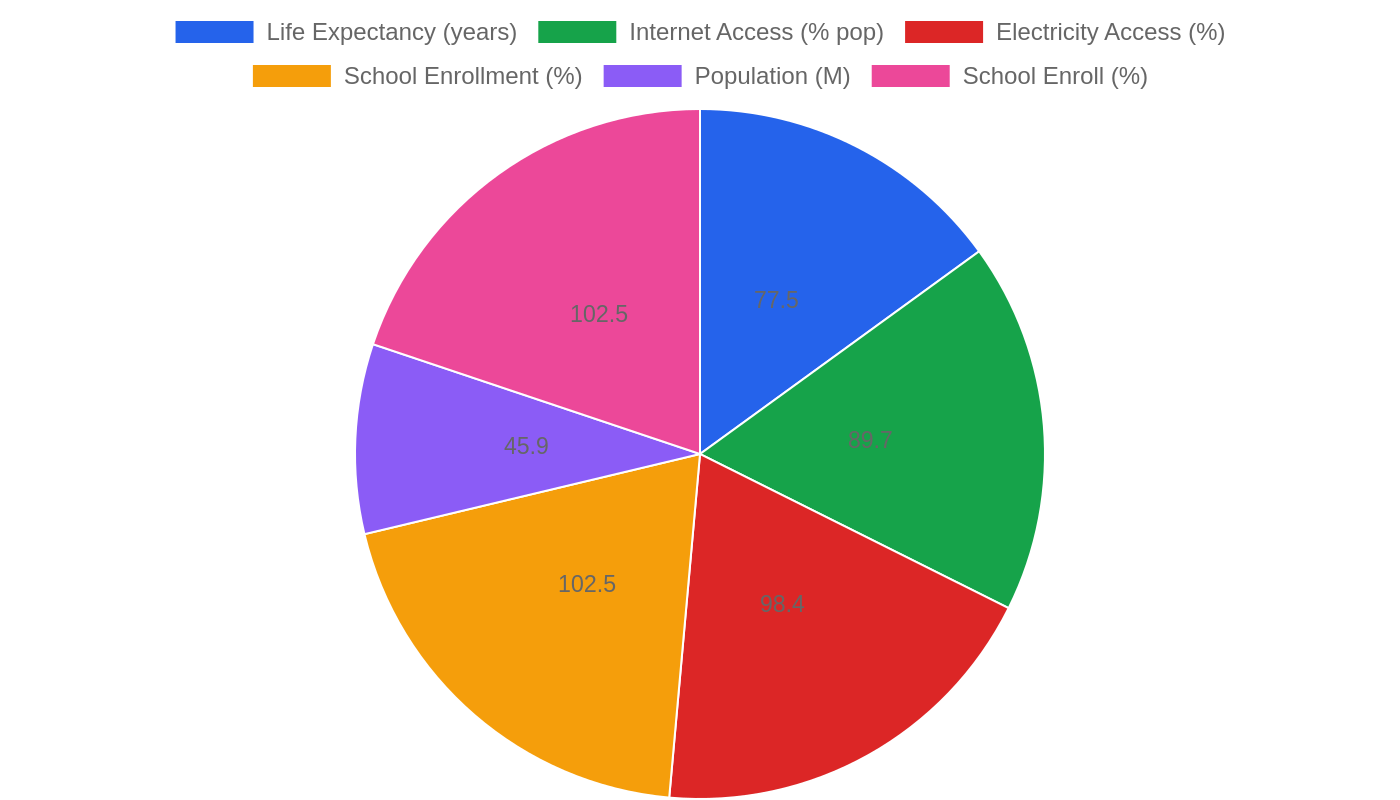
– Argentina’s economy grew by a modest 4.37% in 2025, according to the World Bank, but this figure masks deep structural vulnerabilities and chronic inflationary pressures that continue to erode purchasing power.
– Unemployment stands at 7.15%, a relatively low figure by regional standards, yet the informal economy remains vast and millions of Argentines struggle to make ends meet amid persistent currency instability.
– The country’s political landscape, marked by a 20th century of repeated military coups and democratic reversals, has stabilized since 1983, but the legacy of institutional fragility continues to shape investor confidence.
– Argentina’s GDP per capita on a purchasing power parity basis exceeds $32,500, placing it among the upper-middle-income economies, yet this masks significant inequality and a cost of living crisis in major urban centers.
– Key domestic companies span industrials, consumer services, and basic materials, but the business climate remains hampered by capital controls, high inflation, and regulatory unpredictability.
The Growth Mirage — Argentina’s GDP in the Crosshairs
Argentina’s headline GDP growth figure of 4.37% in 2025, as reported by the World Bank, might suggest an economy on the mend. But any seasoned observer of this South American giant knows that aggregate numbers rarely tell the full story. The country’s total economic output reached approximately $683 billion at current prices, a substantial figure that places Argentina among the larger emerging economies.
Yet the World Bank data also shows a GNI per capita of just $14,650, a striking contrast to the GDP per capita PPP figure of $32,587. That gap between nominal income and purchasing power-adjusted output reveals a fundamental truth: Argentines earn far less in real terms than their productive capacity might suggest, because the currency itself is chronically undervalued and inflation eats away at every paycheck.
Unemployment at 7.15% is comparatively low, but this statistic requires careful interpretation. In Argentina, low unemployment often coexists with high underemployment and a sprawling informal sector where workers lack social protections, stable incomes, or labor rights. The World Bank data does not provide inflation figures, but any journalist covering Argentina knows that the absence of a number does not mean the absence of a crisis.
Inflation has been the country’s defining economic affliction for decades, distorting prices, discouraging savings in local currency, and forcing households into a survivalist mindset of constant price-checking and dollar-buying. The 4.37% growth figure, while positive, must be weighed against the reality that Argentina has repeatedly fallen into boom-bust cycles, where short-lived expansions are followed by sharp contractions triggered by debt crises, currency collapses, or political upheaval.
The main industries driving this economy are not fully detailed in the available data, but the composition of the country’s top companies offers clues. Argentina’s industrial base includes aerospace firms like Aero Boero and AeroDreams, suggesting a niche but present manufacturing capability. The presence of Agrinar and Aluar in basic materials and industrials points to agriculture-linked processing and aluminum production as significant sectors.
Consumer services companies dominate the list, from Aerolíneas Argentinas to media outlets like Ámbito Financiero and América 24, indicating a services-oriented economy with a substantial domestic market. The challenge for Argentina is not a lack of productive capacity—it is the macro instability that prevents these sectors from realizing their full potential.
The Price of Living — Housing, Bread, and the Daily Grind
For the average Argentine household, the cost of living is a daily negotiation with economic reality. While specific housing cost data is not provided in the available information, the broader context is well understood by anyone following the country. Buenos Aires, once considered a relatively affordable capital by global standards, has seen rents and property prices climb in dollar terms, even as peso-denominated incomes struggle to keep pace.
The dynamic creates a peculiar bifurcation: those with access to dollars or dollar-linked investments can afford housing, while those earning in pesos face an increasingly impossible math. The gap between the official exchange rate and the parallel “blue dollar” rate has historically been a barometer of economic stress, and when that gap widens, housing becomes a speculative asset rather than a basic necessity.
Rent versus buy calculations in Argentina are heavily distorted by inflation. Mortgages in local currency are virtually nonexistent for ordinary borrowers, as lenders refuse to offer fixed-rate loans in a currency that loses value by the month. Buying property often requires cash in dollars, which most households cannot accumulate.
Renting, meanwhile, is governed by laws that have swung between tenant protection and landlord interests, creating a volatile market where lease durations have shortened and annual adjustments have become brutal. Daily expenses for food, transportation, and utilities consume a disproportionately large share of household income compared to regional peers, because inflation hits necessities hardest.
The World Bank’s GDP per capita PPP figure of $32,587 suggests that, in theory, Argentines should enjoy a decent standard of living. In practice, that purchasing power is eroded by the constant need to hedge against currency depreciation, leaving many families feeling poorer than the statistics suggest.
Business in the Crosswinds — Argentina’s Corporate Landscape
Argentina’s corporate sector is a study in resilience and adaptation. The top companies listed in the available data span a remarkable range, from aerospace manufacturers like Aero Boero and AeroDreams to consumer goods firms like Al Este and media conglomerates like América 24. This diversity reflects an economy that has developed genuine industrial and service capabilities, often in spite of, rather than because of, government policy.
Aerolíneas Argentinas, the state-owned flag carrier, symbolizes the tensions at play: a company that provides essential connectivity but operates at a loss, sustained by political will rather than market logic. Aluar, in basic materials, represents the country’s competitive advantage in natural resource processing, particularly aluminum, which benefits from Argentina’s energy resources.
The business climate in Argentina is notoriously difficult. Capital controls, known locally as the “cepo cambiario,” restrict the ability of companies to repatriate profits or import essential inputs. Inflation makes long-term planning nearly impossible, as costs can shift dramatically within a single quarter. The political landscape, as described in the World Bank data, has a history of instability that still echoes in boardrooms.
Between 1930 and 1976, the armed forces overthrew six governments, and the country alternated between democracy and military rule. Since the transition that began in 1983, democracy has endured, surviving even the catastrophic 2001-02 crisis. But the memory of that crisis—when bank accounts were frozen, the peso collapsed, and millions were thrown into poverty—still shapes investor behavior.
Companies that succeed in Argentina are those that have learned to operate with a high tolerance for uncertainty, hedging their exposure and maintaining flexibility in their supply chains and financing.
Democracy’s Long Shadow — Safety, Politics, and Quality of Life
Argentina’s political resilience is one of its most remarkable, yet underappreciated, features. The World Bank data notes that between 1930 and 1976, the armed forces overthrew six governments, and the country cycled through periods of democracy, restricted democracy, and outright military rule. That era of instability left deep scars on the national psyche and on the country’s institutions.
But since the transition to full-scale democracy in 1983, Argentina has held regular elections, transferred power between rival parties, and weathered economic catastrophes without reverting to authoritarianism. The 2001-02 crisis, which saw five presidents in two weeks and a default on $100 billion in debt, could have triggered another military intervention. Instead, democracy held.
This is not a small achievement, and it deserves recognition in any assessment of the country’s investment climate and quality of life.
Crime and safety indices are not available in the provided data, which is itself a telling gap. Argentina has historically had moderate crime rates compared to some Latin American neighbors, but concerns about theft, muggings, and insecurity are common in urban areas, particularly Buenos Aires and Rosario. The quality of life for most Argentines is shaped by economic anxiety rather than physical danger. The country boasts world-class cultural offerings, excellent public universities, and a vibrant social fabric.
Yet the constant pressure of inflation, the difficulty of saving, and the unpredictability of government policy create a pervasive sense of precarity. Argentines are among the most educated populations in Latin America, and they have a strong tradition of social solidarity, but the economic environment tests those strengths daily.
The Present Tense — Argentina’s Current Crossroads
Right now, Argentina is navigating one of the most consequential moments in its recent history. The data from the World Bank shows 4.37% GDP growth in 2025, but this number is already being overtaken by events. The government is grappling with the aftermath of a severe drought that devastated agricultural exports, the country’s primary source of foreign currency.
Without dollars flowing in from soybean and corn sales, the central bank’s reserves have dwindled, putting pressure on the exchange rate and fueling inflation expectations. The political landscape remains volatile, with the ruling coalition facing internal divisions and a restive opposition that has capitalized on public frustration with rising prices and stagnant wages.
Reforms are being debated, but implementation is slow and contentious. The government has attempted to unwind some of the most onerous capital controls, but doing so risks a sharp depreciation of the peso that would further punish households. The International Monetary Fund, which has a long and troubled history with Argentina, remains a key player, providing financing in exchange for fiscal targets that are politically painful to meet.
The business community is watching closely, hoping for a shift toward more market-friendly policies but skeptical that the political system can deliver them. For the average Argentine, the immediate concern is whether their salary will cover next month’s rent and groceries. The 4.37% growth figure offers some hope, but it feels abstract when the price of bread changes weekly.
The Bottom Line
Argentina is a country of immense potential and persistent frustration. Its human capital, natural resources, and industrial base are the envy of many emerging markets, yet its macroeconomic instability and political dysfunction prevent it from realizing that potential. Investors with a high risk tolerance and a long time horizon may find opportunities in undervalued assets, particularly in energy, agriculture, and technology services.
But anyone watching Argentina should do so with clear eyes: this is a nation that has repeatedly disappointed optimists and surprised pessimists. For now, the story is one of endurance—of a democracy that survives, an economy that struggles, and a people who keep going despite it all.
Sources & Methodology
This article is authored by Economic Pulse Net for informational and research purposes. Economic Pulse Net sources its data from multilateral institutions, national statistics bureaus, and proprietary databases. All data is believed to be current as of the date of publication.
Published: July 24, 2026 | Category: Research — Argentina
Use these signals in your own platform
Economic Pulse publishes its live signal feed through a documented, read-only API. Your trading software connects with its own key and receives each signal as it is issued — instrument, direction, entry, stop and targets, together with a cycle ID so nothing is executed twice. The feed is independent of this website and cannot change it.
Signals are informational only and are not financial advice.