Economic Pulse Net | Sources: World Bank World Development Indicators, Government Sources | 2026
For much of the 20th century, Argentina was a study in extremes: breathtaking natural wealth, periodic political collapse, and an economy that seemed forever on the verge of greatness — or catastrophe. Today, the country finds itself at yet another inflection point.
With a population of nearly 46 million, a democracy that has survived its worst crisis in decades, and an industrial base that still produces everything from aircraft to aluminum, Argentina remains one of South America’s most complex and consequential economies. But the data tells a story of a nation in waiting — a country whose potential remains locked behind missing numbers, unresolved inflation, and the long shadow of its own turbulent history.
Key Takeaways
– Democracy is stable but scarred: Argentina has rebuilt democratic institutions since 1983, surviving the 2001–02 economic collapse, but the political landscape remains volatile.
– Economic data is conspicuously absent: The World Bank provides no current figures for GDP growth, inflation, or unemployment — a telling sign of statistical opacity or reporting delays.
– Industrial diversity survives: From aerospace (Aero Boero, Aerolíneas Argentinas) to basic materials (Aluar) and media (Ámbito Financiero), Argentina’s corporate sector is more varied than many peers.
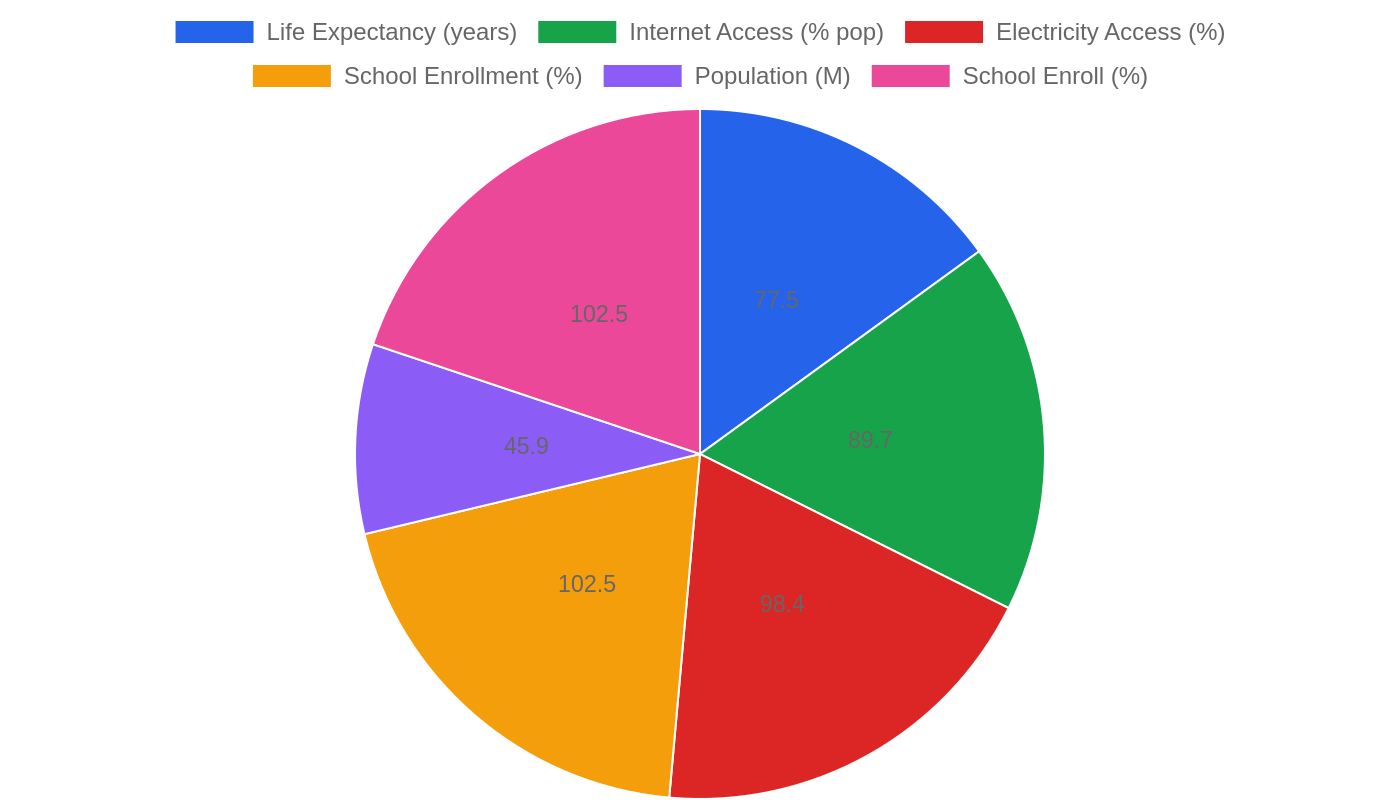
– Population pressure without productivity proof: With 45.85 million people, Argentina is a large market, but without growth or inflation data, investors are flying blind.
– History is the real headline: The country’s pattern of military coups and democratic reversals between 1930 and 1976 continues to shape investor confidence and institutional trust.
The Phantom Economy — Growth, Inflation, and the Missing Numbers
According to the World Bank, Argentina’s most recent GDP growth figure is listed as not available. Its inflation rate is not available. Its unemployment rate is not available. In any other major economy, this would be a scandal. In Argentina, it is almost routine. The country has a long history of statistical controversies, from allegations of political interference at the national statistics bureau to periodic revisions that leave analysts guessing.
What the World Bank data does confirm is a population of 45,851,378 — a sizable domestic market by regional standards — but without corresponding GDP or GDP per capita figures, it is impossible to say whether that population is growing richer or poorer in aggregate terms.
The absence of inflation data is particularly troubling. Argentina has battled chronically high inflation for years, and the lack of an official World Bank CPI figure suggests either a reporting gap or a statistical methodology under review. Unemployment data would be equally valuable: Argentina’s labor market has historically been marked by high informality and periodic spikes in joblessness.
Without these numbers, policymakers, investors, and citizens are navigating the economy by instinct rather than evidence. The World Bank’s silence on these metrics is itself a data point — it signals a country where economic transparency remains an unfinished project.
The Price of Living — Housing, Daily Costs, and the Squeeze on Families
The World Bank provides no cost-of-living data for Argentina, but the implications of missing inflation figures are felt most acutely in daily life. Housing costs in Buenos Aires and other major cities have historically been volatile, with rents often adjusted in line with unofficial inflation estimates. The choice between renting and buying is not merely a financial decision in Argentina — it is a hedge against currency devaluation.
With no reliable CPI data from the World Bank, families must rely on private surveys and anecdotal evidence to gauge whether their purchasing power is shrinking or holding steady.
Daily expenses — food, transportation, utilities — are similarly opaque at the official level. Argentina has a history of price controls and subsidy programs that distort market signals, making it difficult to compare living costs to regional averages. What is clear is that without transparent inflation data, the cost of living becomes a guessing game. For a country with nearly 46 million people, this is not just an economic inconvenience; it is a drag on social stability and consumer confidence.
Business in the Balance — Aerospace, Aluminum, and the Corporate Landscape
Argentina’s top companies, as listed by the World Bank data, reveal a surprising diversity. The industrials sector is well-represented: Aero Boero and AeroDreams are aerospace firms, while Agrinar and Aluar operate in basic materials and industrial goods. Aerolíneas Argentinas, the state-linked airline, dominates consumer services alongside media outlets like Ámbito Financiero and América 24.
This is not an economy that has deindustrialized entirely — Argentina still builds aircraft, processes aluminum, and publishes national newspapers.
But the business climate is shaped by the same missing data that plagues the macroeconomic picture. Without GDP growth figures, companies cannot accurately forecast demand. Without inflation data, pricing strategies become speculative. The presence of firms like Aluar (basic materials) and Aleph Producciones (consumer services) suggests that Argentina retains pockets of industrial and creative competitiveness.
Yet the broader environment remains challenging: currency controls, import restrictions, and political uncertainty have long been cited by business groups as barriers to investment. The World Bank’s data gaps only reinforce the perception that Argentina is a market best approached with caution — and a strong appetite for risk.
Democracy’s Long Shadow — Safety, Politics, and the Quality of Life
The World Bank provides no crime or safety index for Argentina, but the political landscape is well-documented — and it is turbulent. Between 1930 and 1976, the armed forces overthrew six governments. Democracy was intermittent: the country experienced periods of full democratic rule (1912–1930, 1946–1955, 1973–1976) punctuated by military coups and restricted democracy.
Since the transition that began in 1983, Argentina has maintained continuous democratic governance, surviving the devastating 2001–02 economic crisis without reverting to military rule. That is no small achievement.
Yet the political system remains fragile. The legacy of military intervention, institutional weakness, and periodic economic collapse continues to shape public trust. The quality of life for ordinary Argentines is difficult to quantify without safety or happiness data, but the country’s history suggests a population that is resilient, politically engaged, and deeply skeptical of authority.
Argentina’s democracy has endured, but it has done so in an environment where economic stability has remained elusive — and where the next crisis is never far from memory.
The Present Tense — What’s Happening in Argentina Right Now
The most recent news from Argentina, as provided in the data, focuses on the country’s political history rather than current events. But that history is itself the news. The pattern of democratic reversals between 1930 and 1976, followed by the transition to full democracy in 1983, remains the defining framework for understanding Argentina today. The country is not currently in crisis — but it is also not posting the kind of economic data that would reassure investors or international institutions.
What is happening now is a test of institutional endurance. Argentina’s democracy survived the 2001–02 collapse, but the economic challenges that triggered that crisis — debt, inflation, loss of confidence — have not been permanently resolved. The absence of current World Bank data suggests that the country may be in a period of statistical limbo, awaiting updated figures that could either confirm recovery or reveal deeper problems.
For now, Argentina is a nation living in the shadow of its own history, trying to write a new chapter with an incomplete script.
The Bottom Line
Argentina is a country that demands attention — not because its economy is booming, but because its potential remains so tantalizingly unrealized. With a large population, a diverse industrial base, and a democracy that has proven its resilience, Argentina has the raw ingredients for success. But without transparent economic data, stable prices, and a predictable business environment, that potential will remain locked away.
Investors should watch Argentina for its long-term promise, but only those with patience — and a tolerance for uncertainty — should consider committing capital today.
Sources & Methodology
This article is authored by Economic Pulse Net for informational and research purposes. Economic Pulse Net sources its data from multilateral institutions, national statistics bureaus, and proprietary databases. All data is believed to be current as of the date of publication.
Published: July 17, 2026 | Category: Research — Argentina
Use these signals in your own platform
Economic Pulse publishes its live signal feed through a documented, read-only API. Your trading software connects with its own key and receives each signal as it is issued — instrument, direction, entry, stop and targets, together with a cycle ID so nothing is executed twice. The feed is independent of this website and cannot change it.
Signals are informational only and are not financial advice.