Economic Pulse Net | Sources: World Bank World Development Indicators, Government Sources | 2026
In the vast blue expanse of the South Pacific, Vanuatu stands as a testament to resilience. This archipelago nation, home to roughly 330,000 people spread across 80 islands, has long captured the imagination of economists and travellers alike. Yet beneath the postcard-perfect veneer of volcanic peaks and coral reefs lies an economy at a crossroads—one where the rhythms of customary land ownership meet the relentless pressures of globalisation, climate change, and political fluidity.
For the discerning investor and the policy watcher, Vanuatu offers a fascinating case study in how small island developing states chart their course in an increasingly uncertain world.
Key Takeaways
– Political Stability with a Ceremonial President: Vanuatu operates as a parliamentary democracy with a written constitution, where the President serves a primarily symbolic role, elected for five-year terms by a two-thirds vote of an electoral college comprising Members of Parliament and Regional Council presidents.
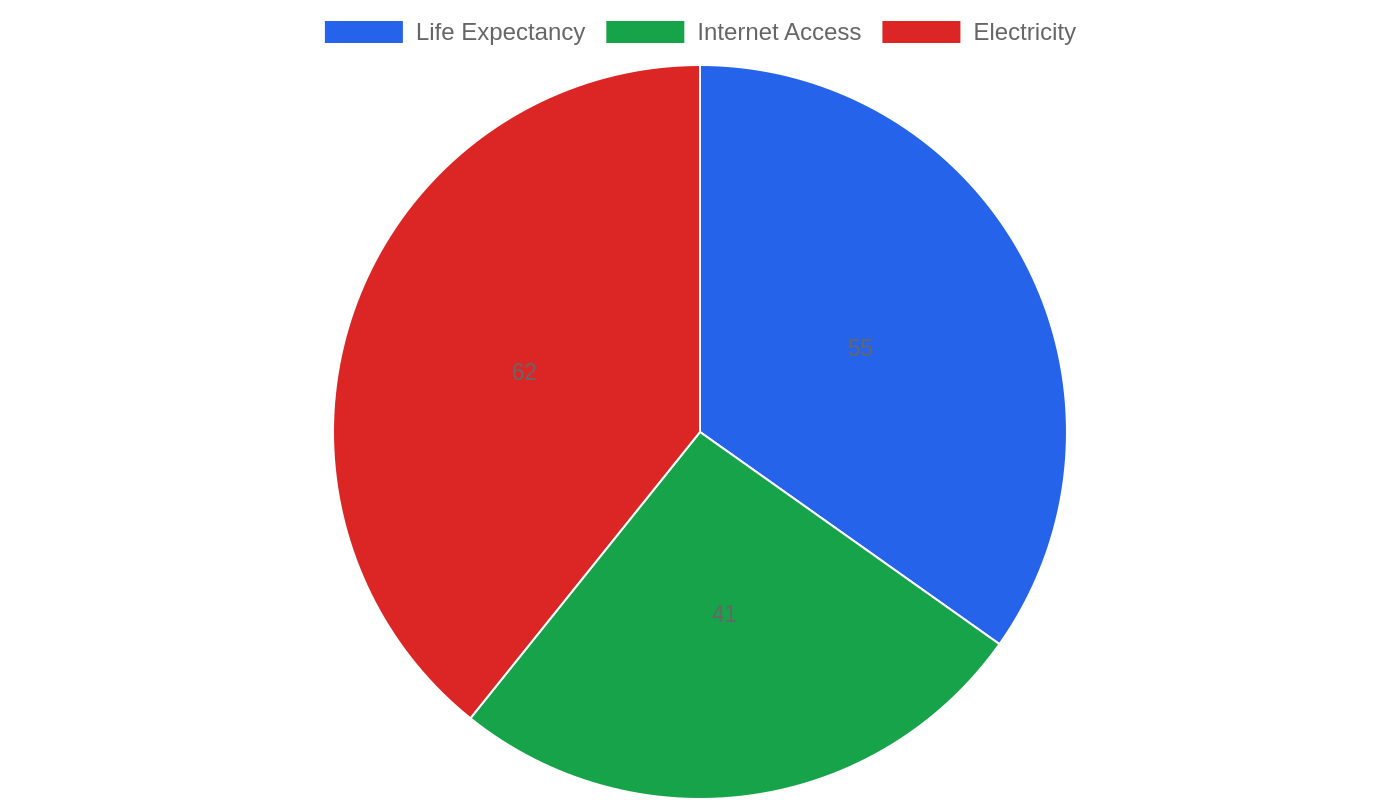
– A Data-Scarce Economy: Key economic indicators including GDP growth, inflation, and unemployment are currently unavailable from the World Bank, making it challenging to assess the nation’s economic trajectory with precision.
– Governance by Coalition: The political landscape is defined by coalition politics and the potential for presidential removal by the electoral college, suggesting a dynamic, sometimes volatile, governance environment.
– A Nation of Paradoxes: Vanuatu balances a modern parliamentary system with deep-rooted customary traditions, creating a unique business and social environment that defies easy categorisation.
The Economic Canvas: A Portrait Painted in Broad Strokes
When the World Bank’s data portal returns blank fields for GDP growth, inflation, and unemployment, it tells a story of its own. Vanuatu, like many of its Pacific island neighbours, operates within a statistical shadow—a place where informal economic activity, subsistence agriculture, and customary exchange systems form a significant part of the daily economic reality that formal metrics struggle to capture.
The absence of reliable data points from the World Bank is not merely an administrative gap; it reflects the profound challenges of measuring economic activity in a nation where family gardens feed households, where fishing provides sustenance rather than export revenue, and where the concept of “employment” in the Western sense applies to only a fraction of the working-age population.
This is not to say the economy is stagnant. Rather, it suggests that Vanuatu’s economic lifeblood flows through channels that standard economic instrumentation cannot easily monitor.
Remittances from ni-Vanuatu workers employed in seasonal agricultural schemes in Australia and New Zealand, revenue from tourism drawn to the famous Tanna Island volcano and the capital Port Vila’s duty-free shopping, and the steady hand of development assistance from regional partners all contribute to a complex economic ecosystem.
The country has historically relied heavily on its agricultural sector—coconut products, kava for export, and cocoa—alongside a growing services sector anchored in tourism and offshore financial services. Without hard numbers, analysts must rely on qualitative assessments: an economy that is small, open, and acutely sensitive to external shocks, from cyclones to global commodity price swings.
The Cost of Living: Paradise Has Its Price
For those considering a move to Vanuatu—whether as expatriates, retirees, or entrepreneurs—the cost of living presents a mixed picture. Housing in Port Vila, the capital and economic hub, reflects the dual nature of the market. On one hand, traditional settlements on customary land provide housing at minimal monetary cost, rooted in the communal land tenure system that governs roughly 98% of land in the archipelago.
On the other hand, the modern rental market in Port Vila and Luganville caters to expatriates, aid workers, and a growing middle class, with prices that can rival those in developed nations due to the high cost of importing construction materials and the limited supply of titled, freehold land.
Daily expenses in Vanuatu are heavily influenced by the country’s import dependency. The nation imports a significant portion of its food, fuel, and manufactured goods, making local prices sensitive to shipping costs and global market fluctuations. Locally grown produce—root crops like taro and cassava, tropical fruits, and fresh seafood—remains relatively affordable at the vibrant Port Vila market, where farmers from surrounding islands bring their harvests.
However, imported staples such as rice, flour, and canned goods carry premium prices. For a family accustomed to the supermarkets of Sydney or Auckland, the weekly grocery bill in Vanuatu can be surprisingly steep, while for those willing to embrace local produce and cooking methods, the cost of living can be remarkably low.
This bifurcation creates a unique economic environment where the “cost of living” is less a single number and more a lifestyle choice between embracing local traditions or maintaining imported habits.
Investment and Business Climate: Navigating Custom and Commerce
The business environment in Vanuatu is defined by the interplay between a modern legal framework and the enduring power of customary governance. The country’s top companies and key industries reflect its geographic and economic position: tourism operators, agricultural exporters, and a notable offshore financial services sector that has historically attracted international business seeking tax neutrality.
Vanuatu offers one of the most straightforward corporate registration processes in the Pacific, with a reputation for low taxes—there is no income tax, no capital gains tax, and no inheritance tax—which has made it an attractive jurisdiction for international business registrations.
However, investors quickly discover that navigating the business landscape requires more than just legal compliance. Land acquisition, the cornerstone of most significant investments, involves intricate negotiations with customary landowners, a process that can be time-consuming and requires deep cultural understanding. The political landscape, with its coalition governments and the constitutional mechanism allowing for presidential removal by the electoral college, introduces an element of policy uncertainty.
Yet, for those willing to invest the time in building relationships and understanding local protocols, opportunities exist in tourism infrastructure, agricultural processing, renewable energy—particularly solar and wind, given the high cost of imported diesel—and digital services. The government has shown interest in diversifying the economy beyond its traditional pillars, though progress has been measured, constrained by limited fiscal capacity and the ever-present threat of natural disasters.
Safety, Politics, and the Quality of Life: A Community Under Pressure
While specific crime and safety indices for Vanuatu are not available, the nation’s reputation is one of a generally peaceful society, where community bonds and the traditional concept of “wantok” (literally “one talk,” referring to people who share a language) provide a social safety net that extends far beyond government services. Violent crime is rare, and Port Vila maintains the relaxed, low-key atmosphere of a small Pacific town.
The primary threats to personal safety come less from criminal activity and more from natural hazards—cyclones, earthquakes, and volcanic activity—which are an accepted part of life in this geologically active region.
The political landscape, as described in the country’s constitutional framework, reveals a system designed for consensus but prone to fragmentation. The President, elected for a five-year term by a two-thirds vote of an electoral college comprising MPs and regional council presidents, symbolises national unity but holds primarily ceremonial powers.
The real authority rests with Parliament and the Prime Minister, and the constitution’s provision for presidential removal by the electoral college underscores the fluid nature of political alliances. This has historically led to frequent votes of no confidence and shifting coalition governments, creating a political environment that can be challenging for long-term policy planning.
Quality of life in Vanuatu, however, remains high for many—the country consistently ranks well in happiness surveys despite its economic challenges, a testament to the strength of community ties, the beauty of the natural environment, and a pace of life that prioritises relationships over material accumulation.
Current Affairs: The Nation at a Pivotal Moment
Today, Vanuatu stands at a critical juncture, navigating the intersecting pressures of climate change, political evolution, and economic transformation. As one of the world’s most climate-vulnerable nations, Vanuatu has emerged as a vocal leader in the global fight for climate justice, successfully championing a UN General Assembly resolution seeking an advisory opinion from the International Court of Justice on state obligations regarding climate change.
This diplomatic leadership reflects a nation that, despite its small size, commands moral authority on the world stage. Domestically, the government is grappling with the aftermath of recent cyclones, which have repeatedly devastated infrastructure and crops, straining already limited fiscal resources and highlighting the urgent need for climate-resilient development.
Politically, the coalition dynamics that characterise Vanuatu’s parliamentary system continue to evolve, with ongoing discussions about constitutional reforms, decentralisation, and the balance between customary governance and state institutions. The tourism sector, a vital source of foreign exchange, is working to recover and rebuild after the disruptions of recent years, with renewed focus on attracting higher-value visitors and developing sustainable tourism models that benefit local communities.
Meanwhile, the debate over offshore financial services continues, as international pressure for transparency and tax cooperation mounts, forcing Vanuatu to reconsider aspects of its economic model. The nation is also watching closely the outcomes of labour mobility schemes with regional partners, which provide crucial income for ni-Vanuatu workers and remittances that support families back home.
These currents—climate diplomacy, political reform, economic diversification, and international integration—are converging, making this a defining moment for the archipelago.
The Bottom Line
Vanuatu is not a country for those seeking straightforward economic metrics or predictable investment climates. It is a nation of profound complexity, where the modern and the traditional coexist in dynamic tension, where resilience is measured not in GDP growth rates but in the ability of communities to rebuild after each cyclone and adapt to each political shift.
For the intrepid investor, the policy analyst, or the scholar of Pacific affairs, Vanuatu offers a compelling case study in small-state economics, climate adaptation, and the enduring power of culture in shaping development outcomes. Watch this nation not for its quarterly statistics, but for its long-term trajectory—for how it navigates the coming decades will offer lessons for small island states worldwide.
Sources & Methodology
This article is authored by Economic Pulse Net for informational and research purposes. Economic Pulse Net sources its data from multilateral institutions, national statistics bureaus, and proprietary databases. All data is believed to be current as of the date of publication.
Published: August 01, 2026 | Category: Research — Vanuatu
Use these signals in your own platform
Economic Pulse publishes its live signal feed through a documented, read-only API. Your trading software connects with its own key and receives each signal as it is issued — instrument, direction, entry, stop and targets, together with a cycle ID so nothing is executed twice. The feed is independent of this website and cannot change it.
Signals are informational only and are not financial advice.