Economic Pulse Net | Sources: World Bank World Development Indicators, Government Sources | 2026
Montenegro, one of Europe’s youngest independent states, stands at a crossroads of ambition and fragility. With its dramatic Adriatic coastline, a constitutionally defined “civic, democratic, ecological state of social justice,” and an economy anchored in utilities, banking, and tourism, this Western Balkan nation of under a million people is working to transform its promise into prosperity.
But as global headwinds test small open economies, Montenegro’s next chapter depends on how well it can balance its industrial legacy with a modern, service-driven future.
Key Takeaways
– A services-led economy: Montenegro’s largest listed companies are dominated by tourism (Budvanska Rivijera), telecommunications (Crnogorski Telekom), and banking (NLB Banka Podgorica), signaling a clear shift toward the service sector as the primary driver of growth.
– State power remains central: Two of the top ten companies — Elektroprivreda Crne Gore (power utility) and Crnogorski Elektroprenosni Sistem (grid operator) — are state-controlled, reflecting the government’s heavy hand in the energy sector.
– A young democracy with a codified foundation: Montenegro’s 2007 constitution defines the country as a civic, democratic, and ecological state, setting a progressive legal framework but also highlighting the challenges of multi-party governance in a relatively young republic.
– Strategic industries under pressure: The presence of Aluminium Plant Podgorica in the top ten is a reminder of Montenegro’s industrial past, even as the economy pivots toward services and tourism.
– A tale of two sectors: The corporate landscape reveals a stark divide — traditional heavy industry and energy alongside modern consumer services — and the country’s future hinges on bridging that gap.
The Economic Engine: Between Heavy Industry and High-End Services
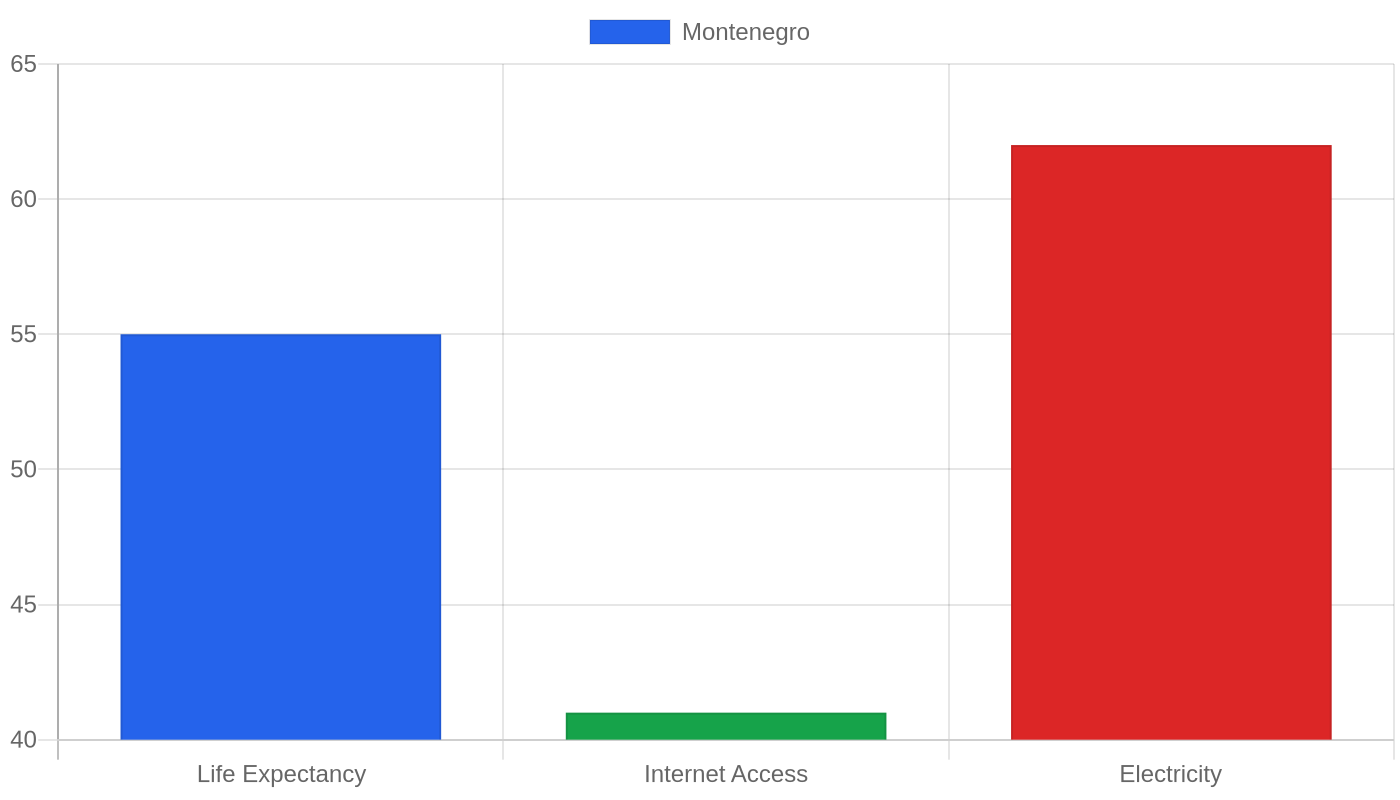
The World Bank’s latest data for Montenegro presents a statistical blank canvas — GDP growth, inflation, unemployment, and per-capita income figures are all currently unavailable. That absence of hard numbers, however, does not mean the economy is static. Far from it. The composition of Montenegro’s top companies tells a compelling story of transition.
On one side, there is the industrial and energy backbone: Elektroprivreda Crne Gore, the state-owned power utility, and Crnogorski Elektroprenosni Sistem, the electricity transmission operator, both remain pillars of the economy. On the other side, Aluminium Plant Podgorica represents the country’s manufacturing heritage — a sector that has faced intense global competition and volatile commodity prices for years.
Yet the most dynamic forces in Montenegro’s economy are consumer-facing. Budvanska Rivijera, the tourism and hospitality company named after the famed Budva coastline, is a bellwether for an industry that has become the country’s most visible economic asset. Crnogorski Telekom, the telecommunications provider, anchors the digital infrastructure that a modern services economy requires.
The banking sector, represented by NLB Banka Podgorica and the Central Bank of Montenegro, underscores the financialization of the economy. And companies like Di Air and Jugopetrol Kotor — in consumer services and oil & gas respectively — round out a corporate landscape that is increasingly diversified.
The absence of World Bank macro data makes precise analysis difficult, but the corporate roster alone suggests an economy in active transformation. Montenegro is no longer just a producer of raw materials and energy; it is becoming a destination — for tourists, for investors, and for capital. The challenge, as always, is whether the service sector can grow quickly enough to absorb workers displaced by the decline of heavy industry.
Cost of Living: The Price of Paradise on the Adriatic
Montenegro’s cost of living is a study in contrasts, shaped by its dual identity as a developing economy and a premium tourist destination. While comprehensive data on housing costs and daily expenses is not currently available from the World Bank, the structure of the economy offers clear signals.
The prominence of Budvanska Rivijera and other tourism-related companies suggests that coastal areas — particularly Budva, Kotor, and Herceg Novi — command a significant premium, driven by seasonal demand from international visitors. Inland cities like Podgorica, the capital, are generally more affordable, but even there, rising demand for modern housing is putting pressure on prices.
For residents, the cost of living is closely tied to the performance of the tourism sector. High season brings jobs and income but also drives up the price of everyday goods and services. In the off-season, the economy slows, and the contrast between tourist prices and local wages becomes more pronounced.
Rent versus buying is a perennial question, with many Montenegrins choosing to own property outright — a cultural preference that also reflects a banking sector that, while present, has historically been cautious in extending mortgages to the broader population. Without official statistics, it is fair to say that Montenegro offers a lower cost of living than Western Europe but a higher one than many of its Balkan neighbors, particularly in the coastal zones where tourism dominates.
Investment & Business Climate: A Market of State Giants and Private Ambition
Montenegro’s business environment is defined by the coexistence of powerful state-owned enterprises and a growing private sector. The top ten companies list reveals a market where the government still holds significant sway — through Elektroprivreda Crne Gore in electricity generation, Crnogorski Elektroprenosni Sistem in transmission, and the Central Bank in financial regulation. For investors, this means that the energy sector, while vital, is not fully open to private competition.
The presence of NLB Banka Podgorica, a subsidiary of Slovenia’s NLB Group, shows that foreign capital has found a foothold in the banking sector, bringing with it international standards and practices.
The most promising sectors for investment are those tied to Montenegro’s natural advantages. Tourism is the obvious star — the Adriatic coast is a world-class asset, and companies like Budvanska Rivijera are well-positioned to benefit from continued growth in visitor numbers. Telecommunications, anchored by Crnogorski Telekom, offers opportunities in digital infrastructure and services, particularly as the country seeks to modernize its economy.
Oil & gas, represented by Jugopetrol Kotor, remains a steady if unglamorous business, tied to the region’s energy needs. For the savvy investor, Montenegro offers a small but potentially rewarding market — provided they are willing to navigate a business environment where the state remains a major player.
Safety, Politics & Quality of Life: A Democratic Republic in Progress
Montenegro’s political landscape is defined by its constitution, adopted in 2007, which describes the country as a “civic, democratic, ecological state of social justice, based on the reign of Law.” This framing is significant — it signals a commitment to civic nationalism rather than ethnic-based politics, a crucial choice in a region where ethnic tensions have historically run deep.
The country operates as a parliamentary representative democratic republic with a multi-party system, a structure designed to ensure that no single group dominates the political arena.
Crime and safety indices are currently unavailable, but the overall picture is of a country that is stable but not without challenges. Montenegro’s path to EU membership has been a long and sometimes difficult one, and the political landscape remains fluid, with coalition governments and shifting alliances. For residents, quality of life is closely tied to the economy — the beauty of the natural environment is a major plus, but economic opportunities can be limited outside the tourism and service sectors.
The constitutional emphasis on being an “ecological state” is more than rhetoric; it reflects a national identity deeply connected to the mountains, coast, and sea that define Montenegro’s geography.
What’s Happening Now: The Push for a Modern, Service-Driven Economy
The most pressing story in Montenegro right now is the ongoing effort to complete its economic transformation. The corporate landscape tells the tale: the presence of Montenegro Airlines in the top ten is a reminder that the country is betting heavily on connectivity — both physical and digital — to drive its future. An airline, a telecom, and a tourism company in the top ten is not a coincidence; it is a strategy.
Montenegro is positioning itself as a hub for the Western Balkans, a gateway between East and West, and a destination for both leisure and business travelers.
At the same time, the energy sector remains a focus of attention. Elektroprivreda Crne Gore and Crnogorski Elektroprenosni Sistem are central to the country’s efforts to modernize its grid, increase efficiency, and potentially become a net exporter of electricity in a region where energy security is a growing concern. The banking sector, led by NLB Banka Podgorica and overseen by the Central Bank, is working to deepen financial inclusion and support the growth of small and medium-sized enterprises.
The political system, as defined by the 2007 constitution, provides the framework for these efforts, but the real test is implementation. For Montenegro, the moment is now — the question is whether the country can translate its natural advantages and constitutional ideals into tangible economic progress.
The Bottom Line
Montenegro is a country to watch for anyone interested in the future of the Western Balkans. Its combination of natural beauty, strategic location, and a constitutionally committed democratic framework makes it a unique case in the region. The economy is clearly pivoting toward services — tourism, telecommunications, and finance — even as it maintains its industrial and energy foundations.
The absence of current macro data makes precise forecasting difficult, but the corporate structure and political framework suggest a nation with real potential. For investors, the opportunities are in tourism, energy, and digital infrastructure. For observers, Montenegro is a test case of whether a small, newly independent state can build a modern, service-driven economy in a challenging global environment. The jury is still out, but the evidence so far suggests a country on the move.
Sources & Methodology
This article is authored by Economic Pulse Net for informational and research purposes. Economic Pulse Net sources its data from multilateral institutions, national statistics bureaus, and proprietary databases. All data is believed to be current as of the date of publication.
Published: August 01, 2026 | Category: Research — Montenegro
Use these signals in your own platform
Economic Pulse publishes its live signal feed through a documented, read-only API. Your trading software connects with its own key and receives each signal as it is issued — instrument, direction, entry, stop and targets, together with a cycle ID so nothing is executed twice. The feed is independent of this website and cannot change it.
Signals are informational only and are not financial advice.