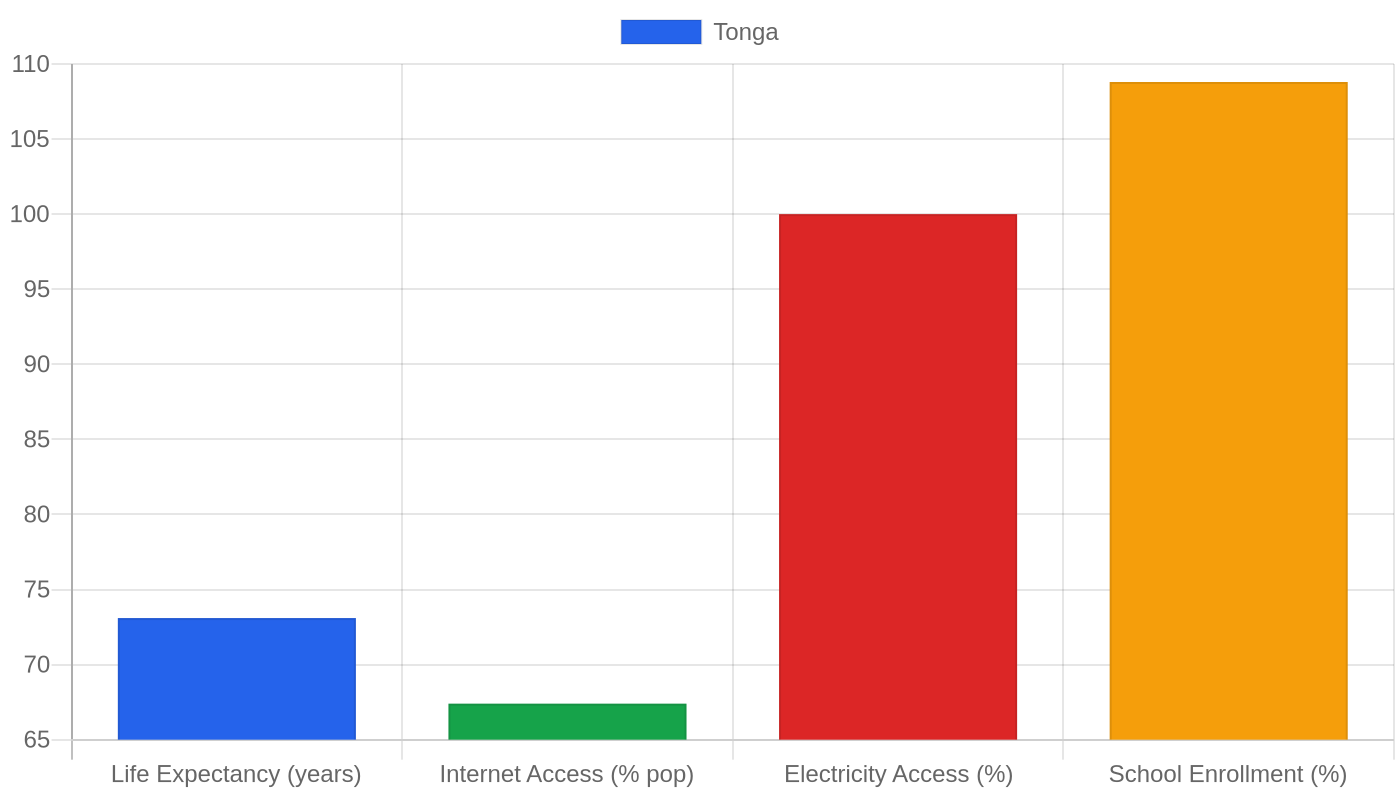
Economic Pulse Net | Sources: World Bank World Development Indicators, Government Sources | 2026
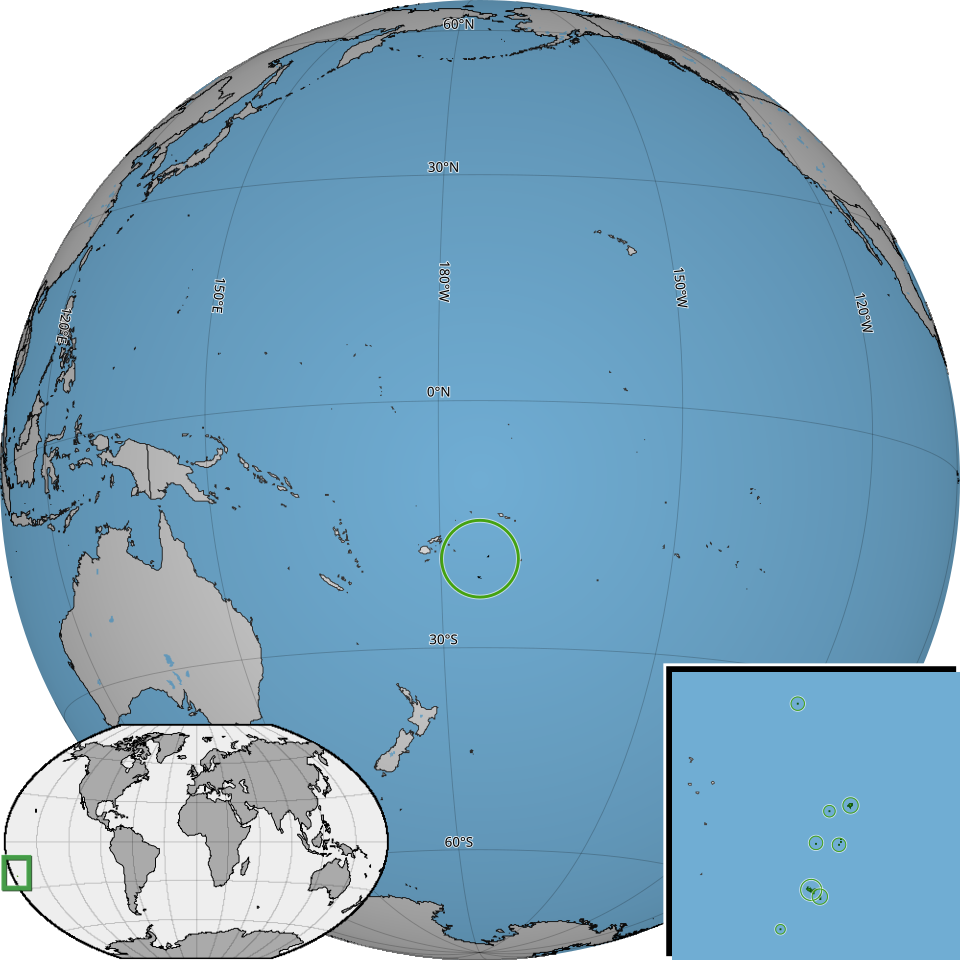
In a Pacific region increasingly defined by geopolitical competition and climate urgency, the Kingdom of Tonga stands apart. As the only extant indigenous monarchy in the Pacific islands, Tonga navigates a unique path where ancient tradition meets modern economic pressure. While comprehensive economic data remains scarce, the kingdom’s story is one of resilience, cultural preservation, and careful adaptation.
Key Takeaways
– A Constitutional Monarchy in a Modern World: Tonga maintains a political system built around reverence for its monarch, a tradition that shapes both governance and economic policy in ways unseen elsewhere in the region.
– Education as a Foundation: The kingdom provides free and mandatory education for all citizens, with secondary education available at nominal fees and foreign-funded scholarships supporting postsecondary study — a significant investment in human capital.
– Cultural Etiquette Meets Economic Reality: Criticism of the monarchy is held to be contrary to Tongan culture and etiquette, creating a unique dynamic where political and economic discourse operates within traditional boundaries.
– A Pacific Island Economy in Transition: While specific GDP, inflation, and employment figures are not available, Tonga’s position as a small island state in the Pacific suggests a story of both vulnerability to external shocks and remarkable adaptability.
– Strategic Significance in the Pacific: As one of the region’s oldest continuing monarchies, Tonga’s stability and development trajectory are closely watched by neighbors and international partners alike.
Tradition and Transition: The Economic Landscape of the Kingdom
The economic picture of Tonga remains one of the most opaque in the Pacific, with the World Bank reporting no current figures for GDP growth, inflation, or unemployment. This data gap itself tells a story — the kingdom’s economy is small, dispersed across 169 islands (of which only 36 are inhabited), and heavily reliant on traditional subsistence activities alongside remittances from Tongans abroad.
What can be said with confidence is that Tonga’s economic structure reflects its geographical reality. As a Polynesian kingdom spread across a vast expanse of ocean, its economic activities are necessarily decentralized. The main industries that would typically drive GDP — manufacturing, large-scale agriculture, or services — are limited by the constraints of island geography and small population size.
The World Bank’s inability to provide standard economic indicators suggests either significant data collection challenges or an economy that falls below the threshold for standard reporting.
The kingdom’s commitment to education represents perhaps its most significant economic investment. With free and mandatory education for all citizens, Tonga is building human capital that can either support domestic development or, as has historically been the case, provide skilled workers for overseas markets whose remittances flow back to the kingdom.
The foreign-funded scholarships for postsecondary education create a pipeline of educated Tongans who may return with new skills and international connections, or remain abroad and contribute through financial support to family members at home.
The reverence for the monarchy, which replaces the sacred paramount chief of earlier centuries, creates a stable political environment that can be attractive for certain types of investment. However, the cultural constraints on criticism of the monarch may also limit the open policy debate that typically accompanies economic reform. This is a nation walking a careful line between preserving its unique cultural identity and engaging with the global economy on its own terms.
The Cost of Island Living: Housing and Daily Life in Tonga
For Tongans, the cost of living is shaped by the fundamental realities of island economics — everything that cannot be produced locally must be imported, and import costs are magnified by the distances involved in Pacific shipping routes. Housing in Tonga reflects a dual system: traditional village-based living where extended families share land and resources, and a smaller urban housing market centered on the capital, Nukuʻalofa, where modern housing commands premium prices.
The rental market in Tonga is limited by international standards, with homeownership through traditional land tenure systems being the norm for many Tongans. The concept of buying and selling land operates differently than in Western economies, with land rights deeply embedded in the social and political structure. For expatriates and returning Tongans, housing options are more limited and costs higher, reflecting the scarcity of modern amenities.
Daily expenses in Tonga — food, transportation, utilities — are influenced by the same import dynamics that affect housing. Locally produced foods such as root crops, fish, and tropical fruits are relatively affordable, but imported goods, particularly processed foods, fuel, and manufactured items, carry significant price premiums. The gap between local and imported costs creates a two-tier economy where those with access to remittances or overseas income fare better than those dependent solely on local wages.
Business and Investment: Opportunities in a Kingdom of Tradition
The business environment in Tonga is characterized by its small scale and the dominance of family and community-based enterprises. Major companies operating in the kingdom would primarily be found in telecommunications, banking, and utilities — the essential services that underpin any modern economy. The tourism sector, while not dominant, represents a significant opportunity given Tonga’s natural beauty and cultural distinctiveness.
For investors, Tonga offers a politically stable environment with a legal system based on constitutional monarchy. The kingdom’s education system produces literate, skilled workers, and English is widely spoken. However, the small domestic market, geographic isolation, and vulnerability to natural disasters — particularly cyclones and volcanic activity — present significant challenges.
The sectors most likely to attract investment are those that leverage Tonga’s unique advantages: tourism that emphasizes cultural authenticity, fisheries and aquaculture that can access premium international markets, and renewable energy projects that reduce dependence on imported fossil fuels. The kingdom’s foreign-funded scholarships create a pool of internationally educated talent that could support knowledge-based industries, though retaining that talent domestically remains a challenge.
Stability and Safety: The Political and Social Contract
Tonga’s crime and safety indices remain unreported, but the kingdom’s social structure suggests a society where traditional values and community bonds provide a foundation for public safety. The reverence for the monarchy extends to broader respect for authority and social order, creating an environment where violent crime is generally considered rare by regional standards.
The political landscape is defined by the constitutional monarchy’s unique position — it is the only extant indigenous monarchy in the Pacific islands. This political system has proven remarkably durable, adapting to changing circumstances while maintaining the cultural centrality of the monarchy. The prohibition on criticism of the monarch, rooted in Tongan culture and etiquette, creates a political discourse that operates within distinct boundaries.
Quality of life in Tonga is shaped by factors that defy simple economic measurement. The strong community networks, the connection to traditional lands and waters, and the absence of many urban pressures contribute to a quality of life that many Tongans value highly, even when material wealth is limited. The free education system and foreign-funded scholarships represent a social contract that invests in the nation’s youth and future.
Navigating the Present: Tonga’s Current Moment
As of the latest reporting period, Tonga finds itself at a crossroads where traditional governance meets contemporary challenges. The kingdom continues to operate without comprehensive economic data being reported by the World Bank, which itself is notable — it suggests an economy that may be growing in informal and traditional sectors that standard metrics capture poorly, or one that is facing significant headwinds.
The Pacific region’s increasing geopolitical attention brings both opportunities and pressures. Tonga’s strategic position and its status as a stable, long-standing monarchy make it an attractive partner for various international actors seeking influence in the region. The kingdom’s foreign-funded scholarships indicate active international engagement, particularly in education and capacity building.
Climate change remains an existential concern for all Pacific island nations, and Tonga is no exception. The kingdom’s vulnerability to rising sea levels, increased storm intensity, and ocean acidification shapes both its domestic priorities and its international advocacy. These environmental pressures intersect with economic development in ways that will define Tonga’s trajectory in the coming years.
The tension between preserving cultural traditions and embracing necessary modernization continues to shape policy decisions. The monarchy’s role as both a symbol of national unity and a participant in governance creates a unique political economy where change must be carefully managed to maintain social cohesion.
The Bottom Line
Tonga represents a fascinating case study in how a small island nation can maintain cultural integrity while engaging with the global economy. For investors and businesses, the kingdom offers stability and educated human capital, though the market size and geographic challenges require patience and long-term perspective.
For policymakers and development specialists, Tonga demonstrates that economic development need not come at the cost of cultural identity — the kingdom’s education system and social contract provide a model for balancing tradition with progress. And for anyone interested in the future of the Pacific region, Tonga’s navigation of climate change, geopolitical competition, and economic development will offer lessons that resonate far beyond its shores.
Sources & Methodology
This article is authored by Economic Pulse Net for informational and research purposes. Economic Pulse Net sources its data from multilateral institutions, national statistics bureaus, and proprietary databases. All data is believed to be current as of the date of publication.
Published: August 06, 2026 | Category: Research — Tonga
Use these signals in your own platform
Economic Pulse publishes its live signal feed through a documented, read-only API. Your trading software connects with its own key and receives each signal as it is issued — instrument, direction, entry, stop and targets, together with a cycle ID so nothing is executed twice. The feed is independent of this website and cannot change it.
Signals are informational only and are not financial advice.