Economic Pulse Net | Sources: World Bank World Development Indicators, Government Sources | 2026
Key Takeaways
* Unique Political Structure: Tonga stands as the only extant indigenous monarchy in the Pacific islands, where reverence for the monarch remains deeply entrenched in cultural etiquette.
Educational Progression: The nation provides free mandatory education for all citizens, with secondary schooling available at nominal fees and postsecondary opportunities often supported by foreign-funded scholarships.
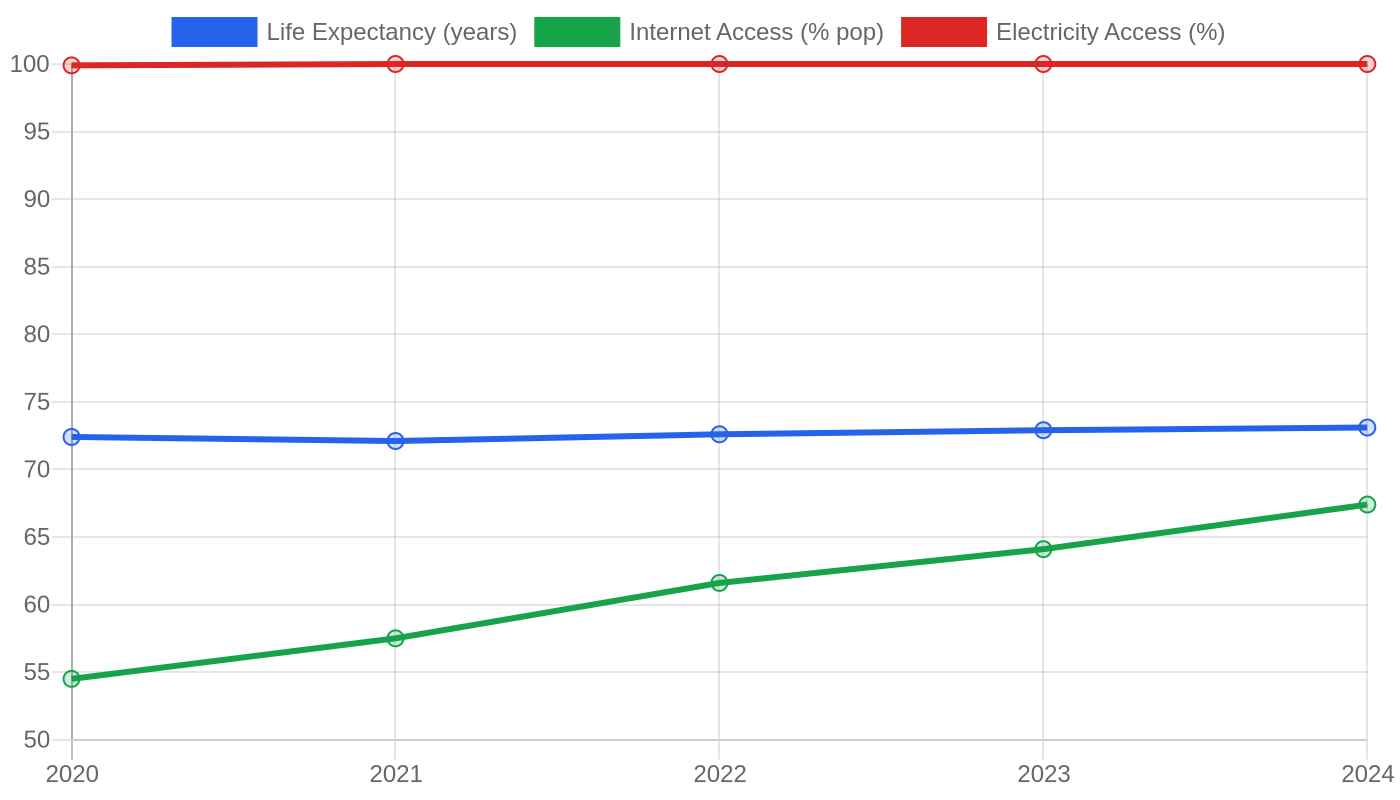
Data Transparency Gaps: Current World Bank metrics indicate significant gaps in real-time reporting for GDP growth, inflation, unemployment, and per capita income figures.
Cultural vs. Modern Pressures: While traditional social structures remain strong, the intersection of constitutional governance and modern economic development creates a unique policy landscape for investors and observers.
The Weight of Tradition on Economic Policy
Tonga’s economic narrative is inextricably linked to its political identity as a constitutional monarchy, distinguishing it from its regional neighbors. As the only surviving indigenous monarchy in the Pacific islands, the country operates under a system where reverence for the monarch replaces the historical authority once held by the sacred paramount chief, the Tuʻi Tonga. This deep-seated cultural hierarchy influences not just social interactions but also the broader framework of governance and public policy.
Criticism of the monarch is considered contrary to Tongan culture and etiquette, suggesting that political discourse and economic reform must navigate these sensitive cultural waters carefully. The state prioritizes human capital development through a robust educational framework, offering free and mandatory education for all citizens. Furthermore, secondary education is accessible with only nominal fees, ensuring broad participation in the foundational stages of learning.
For higher education, the government relies on foreign-funded scholarships to support postsecondary studies, indicating a strategic reliance on international aid to build skilled labor. These educational investments are critical, as they form the backbone of the workforce needed to drive future industrial growth, even as current macroeconomic indicators remain obscured by data availability issues.
Navigating the Cost of Living Landscape
For residents and potential expatriates, understanding the daily economic reality in Tonga requires looking beyond standard aggregate indices. With specific cost-of-living metrics currently listed as unavailable in major global databases, the general experience is shaped by the island’s geographic isolation and import-dependent economy.
Housing costs, while lacking precise comparative data against regional averages in the provided dataset, are generally influenced by the limited land availability and the high cost of importing construction materials. Daily expenses reflect this dynamic, with local markets serving as the primary source for fresh produce, while imported goods carry a premium due to logistical challenges.
Rent versus buy decisions are complicated by the customary land tenure systems prevalent in Polynesia, which can restrict outright ownership for non-citizens or those outside traditional family lines. Consequently, the cost of living is likely higher than in larger, more diversified Pacific economies, driven by the necessity of importing most manufactured goods and energy sources.
Residents must budget for these structural costs, knowing that basic utilities and consumer goods are subject to global supply chain fluctuations despite the local agricultural base.
Investment Opportunities in a Closed Market
The business environment in Tonga is characterized by a small, concentrated market with limited visibility into top corporate entities within the current data scope. Major companies operating in the kingdom are largely tied to essential services, telecommunications, and tourism, sectors that benefit from the country’s unique cultural appeal and natural beauty.
However, the lack of specific data on top companies and main industries makes it difficult to identify dominant private sector players or emerging startups. Investors must be cautious, as the business climate is heavily regulated by both statutory laws and customary practices that govern land use and employment. Sectors such as renewable energy and digital infrastructure offer potential for growth, especially given the government’s focus on education and scholarship programs aimed at building technical capacity.
Foreign investment is welcome but must align with national priorities and respect the cultural protocols surrounding land and leadership. The absence of detailed industrial breakdowns suggests that opportunities may be found in niche areas like sustainable agriculture, marine resources, and culturally immersive tourism rather than large-scale manufacturing.
Safety, Politics, and Social Stability
Tonga maintains a reputation for social cohesion, though specific crime and safety indices are currently unreported in global monitoring tools. The political landscape is defined by the constitutional monarchy, which provides a stable, albeit traditional, framework for governance. This stability is reinforced by the widespread acceptance of the monarch’s role, which serves as a unifying symbol amidst modernizing pressures.
Quality of life is supported by the state’s commitment to universal education, reducing long-term social inequalities and fostering a more informed citizenry. The provision of free mandatory education and subsidized secondary schooling contributes to social welfare, ensuring that basic human capital needs are met regardless of economic status. Happiness and well-being, while not quantified in the provided data, are likely influenced by strong community ties and the preservation of cultural heritage.
However, the tension between traditional reverence for the monarchy and demands for democratic reform remains a underlying current in political discourse. Crime rates are generally perceived as low in such close-knit societies, but the lack of specific safety indices prevents a precise assessment of urban versus rural security dynamics.
What’s Happening Now: Balancing Heritage and Reform
The current affairs in Tonga are dominated by the ongoing dialogue between preserving indigenous traditions and adapting to global economic realities. Recent developments highlight the government’s continued emphasis on education as a tool for modernization, with foreign-funded scholarships playing a crucial role in sending students abroad for advanced training. This influx of educated returnees is expected to bring new skills and perspectives back to the kingdom, potentially driving innovation in key sectors.
Meanwhile, the political structure remains unchanged, with the monarchy continuing to serve as the central pillar of national identity and stability. Critics and reform advocates continue to push for greater democratization, arguing that the concentration of power contradicts modern governance standards. However, any significant political shift must navigate the cultural taboo against criticizing the monarch, making legislative changes a slow and deliberate process.
Economic policies are likely being refined to attract foreign investment while protecting local industries, though specific policy shifts are not detailed in the current data set. The interplay between these traditional values and modern economic necessities defines the immediate future of Tonga’s development trajectory.
The Bottom Line
Tonga presents a unique case study for investors and policymakers interested in the intersection of tradition and development. Its status as the last indigenous monarchy in the Pacific offers a stable, culturally rich environment, but one that requires deep respect for local customs and land tenure systems. While data gaps obscure the full economic picture, the strong foundation in education and social welfare suggests a resilient society capable of gradual modernization.
Stakeholders should watch for reforms in the education and tourism sectors, as these areas offer the clearest pathways for growth and international engagement.
Sources & Methodology
This article is authored by Economic Pulse Net for informational and research purposes. Economic Pulse Net sources its data from multilateral institutions, national statistics bureaus, and proprietary databases. All data is believed to be current as of the date of publication.
Published: October 04, 2026 | Category: Research — Tonga
Use these signals in your own platform
Economic Pulse publishes its live signal feed through a documented, read-only API. Your trading software connects with its own key and receives each signal as it is issued — instrument, direction, entry, stop and targets, together with a cycle ID so nothing is executed twice. The feed is independent of this website and cannot change it.
Signals are informational only and are not financial advice.