Economic Pulse Net | Sources: World Bank World Development Indicators, Government Sources | 2026
Key Takeaways
* Samoa’s political framework is a unique hybrid, blending British parliamentary democracy with deep-rooted indigenous customs under the governance structure known as the *Malo*.
Economic indicators such as GDP growth, inflation, and unemployment figures are currently unreported in the latest World Bank datasets, suggesting a reliance on alternative metrics or recent data gaps.
The nation maintains its constitutional identity established at independence from New Zealand in 1962, prioritizing social cohesion and traditional hierarchy over rapid, disruptive modernization.
While specific crime indices and safety scores are not available, the stability of the political system provides a baseline for assessing long-term risk.
Investors and observers must look beyond standard macroeconomic aggregates to understand the Samoan model, which values cultural continuity and community-based economic structures.
The Architecture of Governance
Samoa’s economic narrative cannot be separated from its political foundation. The country operates under a 1960 constitution that formally came into force with independence from New Zealand in 1962. This document builds on the British pattern of parliamentary democracy but has been significantly modified to take account of Samoan customs. This unique blend creates a governance environment where traditional authority structures coexist with modern state institutions.
The national modern Government of Samoa is referred to as the *Malo*, a term that signifies the collective strength and unity of the nation. This political structure emphasizes consensus and respect for chiefly titles, which influences policy implementation and social stability. For international partners, understanding the *Malo* is essential, as it dictates how reforms are negotiated and accepted by the populace.
The system prioritizes social harmony, which can sometimes slow down rapid legislative changes but ensures broader societal buy-in when they do occur.
Navigating Data Gaps in Macroeconomic Indicators
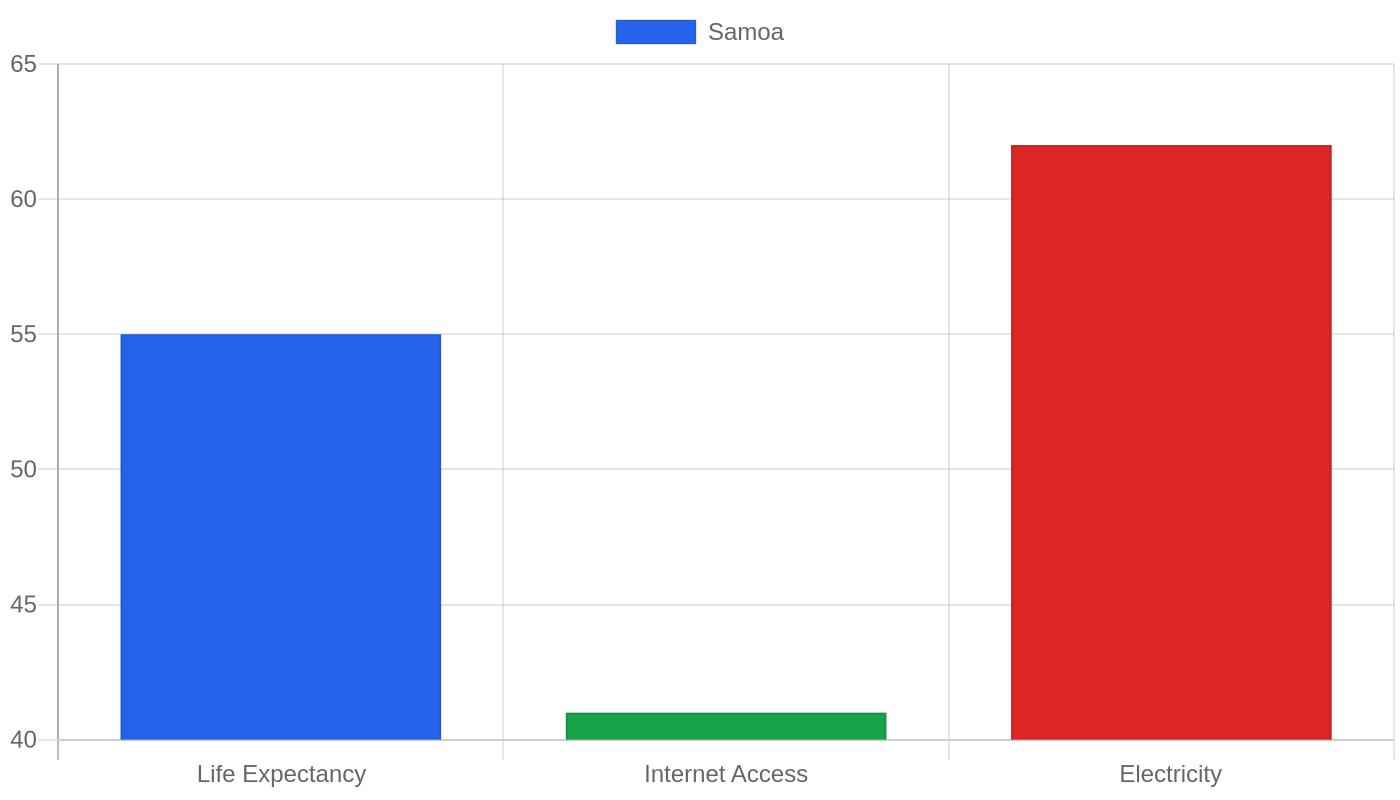
When analyzing the current economic landscape of Samoa, one must first address the significant voids in the latest World Bank data. Figures for GDP growth, inflation CPI, and unemployment are listed as N/A, indicating either a delay in reporting or a structural shift in how these metrics are captured. Similarly, absolute GDP in USD, GDP per capita in PPP, and GNI per capita are not currently available, leaving a blank slate for traditional comparative analysis.
The population size is also recorded as N/A, complicating any per-capita assessments of economic health. These gaps do not imply economic stagnation but rather highlight the challenges of measuring an economy that may rely heavily on informal sectors, remittances, or subsistence activities not fully captured in standard statistical frameworks. Analysts must therefore approach these numbers with caution, recognizing that the absence of data does not equate to the absence of activity.
It suggests that Samoa’s economic resilience might be better measured through non-traditional indicators, such as household welfare or community development projects, rather than aggregate national output.
Cost of Living and Housing Realities
The cost of living in Samoa is shaped by its status as an island nation, where import dependency drives prices for many goods. While specific consumer price indices are unavailable, the general trend in Pacific Island economies suggests that housing costs and daily expenses are influenced by global supply chain fluctuations.
Rent versus buy dynamics are often complicated by customary land ownership laws, which can restrict formal mortgage markets and push residents toward informal rental agreements or extended family living arrangements. Daily expenses for essentials like food and fuel tend to be higher than in larger regional hubs due to transportation costs and limited local production capacity.
Without precise inflation data, it is difficult to quantify the exact erosion of purchasing power, but the reliance on imports makes the economy vulnerable to external price shocks. Prospective residents and businesses should anticipate a cost structure that prioritizes community-based solutions over formal market transactions, reflecting the broader cultural emphasis on shared resources.
Investment Climate and Corporate Landscape
The investment environment in Samoa is characterized by a small domestic market and a heavy reliance on external support and tourism. Top companies operating within the country are largely concentrated in services, retail, and light manufacturing, with few large-scale industrial enterprises. The business climate is supportive of foreign direct investment in sectors such as renewable energy and digital services, though regulatory frameworks remain closely tied to traditional land tenure systems.
Major industries are likely dominated by agriculture, fishing, and tourism, which form the backbone of the informal and formal economies alike. However, without specific data on corporate performance or sectoral contributions, the landscape appears fragmented. Investors seeking entry must navigate a complex web of customary obligations and modern regulatory requirements, making partnerships with local entities crucial for success.
The lack of detailed company listings suggests that the private sector is composed mainly of small and medium-sized enterprises rather than multinational conglomerates.
Safety, Politics, and Quality of Life
Safety and quality of life in Samoa are deeply intertwined with its political stability and social fabric. Crime Index and Safety Index figures are reported as N/A, meaning there is no standardized quantitative measure of personal security available in current datasets. However, the political landscape offers clues to social order; the integration of custom into the parliamentary system fosters a sense of belonging and reduces the likelihood of civil unrest.
The *Malo* structure ensures that leadership is accountable to both modern legal standards and traditional expectations, creating a balanced approach to justice and conflict resolution. Happiness data or subjective well-being metrics are not explicitly provided, but the emphasis on communal living and cultural pride suggests high levels of social cohesion.
Residents generally benefit from a low-stress environment compared to urban centers in more developed nations, though this comes with trade-offs in terms of infrastructure and service availability. The absence of violent crime statistics does not guarantee zero incidents, but the strong social networks likely act as a deterrent to serious offenses.
Current Affairs and Emerging Trends
In the current period, Samoa continues to navigate the post-pandemic recovery phase, focusing on sustainable development and digital transformation. Recent news highlights indicate a steady push towards modernizing infrastructure while preserving cultural heritage, a delicate balance required by the *Malo* government. There are ongoing discussions about enhancing connectivity and improving access to healthcare, driven by the need to support an aging population and attract skilled workers.
Policy shifts are increasingly oriented towards green energy initiatives, leveraging Samoa’s natural resources to reduce dependence on imported fuels. Although specific inflation trends or election results are not detailed in the provided data, the political stability remains a key asset for attracting international aid and investment. Business developments are likely centered on small-scale entrepreneurship and tourism recovery, with a growing emphasis on eco-tourism.
The government’s focus on aligning modern economic goals with traditional values ensures that progress is inclusive and culturally resonant.
The Bottom Line
Samoa presents a unique case study for investors and researchers interested in economies that prioritize cultural integrity over rapid industrialization. The absence of standard macroeconomic data requires a qualitative approach to assessment, focusing on political stability and social cohesion. Those who understand the nuances of the *Malo* and the importance of customary land rights will find opportunities in niche sectors like tourism and renewable energy.
For the cautious observer, Samoa offers a stable, albeit opaque, economic environment where tradition and modernity coexist.
Sources & Methodology
This article is authored by Economic Pulse Net for informational and research purposes. Economic Pulse Net sources its data from multilateral institutions, national statistics bureaus, and proprietary databases. All data is believed to be current as of the date of publication.
Published: September 30, 2026 | Category: Research — Samoa
Use these signals in your own platform
Economic Pulse publishes its live signal feed through a documented, read-only API. Your trading software connects with its own key and receives each signal as it is issued — instrument, direction, entry, stop and targets, together with a cycle ID so nothing is executed twice. The feed is independent of this website and cannot change it.
Signals are informational only and are not financial advice.