Economic Pulse Net | Sources: World Bank World Development Indicators, Government Sources | 2026
Key Takeaways
* Modest Growth Trajectory: New Zealand’s economy is projected to expand by just 0.46% in 2025, signaling a period of consolidation rather than rapid expansion despite a robust GDP per capita.
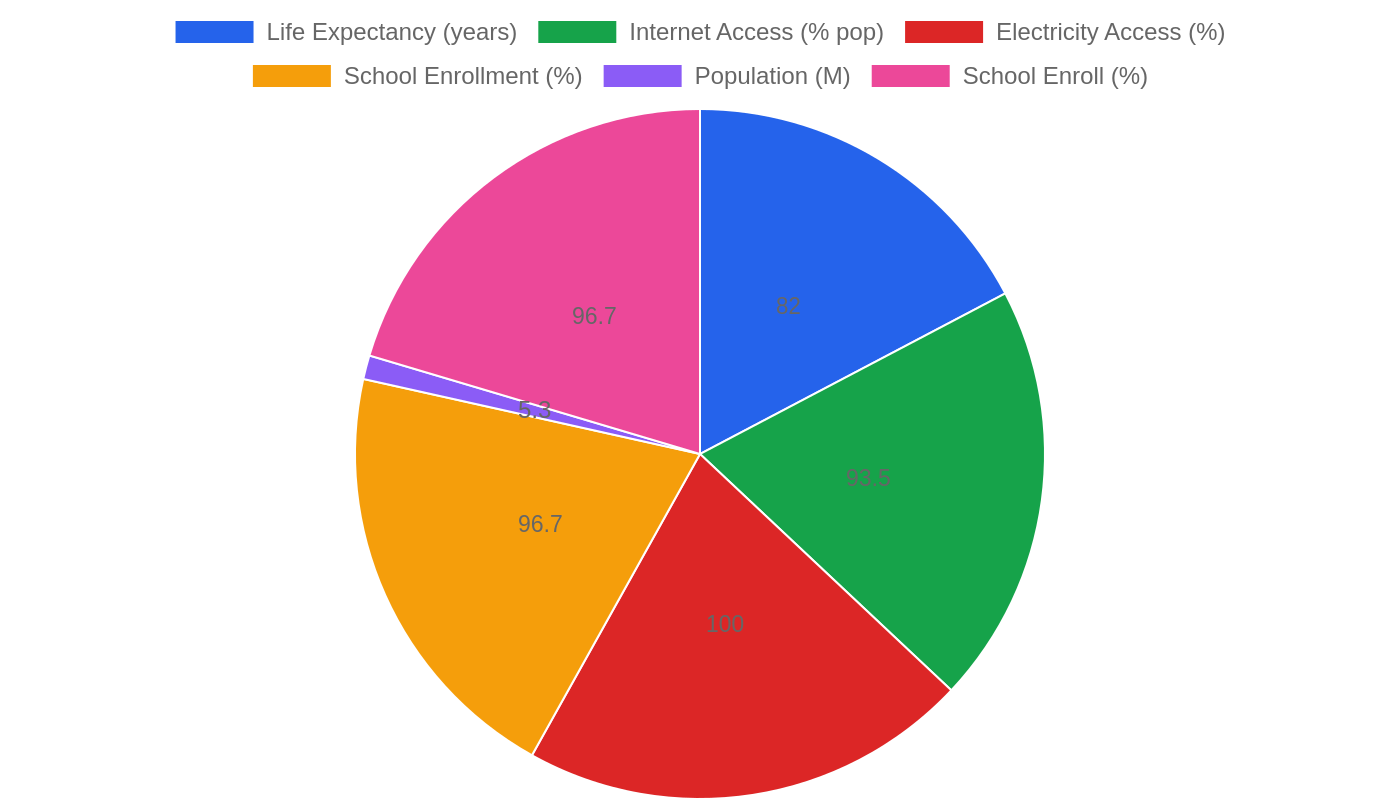
High Living Standards: With a GDP per capita (PPP) exceeding $57,000 and a GNI per capita of $46,630, the nation maintains one of the highest standards of living globally, supported by a population of roughly 5.3 million.
Stable Labor Market: The unemployment rate sits at a manageable 5.076%, indicating that while growth is slow, the labor market remains relatively stable and inclusive.
Corporate Landscape Dominated by Agriculture and Services: Major economic players like Fonterra and Fletcher Building highlight the continued importance of primary industries and construction, alongside emerging telecom and consumer service sectors.
Political Continuity: As a constitutional monarchy with an uncodified constitution, New Zealand offers political stability under King Charles III, though governance relies heavily on parliamentary democracy and the Governor-General’s ceremonial yet potent prerogatives.
Economic Headwinds and Structural Strengths
New Zealand’s economic outlook for 2025 presents a nuanced picture of stability amidst sluggish momentum. According to World Bank data, the nation’s GDP growth is forecast at a modest 0.462871830681081%, reflecting a broader global trend of post-pandemic normalization where explosive growth gives way to sustainable, albeit slower, accumulation.
However, this low headline growth figure belies the underlying wealth of the nation; the total GDP stands at approximately $264 billion USD, a substantial sum for a country with a population of 5,324,700. This disparity highlights New Zealand’s efficiency in generating value per citizen, evidenced by a staggering GDP per capita (PPP) of $57,350.36.
Furthermore, the GNI per capita of $46,630 suggests that income generated by residents, including from overseas investments, remains high, supporting domestic consumption power. While inflation is currently tracked at 2.8397963180572%, hovering near typical central bank targets, it indicates that price stability has been largely achieved without triggering severe deflationary pressures.
The unemployment rate of 5.076% further corroborates this stability, suggesting that the workforce is engaged even as the broader economy pauses to recalibrate. For investors and policymakers, these numbers signal a mature economy that prioritizes quality of life and steady accumulation over volatile, high-speed expansion.
Cost of Living and Housing Dynamics
The cost of living in New Zealand is intrinsically linked to its geographic isolation and high-income status, creating a unique economic environment for residents and expatriates alike. While specific housing indices are not detailed in the current dataset, the high GDP per capita implies that wages generally keep pace with or exceed daily expenses, allowing for a comfortable standard of living relative to many other nations.
Daily expenses are likely influenced by the strong performance of key industries such as agriculture and tourism, which help stabilize food and service costs. However, the small population size of 5.3 million can sometimes constrain housing supply in major urban centers, potentially driving up rent-to-buy ratios compared to larger markets.
Compared to regional averages in the Pacific, New Zealand’s economic metrics suggest a premium on quality infrastructure and services, meaning consumers pay more for reliability and safety. Ultimately, the interplay between a high GNI and moderate inflation means that while nominal costs may be higher, the purchasing power parity remains strong, allowing households to maintain significant discretionary spending power despite the modest overall GDP growth.
Investment & Business Climate
The corporate landscape in New Zealand is characterized by a mix of established giants in primary industries and dynamic players in the service and technology sectors. Fonterra leads the pack with a valuation of 22,953, underscoring the enduring global demand for dairy and agricultural exports, which remain the backbone of the export economy. Fletcher Building, valued at 8,498, reflects the ongoing need for construction materials, driven by both residential development and infrastructure maintenance.
In the consumer services space, Woolworths (7,585) dominates retail, while Air New Zealand (2,734) and Airwork serve critical roles in connectivity and logistics. The telecommunications sector is also vibrant, with Spark New Zealand (3,694) and 2degrees competing to provide digital infrastructure essential for a modern economy. Emerging companies like AFFCO Holdings in consumer goods and AHI Roofing in industrials show diversification beyond traditional farming.
For foreign investors, this concentration of capital in well-established firms offers lower risk profiles but potentially slower returns compared to frontier markets. The business environment appears conducive to long-term holding strategies, particularly in sectors tied to global commodity cycles and domestic consumption needs.
Safety, Politics & Quality of Life
New Zealand’s political framework provides a bedrock of stability that supports its high quality of life rankings. As a constitutional monarchy with a parliamentary democracy, the nation operates under the sovereignty of King Charles III, whose role is represented domestically by the Governor-General. Although the constitution is not codified, relying instead on statutory laws and conventions, this system allows for flexible governance while maintaining strict adherence to democratic principles.
The Governor-General holds significant ceremonial powers, including the appointment of ministers, ambassadors, and the review of cases of injustice, ensuring checks and balances within the executive branch. Safety indices are listed as N/A in current datasets, but historically, New Zealand has been regarded as one of the safest countries globally, fostering a secure environment for businesses and families.
The combination of political continuity, transparent governance, and social cohesion contributes significantly to the nation’s attractiveness for skilled migration and long-term settlement. This stability is a key intangible asset that complements the hard economic data, making the country resilient to external geopolitical shocks.
What’s Happening Now / Current Affairs
In the immediate term, New Zealand’s economic narrative is defined by cautious optimism and structural adjustment. The projected GDP growth of less than half a percent for 2025 suggests that the government and central bank are navigating a delicate balance between stimulating activity and managing debt levels. Recent policy shifts appear focused on maintaining the low unemployment rate of 5.076% while keeping inflation around the 2.84% mark, avoiding the pitfalls of overheating or stagnation.
Major corporations like Fonterra and Fletcher Building are likely adapting to changing global supply chains, emphasizing efficiency and sustainability to maintain their competitive edge. The telecommunications sector, led by Spark and 2degrees, continues to drive digital transformation, enabling remote work and e-commerce growth despite physical distance from major markets.
Meanwhile, the political establishment remains steady under the parliamentary system, with no immediate signs of radical upheaval, allowing for consistent long-term planning. These developments indicate a country that is confident in its trajectory, prioritizing resilience and incremental progress over aggressive reform.
The Bottom Line
New Zealand represents a compelling case study for investors seeking stability and high human development metrics rather than hyper-growth opportunities. The country’s strong GDP per capita and manageable unemployment rates make it an attractive destination for talent and safe-haven capital. However, the low GDP growth forecast warns against expecting rapid market expansions in the short term.
It is best suited for long-term holders interested in agriculture, infrastructure, and consumer services who value political stability and high quality of life.
Sources & Methodology
This article is authored by Economic Pulse Net for informational and research purposes. Economic Pulse Net sources its data from multilateral institutions, national statistics bureaus, and proprietary databases. All data is believed to be current as of the date of publication.
Published: October 22, 2026 | Category: Research — New Zealand
Use these signals in your own platform
Economic Pulse publishes its live signal feed through a documented, read-only API. Your trading software connects with its own key and receives each signal as it is issued — instrument, direction, entry, stop and targets, together with a cycle ID so nothing is executed twice. The feed is independent of this website and cannot change it.
Signals are informational only and are not financial advice.