Economic Pulse Net | Sources: World Bank World Development Indicators, Government Sources | 2026
Key Takeaways
– Nauru, a 21-square-kilometer island nation with a population of roughly 10,000, is navigating a post-phosphate era with a renewed focus on international partnerships and renewable energy.
– The country recently joined the International Renewable Energy Agency (IRENA), signaling a strategic pivot toward sustainable development and energy security.
– As a member of the United Nations, the Commonwealth of Nations, and the Asian Development Bank, Nauru is leveraging multilateral ties to address its economic vulnerabilities.
– With President David Adeang leading a 19-member unicameral parliament, political stability remains a cornerstone of the nation’s governance structure.
– Nauru’s admission as the 189th member of the International Monetary Fund in April 2016 marked a significant step toward greater financial integration and economic oversight.
The Post-Phosphate Economy — Finding Footing in a Changed Landscape
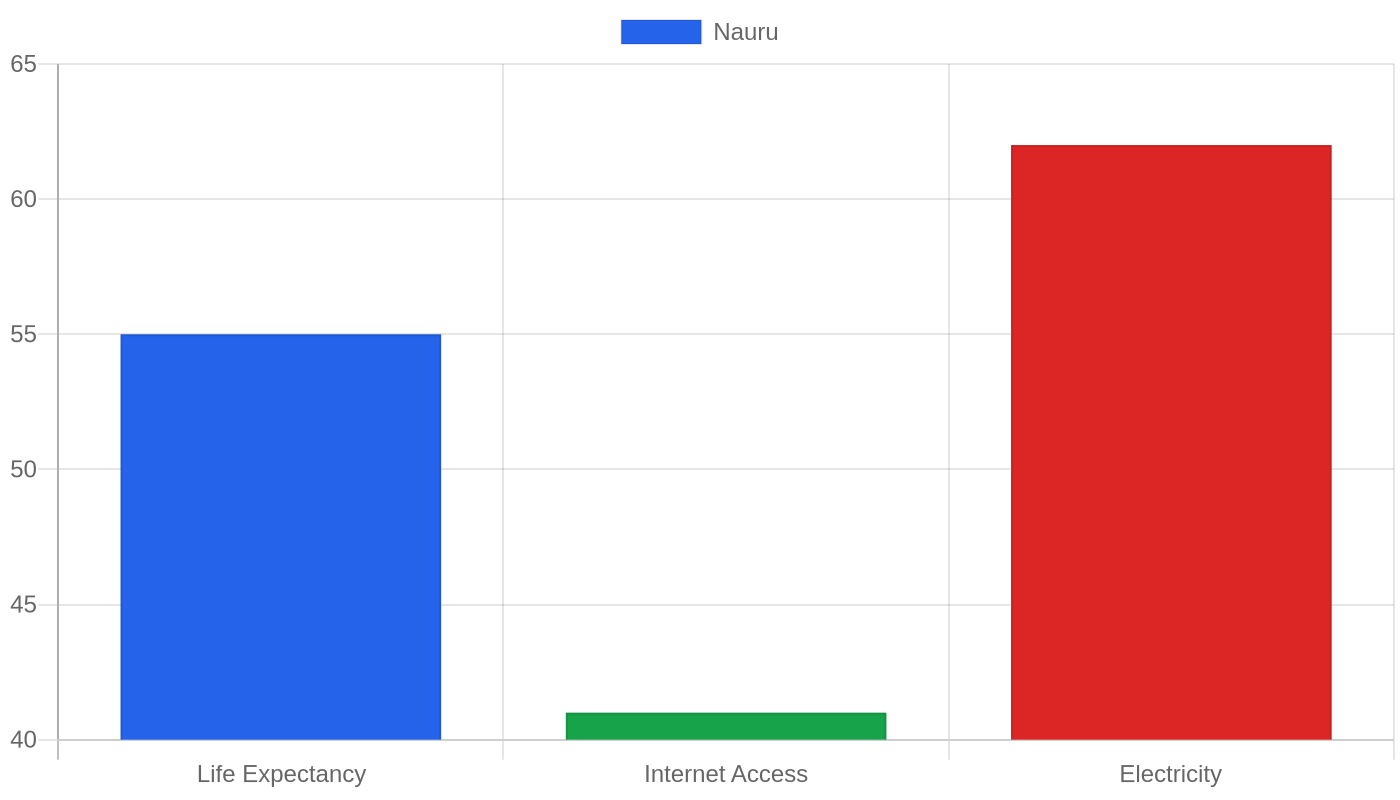
The economic story of Nauru is one of dramatic transformation and quiet recalibration. For decades, the island’s prosperity was built on phosphate mining, which left the country with vast mineral wealth but also stripped much of its interior land. Today, the World Bank data presents a picture of limited quantitative visibility — GDP growth figures, inflation rates, and unemployment statistics are not currently available in the dataset.
This absence of hard numbers is itself telling; it reflects the challenges of tracking economic activity in a microstate where traditional metrics often fail to capture the full picture of subsistence living, remittance flows, and aid dependency.
What is clear is that Nauru’s economy has had to reinvent itself. The phosphate reserves that once made it one of the wealthiest nations per capita in the 1970s and 1980s are now largely exhausted. The country has pivoted toward other revenue streams, including hosting regional processing centers and leveraging its strategic location in the Pacific. The absence of robust GDP data from the World Bank means economists must rely on qualitative assessments and regional comparisons.
Nauru’s economic resilience is tested by its geographic isolation, limited arable land, and vulnerability to climate change. The nation’s participation in the Asian Development Bank suggests an active pursuit of development financing and technical assistance to diversify its economic base.
Inflation and employment figures remain opaque, but the broader Pacific context suggests that Nauru faces persistent challenges in generating formal sector jobs for its young population. The government remains the largest employer, a common trait among small island states where private sector development is constrained by market size and distance from major trade routes.
The shift toward renewable energy through IRENA membership is not merely an environmental gesture; it is an economic strategy to reduce dependence on imported fossil fuels, which have historically drained foreign exchange reserves and exposed the country to global oil price volatility.
Housing and Daily Life — The High Cost of Island Living
In Nauru, the concept of cost of living takes on a unique dimension shaped by geography. As a remote island nation, nearly all consumer goods — from food to construction materials — must be imported, creating an inherent price premium. While specific housing cost data is not available in the provided information, the economic logic of island microstates suggests that rental and purchase prices are elevated compared to continental benchmarks.
The scarcity of land, compounded by the environmental degradation from phosphate mining, means that habitable and arable land is at a premium.
Daily expenses in Nauru are influenced by the same import dependency that affects housing. Fresh produce, processed foods, and household goods all carry additional shipping and handling costs. For residents, this means a higher cost of basic necessities relative to regional averages in larger Pacific nations like Fiji or Papua New Guinea, which benefit from economies of scale. The government’s role in providing public housing and infrastructure is likely significant, though detailed data is not provided.
The quality of life in Nauru is therefore a balance between the natural beauty of the island and the practical challenges of remoteness. As the country invests in renewable energy and seeks to stabilize its economy, the hope is that infrastructure improvements will ease the burden on households and make daily living more affordable.
Business Climate and Investment — A Small Stage with Strategic Ambitions
The business environment in Nauru is characterized by its small scale and the dominance of state-linked enterprises. The dataset does not list major private companies, which is a reflection of the limited corporate landscape on the island. Investment opportunities are primarily concentrated in sectors aligned with national priorities: renewable energy, infrastructure development, and maritime resources.
The recent membership in IRENA opens doors to international climate finance and green technology partnerships, positioning Nauru as a potential testbed for island-appropriate energy solutions.
The country’s membership in the International Monetary Fund since 2016 provides a framework for fiscal discipline and access to technical expertise. This institutional backing is crucial for attracting foreign investment, as it signals a commitment to transparent economic governance. However, the business climate remains constrained by the size of the domestic market, the high cost of logistics, and the need for specialized skills.
Sectors to watch include solar and wind energy projects, which could transform the island’s energy profile, and potential developments in fisheries licensing, a common revenue source for Pacific nations. For investors, Nauru offers a niche opportunity — the chance to participate in the modernization of a microstate with clear strategic goals and international backing, albeit with the risks inherent to operating in a remote and small-scale economy.
Governance, Safety, and the Pacific Way of Life
The political landscape of Nauru is defined by its democratic institutions and international engagement. President David Adeang heads a 19-member unicameral parliament, a structure that allows for direct representation within a small population. The country’s active participation in the United Nations, the Commonwealth of Nations, and the Olympic Games underscores its commitment to being a global citizen despite its size.
This diplomatic engagement is a key component of Nauru’s survival strategy, ensuring that its unique vulnerabilities are heard on the world stage.
Crime and safety indices are not available in the provided data, but the social fabric of Nauru is typically characterized as close-knit, with community ties playing a significant role in daily life. Political stability has been a hallmark of recent governance, with the Adeang administration focusing on continuity and international cooperation.
The quality of life in Nauru is intrinsically linked to its environmental health; as a low-lying atoll, the threats of rising sea levels and climate change are existential concerns that shape both policy and public sentiment. The nation’s recent move to join IRENA is a proactive step toward mitigating these threats, demonstrating a forward-looking approach that prioritizes sustainability and resilience.
Current Affairs — A Pivot Toward Renewable Energy and Global Integration
Right now, Nauru is making headlines for its strategic pivot toward renewable energy and deepening financial integration. The country’s accession to the International Renewable Energy Agency marks a significant policy shift, signaling a move away from its fossil fuel dependency and toward a more sustainable energy future. This decision aligns with broader Pacific regional initiatives to combat climate change and reduce carbon emissions.
The government, under President Adeang, is positioning Nauru as a proactive player in the global energy transition, seeking partnerships and funding to modernize its infrastructure.
Simultaneously, Nauru’s ongoing relationship with the International Monetary Fund, which began with its membership in April 2016, continues to evolve. This institutional engagement provides the country with access to economic surveillance, policy advice, and potential financial assistance, all of which are critical for navigating the complexities of a small island economy. The political landscape remains stable, with the 19-member parliament providing a manageable and focused legislative body.
As the world’s attention turns to climate adaptation and the resilience of small island developing states, Nauru is actively working to ensure it is not left behind. The combination of renewable energy investment, international partnerships, and a stable political environment suggests a nation that is quietly but determinedly building a more secure economic future.
The Bottom Line
Nauru is a country that defies easy categorization. It is a microstate with a complicated colonial and economic history, now charting a course toward sustainability and global integration. For policymakers, development economists, and investors interested in the future of small island states, Nauru offers a compelling case study in resilience and adaptation.
The nation’s strategic moves — joining IRENA, maintaining IMF membership, and engaging actively with multilateral bodies — indicate a clear-eyed understanding of its challenges and a pragmatic approach to overcoming them. While hard economic data remains scarce, the direction of travel is evident. For those watching the Pacific region, Nauru is a quiet but significant player, demonstrating that even the smallest nations can take meaningful steps toward a more secure and prosperous future.
Sources & Methodology
This article is authored by Economic Pulse Net for informational and research purposes. Economic Pulse Net sources its data from multilateral institutions, national statistics bureaus, and proprietary databases. All data is believed to be current as of the date of publication.
Published: August 08, 2026 | Category: Research — Nauru
Use these signals in your own platform
Economic Pulse publishes its live signal feed through a documented, read-only API. Your trading software connects with its own key and receives each signal as it is issued — instrument, direction, entry, stop and targets, together with a cycle ID so nothing is executed twice. The feed is independent of this website and cannot change it.
Signals are informational only and are not financial advice.