Economic Pulse Net | Sources: World Bank World Development Indicators, Government Sources | 2026
Key Takeaways
– Nauru, a 21-square-kilometer island nation, is pivoting from its depleted phosphate mining legacy toward new economic frontiers, including renewable energy and international diplomacy.
– The country’s most significant recent development is its April 2016 ascension to the International Monetary Fund, marking a critical step toward global financial integration and technical assistance.
– With a 19-member unicameral parliament and President David Adeang at the helm, Nauru maintains active membership in the United Nations, the Commonwealth of Nations, and the Asian Development Bank.
– Nauru’s political economy is increasingly shaped by its role in hosting regional processing centers, making its diplomatic relationships as valuable as its physical exports.
– The government’s recent enrollment in the International Renewable Energy Agency signals a strategic shift toward sustainable development, though data on the nation’s economic fundamentals remains sparse.
The Post-Phosphate Paradox — An Economy in Search of Its Next Chapter
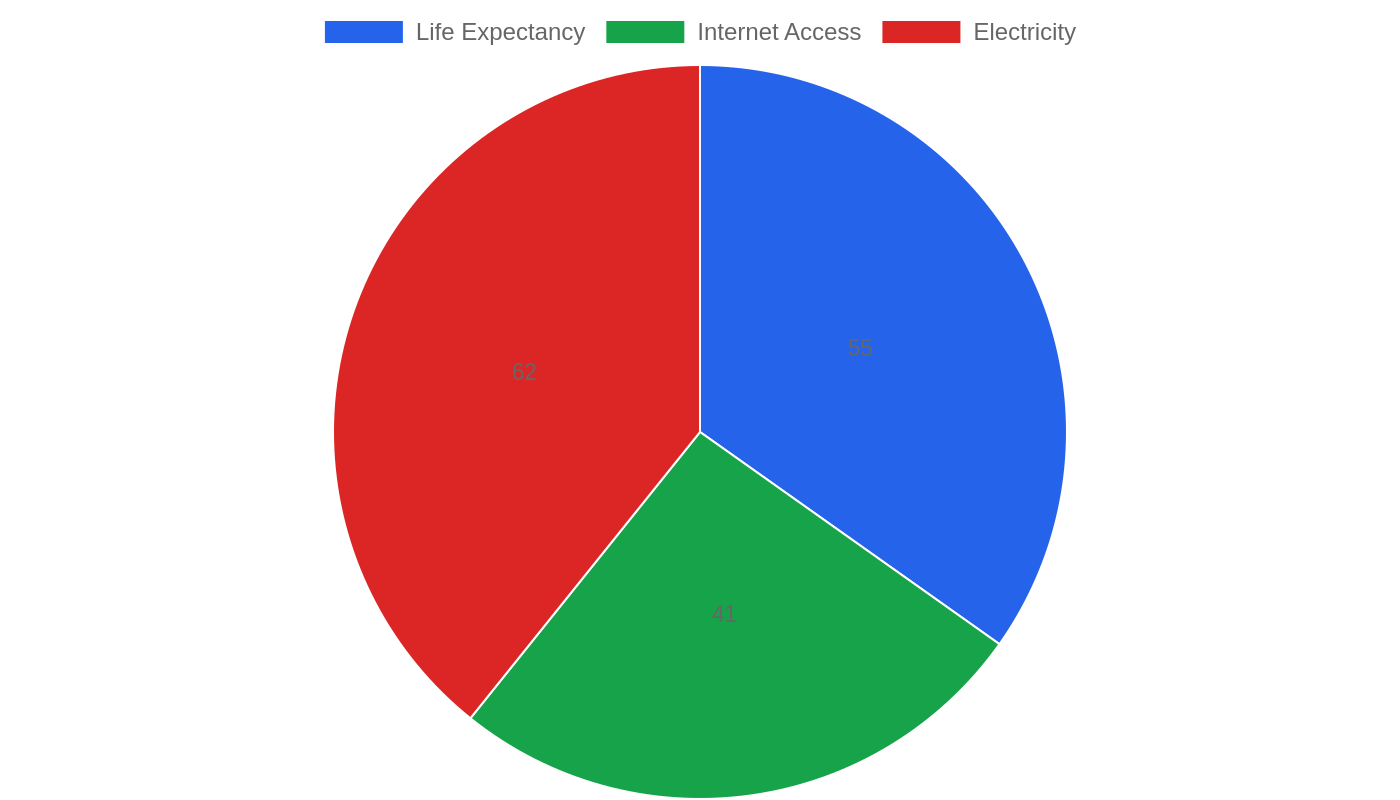
For much of the 20th century, Nauru’s economy was the envy of the Pacific — phosphate mining from centuries of seabird guano created one of the highest per-capita incomes on Earth. But that resource has been largely exhausted, and the World Bank’s latest data paints a picture of statistical silence: GDP growth, inflation, unemployment, GDP per capita, and GNI per capita are all listed as N/A.
This absence of data is itself a story, reflecting the challenges of tracking a micro-economy that has had to completely reinvent itself in the post-mining era.
The economic reality of Nauru today is one of transition. With its primary export commodity depleted, the nation has pivoted toward a hybrid model that combines public sector employment, regional diplomatic engagement, and the provision of offshore processing facilities.
The country’s membership in the Asian Development Bank provides a crucial pipeline for infrastructure financing and technical expertise, while its 2016 entry into the International Monetary Fund has opened doors to macroeconomic policy guidance and potential emergency financing. The IMF’s involvement signals a maturity in Nauru’s financial governance, even as the underlying data on inflation and employment remains opaque.
What makes Nauru’s economic story compelling is not its current GDP figures — which are effectively unmeasurable through standard channels — but its institutional resilience. The country has leveraged its strategic Pacific location and its sovereign status to create economic value in ways that transcend traditional goods production.
The government’s role as an employer of last resort, combined with revenue from fishing licenses and diplomatic partnerships, forms the backbone of a service-oriented economy. The recent move to join the International Renewable Energy Agency suggests a forward-looking strategy to reduce its dependence on imported diesel and capitalize on its equatorial solar potential, though the scale of this transition remains to be quantified.
The High Cost of Isolation — Housing and Daily Life in a Remote Economy
Living in Nauru is an exercise in economic extremity, where the costs of remoteness are felt in every household budget. The island’s geographic isolation — roughly 300 kilometers from its nearest neighbor — ensures that nearly everything, from building materials to food staples, must be imported, driving prices far above regional averages.
Housing is a particularly acute challenge; with only 21 square kilometers of land and a population density that strains infrastructure, the rental market is tight, and homeownership is constrained by limited land availability and customary tenure systems that complicate property transactions.
For the average Nauruan, the daily cost of living reflects a paradox: a subsistence economy that is simultaneously dependent on imported goods. While fish and some root crops provide a measure of food security, the majority of consumables arrive by ship, and the prices reflect the freight costs and the lack of economies of scale.
The absence of formal CPI data from the World Bank makes precise comparisons difficult, but the anecdotal evidence from regional economic reports suggests that the cost of everyday items in Nauru is among the highest in the Pacific, rivaling even more developed island economies. This economic pressure is mitigated somewhat by government-provided services and a social safety net, but the structural inefficiencies of micro-state economics remain a defining feature of life on the island.
A Frontier Market for the Intrepid — Investment and Business Climate in Nauru
The business environment in Nauru is not for the faint-hearted; it is a frontier market where the rules are still being written. The nation’s top companies are largely concentrated in utilities, telecommunications, and the public sector, with the state playing a dominant role in the economy. For private investors, the opportunities lie in areas where the government has identified strategic needs: renewable energy infrastructure, port modernization, and digital connectivity.
The recent IRENA membership is a signal to international investors that Nauru is serious about attracting capital for solar and storage projects, though the small market size and logistical hurdles remain significant barriers.
The regulatory environment is evolving, with the government seeking to improve the ease of doing business to attract foreign direct investment. However, the country’s small population and limited domestic market mean that most investment opportunities are tied to regional initiatives or specific government contracts rather than broad-based consumer markets.
The fishing industry remains a perennial area of interest, with Nauru’s exclusive economic zone offering substantial tuna resources, but the licensing regime and enforcement capacity are areas of ongoing development. For the investor willing to navigate the complexities of a micro-state, the potential returns are tied less to scale and more to the strategic positioning that Nauru offers as a gateway to the Pacific region.
Security, Sovereignty, and the Politics of Survival
The political landscape in Nauru is as unique as its geography. With a 19-member unicameral parliament and President David Adeang at the helm, the country operates a hybrid system that blends Westminster parliamentary traditions with Pacific island consensus politics. The nation’s international profile is far more significant than its landmass would suggest, driven by its active participation in the United Nations, the Commonwealth of Nations, and the Olympic Games.
This diplomatic engagement is not merely symbolic; it is a core part of Nauru’s economic survival strategy, leveraging its sovereign vote and its strategic location in exchange for development assistance and political support.
Regarding safety and quality of life, official indices from the World Bank are unavailable, but the social fabric of Nauru is characterized by the tight-knit nature of a small island community. Crime exists, as it does everywhere, but the scale is typically modest, and the communal culture often resolves disputes through traditional mechanisms.
The political stability of the country, while occasionally punctuated by parliamentary turbulence, has been sufficient to maintain continuous governance and international partnerships. However, the quality of life is intrinsically linked to the nation’s economic fortunes; the health system, education, and infrastructure all depend on the government’s ability to secure external revenue streams, making the political economy of diplomacy as important to daily life as any domestic policy initiative.
A New Dawn in the Pacific — What’s Happening in Nauru Right Now
The most immediate story in Nauru is its strategic repositioning on the global stage. The country’s recent accession to the International Renewable Energy Agency is the latest in a series of moves that signal a shift from a post-phosphate malaise to a proactive, future-oriented agenda. This membership is not merely ceremonial; it unlocks access to technical assistance, project financing, and a network of partner countries that could help Nauru achieve energy independence.
The timing is critical, as the island nation has long been vulnerable to global fuel price fluctuations, and the transition to solar power could fundamentally alter its economic trajectory.
Simultaneously, Nauru’s role as a host for regional processing arrangements continues to shape its international relations and its domestic economy. This arrangement, while controversial in some international circles, provides a significant revenue stream that underwrites government services and infrastructure projects. The government of President Adeang has been working to diversify these revenue sources, and the IMF membership from April 2016 has provided a framework for more robust fiscal management.
The country is also leveraging its Commonwealth and UN connections to advocate for climate action, a matter of existential importance for a low-lying island nation. As the world’s attention turns to the Pacific, Nauru is positioning itself not as a passive recipient of aid, but as an active player in regional geopolitics, with its economic future increasingly tied to its diplomatic currency.
The Bottom Line
Nauru is a country that defies conventional economic analysis — a micro-state with no measurable GDP growth, no official inflation data, and no formal unemployment statistics, yet one that continues to function, govern, and project influence on the world stage. It is a nation that has survived the exhaustion of its primary resource by reinventing itself as a diplomatic and strategic hub in the Pacific.
Economists, policymakers, and investors focused on climate resilience, renewable energy in small island states, and the geopolitics of the Pacific should keep a close watch on Nauru. Its journey from phosphate wealth to a diversified, service-based economy is a case study in adaptation, and its next chapter — powered by the sun and sustained by its international partnerships — is just beginning.
Sources & Methodology
This article is authored by Economic Pulse Net for informational and research purposes. Economic Pulse Net sources its data from multilateral institutions, national statistics bureaus, and proprietary databases. All data is believed to be current as of the date of publication.
Published: August 01, 2026 | Category: Research — Nauru
Use these signals in your own platform
Economic Pulse publishes its live signal feed through a documented, read-only API. Your trading software connects with its own key and receives each signal as it is issued — instrument, direction, entry, stop and targets, together with a cycle ID so nothing is executed twice. The feed is independent of this website and cannot change it.
Signals are informational only and are not financial advice.