Economic Pulse Net | Sources: World Bank World Development Indicators, Government Sources | 2026
Key Takeaways
– The Federated States of Micronesia (FSM) operates as a unique economic entity where traditional subsistence livelihoods intersect with modern service industries, creating a dual economy that defies conventional metrics.
– As a nation spread across 607 islands in the western Pacific, Micronesia’s economic geography is defined by vast ocean distances rather than land mass, fundamentally shaping its development trajectory.
– The country’s economic framework relies heavily on its strategic partnerships and development assistance, with fishing rights and maritime resources serving as crucial bargaining chips on the international stage.
– Climate resilience and sustainable resource management have emerged as defining challenges for the nation’s long-term economic stability, given its position on the frontlines of environmental change.
– Micronesia represents a case study in how small island developing states navigate globalization while preserving cultural identity and environmental heritage.
The Economic Landscape — Navigating a Sea of Opportunity and Constraint
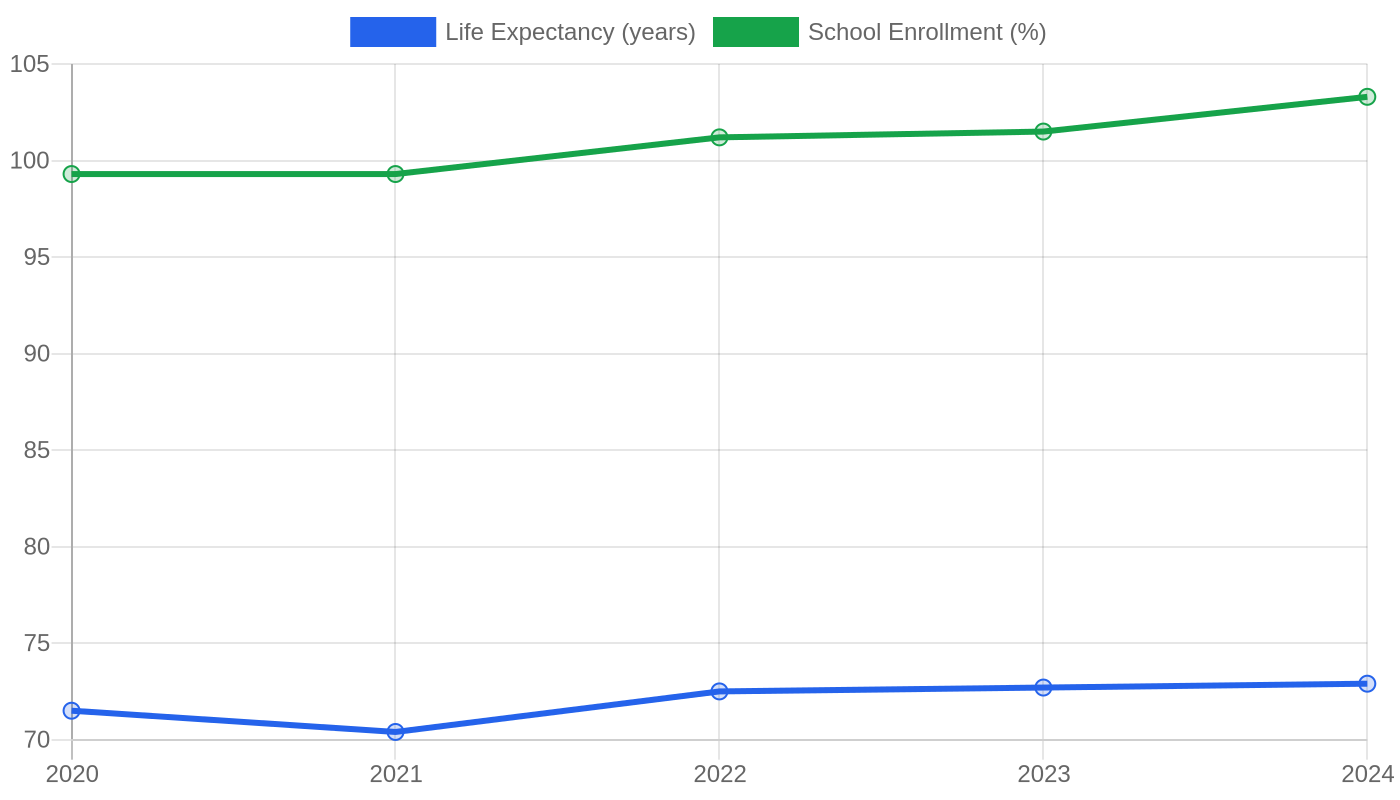
The Federated States of Micronesia presents a distinctive economic profile that challenges traditional development narratives. According to the World Bank’s latest data, conventional indicators such as GDP growth, inflation rates, and unemployment figures remain uncalculated, reflecting both the challenges of data collection across a widely dispersed island nation and the limitations of applying standard economic frameworks to a society where subsistence activities and formal market participation operate in parallel.
This absence of standardized metrics, however, does not diminish the reality of economic activity occurring daily across the four states of Yap, Chuuk, Pohnpei, and Kosrae.
The FSM’s economic structure is fundamentally shaped by its geography and resource endowments. The nation’s exclusive economic zone spans approximately 2.6 million square kilometers of ocean, making it one of the largest maritime territories in the Pacific relative to its land area.
This maritime domain underpins the country’s most significant economic assets: tuna fisheries and other marine resources that generate substantial revenue through fishing access agreements with distant-water fishing nations. The fisheries sector represents the country’s primary export earner and a critical source of government revenue, demonstrating how the nation leverages its ocean territory as economic infrastructure.
The service sector, particularly public administration, constitutes a substantial portion of formal economic activity. Government employment and associated services have historically provided stable income opportunities, creating a dynamic where public sector spending drives domestic demand. Meanwhile, subsistence agriculture and artisanal fishing continue to sustain rural communities, providing food security and informal employment that exists outside formal economic measurement.
This dual structure means that aggregate economic indicators may not fully capture the welfare realities of Micronesian households.
The economy’s dependence on external assistance and strategic agreements creates both opportunities and vulnerabilities. Development partnerships provide essential budgetary support and infrastructure investment, while also creating dependencies that policymakers must carefully manage. The country’s strategic location in the western Pacific has increasingly positioned it as a site of geopolitical interest, potentially opening new avenues for economic engagement and investment.
However, these opportunities come with the responsibility of balancing economic development against environmental preservation and cultural continuity.
Cost of Living — The Price of Paradise in the Pacific
Understanding the cost of living in Micronesia requires appreciating the fundamental constraints of island economics. As an archipelago nation, nearly all manufactured goods, processed foods, fuels, and construction materials must be imported, with transportation costs inevitably inflating consumer prices beyond what comparable goods might cost in larger markets. This import dependence creates a structural cost premium that affects virtually every aspect of daily life, from grocery shopping to utility bills.
The absence of comprehensive cost-of-living indices from the World Bank or other international bodies reflects the difficulty of establishing standardized baskets of goods across such geographically dispersed communities.
Housing in Micronesia presents a distinctive picture compared to urbanized Asian or Western markets. Traditional extended family land tenure systems remain prevalent, meaning that many Micronesians have access to land and housing through customary arrangements rather than formal property markets. This system provides a social safety net and reduces outright homelessness, but it also limits the development of formal housing markets and mortgage financing.
In state capitals like Palikir or commercial centers like Weno in Chuuk, rental demand exists primarily from government employees, expatriate workers, and aid personnel, creating a niche but limited formal rental market.
The comparative cost dynamics become apparent when considering the choices facing Micronesian households. Imported food items carry significant price premiums, which is why subsistence fishing and farming remain economically rational activities for many families. The interplay between cash income and subsistence production creates a household economy where monetary expenses are minimized through traditional practices.
For those entirely dependent on cash income, however, the cost of living can be substantial, particularly in urban centers where imported goods dominate consumption patterns. Electricity costs, often generated through imported diesel fuel, represent a significant monthly expense, particularly in households that have access to modern appliances and cooling systems.
Investment & Business Climate — Charting a Course for Enterprise
The business environment in Micronesia reflects the broader economic structure of small island developing states, characterized by a narrow domestic market, geographic fragmentation, and reliance on external partnerships.
While comprehensive data on the country’s largest companies remains limited in the World Bank’s dataset, the economic landscape is typically dominated by small and medium enterprises serving local communities, alongside state-owned enterprises and joint ventures in key sectors such as utilities, telecommunications, and fisheries.
The tuna processing and transshipment industry represents a notable area of commercial activity, with foreign investment partnerships facilitating the development of this value-added sector.
Sectors with significant investment potential include fisheries and aquaculture, tourism infrastructure, renewable energy, and digital connectivity. The country’s pristine marine environments offer opportunities for high-value, low-impact tourism development, though the remote location and limited air connectivity present substantial barriers.
Renewable energy projects, particularly solar installations, could reduce the nation’s dependence on imported diesel and lower electricity costs, representing both an environmental and economic opportunity. The expansion of internet connectivity and digital services offers potential for knowledge-based enterprises and improved access to global markets for local producers.
However, investors face significant structural challenges. The small domestic market limits economies of scale, while the geographic dispersion of the population across islands increases the costs of distribution and service delivery. Regulatory frameworks are developing but may lack the sophistication and predictability that international investors seek. Access to financing remains constrained by the limited development of domestic capital markets and the small scale of the banking sector.
These factors combine to create an investment climate where opportunities exist but require patience, local knowledge, and a long-term perspective to realize.
The strategic dimension of Micronesia’s economic position cannot be overstated. As Pacific geopolitics intensify, the country’s partnerships and agreements have taken on renewed significance, potentially attracting development finance and infrastructure investment from multiple sources.
This competitive interest in the region could translate into improved economic opportunities for Micronesian businesses and workers, provided that the nation can effectively leverage its position while maintaining policy autonomy and safeguarding national interests.
Safety, Politics & Quality of Life — Stability in a Changing World
Crime and safety indices for Micronesia are not currently calculated by international databases, reflecting both the country’s small population and the challenges of compiling standardized crime statistics across dispersed island communities. Anecdotal evidence and qualitative assessments typically characterize Micronesia as a society with relatively low levels of violent crime, where traditional community structures and customary law continue to play important roles in maintaining social order.
However, like many Pacific island nations, Micronesia faces challenges related to domestic violence, youth unemployment, and the social impacts of modernization and urbanization.
The political landscape of the Federated States of Micronesia is defined by its unique constitutional structure, which distributes power between the national government and the four constituent states. This federal arrangement reflects the country’s diverse cultural and linguistic heritage, with each state maintaining significant autonomy over local affairs. The presidency rotates among the four states, ensuring representation and balance in national leadership.
Political discourse in Micronesia encompasses concerns about economic sustainability, climate change adaptation, education and health services, and the negotiation of international partnerships that will shape the country’s future trajectory.
Quality of life in Micronesia is characterized by a complex interplay of traditional values and modern aspirations. The persistence of subsistence livelihoods provides a measure of food security and community cohesion that buffers against economic shocks. Family networks and extended kinship systems offer social support mechanisms that may be eroding in more industrialized societies.
The natural environment provides recreational opportunities and aesthetic pleasures that contribute significantly to subjective well-being. However, these positive dimensions must be weighed against challenges including limited access to specialized healthcare, the out-migration of educated youth seeking opportunities abroad, and the existential threat posed by climate change to low-lying coastal communities.
Current Affairs — Micronesia at a Crossroads
The Federated States of Micronesia currently finds itself navigating a period of significant transition and opportunity. The nation is actively engaged in renegotiating and strengthening its international partnerships, recognizing that its strategic location in the western Pacific has elevated its geopolitical importance.
These negotiations carry profound economic implications, with the potential to reshape the country’s fiscal position, infrastructure investment, and development trajectory for decades to come. The outcomes of these discussions will determine the resources available for education, healthcare, and climate adaptation in the years ahead.
Climate change remains the defining challenge of the current era for Micronesia. Rising sea levels, increasing ocean temperatures, and the growing frequency of extreme weather events threaten coastal infrastructure, freshwater resources, and the very habitability of some low-lying communities. The government has positioned itself as a vocal advocate for ambitious climate action in international forums, while simultaneously developing domestic adaptation strategies.
These efforts include coastal protection measures, water security projects, and the diversification of economic activities to reduce vulnerability to climate-related shocks.
The nation is also grappling with the economic implications of its demographic profile and human capital development. The out-migration of skilled workers and young people seeking educational and employment opportunities abroad represents both a loss of human capital and a potential source of remittance income. Investments in education and vocational training aim to equip the next generation with skills relevant to both traditional livelihoods and modern economic opportunities.
The development of the blue economy, encompassing sustainable fisheries, marine biotechnology, and ocean-based renewable energy, presents a potential pathway for economic diversification that aligns with Micronesian values and environmental stewardship.
The Bottom Line
Micronesia commands attention from observers interested in the future of small island states in the Pacific century. The nation’s economic trajectory will be shaped by its ability to leverage strategic partnerships, develop sustainable ocean-based industries, and adapt to the realities of climate change.
For development economists, climate policy analysts, and investors with a long-term perspective and tolerance for frontier markets, Micronesia offers a lens into both the challenges and opportunities of our interconnected world. The coming years will reveal whether this island nation can transform its geographic position and natural endowments into lasting prosperity for its people.
Sources & Methodology
This article is authored by Economic Pulse Net for informational and research purposes. Economic Pulse Net sources its data from multilateral institutions, national statistics bureaus, and proprietary databases. All data is believed to be current as of the date of publication.
Published: August 07, 2026 | Category: Research — Micronesia
Use these signals in your own platform
Economic Pulse publishes its live signal feed through a documented, read-only API. Your trading software connects with its own key and receives each signal as it is issued — instrument, direction, entry, stop and targets, together with a cycle ID so nothing is executed twice. The feed is independent of this website and cannot change it.
Signals are informational only and are not financial advice.