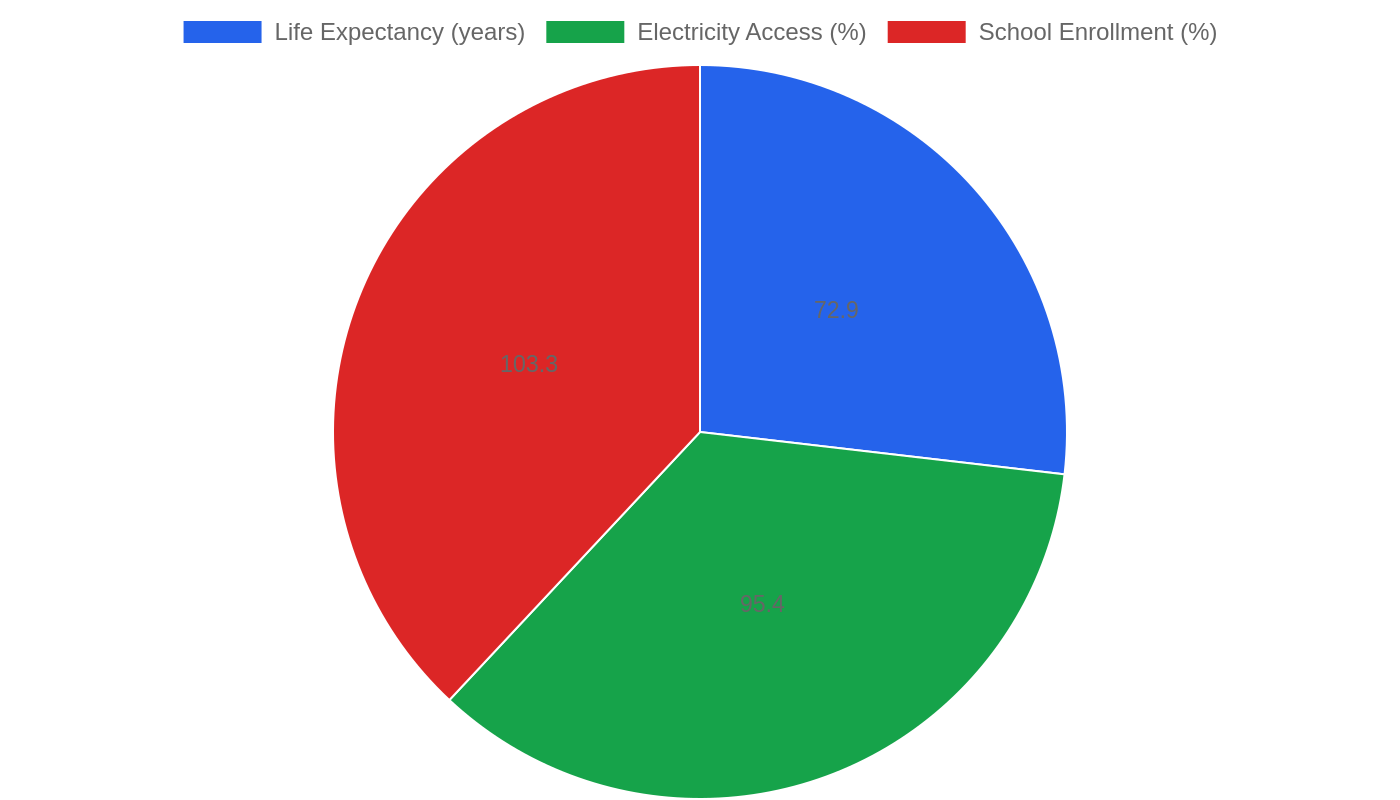
Economic Pulse Net | Sources: World Bank World Development Indicators, Government Sources | 2026
Key Takeaways
– The Federated States of Micronesia (FSM) operates with a unique economic model, heavily reliant on international development assistance and its strategic geopolitical position in the Pacific.
– While comprehensive economic indicators remain limited, the nation’s identity is shaped by its vast exclusive economic zone (EEZ), which offers significant potential in fisheries and marine resources.
– Micronesia’s economy functions as a blend of traditional subsistence activity and modern public-sector employment, creating a distinct dual structure.
– The country’s political landscape is defined by its compact agreements and regional diplomacy, positioning it as a key player in Pacific island affairs.
– For investors and observers, Micronesia represents an early-stage opportunity where infrastructure and sustainable development are the primary watchwords.
The Economic Canvas: A Nation Beyond the Numbers
When economists look at the Federated States of Micronesia, they encounter a fascinating paradox: a nation whose formal statistical profile remains sparse, yet whose economic story is rich with complexity and strategic importance. The World Bank’s latest data shows that key indicators—GDP growth, inflation, and unemployment—remain unmeasured, which itself tells a story about a country where economic activity flows through channels that traditional metrics often miss.
The formal economy, centered in the state capitals of Pohnpei, Chuuk, Yap, and Kosrae, revolves around public administration, with government services accounting for the lion’s share of formal employment. This is not a weakness but rather a reflection of a deliberate development path chosen by a nation spread across 607 islands and an ocean territory larger than the continental United States.
The absence of robust GDP per capita and GNI figures from the World Bank should not be misread as economic stagnation. Rather, it speaks to the challenges of measuring an economy where subsistence fishing, traditional agriculture, and remittances play substantial roles alongside formal sector activity.
The fisheries sector stands as the nation’s primary industrial pillar, with licensing fees from foreign fishing vessels—particularly those pursuing tuna in Micronesia’s bountiful waters—contributing significantly to government revenue. The country’s membership in the Parties to the Nauru Agreement gives it substantial leverage in managing one of the world’s richest tuna fisheries.
Tourism remains nascent but holds promise, constrained by infrastructure limitations yet buoyed by the region’s legendary diving sites and World War II historical wrecks, particularly in Chuuk Lagoon.
Employment patterns in Micronesia defy conventional categorization. The public sector dominates formal job markets, while a substantial portion of the population engages in semi-subsistence activities that provide food security and social cohesion. This dual economy means that traditional unemployment metrics, even if available, would likely understate the true picture of economic well-being.
The nation’s development trajectory is inextricably linked to its Compact of Free Association funding, which provides the fiscal foundation for public services and infrastructure projects. Understanding Micronesia requires appreciating that its economic health cannot be separated from its geopolitical relationships and the stewardship of its vast marine resources.
Housing and Daily Life: The Cost of Island Living
The cost of living in the Federated States of Micronesia reflects the fundamental economics of island life: nearly everything must be imported, and distance from global supply chains imposes a premium on goods and services. Housing patterns in Micronesia differ dramatically from urbanized Asian or Western norms, with a strong tradition of extended family compounds and customary land tenure systems.
In the state capitals like Palikir and Kolonia on Pohnpei, a mix of government housing, private rentals, and family-owned properties creates a market where formal rent data is scarce but the dynamics are clear: demand for modern housing outstrips supply, particularly for expatriate workers and government officials.
The daily expenses of an average Micronesian family are shaped by the interplay between imported goods and locally sourced food. Imported rice, canned goods, and processed foods form dietary staples, while fresh fish, breadfruit, taro, and tropical fruits come from local production, often at minimal monetary cost. This duality means that while the cash economy demands significant outlays for imported necessities, the traditional economy provides a buffer that makes formal poverty metrics potentially misleading.
Utilities—particularly electricity, which is often generated by diesel and subject to global fuel price fluctuations—represent a significant household expense and a key vulnerability to external price shocks.
Investment and Enterprise: Charting a Course for Growth
For the business community, Micronesia presents a landscape of both opportunity and challenge. The top companies operating within the country are predominantly in the public utility, telecommunications, and retail sectors, with a growing presence of Asia-Pacific investors eyeing fisheries processing and tourism development. The government has signaled openness to foreign investment, particularly in areas that promise job creation and technology transfer, though the regulatory environment remains a work in progress.
The banking sector is thin, credit is limited, and the business registry reflects a preponderance of small, family-owned enterprises that form the backbone of the private sector.
Sectors to watch include aquaculture, where Micronesia’s clean waters offer comparative advantages; eco-tourism, capitalizing on the nation’s pristine environments; and the blue economy, with marine biotechnology and sustainable fisheries management presenting frontier opportunities. The country’s strategic location in the western Pacific, combined with its political stability and English-speaking workforce, makes it an intriguing, if challenging, destination for patient investors.
However, infrastructure gaps—particularly in transportation and energy—remain the primary constraints on private sector expansion. The business climate is characterized by a cautious optimism, with stakeholders awaiting clearer signals on regulatory reform and public-private partnership frameworks.
Security, Sovereignty, and the Pacific Way
The crime and safety indices for Micronesia remain unmeasured by international databases, but anecdotal evidence and regional comparisons suggest a society where traditional governance structures and community bonds maintain social order. Crime rates in Micronesia are generally considered low by global standards, with petty theft and alcohol-related incidents being the most commonly reported issues.
The political landscape is defined by the nation’s unique constitutional structure—a federal system where four states retain substantial autonomy—and its foreign policy, which has increasingly emphasized climate change advocacy and maritime security. The FSM’s leadership in regional forums, particularly regarding ocean governance and the Pacific Islands Forum, amplifies its voice far beyond its small population.
Quality of life in Micronesia is shaped by factors that defy simple indices: strong community networks, deep cultural traditions, and a pace of life that prioritizes social relationships over material accumulation. The challenges of geographic dispersion—limited inter-island transportation, communication gaps, and the high cost of service delivery—are balanced against the benefits of low population density and unspoiled natural environments.
Political discourse increasingly focuses on the post-Compact era, with leaders debating how to diversify revenue sources and build economic resilience beyond development assistance. The nation’s commitment to democratic governance, free press, and civil liberties aligns with Pacific regional norms, providing a stable foundation for long-term planning.
The Pacific Crossroads: Current Affairs and the Road Ahead
Right now, Micronesia stands at a critical juncture, navigating the complex transition toward greater economic self-reliance while managing the expectations of its young, growing population. The nation is actively engaged in renegotiating its strategic partnerships, seeking to leverage its geopolitical significance in the face of great-power competition in the Pacific region.
Climate change adaptation has moved from a future concern to a present-day imperative, with infrastructure projects increasingly designed to withstand extreme weather events and rising sea levels. The government has prioritized improvements in digital connectivity, recognizing that bridging the information gap is essential for economic diversification and educational advancement.
Fisheries negotiations continue to dominate economic headlines, with Micronesia seeking to maximize returns from its tuna resources while ensuring sustainable harvest levels. The country has also positioned itself as a champion of marine conservation, with ambitious commitments to protect its ocean territory.
Infrastructure development, particularly in transportation and energy, remains the central focus of public investment, with renewable energy projects gaining momentum as a way to reduce dependence on imported diesel. The nation’s youth are increasingly connected to global trends, creating both opportunities and pressures for economic reform.
As Micronesia charts its course through 2026 and beyond, the world watches a small nation with outsized strategic importance, working to define a future that honors its traditions while embracing the possibilities of the modern global economy.
The Bottom Line
The Federated States of Micronesia commands attention not for its economic size but for its strategic significance and the unique development model it represents. For policymakers, development economists, and investors focused on the Pacific region, Micronesia offers a case study in resilience, sovereignty, and the challenges of sustainable development in a climate-vulnerable setting.
While traditional economic indicators remain sparse, the nation’s commitment to ocean stewardship, regional leadership, and gradual economic diversification signals a thoughtful approach to its future. Those who watch Micronesia are witnessing not a static picture, but a dynamic story of a nation navigating the complex currents of the 21st century with determination and pride.
Sources & Methodology
This article is authored by Economic Pulse Net for informational and research purposes. Economic Pulse Net sources its data from multilateral institutions, national statistics bureaus, and proprietary databases. All data is believed to be current as of the date of publication.
Published: August 06, 2026 | Category: Research — Micronesia
Use these signals in your own platform
Economic Pulse publishes its live signal feed through a documented, read-only API. Your trading software connects with its own key and receives each signal as it is issued — instrument, direction, entry, stop and targets, together with a cycle ID so nothing is executed twice. The feed is independent of this website and cannot change it.
Signals are informational only and are not financial advice.