Economic Pulse Net | Sources: World Bank World Development Indicators, Government Sources | 2026
Key Takeaways
– Guam operates under a unique political framework as a US territory with its own elected governor and legislature, creating a distinct governance model that blends local autonomy with external oversight.
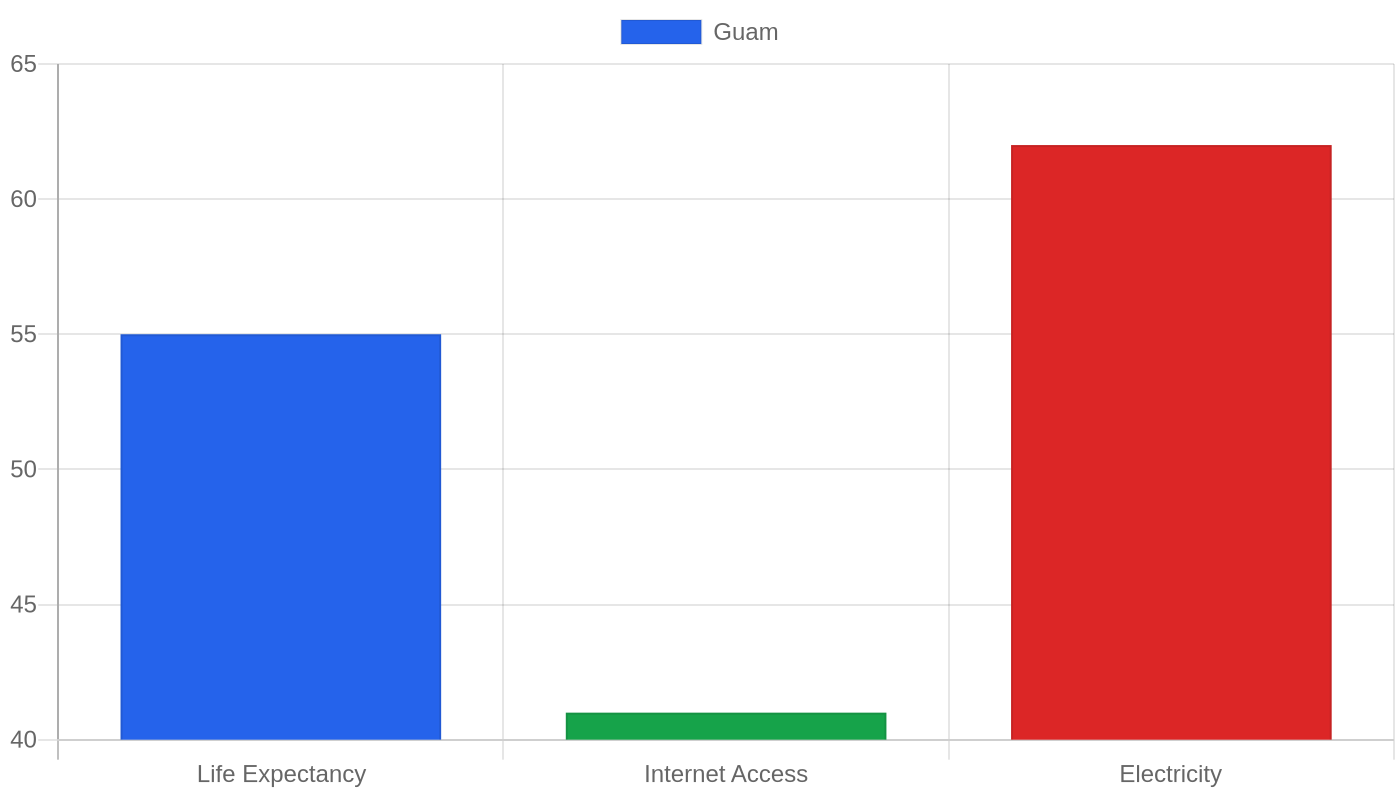
– The island’s economy remains heavily dependent on tourism and military spending, though precise GDP and inflation figures are not currently tracked by the World Bank.
– Cost of living pressures are a defining feature of daily life on the island, driven by its remote Pacific location and reliance on imported goods.
– Political stability is anchored by a popularly elected governor and a 15-member unicameral legislature, with judicial oversight from the Supreme Court of Guam.
– The territory faces structural economic challenges that make it a compelling case study in small-island development within a broader geopolitical framework.
The Economic Engine: Tourism, Tides, and the Military Dollar
Guam’s economy operates in a space where traditional metrics are notably absent. The World Bank does not currently report GDP growth, inflation, or unemployment figures for the territory, which in itself tells a story about the challenges of economic data collection in small, remote island economies. Without these standard benchmarks, analysts must piece together the territory’s economic health through qualitative indicators and observable trends.
The main industries driving Guam’s economy are tourism and the military presence. Tourism has historically been the primary private-sector driver, with visitors—predominantly from Japan, South Korea, and other parts of Asia—drawn to the island’s white sand beaches, coral reefs, and World War II historical sites.
The military component is equally significant, with Andersen Air Force Base and Naval Base Guam representing major economic anchors that provide employment, infrastructure investment, and a steady stream of federal spending.
This dual reliance creates both stability and vulnerability. Military spending tends to be recession-resistant, providing a floor under the economy during global downturns. However, the tourism sector is highly sensitive to external shocks—currency fluctuations, natural disasters, and geopolitical tensions in the Asia-Pacific region can dramatically alter visitor numbers from one quarter to the next.
The absence of diversified industrial exports leaves Guam exposed to forces beyond its control, a structural weakness that policymakers have long struggled to address.
The Price of Paradise: Living Costs in a Remote Island Economy
Housing costs on Guam reflect the fundamental economic reality of island life: almost everything must be imported, and land is finite. The cost of living is significantly higher than in most of mainland Asia, with rental prices in the capital of Hagåtña and tourist hubs like Tumon commanding premiums that rival mid-tier US cities. The limited land supply, combined with population density in urbanized areas, drives up both purchase prices and monthly rents.
For residents, the gap between income and expenses is a persistent challenge. The service-oriented economy produces many low-to-moderate wage jobs in hospitality and retail, while the cost of imported food, fuel, and building materials remains stubbornly high. This dynamic creates a squeeze on household budgets that is familiar to residents of other remote island territories from the Caribbean to the Indian Ocean.
The rental market dominates the housing landscape, as homeownership remains out of reach for many families. Developers have focused on high-end tourism accommodation and military housing, leaving a gap in affordable middle-market options. This imbalance has become a recurring theme in local political discourse, with successive governors and legislators debating zoning reforms and housing subsidies as potential solutions.
Business and Investment: Navigating the Territorial Advantage
Guam’s business environment is shaped by its unique legal status. The territory operates under a tax system that is distinct from the mainland, offering certain incentives for businesses willing to establish operations on the island. The top companies operating in Guam tend to be concentrated in tourism, retail, logistics, and construction—sectors that directly serve either the visitor economy or the military presence.
The political landscape provides a degree of stability that is attractive to investors. With a popularly elected governor and a 15-member unicameral legislature known as the Senate, the territory has a functioning democratic system with regular elections and peaceful transitions of power. The judiciary is overseen by the Supreme Court of Guam, providing a legal framework for contract enforcement and dispute resolution.
For foreign investors, Guam offers a strategic location at the crossroads of East Asia and Oceania, with proximity to major markets in Japan, South Korea, and the Philippines. The military presence also creates opportunities in defense-related contracting and logistics. However, the small domestic market and high operating costs limit the scale of opportunities compared to larger Asian economies.
Sectors to watch include renewable energy, where the island’s abundant sunshine offers potential, and digital services, where improved internet connectivity could attract remote workers and tech entrepreneurs.
Safety, Politics, and the Chamorro Way of Life
Crime and safety data for Guam are not currently tracked by standard international indices, but anecdotal evidence and local reporting suggest a mixed picture. The island enjoys a lower violent crime rate than many mainland urban areas, but property crime—particularly theft and burglary—remains a concern in tourist-heavy areas. Community policing and close-knit social networks, rooted in the indigenous Chamorro culture, provide informal mechanisms of social control that supplement formal law enforcement.
The political landscape is characterized by vigorous democratic competition. The governor and legislature are elected in regular cycles, and political parties align roughly along the ideological spectrum seen in other parts of the Pacific. Debates over the territory’s relationship with the mainland, immigration policy, and economic development dominate campaign seasons.
The Supreme Court of Guam serves as the final arbiter of legal disputes, maintaining judicial independence that bolsters public confidence in the rule of law.
Quality of life on Guam is a study in contrasts. The natural environment offers world-class beaches, hiking trails, and marine ecosystems that provide recreational opportunities unavailable in most urban centers. The Chamorro culture, with its emphasis on family, community, and hospitality, creates a social fabric that many residents cite as the island’s greatest asset. Yet the high cost of living, limited economic opportunities for young people, and occasional typhoon threats temper the idyllic image.
Current Affairs: Navigating the Geopolitical Currents
Right now, Guam finds itself at the center of intensifying geopolitical dynamics in the Pacific. The island’s strategic military importance has grown as tensions in the region have escalated, bringing increased attention—and increased investment—from defense planners. This has translated into construction projects at military facilities, infrastructure upgrades, and a steady influx of military personnel and their families, all of which ripple through the local economy.
On the civilian side, the tourism industry is working to rebuild and diversify its visitor base. The post-pandemic recovery has been uneven, with traditional source markets recovering at different speeds. Local business groups and the government are exploring new markets in Southeast Asia and Oceania to reduce dependence on any single country. There is also growing interest in developing Guam as a hub for medical tourism and educational services, leveraging its bilingual workforce and established infrastructure.
Politically, debates continue over the territory’s long-term status. While there is no active independence movement comparable to some other Pacific territories, discussions about greater autonomy and the terms of the relationship with the mainland remain part of the political conversation. The current governor and legislature are focused on practical issues—infrastructure maintenance, healthcare access, and education funding—that resonate with voters more than abstract constitutional questions.
The Bottom Line
Guam is a place where paradise and pragmatism collide. For investors and businesses with a tolerance for complexity, the island offers a stable political environment and a strategic location that few other Pacific destinations can match. For travelers and expatriates, it provides a unique blend of natural beauty and modern amenities.
But the territory’s economic future hinges on its ability to diversify beyond tourism and military spending, and to address the cost-of-living pressures that threaten to erode its quality of life. Watch Guam if you are interested in how small island economies navigate the intersection of geopolitics, tourism, and sustainable development—it is a story that will only become more relevant as the Pacific gains global attention.
Sources & Methodology
This article is authored by Economic Pulse Net for informational and research purposes. Economic Pulse Net sources its data from multilateral institutions, national statistics bureaus, and proprietary databases. All data is believed to be current as of the date of publication.
Published: July 19, 2026 | Category: Research — Guam
Use these signals in your own platform
Economic Pulse publishes its live signal feed through a documented, read-only API. Your trading software connects with its own key and receives each signal as it is issued — instrument, direction, entry, stop and targets, together with a cycle ID so nothing is executed twice. The feed is independent of this website and cannot change it.
Signals are informational only and are not financial advice.