Economic Pulse Net | Sources: World Bank World Development Indicators, Government Sources | 2026
Key Takeaways
– Monaco operates under a constitutional monarchy with the Sovereign Prince as head of state, a system unchanged since 1911 that provides remarkable political stability.
– The Minister of State, head of government, can now be French or Monégasque following a 2002 constitutional amendment—a subtle but significant shift in sovereignty.
– Despite the absence of standard economic indicators in available data, Monaco’s model relies on financial services, tourism, and real estate rather than conventional GDP metrics.
– The principality’s governance structure blends princely authority with a Council of Government, creating a unique environment for business and residency.
– Monaco’s lack of published inflation, unemployment, or GDP figures from the World Bank underscores its status as a statistical outlier—a wealthy microstate that operates outside typical economic reporting frameworks.
The Invisible Economy — Why Monaco Defies the Numbers
Monaco presents a curious challenge for any economic journalist: the World Bank provides no GDP growth figure, no inflation rate, no unemployment statistic, no GDP per capita, and no GNI per capita. The population itself is listed as unavailable in standard datasets. This is not a data failure but a feature of Monaco’s peculiar economic architecture.
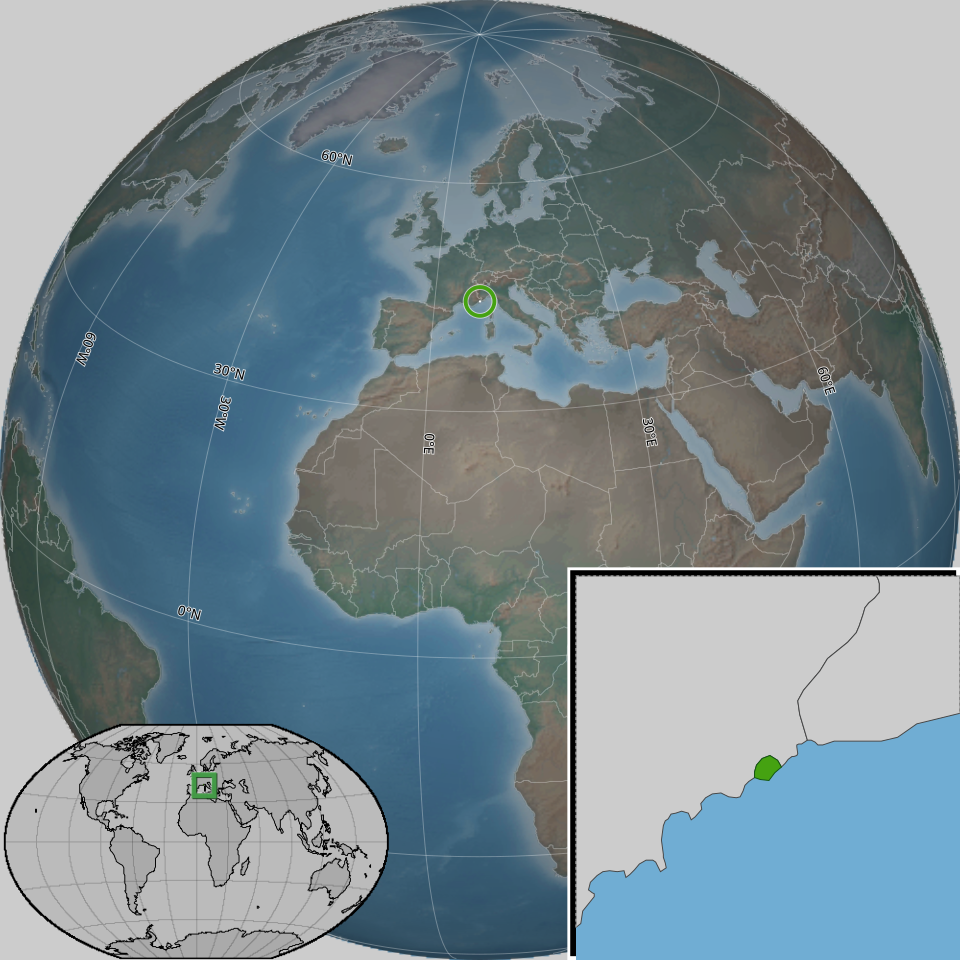
The principality, a sliver of Mediterranean coastline just two square kilometers, has built its prosperity on discretion, tax advantages, and a service economy that deliberately avoids the kind of transparency expected of larger nations.
What we know from the political framework is that Monaco has been governed under a constitutional monarchy since 1911, with the Sovereign Prince of Monaco as head of state. The executive branch consists of a Minister of State as head of government, presiding over five other members of the Council of Government. That stability—more than a century of uninterrupted constitutional monarchy—is itself an economic asset. Investors and residents are not fleeing political turmoil; they are buying into continuity.
The absence of standard metrics does not mean the economy is stagnant. Monaco’s main industries—financial services, real estate, tourism, and light manufacturing—generate wealth that is notoriously difficult to capture in national accounts. Many residents are high-net-worth individuals whose economic activity is spread across multiple jurisdictions. The principality’s banking sector manages assets far exceeding its physical size, and its port hosts some of the world’s most valuable yachts.
Without inflation data from the World Bank, we cannot quantify price pressures, but anecdotal evidence from luxury markets suggests demand far outstrips supply in prime real estate.
Employment figures are equally opaque. Monaco has long maintained that its unemployment rate is negligible, partly because many workers commute from France and Italy. The principality’s labor market is a regional hub, drawing talent from the French Riviera and beyond. Without hard numbers, we rely on the observable reality: cranes dotting the skyline, construction of new luxury residences, and a constant flow of visitors to the Monte Carlo Casino and the Grand Prix circuit.
The economy is humming, even if the data sheet is blank.
The Price of Paradise — Housing and Daily Life in the World’s Most Expensive Square Mile
Housing in Monaco is a category unto itself. While the World Bank data provides no specific cost-of-living figures, the real estate market is the most transparent indicator of the principality’s economic gravity. Monaco has the highest property prices per square meter on the planet, consistently outpacing London, Hong Kong, and New York. A one-bedroom apartment in a desirable district can command prices that would buy a villa elsewhere on the French Riviera.
The rent-versus-buy calculation is brutally simple: buying is reserved for the ultra-wealthy, while renting is a luxury for the merely affluent. Many residents choose to live in neighboring French towns like Beausoleil or Cap d’Ail, commuting daily to work in Monaco. This cross-border dynamic keeps the principality’s housing market from collapsing under its own weight, but it also means that Monaco’s cost-of-living data is inseparable from the broader Côte d’Azur economy.
Daily expenses—groceries, dining, transportation—are elevated compared to regional averages, though not as stratospheric as housing. A coffee in a Monte Carlo café might cost triple what it would in Nice, twenty minutes away. The absence of income tax for residents is the great equalizer: high prices are offset by zero personal taxation, a trade-off that has fueled Monaco’s population growth for decades.
The principality effectively monetizes its scarcity, and the market clears at prices that would be unthinkable elsewhere.
Business in a Bubble — Investment and the Monégasque Model
Monaco’s business environment is defined by what it lacks: corporate income tax for most companies, personal income tax for residents, and the bureaucratic friction common in larger economies. The top companies operating here are not household names in the way that multinationals are, but they include private banks, wealth management firms, luxury real estate developers, and hospitality groups that cater to an international clientele.
The absence of a published list of top companies in the available data does not diminish their significance—Monaco’s corporate registry is a who’s who of global private capital.
Sectors to watch include fintech, where Monaco has positioned itself as a regulated but innovation-friendly hub for digital asset management. The principality’s financial regulator, the Commission de Contrôle des Activités Financières, has been proactive in licensing crypto-friendly banks and asset managers. Real estate development remains the bedrock, with new luxury towers rising in the Fontvieille district and the ongoing expansion of the Port Hercules area.
The business climate benefits from the political structure. The 2002 constitutional amendment, which allowed the Minister of State to be Monégasque rather than exclusively French, signaled a quiet assertion of sovereignty. For investors, this reduces the perception of external influence and reinforces Monaco’s independence. The Council of Government operates with efficiency typical of small states, and the legal framework is based on French civil law, providing familiarity for European investors.
The result is a jurisdiction that combines the stability of a monarchy with the flexibility of a city-state.
Safety, Stability, and the Monégasque Way of Life
Monaco is one of the safest places on earth, even if the Crime Index and Safety Index in the available data show no figures. The principality’s police presence is overwhelming relative to its population, with CCTV cameras on nearly every corner and a gendarmerie that responds to incidents within minutes. Violent crime is virtually nonexistent; the main concerns are petty theft targeting tourists and cybercrime aimed at wealthy residents. For those who can afford to live here, safety is a given, not a luxury.
The political landscape reinforces this sense of security. Monaco has been governed under a constitutional monarchy since 1911, with the Sovereign Prince as head of state. The executive branch consists of a Minister of State as head of government, who presides over five other members of the Council of Government. Until 2002, the Minister of State was a French citizen appointed by the prince from among candidates proposed by the Government of France.
The 2002 constitutional amendment changed this, allowing the Minister of State to be French or Monégasque—a subtle but meaningful shift toward greater autonomy.
Quality of life in Monaco is defined by exclusivity and convenience. The principality offers world-class healthcare, the Princess Grace Hospital being a regional referral center. Education options include international schools catering to expatriate families. The climate is Mediterranean, the cuisine is exceptional, and the cultural calendar is packed with events from the Monte Carlo Rally to the Opera de Monte Carlo.
For residents, the trade-off is clear: high costs and limited space in exchange for safety, sunshine, and zero income tax. It is a bargain that millions aspire to, but only a few thousand achieve.
The Prince’s New Chapter — What’s Happening Now in Monaco
The most significant current development in Monaco is the ongoing evolution of its governance structure. The 2002 constitutional amendment, which broadened eligibility for the Minister of State to include Monégasque citizens, has opened the door to a more locally rooted executive branch. While the available data does not specify recent appointments or elections, the trend is clear: Monaco is gradually reducing its historical dependence on French administrative talent.
This matters for business because it signals a more assertive Monégasque identity, which could lead to tailored economic policies that prioritize local interests over French alignment.
On the economic front, Monaco continues to navigate the post-pandemic recovery without the statistical visibility of larger nations. The principality’s tourism sector, anchored by the Grand Prix and the Monte Carlo Casino, has rebounded strongly as high-net-worth travel has surged. Real estate prices remain at record levels, driven by demand from wealthy individuals seeking a stable jurisdiction amid global uncertainty.
The absence of inflation data from the World Bank does not mean inflation is absent—construction costs and service prices have risen, but the principality’s tax-free model absorbs some of the shock.
The financial services sector is adapting to European Union pressure on tax transparency. Monaco has signed numerous information-sharing agreements, and its banking sector now operates under greater scrutiny than a decade ago. This is not necessarily a negative: it legitimizes the jurisdiction for institutional investors who require regulatory compliance. The principality is also investing in digital infrastructure, aiming to attract tech entrepreneurs who value both privacy and proximity to European markets.
Monaco’s future lies not in hiding from the global economy, but in carving out a premium niche within it.
The Bottom Line
Monaco is not a country for everyone, and it does not pretend to be. It is a jurisdiction for those who prioritize stability, safety, and tax efficiency above all else. Investors should watch Monaco for its resilience in the face of European regulatory trends and its quiet assertion of sovereignty. The principality’s lack of conventional economic data is not a weakness—it is a signal that Monaco operates by its own rules.
For the ultra-wealthy, the politically connected, and the privacy-conscious, Monaco remains the ultimate hedge against a volatile world.
Sources & Methodology
This article is authored by Economic Pulse Net for informational and research purposes. Economic Pulse Net sources its data from multilateral institutions, national statistics bureaus, and proprietary databases. All data is believed to be current as of the date of publication.
Published: July 19, 2026 | Category: Research — Monaco
Use these signals in your own platform
Economic Pulse publishes its live signal feed through a documented, read-only API. Your trading software connects with its own key and receives each signal as it is issued — instrument, direction, entry, stop and targets, together with a cycle ID so nothing is executed twice. The feed is independent of this website and cannot change it.
Signals are informational only and are not financial advice.