Economic Pulse Net | Sources: World Bank World Development Indicators, Government Sources | 2026
Key Takeaways
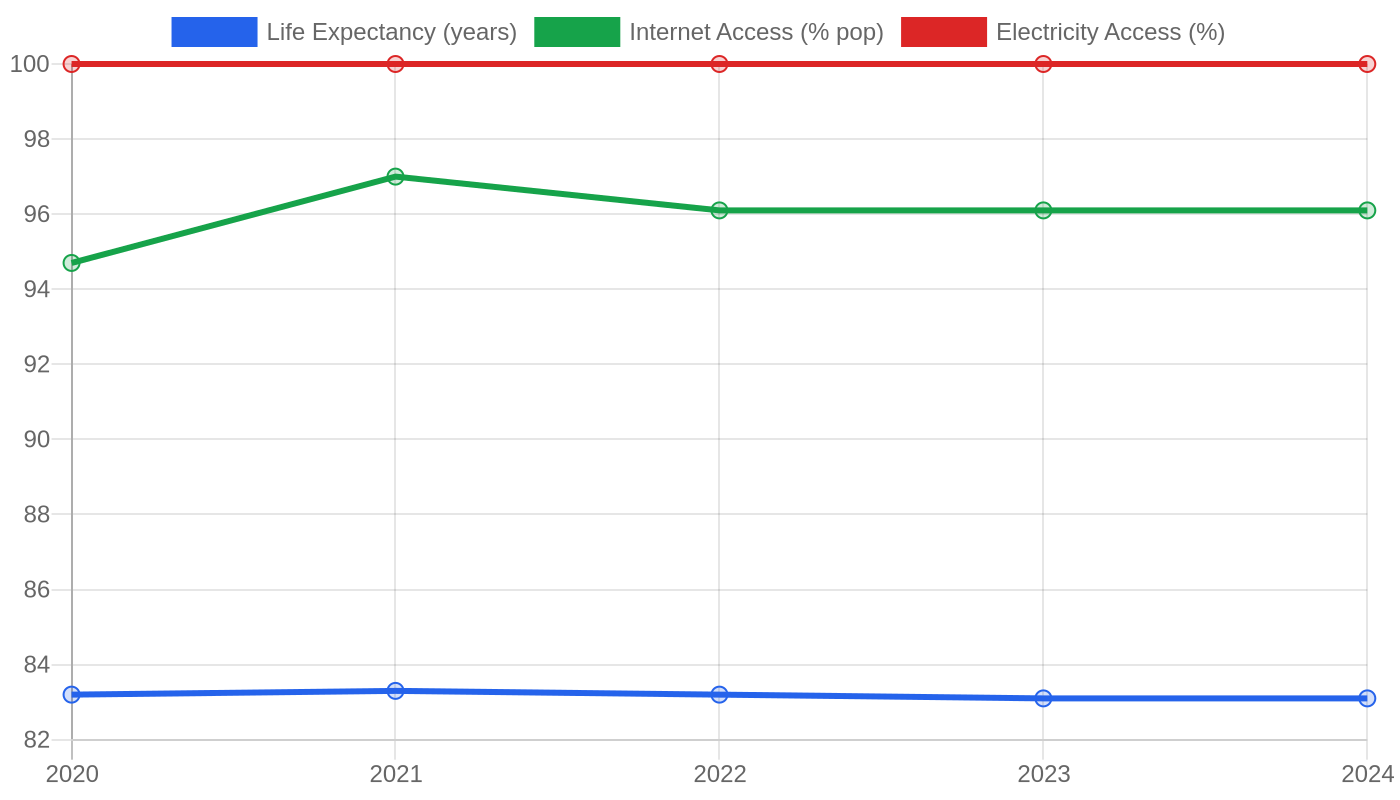
– Australia’s inflation has cooled to 2.87%, placing it within the Reserve Bank’s target band for the first time in years, signaling a potential pivot in monetary policy.
– Unemployment remains remarkably low at 4.09%, reflecting a tight labour market that continues to defy global slowdown fears.
– The housing market is showing alarming stress, with auction clearance rates slumping worse than during the pandemic, according to the *Australian Financial Review*.
– Australia’s political system, a stable constitutional monarchy and parliamentary democracy, has remained largely unchanged since Federation in 1901, providing continuity amid global turbulence.
– With a GDP per capita of $71,934 (PPP) according to the World Bank, Australia remains one of the wealthiest nations on earth, but cost-of-living pressures are testing that prosperity.
The Paradox of Prosperity — Inflation Tamed, Growth Stalled
The Australian economy is living a contradiction. On one hand, the World Bank reports inflation has eased to 2.87% — a figure that would have seemed aspirational just eighteen months ago when price pressures were running hot. This moderation brings the consumer price index squarely inside the Reserve Bank’s 2-3% target band, a milestone that should pave the way for interest rate relief later this year.
On the other hand, the headline GDP growth figure is conspicuously absent from the data, and that silence speaks volumes. Australia’s economy has been walking a tightrope, avoiding recession by the slimmest of margins as household spending contracts under the weight of higher borrowing costs.
The labour market tells a similarly complex story. Unemployment sits at just 4.09%, according to the World Bank — a level that most developed economies would envy. But this figure masks a growing bifurcation: those in work are working hard, but wage growth has struggled to keep pace with the accumulated cost-of-living increases from the past two years. The services sector, particularly healthcare and education, continues to absorb workers, while manufacturing and construction face capacity constraints.
What the data doesn’t show is the growing army of underemployed Australians — part-time workers seeking full-time hours — who are falling through the statistical cracks.
The nation’s wealth, measured by GDP per capita at purchasing power parity of $71,934, places Australia firmly among the global elite. This figure, from the World Bank, reflects the enduring strength of the country’s resource endowments and its highly educated workforce. Yet per capita numbers can obscure as much as they reveal. When population growth — driven by a post-pandemic immigration surge — outpaces economic expansion, average living standards can stagnate even as the headline economy grows.
That is precisely the dynamic playing out in Australia today.
The Great Australian Housing Squeeze — When Shelter Becomes a Luxury
No discussion of Australia’s economic health is complete without confronting the housing crisis. The *Australian Financial Review* reports that auction clearance rates have slumped to levels worse than those seen during the pandemic lockdowns — a stark indicator that buyer sentiment has evaporated. This is not a demand problem; Australia’s population continues to grow, and the structural undersupply of housing is a decade in the making. It is a confidence problem.
Buyers are sitting on their hands, waiting for prices to fall further, while sellers refuse to accept that the party is over.
The cost of housing has become the single greatest driver of household financial stress. In Sydney and Melbourne, median house prices remain multiples of median incomes, pushing homeownership beyond the reach of an entire generation. Renters are faring no better, with vacancy rates at historic lows and rents rising at double-digit annual rates in most capital cities.
The dream of owning a home — once central to the Australian identity — is receding for younger Australians, creating a political fault line that neither major party has fully addressed.
Renting versus buying is no longer a lifestyle choice but a financial trap. Those who entered the market before the pandemic are sitting on enormous equity gains; those who didn’t are watching the door close. The rental market has become a landlord’s paradise and a tenant’s nightmare, with bidding wars for leases becoming commonplace in inner-city suburbs. Daily expenses — from groceries to petrol — have risen in tandem, meaning that even Australians with jobs are feeling the pinch.
The World Bank data on cost of living is absent, but the lived experience of millions of Australians tells the story plainly.
Mining, Services, and the Search for the Next Big Thing
Australia’s economic engine has long been powered by what lies beneath its soil. The mining and resources sector — iron ore, coal, natural gas, and an expanding lithium industry — remains the country’s export backbone and a major contributor to government revenues. But the data on main industries is incomplete, leaving us to infer from the broader economic picture.
What is clear is that Australia is attempting a delicate transition: leveraging its resource wealth to fund the development of a more diversified, services-oriented economy.
The top companies operating in Australia — from the major banks to mining giants to supermarket duopolies — continue to generate substantial profits, but they face mounting scrutiny. A series of parliamentary inquiries into market power, pricing practices, and corporate behaviour has put business on notice. The regulatory environment remains robust, with strong property rights and a transparent legal system, but political risk is rising as cost-of-living pressures fuel populist sentiment.
For investors, Australia offers stability, but the days of easy returns are over.
Sectors to watch include renewable energy, where Australia has world-class solar and wind resources but has struggled with grid integration and policy consistency. The critical minerals boom — lithium, rare earths, cobalt — presents a generational opportunity, particularly as global supply chains seek alternatives to dominant producers. Healthcare and aged care, driven by an aging population, represent another structural growth area.
The business climate remains favourable by global standards, but the *ABC News* business coverage highlights growing concern about productivity stagnation and the need for microeconomic reform.
Stability at a Price — Politics, Safety, and the Australian Way of Life
Australia’s political system is a study in continuity. As the data notes, the country is a constitutional monarchy, a parliamentary democracy, and a federation — a combination of British and American influences that has produced one of the world’s most stable political environments. Since Federation in 1901, the constitution has remained mostly unchanged, and the liberal democratic system has weathered wars, recessions, and pandemics without serious institutional strain.
Power is divided between the federal government and six states, each with its own parliament and substantial autonomy.
This stability comes with a price. The two-party system — Labor and the Coalition — has produced long periods of policy inertia on issues like housing, tax reform, and climate change. The rise of the Greens and independent candidates in recent elections has fractured the old order, forcing minority government and cross-bench negotiations. The result is a more responsive but less predictable political landscape, where ambitious reform can be blocked by a handful of votes in the Senate.
Crime data is not available, but Australia is widely regarded as a safe country by international standards. Gun control, enacted after the 1996 Port Arthur massacre, remains a bipartisan success story. Violent crime is low, and trust in institutions — police, courts, the electoral commission — remains high. Quality of life, measured by access to healthcare, education, and public amenities, is excellent by global benchmarks.
The Australian “fair go” — the belief in equality of opportunity — remains a powerful cultural touchstone, even as economic inequality widens.
The Market Tremors — Auctions, Rates, and the RBA’s Next Move
This is the story that is unfolding right now. The *Australian Financial Review* reports that auction clearance rates have slumped to levels worse than those recorded during the darkest days of the pandemic. This is not a blip; it is a signal. The housing market, which has been the primary transmission mechanism for monetary policy, is cracking. Sellers are pulling listings, buyers are walking away, and the banks are quietly increasing provisions for bad debts.
The *ABC News* business section is filled with analysis of what this means for the broader economy.
The Reserve Bank of Australia faces an agonising choice. Inflation is down, but the economy is slowing. Keeping rates high risks tipping the housing market into a full-blown correction, damaging household wealth and confidence. Cutting rates too early risks reigniting inflation, particularly in the services sector where price pressures remain sticky. The RBA has signalled caution, but the market is increasingly betting on rate cuts before year-end.
The *ABC News* markets coverage shows bond yields falling and the Australian dollar weakening, reflecting expectations of easier monetary policy.
Business sentiment, as tracked by the *ABC News* business programs, is mixed. Mining companies are cautious about Chinese demand, while services firms are optimistic about domestic spending. The slump in auction clearance rates is concentrated in Sydney and Melbourne, but it is spreading to other cities. Regional markets, which boomed during the pandemic as Australians fled cities, are also cooling.
The narrative of Australian exceptionalism — that the property market always bounces back — is being tested as never before.
The Bottom Line
Australia remains a wealthy, stable, and fundamentally resilient economy, but it is navigating a period of profound adjustment. The combination of high household debt, an unaffordable housing market, and slowing global demand creates risks that cannot be ignored. Investors should watch Australia for its resource wealth and institutional stability, but with an eye on the housing correction and the RBA’s next move.
For policymakers, the challenge is clear: how to manage a soft landing when the runway is shorter than it appears. The Lucky Country has been lucky before. It may need to be lucky again.
Sources & Methodology
This article is authored by Economic Pulse Net for informational and research purposes. Economic Pulse Net sources its data from multilateral institutions, national statistics bureaus, and proprietary databases. All data is believed to be current as of the date of publication.
Published: July 20, 2026 | Category: Research — Australia
Use these signals in your own platform
Economic Pulse publishes its live signal feed through a documented, read-only API. Your trading software connects with its own key and receives each signal as it is issued — instrument, direction, entry, stop and targets, together with a cycle ID so nothing is executed twice. The feed is independent of this website and cannot change it.
Signals are informational only and are not financial advice.