Economic Pulse Net | Sources: World Bank World Development Indicators, Government Sources | 2026
Key Takeaways
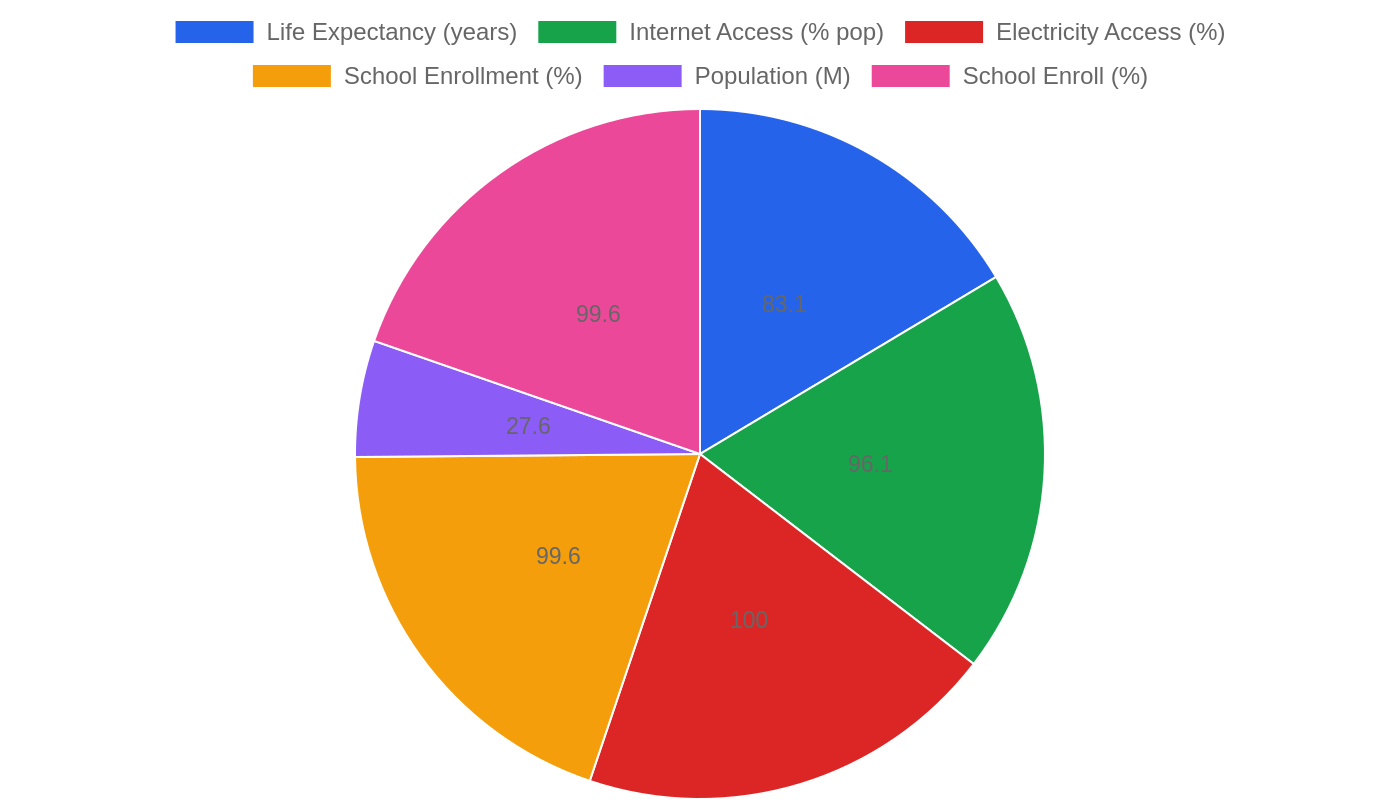
– Australia’s economy is growing at a modest 1.35% in 2025, well below its historical trend, as the post-pandemic rebound fades and global headwinds intensify.
– Inflation remains stubbornly above the central bank’s target band at 2.87%, while unemployment sits at an extraordinarily low 4.09% — a combination that has traders betting on further rate hikes.
– With a GDP per capita (PPP) exceeding $71,900 and GNI per capita of $64,120, Australia remains one of the wealthiest nations on Earth, but the cost-of-living crisis is eroding household confidence.
– The political landscape is stable but contested: a constitutional monarchy with a robust liberal democratic tradition, the government is now grappling with the “Uberisation” of the workforce and mounting pressure on housing affordability.
– The ASX is showing nervousness, with traders ramping up rate-rise bets after a surprisingly strong jobs report, signaling that the Reserve Bank’s battle against inflation is far from over.
The Paradox of Plenty — Growth Slows While Jobs Boom
Australia’s economic narrative in 2025 is one of contradictions. According to the World Bank, GDP growth sits at a tepid 1.35% — a figure that would be the envy of many European economies but feels underwhelming for a nation accustomed to nearly three decades of uninterrupted expansion before the pandemic. The headline number masks a deeper story: the Australian economy is running hot in the labour market but cold in productivity and output growth.
Inflation, measured by the CPI, stands at 2.87% — technically within the Reserve Bank’s 2-3% target band, but only just. For Australian households, this feels like a cold comfort. The cost of essentials — from groceries to electricity — has risen sharply, and the lag between official inflation figures and lived experience has become a source of political tension. The World Bank data shows unemployment at just 4.09%, a rate that most developed economies would consider full employment.
But this labour market tightness is a double-edged sword: it puts upward pressure on wages, which in turn feeds into services inflation, making the central bank’s job harder.
The structure of the economy is shifting beneath the surface. While the World Bank data does not break down specific industries, Australia’s traditional pillars — mining, energy, and agriculture — continue to underpin export revenues. Yet the services sector, particularly finance, education, and healthcare, now accounts for the bulk of employment. The problem is that productivity growth in these sectors has been sluggish.
The result is an economy that can generate jobs but struggles to generate the kind of dynamic expansion that lifts living standards across the board.
The GDP per capita (PPP) figure of $71,934 underscores Australia’s affluence in global terms. But this aggregate number masks growing inequality. The gap between those who own assets — particularly housing and shares — and those who rely on wage income has widened.
With a population of 27.6 million, Australia is not a small economy, but it is a concentrated one: most economic activity is clustered in the Sydney-Melbourne-Brisbane corridor, leaving regional areas increasingly dependent on government transfers and commodity cycles.
The Great Australian Housing Squeeze
If there is a single issue that dominates dinner-table conversation from Perth to Parramatta, it is housing. The World Bank data does not provide specific cost-of-living figures, but the anecdotal evidence is overwhelming, and the macroeconomic indicators tell a grim story. Australia’s property market is among the most unaffordable in the developed world, with median house prices in Sydney and Melbourne hovering at multiples of 10 to 12 times median household income.
Rents have surged dramatically in the post-pandemic period, driven by a combination of population growth — both natural and through immigration — and a chronic undersupply of new dwellings. The rental vacancy rate in most capital cities sits well below 2%, giving landlords extraordinary pricing power. For young Australians, the dream of homeownership is receding.
The “Bank of Mum and Dad” has become one of the country’s largest mortgage lenders, a phenomenon that entrenches intergenerational inequality.
The high cost of living is not limited to housing. Utility bills, insurance premiums, and private health insurance costs have all risen faster than wages. The Australian economy’s high reliance on imported manufactured goods means that global supply chain disruptions and a weaker Australian dollar feed directly into higher prices at the checkout. For a country that prides itself on the “fair go,” the affordability crisis is testing social cohesion.
Mining, Money, and the New Economy — Where to Invest
Australia’s corporate landscape is dominated by a handful of giants. The “Big Four” banks — Commonwealth Bank, Westpac, NAB, and ANZ — along with mining behemoths BHP and Rio Tinto, and the global miner Fortescue, account for a disproportionate share of market capitalisation on the ASX. These companies are deeply tied to the Chinese economic cycle, which makes Australia’s equity market a proxy for Asia-Pacific demand.
The business environment in Australia is generally favourable. The country ranks highly on ease of doing business, with a transparent legal system, strong property rights, and a sophisticated financial sector. However, the political climate is becoming more interventionist. The recent news from the Australian Financial Review quotes Labor MP Andrew Charlton stating that the government will fight the “Uberisation” of the economy.
This signals a shift toward greater regulation of the gig economy, tighter labour laws, and potentially higher corporate taxes for platform-based businesses.
Sectors to watch include renewable energy and critical minerals. Australia has vast deposits of lithium, rare earths, and copper — all essential for the global energy transition. The government is actively courting investment in battery manufacturing and green hydrogen. However, the transition is not without friction. The closure of coal-fired power stations is creating regional economic dislocation, and the pace of renewable energy grid connection has been frustratingly slow.
For international investors, the key question is whether Australia can maintain its status as a safe haven for capital. The country’s AAA credit rating, stable political system, and deep capital markets are strong draws. But the rising cost of doing business — driven by labour shortages, regulatory complexity, and high energy prices — is eroding margins. The ASX’s recent performance, as reported by the Australian Financial Review, shows that traders are jittery.
The “ASX trims rise as traders ramp up rate rise bets after jobs boom” headline captures the mood: good news on employment is being interpreted as bad news for interest rates, which is bad news for equities.
Stability, Safety, and the Politics of Comfort
Australia’s political system is a study in stability. As the World Bank notes, the country is a constitutional monarchy, a parliamentary democracy, and a federation. The constitution has remained largely unchanged since 1901, and the liberal democratic system is deeply entrenched. Power is divided between the federal government and six states, a structure that creates both checks and balances and, at times, frustrating bureaucratic duplication.
The crime and safety indices are not available in the provided data, but Australia is widely regarded as a safe country. Violent crime rates are low by international standards, and trust in public institutions — including the police and the judiciary — remains relatively high. The quality of life is exceptional for those who can afford it: world-class healthcare (though increasingly strained), excellent education, and a natural environment that is the envy of the world.
However, the political landscape is not without tension. The Labor government, led by Prime Minister Anthony Albanese, is navigating a complex set of pressures. On one hand, it must address the cost-of-living crisis and housing affordability. On the other, it is committed to ambitious climate targets and the transformation of the energy system.
The recent news from ABC.net.au indicates that business analysis and business programs are a key focus of national discourse, suggesting that the government is trying to balance pro-business orthodoxy with progressive social policy.
The “Uberisation” comment from Charlton is particularly significant. It signals that the government is willing to take on powerful tech platforms and gig economy companies to protect worker rights. This could lead to higher costs for consumers and reduced flexibility for businesses, but it reflects a broader global trend toward re-regulating labour markets after decades of liberalisation.
The Labour Market Tightrope — Jobs Boom Sparks Rate Fears
The most immediate story in Australia right now is the tension between a red-hot labour market and the central bank’s inflation fight. According to the Australian Financial Review, the latest jobs data was unexpectedly strong, prompting traders to increase their bets on further interest rate rises. This is a classic central bank dilemma: low unemployment is good for workers, but if it generates wage inflation, it can become self-defeating.
The Reserve Bank of Australia has been raising rates aggressively over the past two years, and the full impact of those hikes is still working through the economy. Mortgage holders are feeling the pinch, with many rolling off fixed-rate loans taken out during the pandemic onto much higher variable rates. Household savings buffers are being depleted, and consumer confidence is fragile.
The ABC’s business coverage highlights that the government is acutely aware of these pressures. The “Labor will fight ‘Uberisation’ of the economy” story suggests that the government is looking for ways to support workers without fuelling inflation. Policies around minimum wage increases, gig economy regulation, and skills training are all on the table. The question is whether these measures will be enough to ease the cost-of-living crunch without triggering a wage-price spiral.
Markets are watching closely. The ASX’s reaction to the jobs data — initially rising, then trimming gains — shows that investors are pricing in a higher-for-longer interest rate environment. For businesses, this means higher borrowing costs and potentially slower growth ahead. For households, it means the mortgage squeeze is not over yet.
The Bottom Line
Australia remains a wealthy, stable, and fundamentally attractive economy, but it is navigating a period of uncomfortable adjustment. The low unemployment rate is a strength, but it is also a source of inflationary pressure. The housing crisis is a political time bomb. For investors, the message is mixed: the long-term fundamentals are solid, but the short-term outlook is clouded by interest rate uncertainty and regulatory change.
This is a country to watch closely — not for a dramatic collapse, but for the quiet, grinding challenge of maintaining prosperity in an era of higher costs and slower growth.
Sources & Methodology
This article is authored by Economic Pulse Net for informational and research purposes. Economic Pulse Net sources its data from multilateral institutions, national statistics bureaus, and proprietary databases. All data is believed to be current as of the date of publication.
Published: July 23, 2026 | Category: Research — Australia
Use these signals in your own platform
Economic Pulse publishes its live signal feed through a documented, read-only API. Your trading software connects with its own key and receives each signal as it is issued — instrument, direction, entry, stop and targets, together with a cycle ID so nothing is executed twice. The feed is independent of this website and cannot change it.
Signals are informational only and are not financial advice.