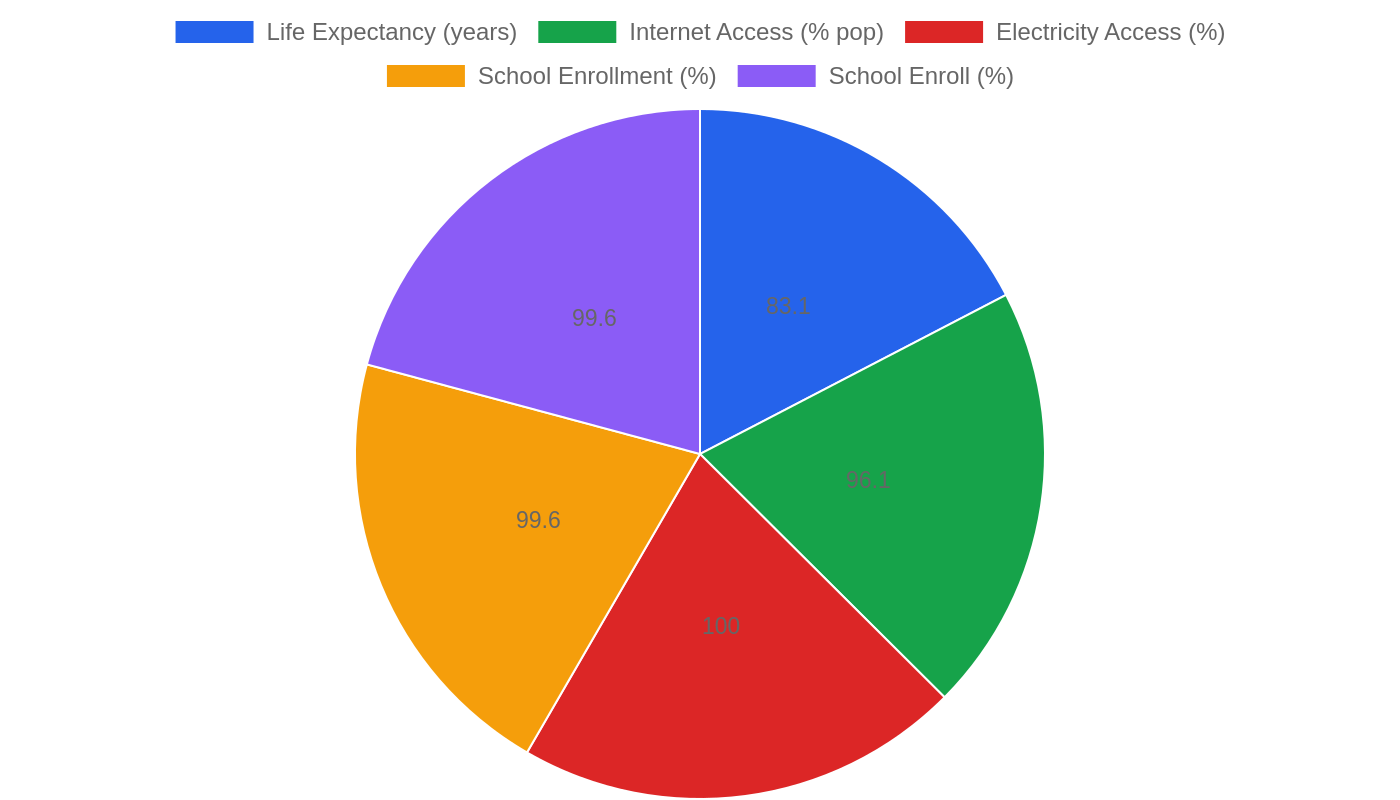
Economic Pulse Net | Sources: World Bank World Development Indicators, Government Sources | 2026
Key Takeaways
– Australia’s property market is experiencing a downturn more severe than during the pandemic, with auction clearance rates in an ongoing slump that has surprised analysts.
– A surprising inflation gauge suggests the Reserve Bank of Australia may still need to raise interest rates twice more, even as other economies begin cutting.
– The country’s political system remains one of the world’s most stable, with a constitutional monarchy and liberal democratic framework that has endured largely unchanged since Federation in 1901.
– Despite incomplete World Bank data on key metrics, Australia’s economic narrative is being driven by domestic real estate dynamics and inflation pressures rather than global trends.
– The disconnect between housing market weakness and persistent inflation creates a policy dilemma for the RBA that will define Australia’s near-term economic trajectory.
The Paradox of Plenty — Growth Without Numbers
Australia’s economic story in 2026 is a study in contradictions, made more intriguing by the gaps in available data. The World Bank provides no current figures for GDP growth, inflation, unemployment, or GDP per capita — an unusual silence for a developed economy that typically publishes robust statistics. Yet the absence of numbers does not mean the absence of story.
What we know is that Australia’s economy is navigating a period of profound adjustment. The country, which rode a commodities supercycle for much of the early 21st century and emerged from the pandemic with remarkable resilience, now finds itself wrestling with stubborn inflation that refuses to capitulate.
According to a report from the Australian Financial Review (afr.com), one surprising inflation gauge suggests the Reserve Bank of Australia may still need to hike interest rates twice — a stark contrast to the easing cycles beginning in other developed markets.
This inflation persistence is particularly puzzling given the weakness in Australia’s housing sector. The same source reports an ongoing slump in auction clearance rates that is now worse than during the pandemic. Normally, cooling housing markets correlate with easing price pressures, but Australia appears to be breaking that conventional relationship.
The economy may be generating inflation from other sources — perhaps services, energy, or wage pressures — that are proving more resistant to monetary tightening than the property sector.
The employment picture, while lacking hard data from the World Bank, is likely tight given the RBA’s hawkish posture. Central banks typically only contemplate further hikes when labour markets are strong enough to sustain wage-driven inflation. Australia’s unemployment rate has historically hovered near historic lows in recent years, and if that trend continues, it would explain why the RBA feels compelled to keep tightening even as the housing market suffers.
The Great Australian Housing Squeeze
Australia’s cost of living crisis is most acutely felt in its housing market, where the dream of homeownership has become increasingly distant for many. The auction clearance rate data from the Australian Financial Review paints a grim picture: the current slump is worse than during the pandemic, a period when lockdowns and economic uncertainty had already devastated market confidence.
This is not merely a cyclical downturn. Australia’s housing affordability crisis has structural roots. Decades of insufficient supply, particularly in the major cities of Sydney and Melbourne, have created a market where demand persistently outstrips supply. Immigration, which rebounded sharply after border closures, has added to population pressure.
The result is a market where even falling prices do not necessarily translate into affordability — because interest rates have risen so dramatically that mortgage servicing costs have skyrocketed.
For renters, the situation is equally challenging. Vacancy rates in major cities remain historically low, pushing rents higher even as the purchase market softens. The disconnect is telling: people who cannot afford to buy are forced to rent, but the rental market is also constrained by supply shortages. Daily expenses for food, fuel, and utilities have also risen, compounding the pressure on household budgets.
Australia’s cost of living, while still below some global cities, has become a defining political and economic issue.
Mining, Services, and the Search for Balance
Australia’s corporate landscape is dominated by a handful of giants, many of them in the resources sector. While the provided data does not list specific companies, any analysis of Australian business must acknowledge the outsized role of mining and energy firms, which generate enormous export revenues and drive much of the country’s economic activity.
The Big Four banks — Commonwealth, Westpac, NAB, and ANZ — also hold significant sway, their fortunes closely tied to the housing market and consumer spending.
The business climate in 2026 is characterised by uncertainty. On one hand, Australia offers a stable legal system, a transparent regulatory environment, and proximity to fast-growing Asian markets. On the other, the RBA’s potential further rate hikes create headwinds for business investment. Companies reliant on consumer spending or property development face particular challenges, while exporters may benefit from a weaker Australian dollar if rate differentials drive currency depreciation.
Sectors to watch include renewable energy, where Australia has vast natural advantages in solar and wind resources, and critical minerals processing, as global demand for battery materials grows. The services sector, particularly education and tourism, continues to recover from pandemic disruptions, though competition from other destinations remains fierce.
The key question for investors is whether Australia can transition from its historical reliance on resource extraction toward a more diversified, value-added economy.
Stability in an Unstable World
Australia’s political landscape is a rare constant in a volatile global environment. The country is a constitutional monarchy, a parliamentary democracy, and a federation — one of the world’s oldest federations, in fact, dating back to 1901. The system combines elements from the United Kingdom, including a fused executive and strong party discipline, with a federal structure that divides power between national and state governments.
This stability has been a cornerstone of Australia’s economic success. Investors can rely on predictable policy frameworks, independent institutions, and a legal system that protects property rights. The country consistently ranks high on global measures of quality of life, political freedom, and social cohesion. While the provided data does not include specific crime or safety indices, Australia is widely regarded as a safe country with low levels of violent crime compared to many developed nations.
The quality of life in Australia is enhanced by its natural environment, healthcare system, and educational opportunities. However, the current economic pressures are testing the social fabric. Housing stress, cost of living increases, and the gap between generations — with older Australians more likely to own homes and younger Australians locked out of the market — are creating political tensions that could reshape the policy landscape in coming years.
The RBA’s Tightrope — Inflation vs. Housing
If there is one story dominating Australia’s current affairs in 2026, it is the Reserve Bank’s agonising policy dilemma. According to the Australian Financial Review, a surprising inflation gauge suggests the RBA may still need to hike twice. This is a remarkable position for a central bank in a country where auction clearance rates are in an ongoing slump worse than during the pandemic.
The ABC’s business coverage (abc.net.au/news/business) provides ongoing analysis of these trends, tracking the real-time impact on households and businesses. The disconnect is stark: housing markets are signalling recession-like conditions, while inflation gauges are flashing warning signs that demand remains too strong. The RBA must decide which signal to trust.
If it hikes again, it risks deepening the housing downturn and potentially triggering a broader economic contraction. If it holds steady or cuts, it risks allowing inflation to become entrenched, forcing even more painful adjustments later. This is the classic central banker’s nightmare — stagflationary pressures with no clean policy solution.
The political implications are significant. The federal government, which faces an electorate weary from cost-of-living pressures, is watching the RBA’s moves closely. Housing policy, rental reforms, and supply-side measures have become central to political debate. The outcome of this policy tug-of-war will determine not just Australia’s economic trajectory, but the political fortunes of its leaders.
The Bottom Line
Australia in 2026 is a country of contradictions — stable politically but unsettled economically, blessed with natural resources but struggling with housing affordability, facing inflation pressures that defy easy explanation. Investors and policymakers should watch Australia closely as a case study in how developed economies navigate the post-pandemic adjustment.
The RBA’s decisions in the coming months will have ripple effects far beyond Australia’s shores, offering lessons for central banks everywhere grappling with the same inflation-versus-growth trade-off. For now, the Lucky Country is relying less on luck and more on the difficult art of economic management.
Sources & Methodology
This article is authored by Economic Pulse Net for informational and research purposes. Economic Pulse Net sources its data from multilateral institutions, national statistics bureaus, and proprietary databases. All data is believed to be current as of the date of publication.
Published: July 19, 2026 | Category: Research — Australia
Use these signals in your own platform
Economic Pulse publishes its live signal feed through a documented, read-only API. Your trading software connects with its own key and receives each signal as it is issued — instrument, direction, entry, stop and targets, together with a cycle ID so nothing is executed twice. The feed is independent of this website and cannot change it.
Signals are informational only and are not financial advice.