Economic Pulse Net | Sources: World Bank World Development Indicators, Government Sources | 2026
Key Takeaways
* Moderate but Steady Growth: Australia’s economy is projected to grow by approximately 1.35% in 2025, reflecting a cautious expansion amid global headwinds.
Strong Purchasing Power: With a GDP per capita (PPP) exceeding $71,900 and a GNI per capita of $64,120, Australians maintain one of the highest standards of living globally.
Tight Labor Market: Unemployment remains low at 4.09%, indicating a robust labor market despite broader economic slowdowns.
Monetary Pressure: Recent financial sector developments show banks raising fixed rates faster than the Reserve Bank of Australia (RBA), signaling deep funding pains that may impact consumer spending.
Political Stability: As one of the world’s oldest federations with a stable liberal democratic system since 1901, Australia offers a predictable political environment for long-term investment.
Economic Pulse: Navigating Slow Growth with High Value
Australia’s economic landscape in 2025 is defined by a juxtaposition of modest aggregate growth and exceptional individual wealth. According to World Bank data, the nation’s GDP growth is estimated at 1.35%, a figure that suggests an economy moving cautiously rather than surging forward. However, this relatively low growth rate masks the underlying strength of the Australian economy, which boasts a total GDP of nearly $1.8 trillion USD.
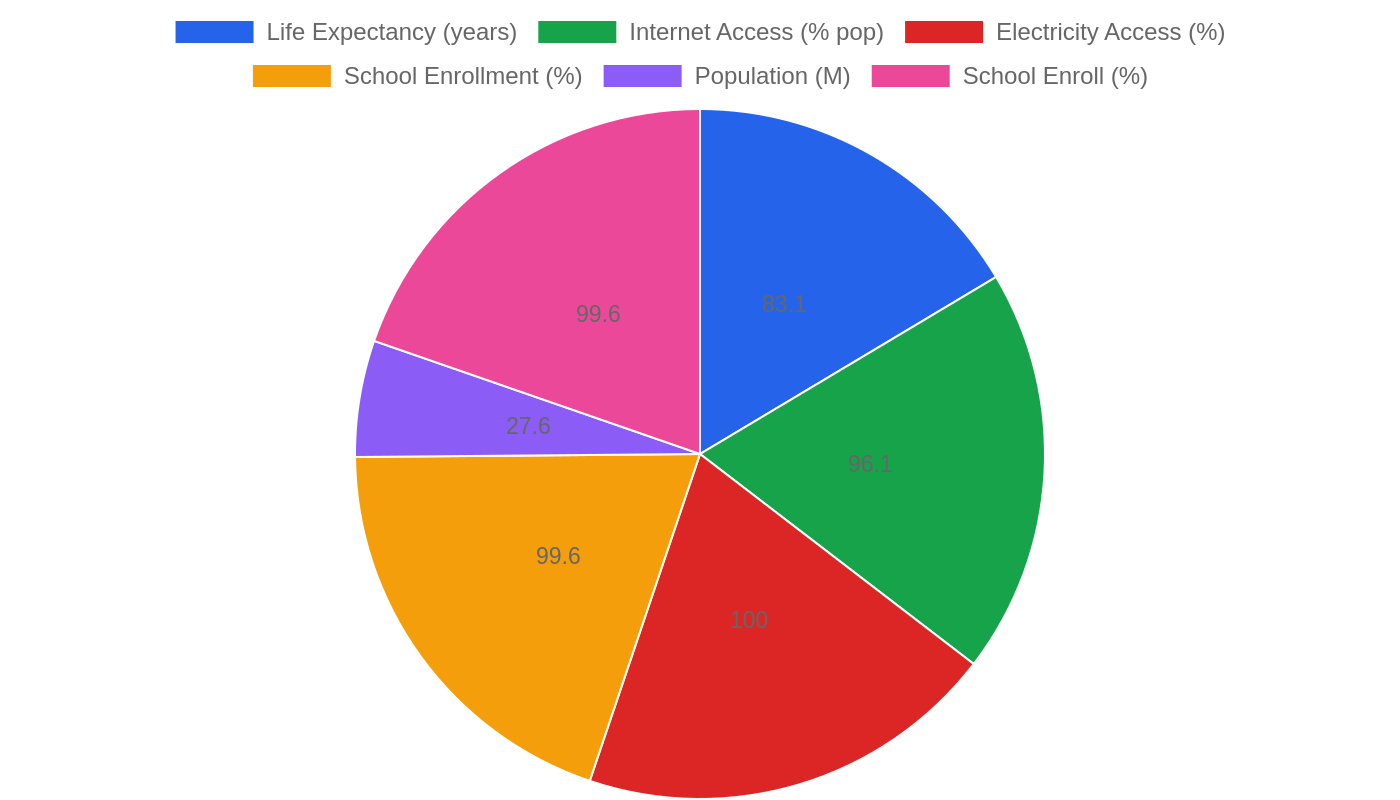
This massive output supports a population of roughly 27.6 million people, resulting in a GDP per capita (PPP) of over $71,900. This high per-capita metric indicates that while the overall engine of growth has slowed, the value generated per individual remains exceptionally high, placing Australia firmly among the world’s wealthiest nations.
Furthermore, the Gross National Income (GNI) per capita stands at $64,120, reinforcing the country’s status as a high-income economy where citizens retain significant purchasing power. The inflation rate, measured by CPI, sits at approximately 2.87%, suggesting that price stability is largely maintained, though not without pressure. These figures collectively paint a picture of a mature economy that prioritizes quality of life and income levels over rapid, potentially volatile, expansion.
Cost of Living: The Premium on Daily Life
The cost of living in Australia reflects its high-income status, creating a unique dynamic for residents and investors alike. While specific housing indices and daily expense metrics are not detailed in the current dataset, the high GDP per capita and GNI suggest that the baseline cost for essentials such as housing, healthcare, and education is significantly higher than in emerging markets.
For expatriates and domestic consumers, the disparity between income and expenses is managed through high wages, but the absolute level of expenditure required to maintain a middle-class lifestyle is substantial. Inflation at 2.87% implies that while prices are rising, they are doing so at a manageable pace compared to many peer economies experiencing double-digit inflation.
However, the interplay between high incomes and high costs creates a resilient consumer base; even if discretionary spending tightens, the fundamental demand for goods and services remains strong due to the sheer volume of disposable income available to households. This economic structure means that businesses operating in Australia must focus on value-added services and premium offerings to capture market share, as price-sensitive competition is less prevalent than in lower-income regions.
Investment & Business Climate: Stability Amidst Funding Stress
Australia’s business environment is anchored by its political stability and mature financial systems, yet it faces immediate challenges from the banking sector. The country’s constitutional framework, a blend of British parliamentary traditions and federal division of powers, provides a consistent regulatory backdrop that encourages long-term foreign direct investment.
Major industries continue to drive the economy, supported by a corporate landscape that includes globally recognized entities, although specific top company names are not listed in the current data. The business climate is further characterized by a tight labor market, with unemployment holding steady at 4.09%. This low unemployment rate ensures that companies have access to a wide pool of talent, reducing recruitment risks and wage pressures associated with labor shortages.
However, the recent news from *Australian Financial Review* highlights a critical vulnerability: “Banks jack up fixed rates faster than RBA as funding pain deepens.” This development suggests that despite the central bank’s policy stance, commercial banks are passing on increased funding costs directly to consumers and businesses through higher fixed-rate loans.
This trend could dampen investment in real estate and small business expansion in the short term, requiring investors to exercise caution regarding debt-heavy sectors. Nevertheless, the overall institutional integrity and rule of law remain strong draws for international capital seeking safe-haven assets in the Asia-Pacific region.
Safety, Politics & Quality of Life: A Foundation of Trust
For individuals considering relocation or long-term settlement, Australia offers a compelling mix of safety and political reliability. The political landscape is described as a constitutional monarchy and parliamentary democracy that has remained largely unchanged since Federation in 1901. This longevity provides a level of predictability rare in the modern geopolitical era, with power divided between federal and state governments to ensure local responsiveness within a unified national framework.
Regarding personal security, crime and safety indices are currently listed as N/A in the provided data, which often correlates with countries where public safety is generally high and specific statistical tracking may differ from global aggregators. Instead, the focus shifts to the qualitative aspects of life, supported by the high GNI per capita.
Citizens benefit from a robust social contract and stable institutions, which contribute to overall well-being and happiness, even if explicit happiness scores are not quantified here. The combination of a stable liberal democratic system and a high standard of living makes Australia an attractive destination for skilled professionals and retirees alike, who prioritize security and governance quality alongside economic opportunity.
What’s Happening Now: Banks, Budgets, and Business Realities
The most pressing narrative in Australia right now revolves around the tension between monetary policy and banking sector realities. According to reports from *Australian Financial Review*, banks are increasing fixed interest rates at a pace that outstrips the Reserve Bank of Australia’s adjustments, citing deepening funding pains.
This discrepancy indicates that financial institutions are facing internal liquidity or cost pressures that are being transferred to borrowers, potentially cooling the housing market and consumer credit sectors. Simultaneously, there is a critical discourse surrounding fiscal management and resource allocation.
An analysis piece titled “Truth is, Lucky Jim has squandered a global budget boom” suggests a political or administrative critique regarding how recent windfalls or budget surpluses were utilized, implying missed opportunities for strategic reinvestment. These developments are being closely monitored by the business community, as reported across various ABC News business segments and AFR markets coverage.
The interplay between these banking stresses and political debates over budget stewardship creates a complex environment for policymakers, who must balance inflation control with economic stimulus. Investors and analysts are watching to see if the government will intervene to stabilize the banking sector or if the private sector will absorb these shocks independently.
The Bottom Line
Australia presents a case study in mature economic resilience, where high per-capita wealth buffers against slower aggregate growth rates. While the immediate outlook is tempered by banking sector stress and political debates over budget management, the underlying fundamentals—low unemployment, high income levels, and political stability—remain robust. It is a market best suited for long-term investors seeking stability and high-quality assets rather than speculative, high-gain opportunities.
For businesses, success will depend on navigating higher borrowing costs while leveraging the strong domestic purchasing power of a highly educated workforce.
Sources & Methodology
This article is authored by Economic Pulse Net for informational and research purposes. Economic Pulse Net sources its data from multilateral institutions, national statistics bureaus, and proprietary databases. All data is believed to be current as of the date of publication.
Published: October 05, 2026 | Category: Research — Australia
Use these signals in your own platform
Economic Pulse publishes its live signal feed through a documented, read-only API. Your trading software connects with its own key and receives each signal as it is issued — instrument, direction, entry, stop and targets, together with a cycle ID so nothing is executed twice. The feed is independent of this website and cannot change it.
Signals are informational only and are not financial advice.