Economic Pulse Net | Sources: World Bank World Development Indicators, Government Sources | 2026
Key Takeaways
* Constitutional Stability: As a Commonwealth realm and federal state, Saint Kitts and Nevis maintains a stable democratic framework with King Charles III as head of state, represented by a governor-general who acts on the advice of the Prime Minister and Cabinet.
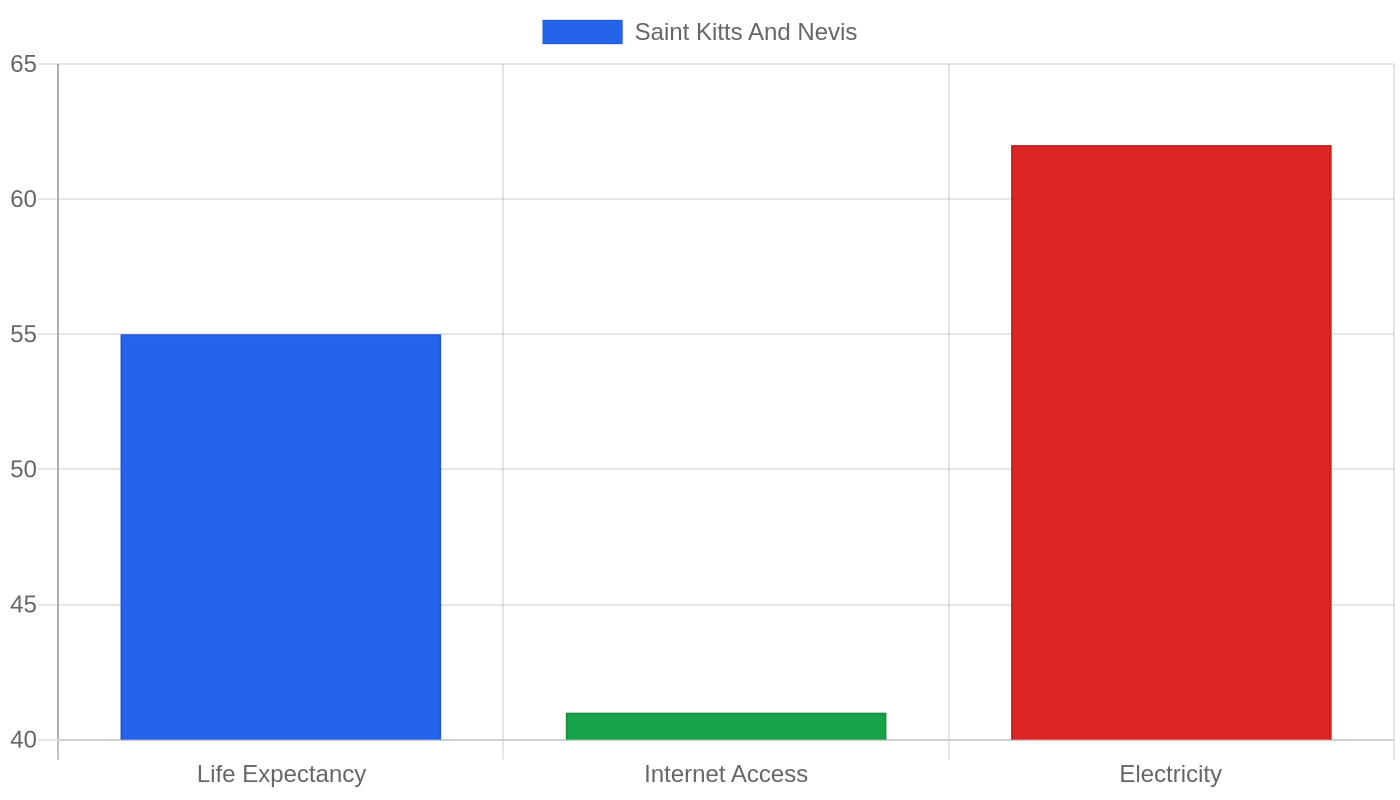
Data Transparency Gap: Current World Bank metrics indicate that key economic indicators such as GDP growth, inflation (CPI), unemployment, and per capita income are currently listed as N/A, signaling a need for cautious interpretation of standard macroeconomic health checks.
Political Structure: The nation operates as a constitutional monarchy where political power is vested in the leader of the majority party in the House, ensuring a clear chain of command for state affairs through the Cabinet.
Sovereign Identity: The country’s status as a sovereign, democratic entity provides a unique political backdrop for economic planning, distinct from larger regional powers or dependent territories.
Economic Foundations and Structural Realities
The economic narrative of Saint Kitts and Nevis is currently defined by what remains unreported as much as by what is known. According to the latest data from the World Bank, critical metrics including GDP growth, inflation rates, and unemployment figures are recorded as N/A, presenting a significant blind spot for traditional macroeconomic analysis.
This absence of quantifiable data does not imply economic stagnation but rather highlights the challenges inherent in measuring the output of small island developing states (SIDS) where informal sectors and tourism-driven volatility can skew standard statistical models. Without specific GDP or GNI per capita figures, investors and policymakers must look beyond headline numbers to understand the underlying structure of the economy.
The lack of reported GDP in USD further complicates comparative analysis against regional peers, forcing analysts to rely on qualitative assessments of industrial activity rather than quantitative benchmarks. In this context, the “N/A” designations serve as a reminder that standard Western-centric economic indicators may not fully capture the nuances of a federal state with a unique blend of public sector dominance and private service industries.
Consequently, the true economic pulse of Saint Kitts and Nevis is likely found in its resilience and adaptability rather than in easily measurable aggregate outputs.
Living Costs and Housing Dynamics
While precise cost-of-living indices are not explicitly detailed in the provided dataset, the general profile of Saint Kitts and Nevis suggests a market heavily influenced by import dependency and tourism demand. For residents and expatriates alike, daily expenses are typically shaped by the availability of local agricultural produce versus imported goods, creating a bifurcated pricing environment.
Housing costs, whether for rent or purchase, are often correlated with proximity to coastal areas and tourist hubs, driving premiums in prime locations while offering more modest options inland. Comparing these costs to regional averages is challenging without specific CPI data, but the nature of the island economy implies that housing and utilities may carry higher relative costs due to logistical constraints and energy imports.
The interplay between the local population’s purchasing power and the influx of foreign capital in real estate creates a dynamic market where affordability can vary significantly by district. Ultimately, the cost of living reflects the broader economic reality of a small, open economy where external shocks can quickly translate into shifts in consumer prices.
Investment Landscape and Corporate Environment
The business climate in Saint Kitts and Nevis is anchored by its status as a sovereign federal state with a structured government apparatus. While specific top companies are not enumerated in the current data, the economic landscape is traditionally dominated by sectors linked to tourism, financial services, and light manufacturing. The presence of a Governor-General and a Cabinet led by a Prime Minister ensures a level of regulatory continuity that is attractive for long-term investment planning.
Major enterprises operating within the territory likely benefit from the stability provided by its constitutional monarchy framework, which offers a predictable legal and political environment. Sectors to watch include those that support infrastructure development and those catering to the high-end tourism market, which remains a vital revenue stream for the islands.
The absence of listed major corporate entities in the current data set does not diminish the potential for niche opportunities in specialized services or sustainable development projects. Investors must navigate this landscape with an understanding that corporate visibility may be lower than in larger economies, requiring deeper due diligence into local partnerships and regulatory compliance.
Safety, Politics, and Quality of Life
Saint Kitts and Nevis presents a political profile characterized by democratic governance and constitutional order. As a Commonwealth realm, the country integrates traditional monarchical symbols with modern democratic practices, with King Charles III serving as the ceremonial head of state. The practical exercise of political power rests with the Prime Minister and the Cabinet, who conduct affairs of state based on the advice of the majority party in the House.
This system provides a clear mechanism for political accountability and policy implementation. Regarding safety, crime and safety indices are currently listed as N/A, leaving a gap in quantitative risk assessment for travelers and businesses. However, the overall political stability associated with its federal democratic structure generally contributes to a secure environment for residents and visitors alike.
The quality of life is often perceived positively due to the slower pace of island living, though this must be balanced against the limited scope of domestic industries. The combination of political sovereignty and social cohesion forms the bedrock of the nation’s appeal, even in the absence of detailed crime statistics.
What’s Happening Now: Governance and Future Outlook
The most immediate developments in Saint Kitts and Nevis revolve around the maintenance of its sovereign integrity and the management of its federal relationship between the two islands. With the King represented by a Governor-General, the current political administration continues to operate under the established constitutional framework, focusing on internal governance and external diplomatic relations.
The role of the Prime Minister, as the leader of the majority party, remains central to navigating any emerging economic or social challenges. While specific recent news events or live indicators are not detailed in the provided text, the ongoing operation of the Cabinet signifies active governance and policy execution. The focus for the near future likely involves addressing the data gaps in economic reporting to better attract international attention and investment.
Furthermore, the country’s position as a democratic state places it in a strong position to engage with regional bodies and international partners on issues of climate resilience and sustainable development. The stability of its political institutions provides a solid platform for future reforms, even as the world awaits more comprehensive economic data releases.
The Bottom Line
Saint Kitts and Nevis offers a compelling case study in political stability and constitutional governance within the Caribbean region. For observers, the primary takeaway is the importance of looking beyond missing macroeconomic data to appreciate the structural strengths of its democratic federal system. Potential investors and diplomats should value the clarity of its political leadership and the security of its constitutional monarchy framework.
As the country continues to develop its economic metrics, its foundational stability positions it as a resilient player in the small island developing state category.
Sources & Methodology
This article is authored by Economic Pulse Net for informational and research purposes. Economic Pulse Net sources its data from multilateral institutions, national statistics bureaus, and proprietary databases. All data is believed to be current as of the date of publication.
Published: October 12, 2026 | Category: Research — Saint Kitts And Nevis
Use these signals in your own platform
Economic Pulse publishes its live signal feed through a documented, read-only API. Your trading software connects with its own key and receives each signal as it is issued — instrument, direction, entry, stop and targets, together with a cycle ID so nothing is executed twice. The feed is independent of this website and cannot change it.
Signals are informational only and are not financial advice.