Economic Pulse Net | Sources: World Bank World Development Indicators, Government Sources | 2026
Key Takeaways
* Panama operates as a presidential representative democratic republic with a multi-party system, where executive power is shared between the President and the National Assembly.
The country’s economic identity is heavily anchored in consumer services and logistics, dominated by major players like Copa Holdings and DHL Aero Expreso.
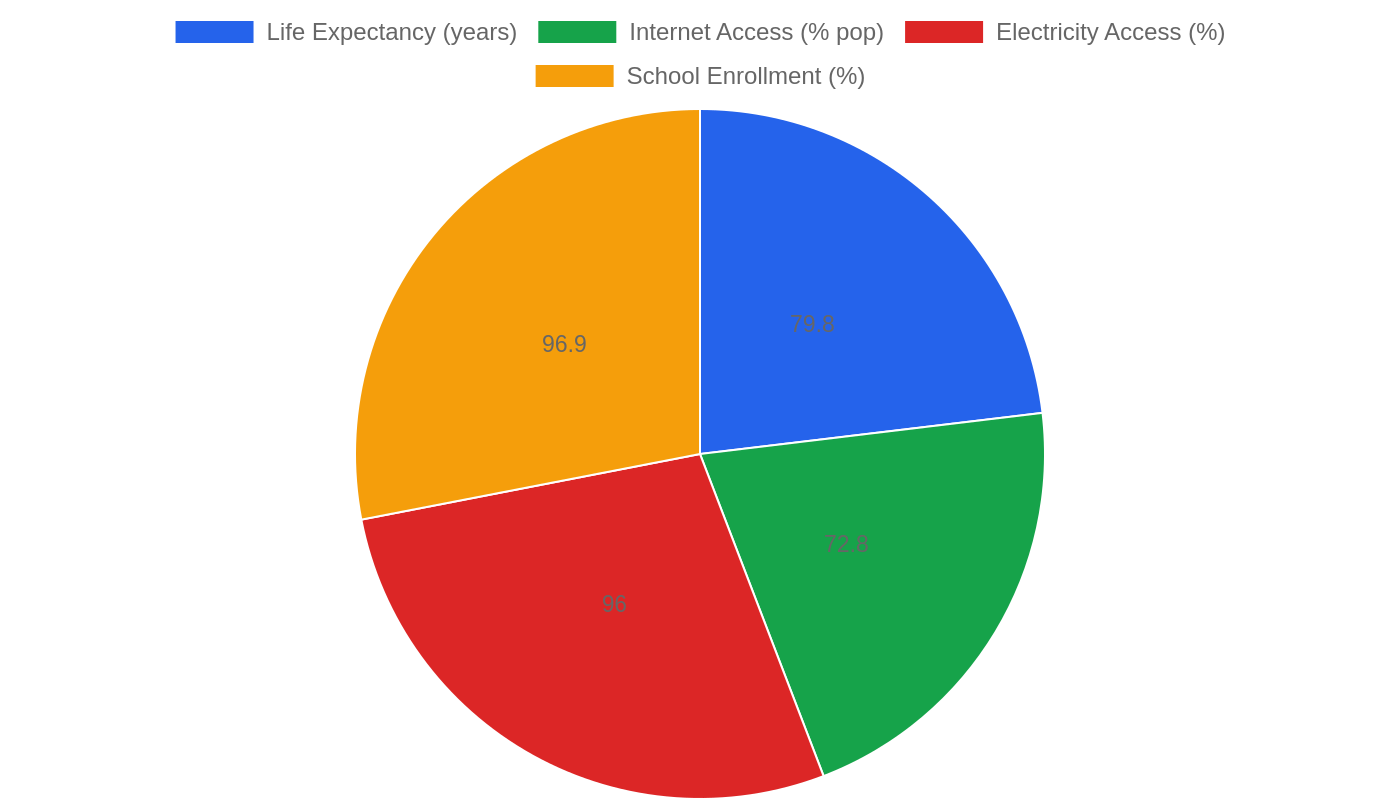
While specific macroeconomic indicators such as GDP growth, inflation, and unemployment rates are currently unreported, the nation remains a critical node in global trade.
The business environment is defined by a strong presence of international financial institutions and air cargo operators, suggesting resilience in key service sectors.
Political stability is underpinned by an independent judiciary, though the landscape requires careful navigation of the multi-party dynamics within the National Assembly.
Economic Foundations and Industrial Pillars
Panama’s economy is structurally distinct from its neighbors, relying less on traditional manufacturing or agriculture and more on high-value service industries that facilitate global commerce. The absence of current World Bank data for GDP growth, inflation, and unemployment masks a complex reality where the service sector drives national output. This reliance on services is evident in the corporate landscape, which is dominated by entities in the consumer services and industrials sectors.
Companies such as Copa Airlines and Copa Holdings illustrate the nation’s role as a central hub for connectivity in the Americas, while Air Services Cargo and DHL Aero Expreso highlight the critical importance of logistics and freight movement. These firms do not just operate locally; they serve as gateways for international trade, leveraging Panama’s strategic geographic position.
The dominance of these specific industries suggests that the country’s economic health is tightly coupled with global supply chain efficiency and aviation demand. Without concrete figures on GDP per capita or GNI, one must infer that the value creation comes from the facilitation of movement rather than the production of goods. This model makes the economy sensitive to external shocks in global travel and shipping but also provides a steady stream of revenue through tolls, fees, and services.
Understanding Panama requires looking past aggregate growth numbers and focusing on the operational vitality of its logistical giants.
Cost of Living and Housing Dynamics
For expatriates and investors, understanding the cost of living in Panama involves navigating a market that varies significantly between urban centers and rural areas. While precise indices for daily expenses are not provided, the presence of major international financial institutions like Balboa Bank and Trust and Banco Latinoamericano de Comercio Exterior indicates a robust banking sector that caters to both local and foreign capital.
These financial hubs often correlate with higher costs of living in cities like Panama City, where real estate and rental markets are influenced by international demand. The lack of specific CPI data means that prospective residents must look at sector-specific trends; for instance, the strength of the consumer services industry implies that hospitality and retail sectors may see price fluctuations tied to tourism and business travel volumes.
Compared to regional averages, Panama’s dollarized economy can offer predictability in pricing, yet housing costs remain a variable dependent on proximity to commercial districts. Investors should note that while broad inflation metrics are unavailable, the structural integrity of the banking sector helps maintain a stable monetary environment. This stability is crucial for those considering long-term property investments or establishing businesses in the region.
The interplay between financial services and daily expenses creates a unique economic ecosystem where wealth concentration can drive localized cost increases even without national-level inflation spikes.
Investment Climate and Corporate Landscape
The investment landscape in Panama is characterized by a concentrated group of large corporations that dominate key sectors, particularly in aviation and finance. Top companies such as Aeroperlas, Air Panamá Internacional, and Alas Chiricanas demonstrate a competitive yet fragmented market in domestic and regional consumer services. Meanwhile, the industrial side is bolstered by heavyweights like DHL Aero Expreso, which underscores the country’s commitment to maintaining efficient cargo routes.
For foreign investors, this concentration of power in a few major players presents both opportunities and barriers; partnerships with established entities like Copa Holdings may offer easier market entry than competing against entrenched local monopolies. The financial sector, represented by Balboa Bank and Trust and Banco Latinoamericano de Comercio Exterior, provides essential infrastructure for trade financing and cross-border transactions.
This dual focus on logistics and finance creates a synergistic business environment where capital flows are supported by physical movement of goods. However, the lack of recent GDP data complicates risk assessments for new entrants who typically rely on growth forecasts to justify capital allocation. Despite this, the continued operation and expansion of these major firms suggest underlying confidence in the market’s fundamentals.
Investors should monitor the performance of these listed companies as leading indicators of broader economic sentiment. The clarity of the corporate hierarchy offers a roadmap for those seeking to engage with Panama’s most dynamic industries.
Safety, Politics, and Quality of Life
Navigating Panama’s social and political environment requires an understanding of its institutional framework, which is built on a foundation of democratic checks and balances. The country functions as a presidential representative democratic republic, where the President serves as both head of state and head of government, ensuring a clear line of executive authority. Legislative power is vested in the National Assembly, creating a multi-party system that encourages diverse political representation and debate.
Crucially, the judiciary operates independently of both the executive and legislative branches, a vital component for maintaining rule of law and protecting property rights. This separation of powers is a key attractor for international business, as it reduces the risk of arbitrary governmental intervention. However, specific crime and safety indices are not currently available, meaning that personal security assessments must be made on a case-by-case basis or through local intelligence.
The political landscape, therefore, relies heavily on the perceived stability of these institutional frameworks rather than on quantifiable safety metrics. For quality of life, the independence of the judiciary and the structured nature of the government provide a sense of order that is conducive to long-term residence. Potential residents should weigh the benefits of a stable political system against the need for localized safety awareness.
The overall governance structure aims to balance executive efficiency with legislative oversight, fostering an environment where legal disputes can be resolved fairly.
Current Affairs and Strategic Outlook
As Panama moves forward, the interplay between its political structure and economic dependencies will define its near-term trajectory. The multi-party system in the National Assembly ensures that no single entity can dominate policy-making entirely, leading to a collaborative approach to governance that is essential for sustaining investor confidence.
With major airlines and logistics firms continuing their operations, the flow of people and goods remains uninterrupted, signaling ongoing resilience in the face of global uncertainties. The absence of updated World Bank data does not indicate stagnation but rather highlights the need for stakeholders to rely on real-time corporate performance and political developments for insights.
Recent activities within the banking sector, led by institutions like Balboa Bank and Trust, suggest that credit availability and financial services remain active pillars of the economy. As global supply chains evolve, Panama’s role as a transit hub will likely intensify, requiring continuous adaptation in regulatory frameworks and infrastructure management. The independence of the judiciary continues to serve as a stabilizing force, reassuring international partners that legal protections are enforceable.
Observers should watch for any shifts in the National Assembly’s composition, as changes in party dynamics could influence future economic policies. The current momentum suggests that Panama is prioritizing the maintenance of its status as a premier logistical and financial gateway.
The Bottom Line
Panama stands as a unique economic entity where institutional stability and logistical expertise outweigh the need for traditional growth metrics. Investors and expatriates should view the country through the lens of its dominant service sectors, particularly aviation and finance, rather than broad macroeconomic aggregates. The robust framework of a democratic republic with an independent judiciary provides a secure foundation for long-term engagement.
For those willing to navigate the nuances of a data-scarce but structurally sound market, Panama offers significant opportunities in global trade facilitation.
Sources & Methodology
This article is authored by Economic Pulse Net for informational and research purposes. Economic Pulse Net sources its data from multilateral institutions, national statistics bureaus, and proprietary databases. All data is believed to be current as of the date of publication.
Published: October 08, 2026 | Category: Research — Panama
Use these signals in your own platform
Economic Pulse publishes its live signal feed through a documented, read-only API. Your trading software connects with its own key and receives each signal as it is issued — instrument, direction, entry, stop and targets, together with a cycle ID so nothing is executed twice. The feed is independent of this website and cannot change it.
Signals are informational only and are not financial advice.