Economic Pulse Net | Sources: World Bank World Development Indicators, Government Sources | 2026
🇭🇳 Honduras 2026 — Navigating the Shadows of Governance and Growth
Key Takeaways
* Political Stability through Separation of Powers: Honduras operates as a presidential representative democratic republic, with a clear constitutional separation between the executive, legislative, and judicial branches, ensuring institutional checks on power.
Aviation Dominance in Corporate Landscape: The corporate sector is heavily influenced by consumer services, specifically aviation, with major players like AeroCaribe de Honduras, Aerolíneas Sosa, and Atlantic Airlines defining the primary business ecosystem.
Critical Infrastructure Control: Essential utilities and telecommunications are dominated by state-linked or major national entities, including Empresa Nacional de Energía Eléctrica for energy and Hondutel for communications, highlighting the strategic importance of public infrastructure.
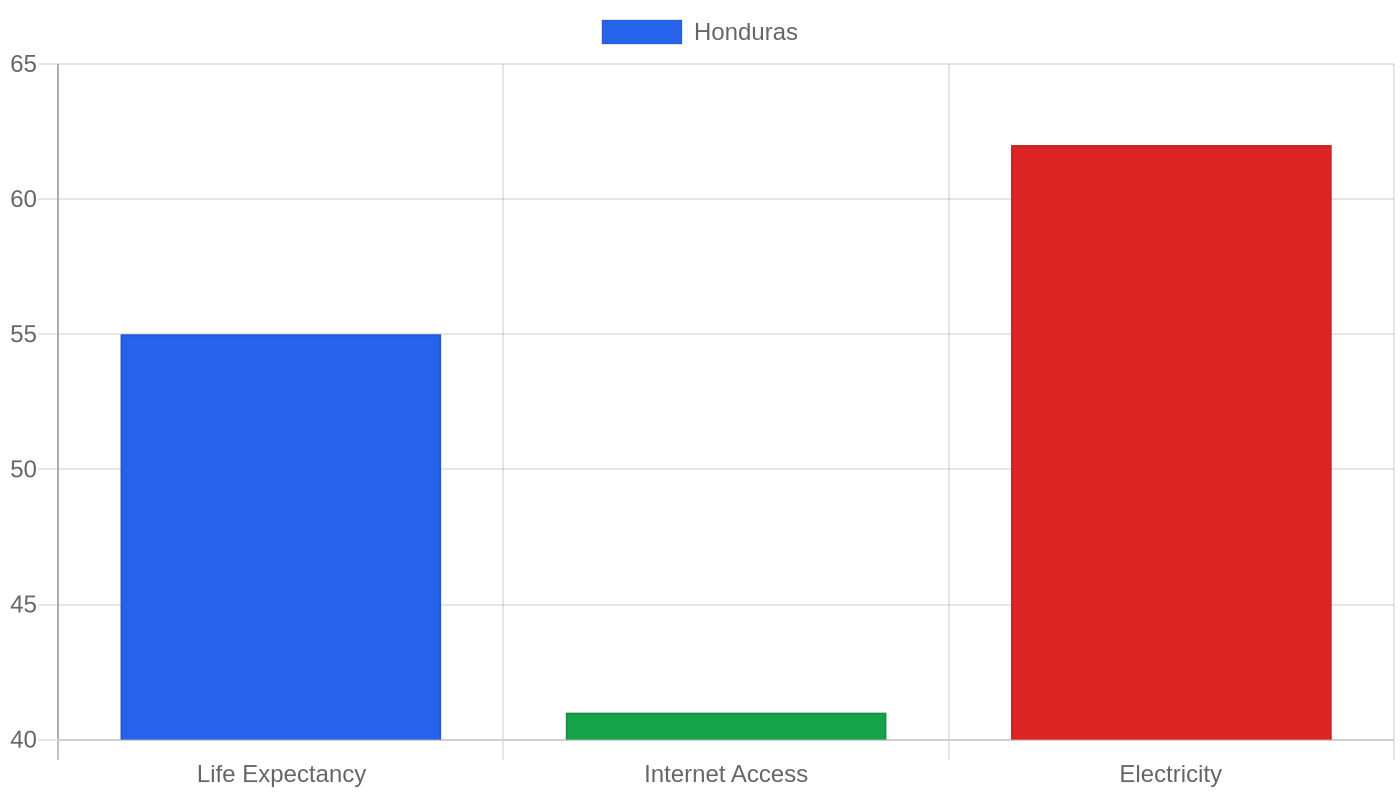
Data Gaps Require Qualitative Analysis: With key macroeconomic indicators such as GDP growth, inflation, and unemployment rates currently listed as unavailable by the World Bank, analysis must rely on structural and political frameworks rather than quantitative performance metrics.
Safety Concerns Persist: Despite political structuring, specific crime and safety indices remain unreported, suggesting that security remains an ambiguous variable for both residents and foreign investors seeking precise risk assessments.
The Architecture of Power and Policy
Honduras governs within a framework of a presidential representative democratic republic, a structure that places significant emphasis on institutional balance. The President of Honduras serves dual roles as both head of state and head of government, wielding substantial executive power exercised through the Honduran government.
This centralization of executive authority is counterbalanced by legislative power vested in the National Congress of Honduras, which is responsible for crafting laws and overseeing governmental actions. Crucially, the judiciary remains independent of both the executive branch and the legislature, providing a necessary check against potential overreach and ensuring legal disputes are resolved without political interference.
This tripartite system suggests a mature, albeit complex, political environment where policy shifts require negotiation across multiple branches. For observers, this structure implies that economic reforms cannot be enacted solely by decree but must navigate the intricate dynamics of congressional approval and judicial review. Understanding this political architecture is essential for predicting the longevity and stability of any new economic policies introduced in the coming year.
Aviation and Utilities: The Core Industries
While broad industry classifications are not explicitly detailed in the provided dataset, the top companies reveal a distinct economic profile dominated by consumer services and critical utilities. The aviation sector appears particularly robust, featuring prominent entities such as AeroCaribe de Honduras, AeroHonduras, Aerolíneas Sosa, Atlantic Airlines, EasySky, InterAirports, and Isleña Airlines.
This concentration suggests that air travel and related logistics play a pivotal role in connecting Honduras to regional and global markets, facilitating both tourism and trade. Beyond aviation, the presence of Empresa Nacional de Energía Eléctrica indicates that energy production and distribution are managed by a significant national entity, underscoring the government’s role in maintaining essential services.
Similarly, Gasolineras Uno highlights the importance of fuel retail and distribution networks in daily economic activity. Meanwhile, Hondutel stands out as a key player in telecommunications, suggesting that connectivity infrastructure is centralized under a major national operator. These sectors collectively form the backbone of the observable economy, indicating that investments in transportation, energy, and communication are likely to remain central to the country’s development strategy.
The dominance of these specific firms points to an economy where infrastructure and mobility are primary drivers of commercial interaction.
Cost of Living and Housing Dynamics
Assessing the cost of living in Honduras presents a challenge due to the absence of specific inflation CPI data and general cost metrics. Without concrete figures on price levels, it is difficult to make direct comparisons to regional averages or determine the purchasing power of the local population. However, the structure of the corporate landscape offers indirect clues about economic accessibility.
The presence of established utility providers like Empresa Nacional de Energía Eléctrica and telecom giant Hondutel suggests that essential services are standardized, potentially offering predictable baseline costs for housing and utilities. In the absence of high-end luxury consumer brands in the top company list, the market may lean towards essential goods and services rather than discretionary spending. This could imply a cost of living driven more by necessity than by premium consumption.
Investors and expatriates should anticipate that while housing costs might be moderate relative to developed nations, the lack of transparent data makes budgeting uncertain. The reliance on national entities for energy and communication also means that household expenses are likely tied closely to government-regulated tariffs rather than purely market-driven fluctuations.
Therefore, while exact numbers are elusive, the economic rhythm appears to be governed by stable, state-influenced utility costs rather than volatile consumer prices.
Investment Climate and Business Opportunities
The investment landscape in Honduras is characterized by the prominence of large-scale service and utility providers. Major companies such as AeroCaribe de Honduras, Aerolíneas Sosa, and Atlantic Airlines dominate the consumer services sector, indicating opportunities for those interested in travel, logistics, and hospitality. For foreign investors, these aviation giants represent stable pillars of the economy, potentially offering partnership or supply chain opportunities.
In the industrial and utility sectors, InterAirports and Empresa Nacional de Energía Eléctrica highlight the importance of infrastructure development. Investing in or partnering with these entities could provide access to critical national resources. Additionally, Hondutel’s position as a leading telecommunications provider suggests that digital infrastructure is a key area of focus.
The business environment appears to favor established players with strong national footprints, implying that new entrants may need to navigate existing monopolies or oligopolies. Gasolineras Uno further emphasizes the enduring relevance of traditional retail and fuel sectors. Overall, the business climate seems to reward alignment with national priorities in energy, transport, and connectivity, rather than speculative tech ventures.
Success in this market likely depends on building relationships with these entrenched corporate leaders.
Safety, Politics, and Quality of Life
Quality of life in Honduras is framed by a complex interplay of political stability and security concerns. Politically, the independence of the judiciary and the clear division of powers offer a degree of predictability for long-term planning. However, the Crime Index and Safety Index are listed as N/A, leaving a significant gap in understanding the day-to-day safety conditions for residents and visitors.
This lack of data does not necessarily indicate low crime, but rather a transparency issue that complicates risk assessment. For individuals considering relocation or business expansion, the absence of safety metrics is a notable red flag that requires careful due diligence. The political framework provides a stable backdrop, but personal security remains an open question. Happiness data is also unavailable, making it difficult to gauge social sentiment or overall well-being.
Consequently, the quality of life narrative is one of structural strength mixed with operational uncertainty. Potential residents must weigh the benefits of a democratic system against the unknown variables of personal safety and social cohesion.
Current Affairs and Strategic Outlook
Currently, the discourse around Honduras is shaped less by immediate economic shocks and more by the ongoing maintenance of its democratic institutions. With no recent news items or live indicators provided, the “now” of Honduras is defined by the status quo of its governance model. The focus remains on the functioning of the National Congress and the executive branch under the current president.
Businesses continue to operate within the established framework set by major corporations like Hondutel and Empresa Nacional de Energía Eléctrica. There are no visible signs of sudden policy shifts or electoral upheavals in the available data, suggesting a period of consolidation rather than transformation. The aviation sector continues to connect the nation, with airlines like Isleña Airlines and EasySky maintaining their routes.
This steady state implies that external investors should look for long-term trends rather than short-term gains. The lack of dynamic news events means that the country’s trajectory is being written by institutional inertia and corporate continuity. Observers should watch for any changes in the relationship between the executive and legislative branches, as this will likely dictate future economic directions.
The Bottom Line
Honduras presents a unique case study in structural resilience amidst data opacity. Investors and policymakers should watch this country not for rapid growth metrics, but for its institutional stability and the strength of its core utility and aviation sectors. It is best suited for those willing to engage with established national entities rather than chasing speculative opportunities. The absence of hard data requires a cautious, qualitative approach to decision-making.
Ultimately, Honduras offers a window into how a nation functions when political frameworks are clear, even when economic numbers are silent.
Sources & Methodology
This article is authored by Economic Pulse Net for informational and research purposes. Economic Pulse Net sources its data from multilateral institutions, national statistics bureaus, and proprietary databases. All data is believed to be current as of the date of publication.
Published: September 24, 2026 | Category: Research — Honduras
Use these signals in your own platform
Economic Pulse publishes its live signal feed through a documented, read-only API. Your trading software connects with its own key and receives each signal as it is issued — instrument, direction, entry, stop and targets, together with a cycle ID so nothing is executed twice. The feed is independent of this website and cannot change it.
Signals are informational only and are not financial advice.