Economic Pulse Net | Sources: World Bank World Development Indicators, Government Sources | 2026
Key Takeaways
– Cuba remains one of the world’s last major centrally planned economies, with the Communist Party constitutionally enshrined as the “leading force of society and of the state,” according to the country’s 1976 Constitution as amended.
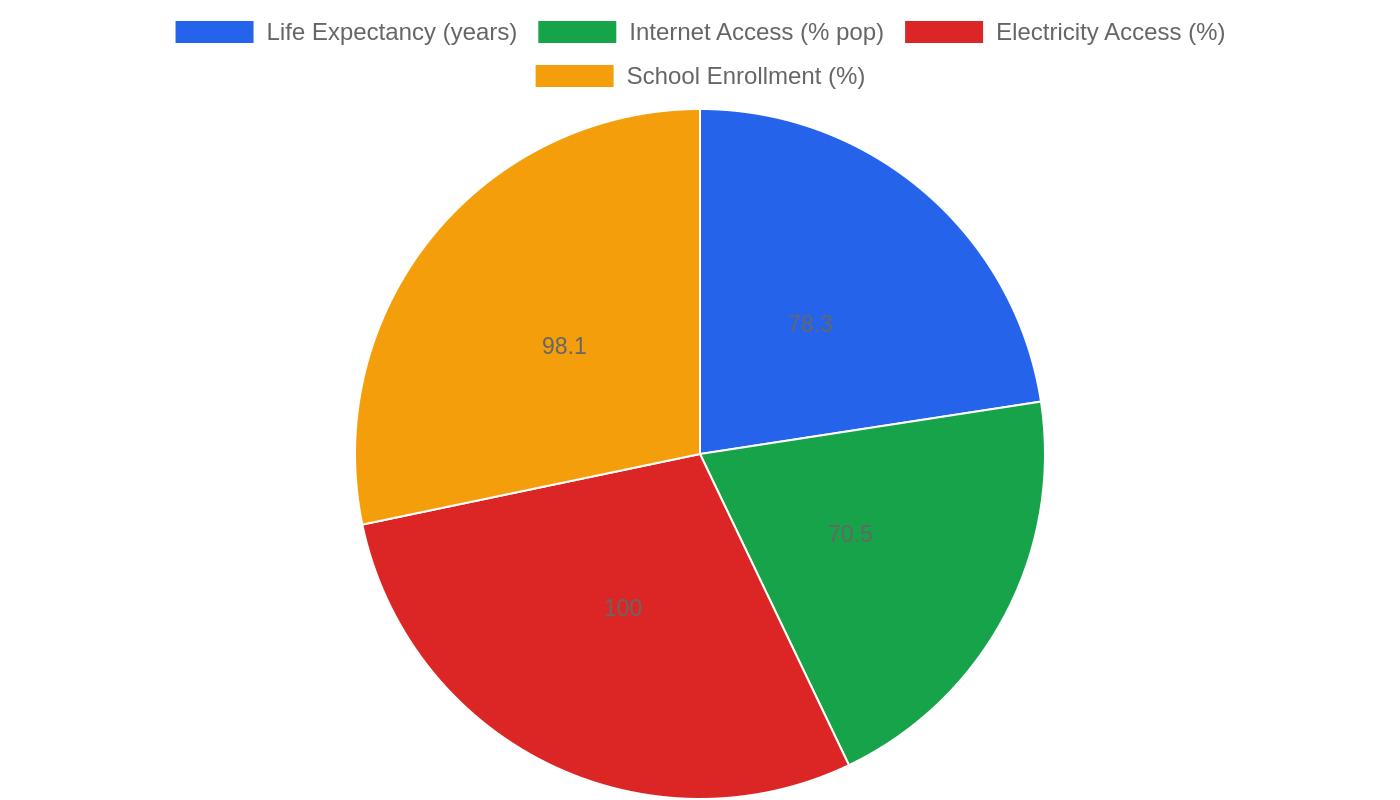
– The economic data landscape is remarkably opaque — the World Bank reports no current figures for GDP growth, inflation, unemployment, or per-capita income, making Cuba one of the most statistically invisible economies in the Western Hemisphere.
– State-owned enterprises dominate every sector of consequence, from telecommunications giant ETECSA to the globally renowned cigar manufacturer Habanos S.A., with no significant private-sector challengers listed among the top companies.
– The economy’s backbone rests on legacy industries — tobacco, petroleum, aviation, and consumer goods — all operated under state control, reflecting a model that has changed little since the 1976 Constitution defined the nation’s socialist character.
– For investors and observers, Cuba represents a high-risk, high-uncertainty environment where political ideology and economic pragmatism remain locked in an uneasy embrace.
The Numbers Gap: Reading an Economy in the Shadows
The most striking feature of Cuba’s economic profile is what is not there. The World Bank, the gold standard for cross-national economic comparison, reports no data for Cuba’s GDP growth, no inflation figures, no unemployment statistics, and no GDP per capita on a purchasing power parity basis. This absence is not an oversight — it is a statement.
Cuba has long operated outside the conventional international financial reporting system, and the data vacuum tells its own story about the country’s integration with global economic institutions.
What we do know is that Cuba’s economic structure remains defined by the state. The top companies list reads like a directory of the revolutionary state’s industrial holdings: Cubana de Aviación and Aero Caribbean in consumer services, Cubatabaco and Habanos S.A. in consumer goods, Cuba Petróleo Unión in oil and gas, and ETECSA in telecommunications. There are no private startups here, no foreign multinationals, no joint ventures that have broken into the upper echelons of corporate Cuba.
The Central Bank of Cuba anchors the financial sector, but its role is administrative rather than market-driven.
The absence of inflation data is particularly telling. In economies where the state controls prices, wages, and production, inflation becomes a political artifact rather than a market signal. Cuba’s dual currency system — long a feature of its economic landscape — has historically created distortions that make conventional CPI measurement nearly impossible.
When the World Bank cannot produce a GDP figure for a country of roughly 11 million people, it suggests either a refusal to participate in standard reporting or a statistical infrastructure that cannot produce reliable numbers.
The Cost of Living: A State-Managed Reality
Without official data on housing costs, rent, or daily expenses, any assessment of Cuban living standards must be understood through the lens of a command economy. In Cuba, the state controls the distribution of basic goods through ration books and subsidized pricing, meaning that the concept of “market prices” for housing and food operates differently than elsewhere in the region.
The absence of World Bank data on GNI per capita underscores how difficult it is to measure actual purchasing power in a system where many goods are allocated rather than sold.
What can be inferred is that the cost of living in Cuba is bifurcated. For those with access to state rations and subsidized services, basic survival costs are low. For those forced into the informal market — where goods and services are exchanged at unregulated prices — the cost of living can be extraordinarily high relative to local salaries.
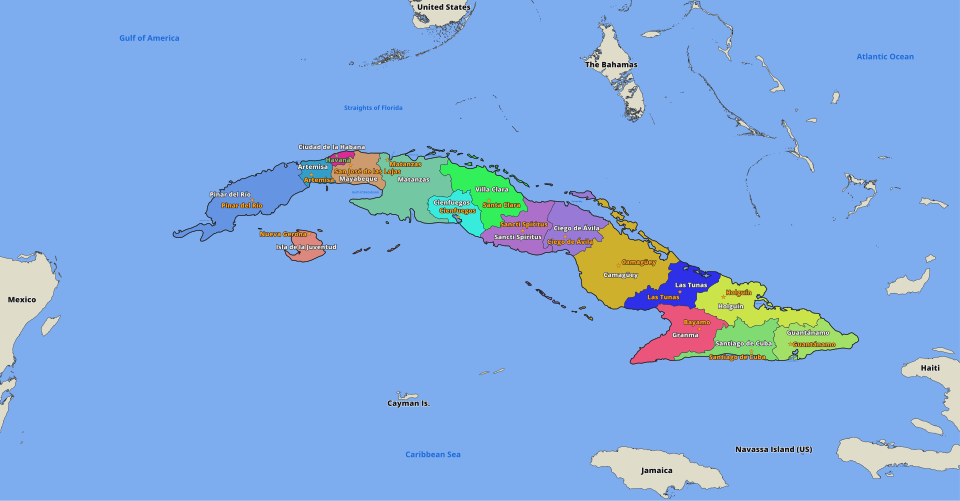
Housing, particularly in Havana, has become a complex patchwork of state allocations, informal rentals, and a growing tourism-driven market for short-term accommodations. The state’s Habaguanex S.A., which operates in the consumer services sector, is deeply involved in Havana’s tourism and hospitality infrastructure, indicating where the government sees growth potential.
Investment and Business Climate: State Monoliths and Limited Openings
For the international business community, Cuba presents a paradox. The state remains the arbiter of all economic activity, yet certain sectors show signs of cautious opening. Habanos S.A. — the joint venture that controls the global distribution of Cuban cigars — demonstrates that the government can partner with foreign interests when strategic interests align.
Similarly, Cuba Petróleo Unión’s presence in the oil and gas sector suggests ongoing efforts to attract foreign investment in energy exploration, though the terms remain tightly controlled by Havana.
The telecommunications sector, anchored by ETECSA, has seen incremental modernization in recent years, with internet access expanding from a rarity to a relative commonplace in urban areas. Yet ETECSA remains a state monopoly, and its presence as one of Cuba’s top companies reflects the government’s determination to keep strategic sectors under state control.
For foreign investors, the message is mixed: opportunities exist in tourism, cigars, rum, and potentially energy, but the legal framework remains inhospitable to conventional private enterprise. The Central Bank of Cuba’s role as the financial gatekeeper means that currency conversion, repatriation of profits, and access to international banking all flow through state channels.
Safety, Politics, and the Quality of Life
The political landscape of Cuba is unambiguous. The Republic of Cuba is a unitary, one-party socialist state adhering to Marxism-Leninism, with the Communist Party constitutionally identified as the “leading force of society and of the state.” The 1976 Constitution, amended in 1992 and 2002, frames the nation’s political identity through the ideas of José Martí and the political and social theories of Marx, Engels, and Lenin.
The system operates on the principle of democratic centralism, which in practice concentrates decision-making authority at the highest levels of the party hierarchy.
Crime and safety indices are unavailable from the World Bank data, but Cuba has historically maintained a reputation for low levels of violent crime compared to many of its regional neighbors. The state’s extensive security apparatus and the tight social controls inherent in the political system contribute to public order, though at a cost to personal and political freedoms that would be unacceptable in most democracies.
Quality of life in Cuba is a study in contradictions: excellent healthcare and education outcomes relative to income levels, but persistent shortages of consumer goods, housing constraints, and limited economic opportunity for ordinary citizens.
What’s Happening Now: The Slow Burn of Change
Cuba in 2026 stands at a moment of generational transition. The economic model established in the 1976 Constitution remains intact, but the pressures for change are mounting from multiple directions. The state’s top companies — from Aero Caribbean to EGREM, the state music and entertainment company — continue to operate, but they do so in an environment of chronic resource constraints and aging infrastructure. The tourism sector, anchored by Habaguanex S.A.
and supported by the aviation companies, represents the most dynamic part of the economy, yet it generates revenue that must be carefully managed by the Central Bank to address Cuba’s persistent balance-of-payments challenges.
The telecommunications sector under ETECSA has become a quiet battleground between the state’s desire for control and the population’s demand for connectivity. Meanwhile, the petroleum operations of Cuba Petróleo Unión continue to search for ways to offset declining domestic production and manage the costs of imported energy. For the Cuban people, the daily reality is one of scarcity tempered by resilience — a society that has learned to navigate shortages with creativity and solidarity.
The political system shows no signs of fundamental transformation, but the economic pressures are real, and how the state responds will define Cuba’s trajectory for the next generation.
The Bottom Line
Cuba is a country that defies conventional economic analysis. With no reliable GDP figures, no inflation data, and no official unemployment statistics, it exists outside the metrics that define modern economic discourse. For policymakers, academics, and investors with a long-term perspective, Cuba offers a unique case study in how a command economy adapts — or fails to adapt — to the realities of the 21st century.
The state’s control over every major industry, from cigars to telecommunications, ensures that change will come slowly and on the government’s terms. Watch Cuba if you are interested in the limits of economic liberalization within a one-party state, or if you see opportunity in the island’s tourism, energy, and consumer goods sectors. But come prepared for a landscape where the data is scarce, the rules are opaque, and the only certainty is that the state remains firmly in charge.
Sources & Methodology
This article is authored by Economic Pulse Net for informational and research purposes. Economic Pulse Net sources its data from multilateral institutions, national statistics bureaus, and proprietary databases. All data is believed to be current as of the date of publication.
Published: August 01, 2026 | Category: Research — Cuba
Use these signals in your own platform
Economic Pulse publishes its live signal feed through a documented, read-only API. Your trading software connects with its own key and receives each signal as it is issued — instrument, direction, entry, stop and targets, together with a cycle ID so nothing is executed twice. The feed is independent of this website and cannot change it.
Signals are informational only and are not financial advice.