Economic Pulse Net | Sources: World Bank World Development Indicators, Government Sources | 2026
Key Takeaways
* A Unique Political Economy: Cuba operates as a unitary one-party socialist state guided by Marxism-Leninism, with the Communist Party defined as the leading force of society and the state.
State-Dominated Corporate Landscape: Major economic activity is concentrated in state-controlled entities, particularly in aviation, telecommunications, tobacco, and energy sectors.
Data Scarcity Masks Reality: Standard macroeconomic indicators such as GDP growth, inflation, and unemployment are currently unavailable, forcing reliance on qualitative analysis of industrial output and corporate structures.
Key Industrial Pillars: The economy is anchored by consumer goods (notably tobacco), oil and gas, and essential services like telecommunications and banking, all dominated by specific national corporations.
Political Stability via Centralization: The political system relies on democratic centralism within a Marxist-Leninist framework, providing a stable but rigid governance structure that dictates economic policy.
The Invisible Engine: Analyzing an Economy Without Numbers
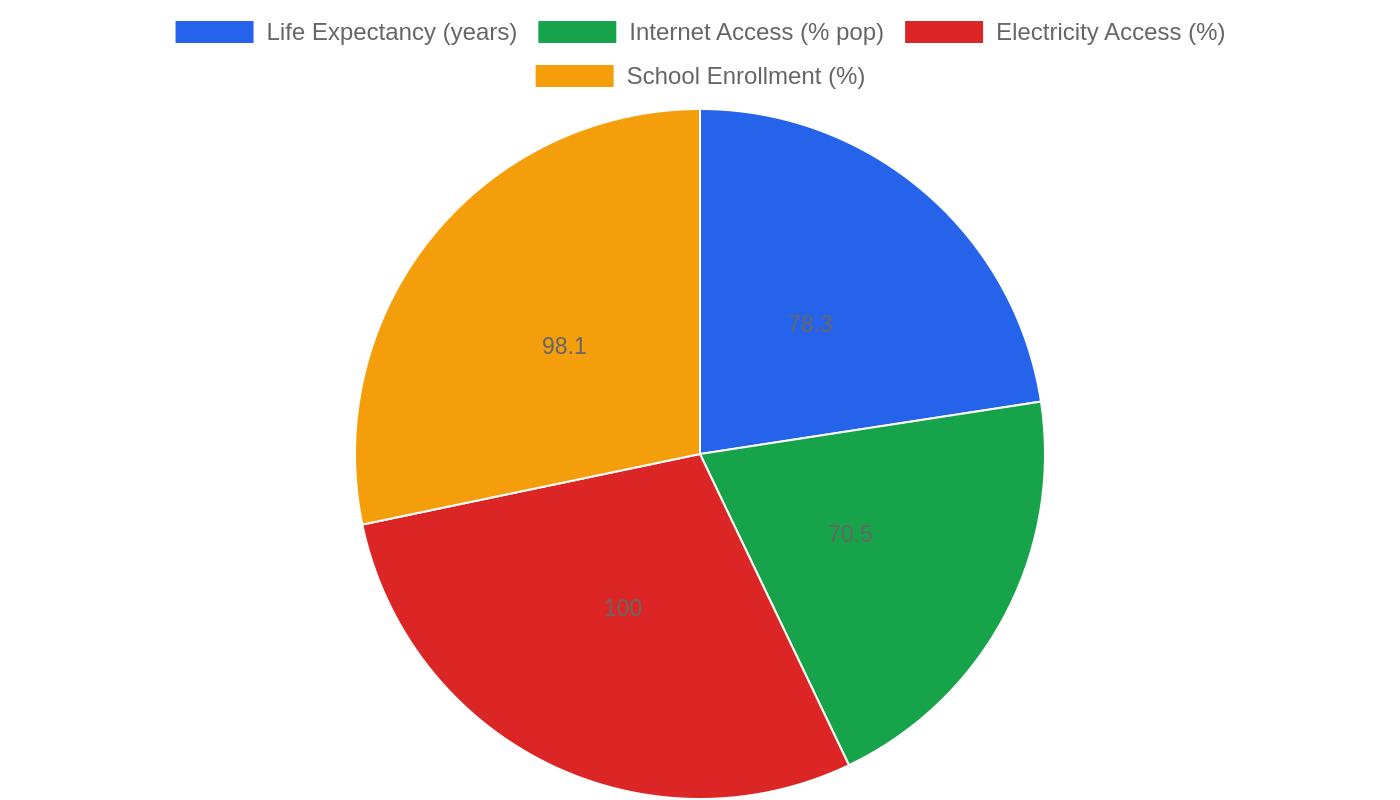
Understanding Cuba’s economic trajectory presents a unique journalistic challenge: the absence of standard quantitative metrics. According to World Bank data, critical indicators including GDP growth, inflation CPI, unemployment rates, and total GDP figures are listed as N/A. This lack of hard data does not imply economic stagnation or silence; rather, it reflects the opacity of a centrally planned economy where market signals are replaced by state directives.
To understand the pulse of this nation, one must look beyond traditional macroeconomic aggregates and examine the structural pillars of its industry. The economy is heavily reliant on specific state-owned enterprises that manage everything from air travel to tobacco production. For instance, the presence of major players like Cubatabaco and Habanos S.A. highlights the enduring importance of luxury consumer goods in the national revenue mix.
Similarly, the dominance of ETECSA in telecommunications and Cuba Petróleo Unión in energy underscores the state’s control over infrastructure and natural resources. While we cannot measure the speed of growth, we can observe the weight of these industries. They form the backbone of a system where private enterprise is limited, and success is often measured by production quotas and export volumes rather than stock prices.
This structural rigidity means that economic shocks are absorbed differently than in market economies, often through rationing or subsidy adjustments rather than price volatility. Therefore, the “N/A” labels are not merely gaps in reporting but reflections of a distinct economic model that prioritizes stability and sovereignty over transparent, market-driven metrics.
The Daily Grind: Cost of Living in a Planned System
In the absence of official Consumer Price Index (CPI) data, gauging the cost of living in Cuba requires an understanding of how state subsidies and dual-currency dynamics historically shaped daily expenses. Current World Bank records indicate no available data for inflation or general cost-of-living indices, which complicates direct comparisons with regional averages.
However, the landscape is defined by the interplay between state-subsidized essentials and the black market or specialized stores where prices reflect true scarcity. Housing costs and rent are largely regulated by the state, meaning that while cash income may be low, access to basic shelter is guaranteed, albeit with significant maintenance backlogs.
Daily expenses for food and utilities are partially offset by government provisions, creating a complex reality where nominal prices do not always correlate with actual purchasing power. Consumers often navigate a dual reality: accessing subsidized goods through state channels while paying premium prices for imported items or services provided by newer private entities.
This environment creates a unique pressure on household budgets, where the value of money is less about inflation rates and more about availability and access. Without concrete inflation figures, residents and investors alike must rely on anecdotal evidence and local market observations to assess whether their wages keep pace with the rising cost of imported goods.
The lack of transparent pricing data means that the true burden of living in Cuba is felt in the queues, the shortages, and the ingenuity required to secure everyday necessities.
Investment & Business Climate: Giants of State Control
The investment landscape in Cuba is characterized by the overwhelming dominance of state-owned enterprises, creating a business environment that is both protected and constrained. Top companies in the country are not diversified conglomerates but specialized monoliths controlling specific sectors. In consumer services, Aero Caribbean, Aerotaxi, Cubana de Aviación, EGREM, and Habaguanex S.A. form the backbone of tourism and transportation.
These entities manage everything from international flights to domestic taxi services, ensuring that the flow of people—and therefore potential foreign currency—remains under strict state oversight. The financial sector is equally centralized, with the Central Bank of Cuba acting as the primary monetary authority and likely the sole provider of formal banking services. In the goods sector, Cubatabaco and Habanos S.A.
are globally recognized brands, leveraging Cuba’s reputation for high-quality cigars to generate vital export revenue. Meanwhile, ETECSA controls all telecommunications, serving as the gateway for digital connectivity and a crucial source of state income. Energy security is managed by Cuba Petróleo Unión, highlighting the strategic importance of oil and gas in maintaining industrial operations.
For foreign investors, these companies represent the only viable entry points, as private enterprise remains restricted. The business climate is thus defined by negotiation with state actors rather than engagement with free markets. Opportunities exist, particularly in tourism and agriculture, but they require navigating a bureaucratic framework where political loyalty and state alignment are as important as capital efficiency.
Safety, Politics & Quality of Life: The Marxist-Leninist Framework
Cuba’s social fabric is woven tightly with its political ideology, creating a society that is politically homogeneous but economically strained. The Republic of Cuba is a unitary one-party socialist state adhering to Marxism-Leninism, with the Constitution of 1976 (amended in 1992 and 2002) guiding the nation through the ideas of José Martí and Marx, Engels, and Lenin.
The Communist Party of Cuba is constitutionally defined as the “leading force of society and of the state,” ensuring that political dissent is minimal but so is political pluralism. This system operates on the principle of democratic centralism, which consolidates decision-making power at the top while expecting strict adherence from below. Regarding safety, current Crime and Safety Indices are listed as N/A, making it difficult to quantify the risk profile using standard global benchmarks.
However, the political stability derived from this centralized control often translates to low levels of violent crime, even if civil liberties are restricted. The quality of life is heavily influenced by state-provided healthcare and education, which remain free at the point of service, though the quality has fluctuated due to economic hardships.
Happiness data is similarly obscured by the lack of independent polling, but the prevailing sentiment among citizens is often a mix of pride in national sovereignty and frustration with material shortages. The political landscape is static, with little room for opposition, creating a predictable but rigid social environment. For expatriates and locals alike, the trade-off is clear: security and social services in exchange for political conformity and economic limitation.
What’s Happening Now: Navigating the Ideological Core
Currently, the most significant narrative in Cuba is not a sudden reform wave, but the steady reinforcement of its ideological foundations. Recent constitutional amendments have reaffirmed the role of the Communist Party, signaling a commitment to the existing socialist model rather than a shift toward liberalization. There are no recent elections or major policy shifts reported that would suggest a change in direction; instead, the focus remains on maintaining the integrity of the state-led economy.
The business developments are incremental, with state companies like ETECSA and Habanos S.A. continuing to dominate their respective sectors without significant new private entrants. Inflation trends are unreported, suggesting that the government either manages prices administratively or chooses not to publish volatile figures. The political landscape remains unchanged, with the Marxist-Leninist framework providing the sole lens through which economic decisions are made.
This consistency offers a degree of predictability for long-term observers, even as it limits short-term opportunities. The “current affairs” in Cuba are defined by endurance rather than transformation. The state continues to prioritize self-reliance and ideological purity, resisting external pressures for market-oriented reforms. This approach means that any economic improvement must come from within the existing system, likely through increased efficiency in state enterprises rather than deregulation.
The news cycle is quiet because the fundamental rules of the game have not changed; the struggle is one of survival and adaptation within a closed loop.
The Bottom Line
Cuba presents a rare case study in economics: a functioning state with invisible numbers. Investors and analysts should watch this country not for explosive growth, but for resilience and structural shifts within the public sector. The dominance of key industries like tobacco, tourism, and energy offers niche opportunities for those willing to engage with state partners. However, the lack of transparent data on inflation and GDP growth demands extreme caution and qualitative due diligence.
This is a market defined by politics first, and economics second.
Sources & Methodology
This article is authored by Economic Pulse Net for informational and research purposes. Economic Pulse Net sources its data from multilateral institutions, national statistics bureaus, and proprietary databases. All data is believed to be current as of the date of publication.
Published: October 09, 2026 | Category: Research — Cuba
Use these signals in your own platform
Economic Pulse publishes its live signal feed through a documented, read-only API. Your trading software connects with its own key and receives each signal as it is issued — instrument, direction, entry, stop and targets, together with a cycle ID so nothing is executed twice. The feed is independent of this website and cannot change it.
Signals are informational only and are not financial advice.