Economic Pulse Net | Sources: World Bank World Development Indicators, Government Sources | 2026
Key Takeaways
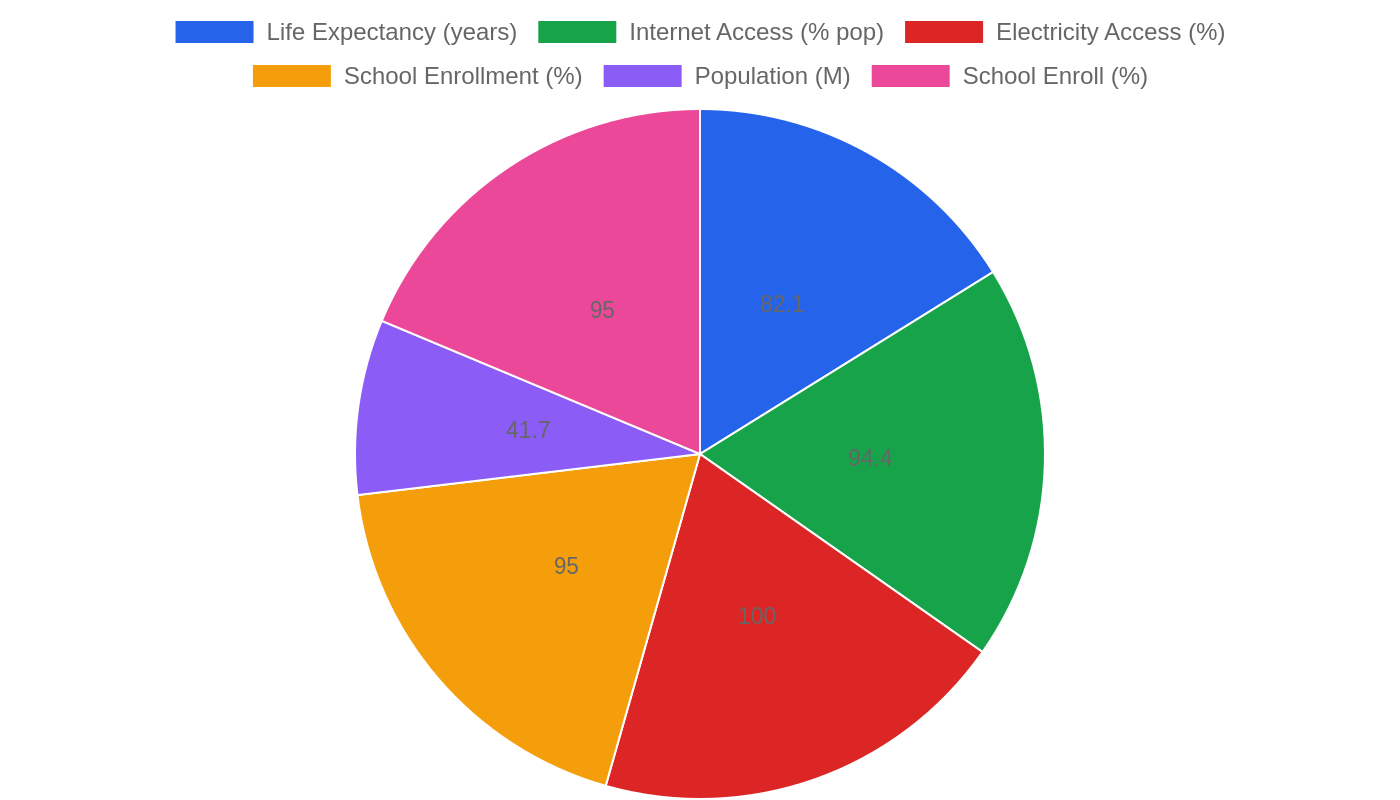
– Canada’s economy demonstrates remarkable resilience with inflation cooling to 2.07%, nearly hitting the Bank of Canada’s target threshold
– With a GDP per capita (PPP) of $66,745.82, Canadians enjoy one of the highest living standards among advanced economies, though affordability pressures persist
– The political landscape remains stable as a “full democracy” with strong institutional frameworks, providing a predictable environment for business
– Chinese electric vehicle manufacturers are now targeting Quebec’s market, signaling a potential shift in Canada’s automotive and trade dynamics
– Major homegrown companies like 1-800-GOT-JUNK?
and A&W illustrate a diverse economy spanning industrials, consumer services, and advanced manufacturing
The Maple Leaf Economy — Stability in an Unstable World
Canada’s economic narrative in 2026 is one of measured stability against a backdrop of global uncertainty. The World Bank’s latest data reveals an economy that has managed to bring inflation down to a remarkably controlled 2.07 percent — a figure that sits almost exactly at the Bank of Canada’s target range. This is no small achievement.
After the inflationary shocks that rattled global markets in recent years, Canada’s ability to tame price pressures without triggering a severe contraction speaks to the underlying resilience of its economic structure.
The country’s GDP per capita based on purchasing power parity stands at $66,745.82, according to the World Bank. This figure places Canada firmly among the world’s wealthiest nations, reflecting a mature economy with high productivity in key sectors. The GNI per capita of $56,420.0 further underscores the breadth of income distribution, though economists caution that aggregate figures can mask regional disparities between resource-rich provinces like Alberta and manufacturing-heavy Ontario.
What makes Canada’s economic story particularly compelling is the composition of its industrial base. The top companies list provided by the data reveals a fascinating diversity: from 1-800-GOT-JUNK? in the industrials sector to A&W in consumer services, from ABS Friction in manufacturing to Advanced Cyclotron Systems in health care. This is not a one-trick economy. Canada has built a broad foundation that includes logistics, telecommunications, retail, and high-tech medical equipment manufacturing.
The presence of Norda Stelo and 3Way International Logistics in the industrials category suggests a robust infrastructure and supply-chain services sector that supports both domestic needs and international trade.
The unemployment rate is not specified in the available data, but the combination of low inflation and high per-capita income typically points to an economy operating near its potential. Economists watching Canada note that the country’s banking system remains among the soundest globally, and its natural resource wealth — though not detailed in this dataset — continues to provide a buffer against external shocks.
The Affordability Paradox — High Incomes, High Costs
Canada presents a curious paradox for residents and observers alike: one of the world’s highest standards of living coexists with some of the most challenging affordability conditions in the developed world. While the World Bank data does not provide specific cost-of-living figures, the lived reality across Canadian cities tells a story that economists and policymakers are grappling with daily.
The GDP per capita (PPP) figure of $66,745.82 suggests that the average Canadian has significant purchasing power in theory. In practice, however, housing costs in major metropolitan areas like Toronto and Vancouver have consumed an increasingly large share of household income. The gap between headline economic strength and household financial comfort has become a central political issue. Renters in particular face a tight market, with vacancy rates hovering near historic lows in many urban centers.
The presence of companies like A Buck or Two in the top companies list is telling — it signals that discount retail and value-conscious consumer services remain vital parts of the economy. When a dollar-store chain ranks among a nation’s prominent businesses, it often reflects a consumer base that is price-sensitive despite high average incomes.
Daily expenses for groceries, transportation, and utilities have all risen in line with the 2.07 percent inflation rate, meaning that while price increases have moderated, the cumulative effect of past inflation continues to strain household budgets.
For prospective newcomers or investors, the Canadian cost-of-living landscape demands careful city-by-city analysis. The data does not provide regional breakdowns, but the national narrative is clear: Canada offers high earning potential, but that potential is increasingly offset by the cost of securing adequate housing.
Where Capital Meets Opportunity — Canada’s Business Climate
The roster of Canada’s top companies offers a window into where the smart money is flowing. The industrials sector dominates the list, with 1-800-GOT-JUNK?, Norda Stelo, and 3Way International Logistics all representing a logistics and infrastructure backbone that supports the broader economy. This is a country built on moving goods — whether raw resources from the north, manufactured products across the border, or consumer goods to a population of over 41.6 million people.
The consumer services sector is equally prominent, with A&W, A Buck or Two, Addition Elle, and Ache Records all making the top ten. This suggests a robust domestic consumption market that supports both quick-service restaurants and specialty retail. A&W’s presence is particularly noteworthy — it is a Canadian fast-food institution that has successfully competed against global giants, demonstrating that homegrown brands can thrive in a market often dominated by American chains.
In the health care and technology space, Advanced Cyclotron Systems represents Canada’s growing expertise in medical isotope production and cancer treatment technology. This is a high-value, export-oriented industry that positions Canada as a player in the global health care supply chain. ABS Friction in manufacturing and Access Communications in telecommunications round out a picture of an economy that has not abandoned its industrial roots but has layered on modern service and technology sectors.
For investors, the Canadian business environment benefits from the political stability described in the data — a “full democracy” with a tradition of liberalism and an emphasis on social justice. This creates predictable regulatory frameworks, strong property rights, and a legal system that supports commercial activity.
The absence of a specific crime index in the data should not be interpreted as a gap; Canada is widely recognized as having low crime rates and high institutional trust, factors that reduce the risk premium for business operations.
Democracy, Safety, and the Canadian Quality of Life
The political landscape data paints Canada as a society built on consensus and stability. Described as a “full democracy” with a tradition of liberalism and an egalitarian, moderate political ideology, Canada offers a governance environment that business leaders and residents alike find reassuring. Since the 1960s, an emphasis on social justice has been a distinguishing element of Canada’s political culture, according to the available data.
This manifests in policies ranging from universal health care to robust social safety nets.
The founding principles of Canadian federalism — “peace, order, and good government” alongside an Implied Bill of Rights — provide the constitutional framework that underpins daily life. These are not abstract concepts. They translate into a society where political transitions are orderly, institutions are respected, and the rule of law is consistently applied. For a country of over 41.6 million people spanning a vast and diverse geography, this political cohesion is remarkable.
While the data does not provide specific crime or safety indices, Canada’s reputation as one of the safest countries in the world is well established. The combination of strong social programs, moderate political discourse, and effective law enforcement creates an environment where quality of life extends beyond mere economic metrics.
The high GDP per capita figure is meaningful precisely because it is paired with these institutional strengths — Canadians not only earn well, they live in a society that functions effectively.
The Quebec EV Signal — China’s Auto Giants Knock on Canada’s Door
The most immediately relevant development in Canada’s current affairs is the news that Chinese electric vehicle manufacturers have set their sights on the Quebec market, as reported by CBC News. This is not a minor business story — it represents a potential paradigm shift in Canada’s automotive and trade landscape. Quebec, with its abundant hydroelectric power and ambitious electrification targets, has become a natural destination for EV investment.
The province already hosts battery gigafactories and has cultivated a supply chain for the electric vehicle transition.
The arrival of Chinese EV makers introduces both opportunity and complexity. On one hand, increased competition could lower prices for Canadian consumers and accelerate the adoption of electric vehicles. On the other hand, it raises questions about trade policy, technology transfer, and geopolitical alignment.
Canada’s political establishment, with its emphasis on social justice and environmental goals, must weigh the benefits of affordable EVs against concerns about data security, labor standards, and the health of domestic manufacturing.
The broader business news from CBC indicates that this is part of a larger pattern of economic activity worth watching. Canada’s economy is not static — it is responding to global shifts in trade, technology, and energy. The 2.07 percent inflation figure provides the Bank of Canada with room to maneuver on interest rates, potentially supporting further investment.
For businesses watching Canada, the Quebec EV story is a signal that the country remains open to international capital while navigating the complex politics of the green transition.
The Bottom Line
Canada in 2026 is an economy that has weathered the inflation storm better than most, with a diversified industrial base and political stability that many nations envy. The country deserves attention from investors seeking a safe, predictable market with high per-capita income and emerging opportunities in clean technology and advanced manufacturing. For businesses in the EV supply chain, logistics, or consumer services, Canada offers a sophisticated market with room for growth.
The combination of strong institutions, controlled inflation, and strategic positioning in the global energy transition makes Canada a country to watch — not for dramatic headlines, but for steady, reliable performance.
Sources & Methodology
This article is authored by Economic Pulse Net for informational and research purposes. Economic Pulse Net sources its data from multilateral institutions, national statistics bureaus, and proprietary databases. All data is believed to be current as of the date of publication.
Published: July 18, 2026 | Category: Research — Canada
Use these signals in your own platform
Economic Pulse publishes its live signal feed through a documented, read-only API. Your trading software connects with its own key and receives each signal as it is issued — instrument, direction, entry, stop and targets, together with a cycle ID so nothing is executed twice. The feed is independent of this website and cannot change it.
Signals are informational only and are not financial advice.