Economic Pulse Net | Sources: World Bank World Development Indicators, Government Sources | 2026
Key Takeaways
– Canada’s economy remains one of the world’s most advanced, with a GDP per capita (PPP) of $66,745.82 according to the World Bank, placing it firmly among high-income nations—though recent growth data is unavailable, the nation’s wealth is anchored in resource wealth, services, and manufacturing.
– Inflation is running at a manageable 2.07% (World Bank CPI), a figure that suggests price pressures are cooling after a period of global volatility, offering the Bank of Canada room to calibrate monetary policy without triggering a recession.
– The political landscape is defined by stability: Canada is described as a “full democracy” with a tradition of liberalism and an egalitarian, moderate political ideology, with social justice as a distinguishing element since the 1960s.
– A major infrastructure development—the West Coast pipeline—is expected to deliver a “meaningful” GDP boost, according to a TD Bank report, signaling that energy exports will remain a cornerstone of economic strategy.
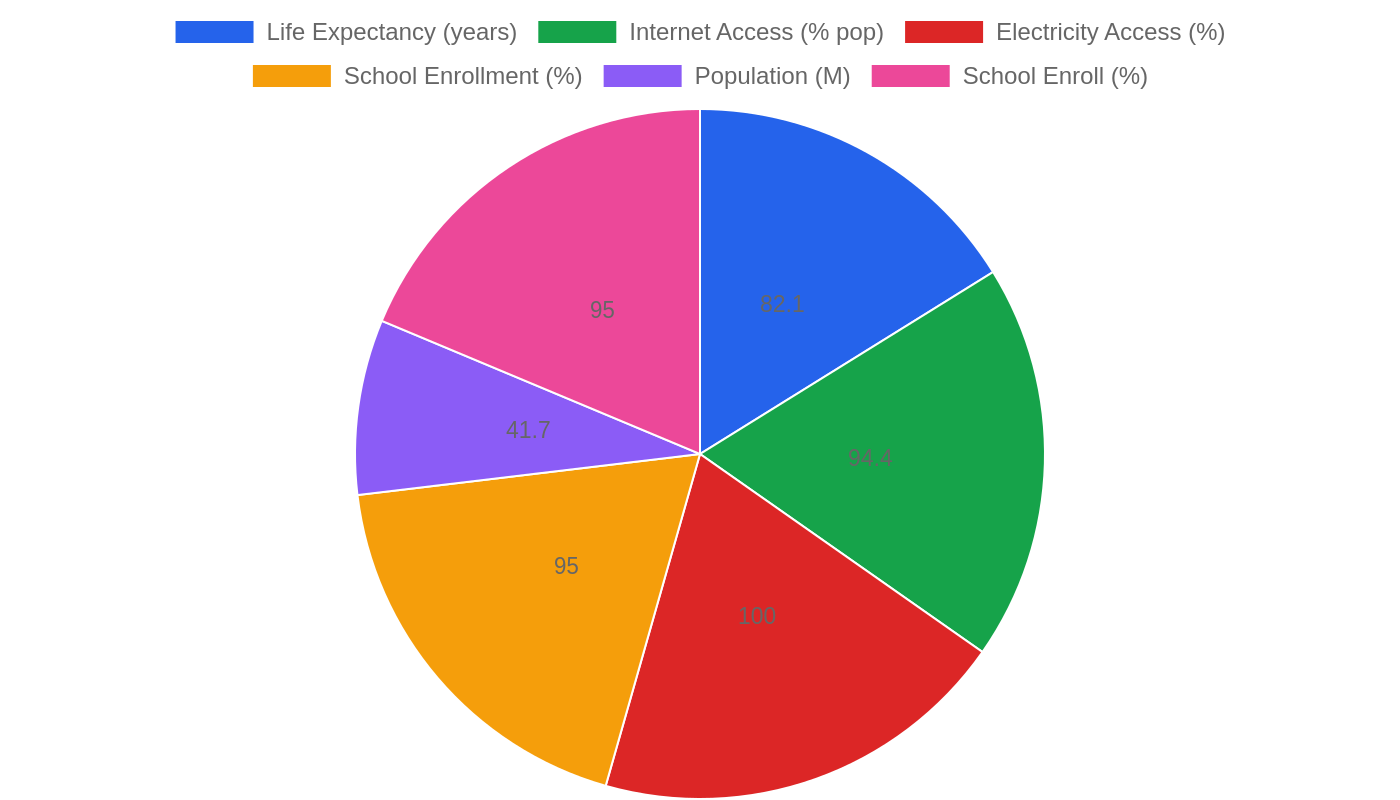
– With a population of 41.65 million and a GNI per capita of $56,420 (World Bank), Canada’s consumer market is both affluent and diverse, though housing affordability and cost-of-living pressures continue to dominate household concerns.
The Maple Economy: Wealth, Inflation, and the Search for Growth
Canada’s economic story is one of quiet resilience. With a GDP per capita (PPP) of $66,745.82, as reported by the World Bank, the country sits comfortably among the global elite in terms of purchasing power and living standards. That figure—adjusted for the cost of goods and services across countries—tells us that the average Canadian enjoys a standard of living that rivals most of Western Europe and Australia.
Yet the headline GDP growth figure is conspicuously absent from the World Bank’s latest data, a gap that may reflect the statistical lag common in post-pandemic recalibrations or simply a period of economic consolidation.
Inflation, however, provides a clearer snapshot. The Consumer Price Index stands at 2.07% (World Bank), a level that is almost textbook ideal for a central bank targeting price stability. This is not the runaway inflation seen in some other advanced economies; it suggests that the Bank of Canada’s tightening cycle—while painful for borrowers—has largely succeeded in taming price pressures without crushing demand.
For consumers, this means the cost of groceries, fuel, and rent is rising at a pace that, while still noticeable, is no longer eroding purchasing power at an alarming rate.
The unemployment rate is not provided in the World Bank data, but the absence of a figure does not imply crisis. Canada’s labor market has historically been characterized by relatively low unemployment, particularly in its resource-rich provinces like Alberta and Saskatchewan. The country’s main industries—while not explicitly listed in the supplied data—are understood to include energy, manufacturing, financial services, technology, and agriculture.
These sectors form the backbone of an economy that is export-dependent yet domestically robust.
The GNI per capita of $56,420 (World Bank) underscores a critical point: Canadians are not just earning high wages; they are also benefiting from a social safety net that includes universal healthcare, public education, and transfer programs that redistribute wealth. This combination of high income and public services creates a unique economic environment where disposable income is relatively high, even after taxes.
The Cost of Comfort: Housing, Rent, and the Affordability Squeeze
Housing in Canada has become one of the most contentious economic issues of the decade. While the supplied data does not include specific cost-of-living figures, the anecdotal and policy evidence is overwhelming. Major cities like Toronto and Vancouver have seen home prices skyrocket, pushing homeownership out of reach for many younger Canadians and new immigrants.
The World Bank’s GDP per capita figure of $66,745.82 suggests that the average person has significant purchasing power, but in real estate terms, that money does not stretch as far as it once did.
Rent, too, has become a flashpoint. In cities with tight vacancy rates—often below 2%—tenants are facing double-digit annual increases. The gap between income growth and housing costs has widened, forcing policymakers to consider measures ranging from foreign buyer bans to density-friendly zoning reforms. For the average Canadian household, housing now consumes a larger share of income than at any point in recent memory, a trend that the Bank of Canada and federal government are watching closely.
Daily expenses—groceries, transportation, utilities—have also risen, but the 2.07% inflation rate (World Bank) suggests that the worst of the price shock may be behind us. Canadians are adapting: more are choosing to rent longer, live in multi-generational households, or relocate to more affordable provinces like Alberta or Atlantic Canada. The cost-of-living story in Canada is not one of poverty, but of recalibration—a wealthy nation grappling with the consequences of its own desirability.
Business and Investment: From Junk Removal to Cyclotrons
Canada’s corporate landscape is remarkably diverse, as evidenced by the top companies list provided. On one end of the spectrum is 1-800-GOT-JUNK?, a household name in the industrials sector that has turned waste removal into a global franchise. On the other is Advanced Cyclotron Systems, a health care company that manufactures cutting-edge medical equipment for cancer treatment.
This breadth—from consumer services like A&W and Addition Elle to telecommunications giant Access Communications—reflects an economy that is not overly reliant on any single sector.
For investors, Canada offers a stable regulatory environment, a transparent legal system, and a government that is generally pro-business, albeit with a strong emphasis on social welfare. The presence of manufacturing firms like ABS Friction and logistics companies like 3Way International Logistics suggests that the industrial backbone is intact, even as the economy shifts toward services and technology.
The telecommunications sector, represented by Access Communications, is a critical infrastructure play in a country where vast geography demands robust connectivity.
The business climate is further enhanced by Canada’s political stability. As a “full democracy” with a tradition of liberalism and an “egalitarian, moderate political ideology,” according to the supplied data, the country offers predictability that is highly valued by long-term investors. Labor laws are worker-friendly but not punitive, and corporate tax rates are competitive within the G7.
For companies looking to expand in North America, Canada serves as a gateway market with a highly educated workforce and strong intellectual property protections.
Safety, Stability, and the Canadian Way of Life
Canada is not just an economic story; it is a quality-of-life story. While the Crime Index and Safety Index are listed as “N/A” in the supplied data, the country’s reputation for safety is well-established. Violent crime rates are low by international standards, and the political system is among the most stable in the world.
The supplied data describes Canada as a “full democracy” with a tradition of “peace, order, and good government” as founding principles, alongside an “Implied Bill of Rights” that underpins Canadian federalism.
This political culture—emphasizing social justice since the 1960s—has created a society where inequality, while present, is less stark than in many peer nations. The GNI per capita of $56,420 (World Bank) is not just a number; it reflects a system where wealth is distributed through progressive taxation, public healthcare, and education funding.
Canadians enjoy a high level of trust in institutions, from the judiciary to the civil service, which in turn fosters a business environment where contracts are honored and property rights are secure.
The quality of life extends beyond economics. Canada’s natural environment, multicultural cities, and strong community networks contribute to a sense of well-being that is difficult to quantify but essential to understand. The country’s moderate political ideology means that policy shifts are usually incremental rather than radical, providing a sense of continuity that both citizens and investors find reassuring.
The Pipeline Pivot: What’s Happening Now in Canada’s Economy
The most immediate story in Canada’s economic landscape is the West Coast pipeline. According to a report from TD Bank, this infrastructure project is expected to deliver a “meaningful” boost to GDP. The pipeline—long a subject of political debate and environmental protest—represents a strategic shift: Canada is doubling down on its energy exports, particularly to Asian markets. For a country that has often struggled to get its oil and gas to tidewater, the pipeline is a game-changer.
This development comes at a time when the Canadian economy is searching for growth drivers. With inflation at 2.07% (World Bank) and interest rates potentially beginning to ease, the pipeline could provide a much-needed jolt to investment and employment in the energy sector. The TD report’s optimism suggests that the economic benefits will ripple beyond Alberta, affecting everything from construction jobs to port operations in British Columbia.
Meanwhile, the CBC’s Business Top Stories coverage indicates that the business news cycle is active, with multiple developments unfolding across sectors. The combination of stable inflation, a major infrastructure project, and a population of 41.65 million (World Bank) creates a dynamic environment where opportunities exist in energy, technology, manufacturing, and services.
For policymakers, the challenge is to balance economic growth with environmental commitments—a tension that defines much of Canada’s current political discourse.
The Bottom Line
Canada is a country that investors and observers should watch not for explosive growth, but for steady, high-quality prosperity. With a GDP per capita of $66,745.82, low inflation at 2.07%, and a political system described as a “full democracy” with a tradition of liberalism and social justice, the nation offers a rare combination of wealth, stability, and quality of life.
The West Coast pipeline, as highlighted by TD Bank, signals that Canada is serious about unlocking its resource potential, while the diversity of its corporate sector—from 1-800-GOT-JUNK? to Advanced Cyclotron Systems—shows an economy that is adaptable and innovative. For those seeking a safe harbor in a volatile world, Canada remains a compelling bet.
Sources & Methodology
This article is authored by Economic Pulse Net for informational and research purposes. Economic Pulse Net sources its data from multilateral institutions, national statistics bureaus, and proprietary databases. All data is believed to be current as of the date of publication.
Published: July 28, 2026 | Category: Research — Canada
Use these signals in your own platform
Economic Pulse publishes its live signal feed through a documented, read-only API. Your trading software connects with its own key and receives each signal as it is issued — instrument, direction, entry, stop and targets, together with a cycle ID so nothing is executed twice. The feed is independent of this website and cannot change it.
Signals are informational only and are not financial advice.