Economic Pulse Net | Sources: World Bank World Development Indicators, Government Sources | 2026
Key Takeaways
* Sovereign Structure: Bermuda operates as a UK Overseas Territory with the British Monarch as head of state, represented locally by Governor Andrew Murdoch since January 2025.
Financial Dominance: The economy is anchored by a robust financial services sector, hosting major global players like Fidelity International and the Bermuda Monetary Authority.
Industrial Diversity: Beyond finance, the island supports significant industrial interests, including shipping giants like Frontline Ltd. and Golden Ocean Group.
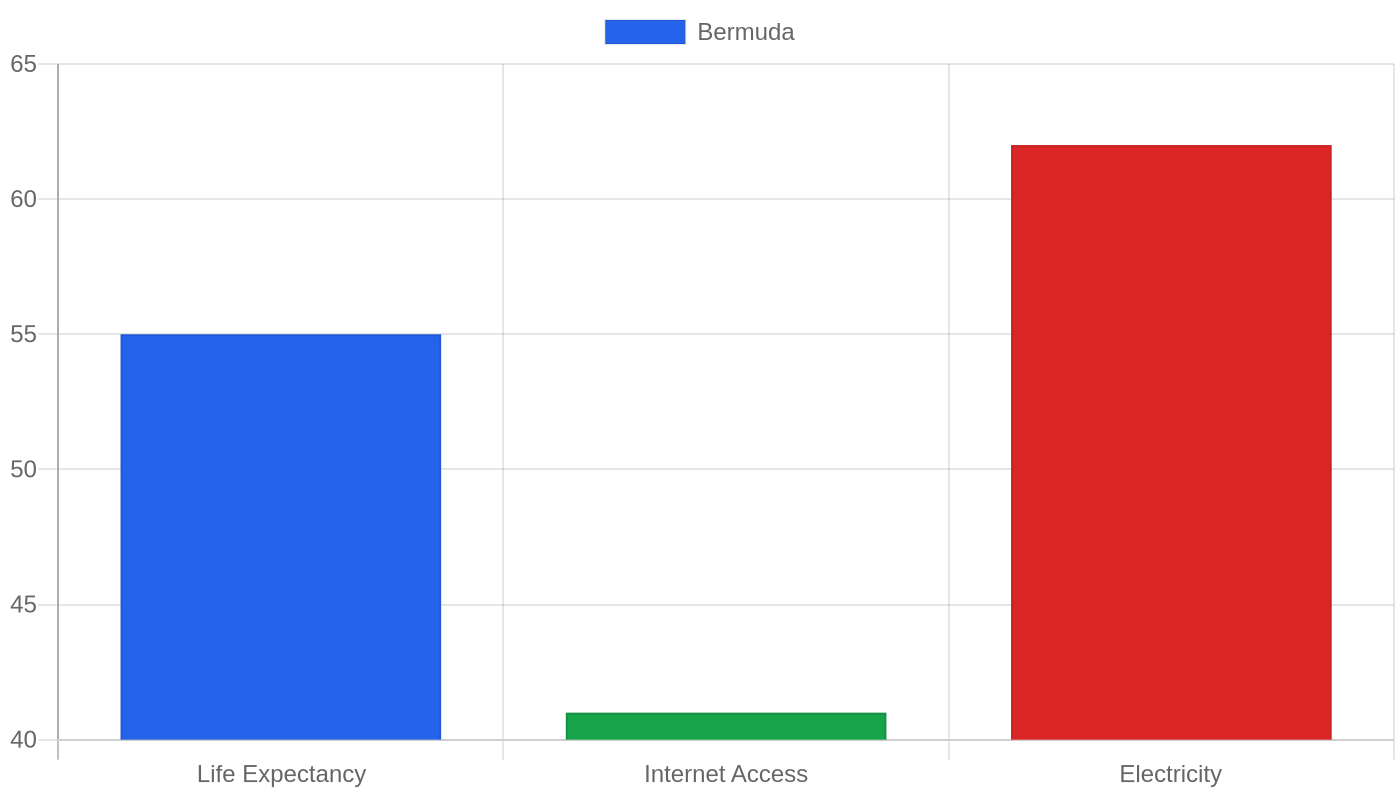
Data Transparency Gap: Official macroeconomic indicators such as GDP growth, inflation rates, and unemployment figures are currently reported as unavailable by the World Bank, suggesting a reliance on alternative metrics for economic assessment.
The Pillars of a Service-Based Economy
Bermuda’s economic landscape is defined less by traditional manufacturing or agricultural output and more by its specialized service sectors, particularly insurance and reinsurance. While specific quantitative measures such as GDP growth percentages, inflation CPI rates, and unemployment figures remain marked as “N/A” in the latest World Bank datasets, the qualitative structure of the economy reveals a high-value, low-volume model.
This absence of standard macroeconomic data points does not indicate stagnation but rather reflects the unique nature of an offshore financial center where value is generated through complex capital flows rather than mass production. The main industries driving this ecosystem are heavily skewed toward financial services and tourism-related consumer goods, creating a resilient buffer against global commodity price shocks.
For investors and analysts, the lack of public statistical granularity requires a deeper dive into corporate balance sheets and regulatory filings to gauge true economic health. Consequently, the narrative of Bermuda’s economy is one of stability and specialization, where the quality of financial institutions matters far more than aggregate national output figures.
The focus remains on maintaining a favorable regulatory environment that attracts international capital, ensuring that the island remains a preferred domicile for global risk management and investment vehicles.
Cost of Living: A Premium Paradise
For residents and expatriates alike, living in Bermuda commands a premium price tag that reflects its isolation and exclusive market dynamics. While exact cost-of-living indices are not provided in the current dataset, the presence of top-tier multinational corporations suggests a high-wage, high-cost equilibrium. Housing costs are historically among the highest in the Western Hemisphere, driven by limited land availability and strict zoning regulations that favor luxury development over mass housing.
Daily expenses, from groceries to utilities, are inflated by import dependencies, meaning that nearly all consumer goods must be shipped or flown into the archipelago. Rent versus buy decisions are complicated by a tight rental market and high property acquisition costs, often making leasing the only viable option for short-term professionals.
Despite these challenges, the infrastructure supporting these costs is world-class, with reliable utilities and modern amenities justifying the expense for many high-income earners. The economic reality is that Bermuda is designed for those who can afford it, creating a segregated economic experience where the cost of entry is steep but the quality of life is correspondingly elevated.
Investment & Business Climate: Giants of Industry
The business environment in Bermuda is characterized by the presence of some of the most influential financial and industrial firms in the world. Major companies such as Bacardi (Consumer goods), Brookfield Infrastructure Partners (Financials), and Butterfield Bank (Financials) have established significant footprints here, indicating a strong institutional trust in the local legal and regulatory framework.
The financial sector is particularly dominant, with entities like the Bermuda Monetary Authority, Catlin Group, and Fidelity International playing pivotal roles in global markets. This concentration of power creates a synergistic ecosystem where expertise in risk, compliance, and asset management is readily available. In the industrial sector, logistics and shipping are equally vital, with Frontline Ltd., Genpact, and Golden Ocean Group operating out of the territory.
These companies benefit from Bermuda’s strategic location and favorable tax treaties, which facilitate efficient international trade operations. The diversity of the top company list—from consumer services via Central European Media Enterprises to heavy industrials—demonstrates a balanced approach to attracting foreign direct investment.
For new entrants, the key advantage is the mature regulatory infrastructure overseen by the Bermuda Monetary Authority, which provides a stable platform for long-term business planning.
Safety, Politics & Quality of Life
Safety and political stability form the bedrock of Bermuda’s appeal as a secure jurisdiction for both residents and businesses. While specific crime and safety indices are currently listed as “N/A,” the general reputation of the territory is one of low violent crime and high social cohesion compared to many other global destinations. The political landscape is distinct, operating under the sovereignty of the United Kingdom while maintaining a degree of internal self-governance.
Executive authority is vested in the British monarch, Charles III, and exercised by the Governor, currently Andrew Murdoch, who was sworn in on January 23, 2025, alongside Deputy Governor Tom Oppenheim. This constitutional arrangement ensures continuity and adherence to international rule-of-law standards, which is critical for maintaining investor confidence.
The appointment of a new Governor in early 2025 signals a fresh chapter in executive leadership, potentially bringing new priorities to the relationship between Bermuda and London. Quality of life is generally high, supported by excellent healthcare and education systems, although the small population size means that social circles can be tightly knit.
The interplay between British oversight and local autonomy creates a unique governance model that prioritizes stability and legal certainty above rapid political change.
What’s Happening Now: Leadership Transition and Stability
The most significant recent development in Bermuda’s political sphere is the transition of executive leadership following the swearing-in of Andrew Murdoch as Governor on January 23, 2025. This event marks a pivotal moment for the territory, as the Governor plays a crucial role in representing the interests of the UK government while overseeing local administration.
With Tom Oppenheim serving as Deputy Governor, the administration is positioned to handle immediate policy shifts and maintain diplomatic ties during this transitional period. Although detailed news reports on specific economic reforms are scarce in the current data, the focus remains on maintaining the integrity of the financial sector amidst global economic volatility.
The Bermuda Monetary Authority continues to enforce strict regulatory standards, ensuring that the island remains compliant with international anti-money laundering and counter-terrorism financing directives. There is no indication of sudden policy ruptures; instead, the emphasis appears to be on steady governance and the preservation of Bermuda’s status as a premier offshore financial center.
The arrival of the new Governor suggests a renewed commitment to strengthening the bond between Bermuda and the United Kingdom, which could lead to subtle adjustments in trade and regulatory frameworks. As the global economic landscape shifts, Bermuda’s ability to adapt without losing its core identity remains the central theme of current affairs.
The Bottom Line
Bermanda presents a compelling case for investors seeking stability, regulatory clarity, and exposure to high-value financial services. However, the lack of transparent macroeconomic data requires due diligence beyond standard public sources. It is best suited for institutional investors and high-net-worth individuals who prioritize legal security and operational efficiency over rapid growth metrics.
Those looking for emerging market dynamism may find the pace too measured, but for those valuing resilience, Bermuda remains a steadfast anchor in the Atlantic.
Sources & Methodology
This article is authored by Economic Pulse Net for informational and research purposes. Economic Pulse Net sources its data from multilateral institutions, national statistics bureaus, and proprietary databases. All data is believed to be current as of the date of publication.
Published: October 04, 2026 | Category: Research — Bermuda
Use these signals in your own platform
Economic Pulse publishes its live signal feed through a documented, read-only API. Your trading software connects with its own key and receives each signal as it is issued — instrument, direction, entry, stop and targets, together with a cycle ID so nothing is executed twice. The feed is independent of this website and cannot change it.
Signals are informational only and are not financial advice.