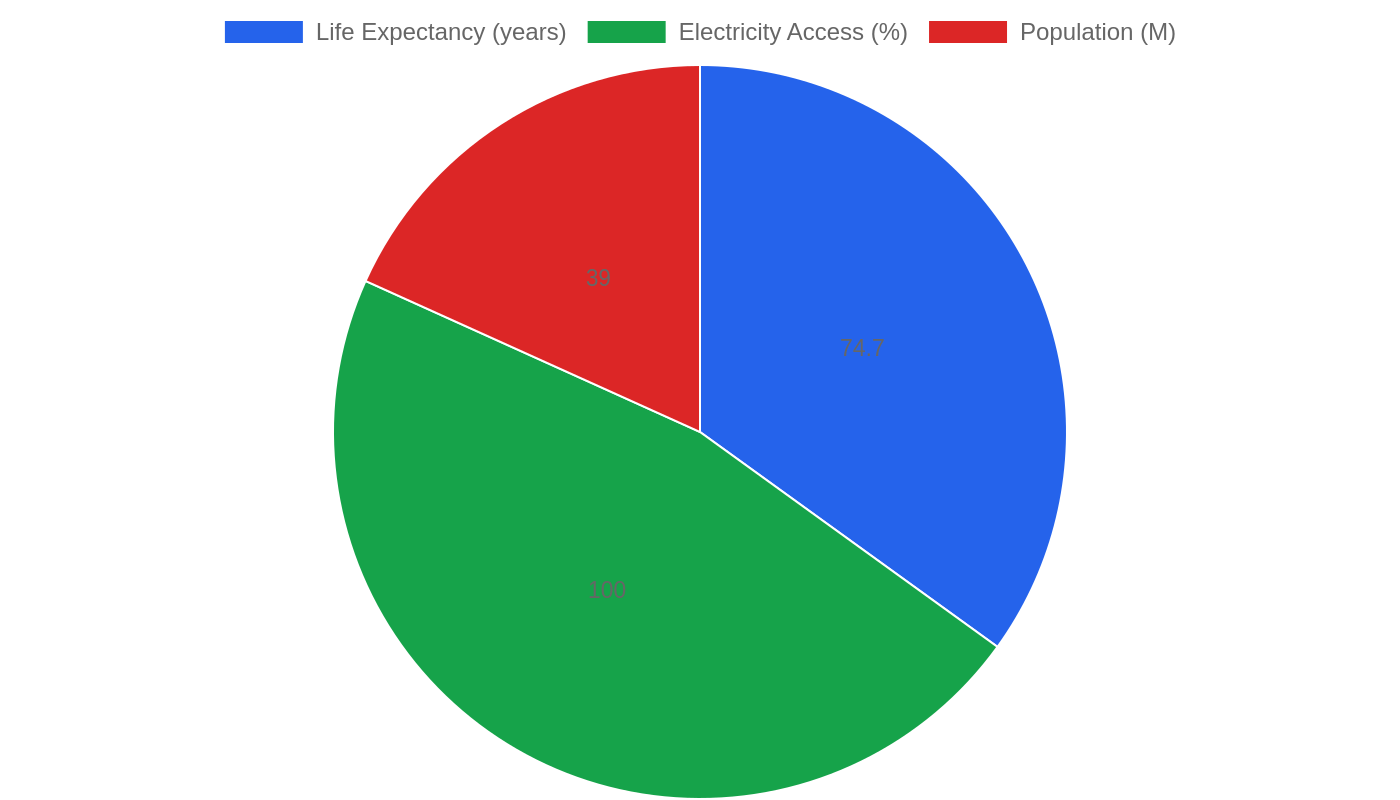
Economic Pulse Net | Sources: World Bank World Development Indicators, Government Sources | 2026
Key Takeaways
– Ukraine’s economy expanded by 1.82% in 2025, according to the World Bank — a modest but meaningful sign of resilience amid ongoing conflict.
– Inflation remains a serious concern, with the CPI climbing to 12.73%, eroding household purchasing power and complicating central bank policy.
– Unemployment stands at 9.83%, reflecting a labour market still scarred by displacement and wartime disruption.
– The corporate landscape is dominated by industrial giants and financial institutions, indicating that core economic structures remain operational despite the war.
– Ukraine operates under a semi-presidential republic system, with separate legislative, executive, and judicial branches maintaining institutional continuity during crisis.
The Fragile Engine — Growth Amid the Ruins
The headline figure from the World Bank tells a story of quiet determination: Ukraine’s GDP grew by 1.82% in 2025. On the surface, that number appears unremarkable — many emerging economies post far stronger numbers in a normal year. But context is everything. This is an economy that has been fighting for survival, and any positive growth figure represents a triumph of adaptation over adversity.
Yet the growth is threatened by a stubborn inflationary spiral. Consumer prices rose by 12.73% over the same period, according to World Bank data. That gap between growth and inflation is the single most important dynamic in the Ukrainian economy right now. It means that while the country is producing more, the value of that production is being eaten away by rising costs. For ordinary Ukrainians, this translates into higher prices at the market, more expensive utilities, and savings that lose value by the month.
The labour market tells a similar story of partial recovery. Unemployment at 9.83% is high by European standards, though not catastrophic given the circumstances. What the number doesn’t fully capture is the quality of employment — many workers have shifted from their pre-war professions into war-related industries or lower-skilled roles. The economic dislocation caused by internal displacement and conscription has created a mismatch between available jobs and available skills.
The industrial backbone of Ukraine remains visible in the country’s top companies. Aeros and Antonov, both in the industrials sector, represent the aerospace and engineering capabilities that have long been a source of national pride. The presence of Azovstal Iron and Steel Works in the basic materials category is particularly significant — this is a company whose name became internationally known during the siege of Mariupol, yet it still appears in corporate registries as an operational entity.
The financial sector also shows surprising vitality, with APEKS-BANK, ASKA Insurance Company, and BG Capital all maintaining their positions.
The Cost of Living Crunch — When Survival Gets More Expensive
For Ukrainian households, the inflation figure is not an abstract statistic — it is the difference between managing and struggling. With prices rising at nearly 13% annually, everyday essentials such as food, transport, and housing have become noticeably more expensive. The World Bank data does not provide specific cost-of-living breakdowns, but the implications of double-digit inflation are clear: families are making difficult trade-offs, and those on fixed incomes are feeling the sharpest pain.
The housing situation in Ukraine is uniquely complicated by the war. Millions of homes have been destroyed or damaged, creating a supply shortage in safer western cities while demand has surged from internally displaced persons. Renting in cities like Lviv or Uzhhorod has become significantly more expensive as displaced families compete for limited housing stock. Meanwhile, in frontline areas, property values have collapsed — no one is buying a home in a city that might be shelled tomorrow.
The broader regional comparison is stark. Ukraine’s inflation rate is among the highest in Europe, and its unemployment rate sits well above the European average. The country is effectively running a wartime economy, with resources diverted toward defence and reconstruction rather than consumer goods and services. For the average citizen, this means a lower standard of living than pre-war levels, with no immediate prospect of relief unless inflation is brought under control.
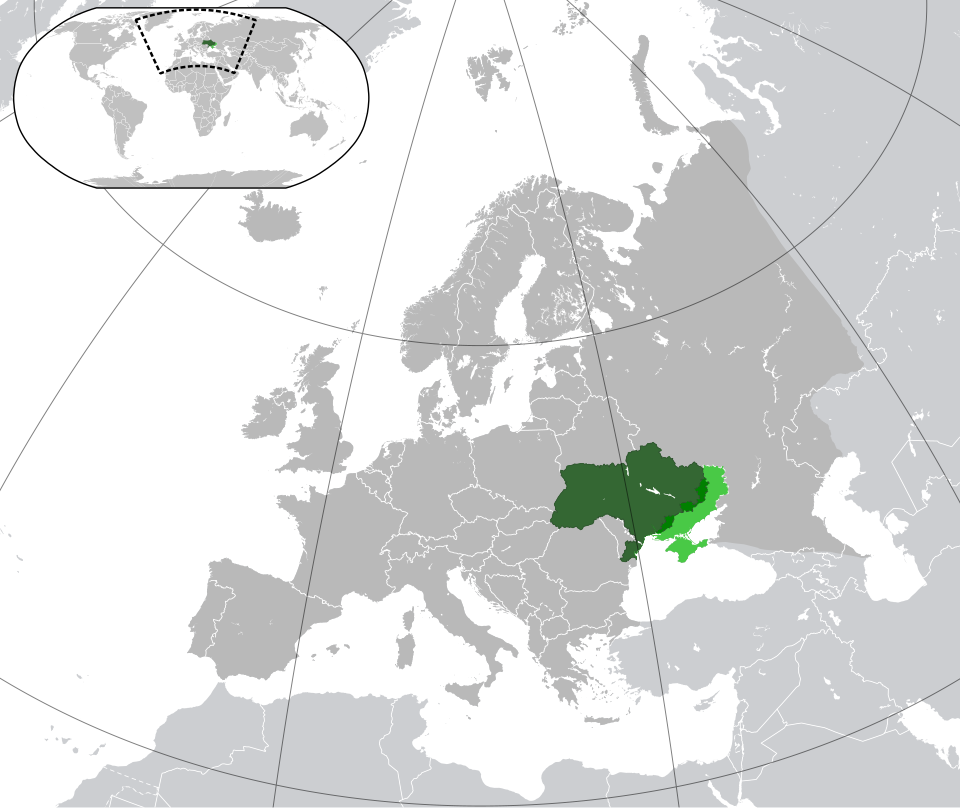
Business Under Fire — Investment in a War Zone
The list of Ukraine’s top companies reads like a testament to corporate endurance. ATB-Market, a consumer services giant, has managed to keep its retail network functioning across much of the country — no small feat when supply chains are disrupted and stores are sometimes damaged by missile strikes. The Bogdan group, another industrial player, continues operations despite the immense logistical challenges of manufacturing during wartime.
For investors, Ukraine presents a paradox. On one hand, the country offers extraordinary opportunities — reconstruction contracts, energy sector modernisation, and the potential for massive infrastructure development once the war ends. On the other hand, the risks are existential. Insurance costs are prohibitive, supply chains are fragile, and the possibility of further destruction is ever-present.
The companies that have survived thus far have done so through a combination of adaptability, government support, and sheer determination.
The financial sector deserves particular attention. Banks like APEKS-BANK continue to operate, which is remarkable given the pressures of wartime banking — including deposit withdrawals, non-performing loans, and the need to maintain liquidity in uncertain conditions. The presence of multiple financial institutions among the top companies suggests that Ukraine’s banking system has held up better than many observers expected at the start of the conflict.
Security, Politics, and the Will to Persevere
Ukraine’s political system remains functional despite the extraordinary pressures of war. The country is a republic under a semi-presidential system, with separate legislative, executive, and judicial branches. This institutional structure has provided continuity during a period when many nations would have seen their governance collapse entirely. The separation of powers has been tested — wartime often concentrates authority in the executive — but the formal structures remain intact.
The safety situation in Ukraine is impossible to quantify with the available data, as crime and safety indices are not provided. However, the reality is that safety in Ukraine is fundamentally determined by geography. Cities far from the front lines experience relatively normal conditions, while communities near combat zones face daily danger. The psychological toll of living under the threat of missile strikes and drone attacks cannot be overstated, even in areas that are not directly contested.
Quality of life in Ukraine has been dramatically reshaped by the war. Social connections have been fractured by displacement, children have lost years of normal schooling, and the entire population has been forced to adapt to a new reality of air raid sirens, power outages, and uncertainty. Yet the resilience of Ukrainian society has become a defining characteristic of this conflict — people continue to work, study, and build businesses even as the war grinds on.
What’s Happening Now — The Battle for Economic Stability
The most pressing issue in Ukraine’s economy right now is the fight against inflation. The 12.73% CPI figure represents a significant acceleration in price pressures, and the central bank is walking a tightrope between supporting growth and stabilising prices. Raising interest rates too aggressively could strangle the fragile recovery; failing to act could allow inflation to become entrenched.
The World Bank’s GDP growth estimate of 1.82% for 2025 suggests that the economy has found a baseline level of functioning despite the war. This is no longer a story of catastrophic collapse, but of grinding adaptation. The question now is whether that baseline can be improved upon — and that depends largely on external factors such as military aid, reconstruction funding, and the broader geopolitical situation.
Unemployment at 9.83% remains stubbornly high, and there are concerns that the labour market is not creating enough quality jobs for the population. Many skilled workers have left the country or joined the military, creating skills shortages in key sectors. At the same time, the reconstruction effort — when it comes in earnest — will require enormous amounts of labour, potentially absorbing much of the current unemployment.
The presence of major companies like Antonov and Azovstal in the corporate rankings suggests that Ukraine’s industrial base, while battered, is not broken. The challenge for the coming year will be converting this survival into genuine growth — and doing so in an environment where the outcome of the war remains uncertain. For now, Ukraine’s economy is holding on, but the margin for error is thin.
The Bottom Line
Ukraine in 2025 is an economy defined by contradictions — growing yet inflationary, resilient yet fragile, functioning yet far from normal. Investors with a high risk tolerance and a long time horizon may find extraordinary opportunities in reconstruction and energy, but they must be prepared for significant volatility. Policymakers and diplomats should watch Ukraine closely as a test case for how economies can survive and eventually rebuild after catastrophic conflict.
For the Ukrainian people, the numbers represent not just statistics but the daily reality of living and working in a nation at war — and their endurance remains the country’s most valuable economic asset.
Sources & Methodology
This article is authored by Economic Pulse Net for informational and research purposes. Economic Pulse Net sources its data from multilateral institutions, national statistics bureaus, and proprietary databases. All data is believed to be current as of the date of publication.
Published: August 01, 2026 | Category: Research — Ukraine
Use these signals in your own platform
Economic Pulse publishes its live signal feed through a documented, read-only API. Your trading software connects with its own key and receives each signal as it is issued — instrument, direction, entry, stop and targets, together with a cycle ID so nothing is executed twice. The feed is independent of this website and cannot change it.
Signals are informational only and are not financial advice.