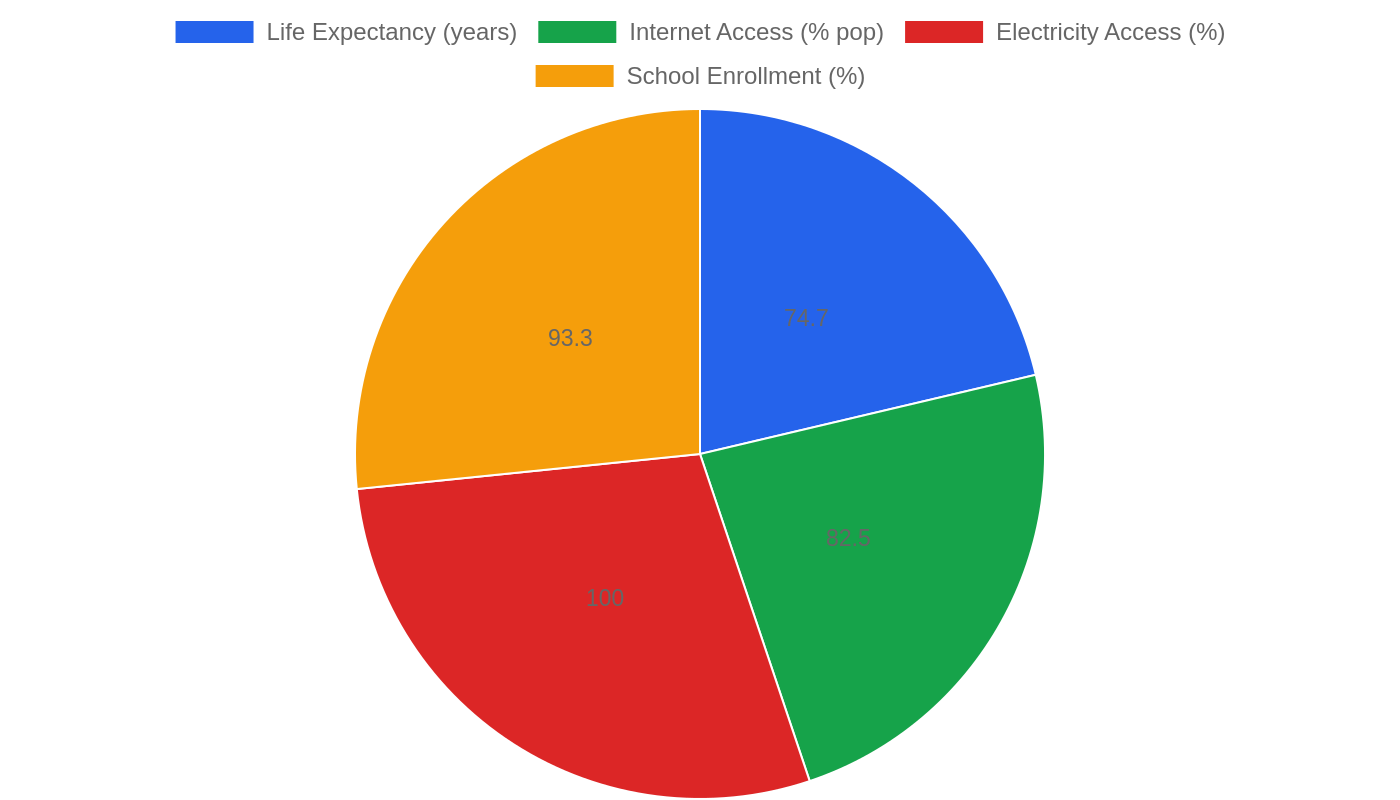
Economic Pulse Net | Sources: World Bank World Development Indicators, Government Sources | 2026
Key Takeaways
– Inflation remains the defining economic challenge, with the CPI holding at a stubborn 12.7% — a level that erodes household purchasing power and complicates business planning.
– Ukraine’s GDP stands at roughly $214 billion, a substantial figure that masks the deep structural damage inflicted by nearly a decade of conflict and territorial loss.
– Unemployment is near double digits at 9.8%, reflecting the ongoing displacement of workers, destruction of industrial capacity, and the sheer difficulty of maintaining normal labour markets during wartime.
– The corporate landscape is dominated by heavy industry and financial services, with steel giant Azovstal and banking group APEKS-BANK among the key players — though many of these companies operate under extreme duress.
– Ukraine remains a semi-presidential republic with functioning but strained institutions, as the country balances the demands of war, the aspirations of EU integration, and the daily struggle to keep the economy alive.
The Big Picture: A $214 Billion Economy Under Siege
The World Bank’s latest data paints a portrait of an economy that is simultaneously resilient and profoundly wounded. Ukraine’s GDP has been recorded at approximately $214.2 billion, with GDP per capita (PPP) reaching just under $18,905. On paper, these figures place Ukraine firmly in the ranks of middle-income European nations. But the numbers only tell part of the story.
Inflation at 12.7% is the clearest signal of the strain. For ordinary Ukrainians, this means the cost of food, energy, and housing continues to climb faster than wages can keep pace. The central bank has been forced into a delicate balancing act — tightening monetary policy to contain price growth while avoiding a full-scale credit crunch that would suffocate an already fragile private sector.
The World Bank’s data does not provide a recent GDP growth figure, which is telling in itself; in a war economy, growth statistics often become secondary to the more pressing issues of survival and reconstruction.
Unemployment at 9.8% is another marker of the conflict’s toll. Millions of Ukrainians have been internally displaced, many have fled abroad, and the male workforce has been mobilised for military service. The result is a labour market that is severely distorted — with labour shortages in agriculture and certain manufacturing sectors even as overall joblessness remains high.
The industries that once formed the backbone of Ukraine’s economy — steel, chemicals, and heavy machinery — have been hit hardest, with factories in the east either destroyed, occupied, or operating at a fraction of their pre-war capacity.
Per capita GNI of just $5,510 underscores the disparity between Ukraine’s nominal output and the actual wealth available to its citizens. This is not a rich country by Western European standards, nor does it pretend to be. It is a country fighting for its economic survival while simultaneously trying to lay the groundwork for future prosperity.
Cost of Living: The Price of Survival
The cost of living in Ukraine has become a daily battle for millions of households. While the World Bank data does not provide a detailed breakdown of housing costs or rental prices, the inflation figure of 12.7% speaks volumes. When inflation runs at this level, the cost of basic necessities — bread, eggs, vegetables, fuel — rises relentlessly. Families that once could plan a monthly budget now find themselves adjusting to new prices almost weekly.
Housing presents a particularly grim picture. In cities like Kyiv, Lviv, and Dnipro, rental demand has surged as internally displaced persons flock to safer western and central regions. This has pushed rents upward, making accommodation increasingly unaffordable for those who have already lost so much.
The decision to rent versus buy is largely moot for most Ukrainians; the property market has been in a state of paralysis, with construction halted in many areas and financing nearly impossible to secure given the economic uncertainty. For those who do own property, the threat of missile strikes and infrastructure damage has made even the concept of a “safe home” feel provisional.
Compared to regional averages, Ukraine’s cost of living remains lower than in Poland or Romania, but the gap is narrowing in the worst-affected urban areas. The real issue is not the absolute cost of goods but the purchasing power of households. With inflation eroding incomes and unemployment keeping many families dependent on state support or remittances from relatives abroad, the cost-of-living crisis is not an abstract statistic — it is the texture of daily life.
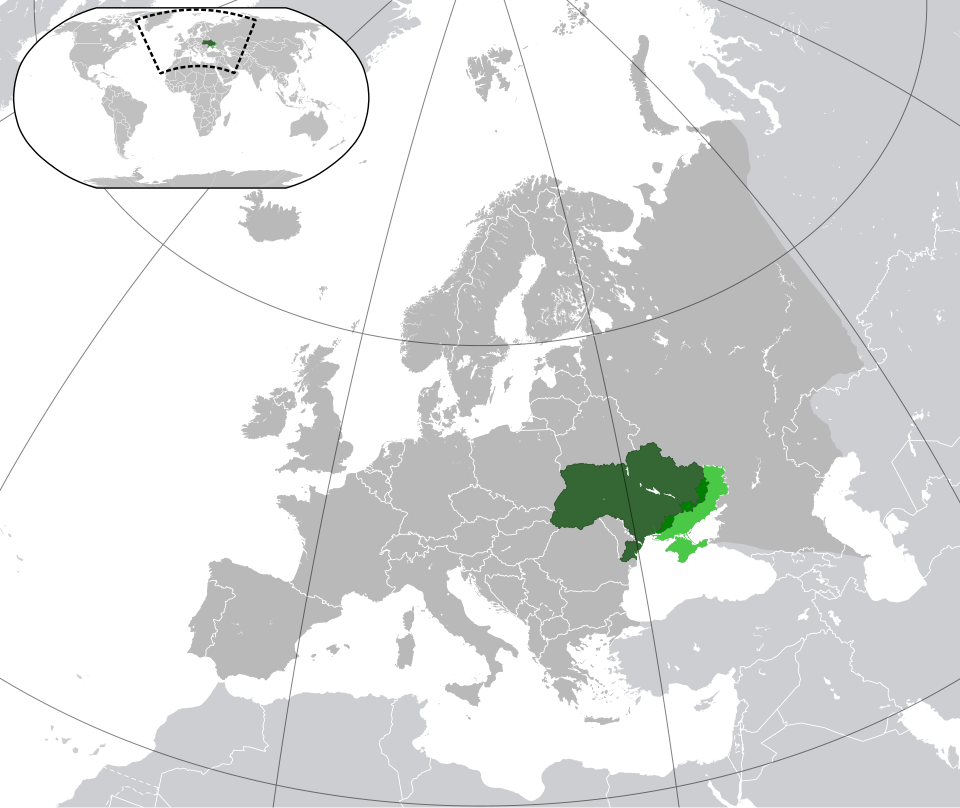
Investment and Business Climate: Heavy Industry in the Crosshairs
The list of Ukraine’s top companies reveals an economy still rooted in its Soviet-era industrial base, albeit with a modern financial overlay. Azovstal Iron and Steel Works, once a symbol of Ukrainian industrial might, now stands in ruins in Mariupol — a physical reminder of how war has dismantled entire sectors. Antonov, the aircraft manufacturer renowned for the world’s largest plane, the An-225 Mriya (destroyed in the early days of the war), continues to operate but under extraordinary constraints.
The Bogdan group, a major player in automotive and bus manufacturing, has had to pivot repeatedly as supply chains fracture and export routes shift.
On the financial side, APEKS-BANK, BG Capital, and ASKA Insurance represent a banking sector that has proven remarkably resilient. Despite the war, Ukraine’s banks have maintained liquidity, continued to process transactions, and even begun to lend again in select sectors. This is no small achievement. The financial system has become a lifeline for both the state and the private sector, facilitating everything from military procurement to humanitarian logistics.
For investors, the picture is deeply contradictory. The potential is enormous — Ukraine has vast agricultural land, a skilled workforce, a strategic location at the crossroads of Europe and Asia, and a future that could include EU membership. But the risks are equally immense. War, corruption, regulatory unpredictability, and the constant threat of infrastructure destruction make this one of the most challenging environments for foreign direct investment in the world.
Those who do invest are either deeply committed to Ukraine’s future or are betting on a post-war reconstruction boom that could rival the Marshall Plan.
Safety, Politics, and Quality of Life: A Nation in the Balance
Ukraine’s political system is defined by its semi-presidential structure — a constitutional arrangement that divides power between the president, the prime minister, and the parliament. The World Bank notes that Ukraine operates with separate legislative, executive, and judicial branches. In practice, this has meant a constant tug-of-war between political factions, with governance often slowed by infighting even as the country faces existential threats.
The crime and safety indices are listed as unavailable, which is perhaps unsurprising given the circumstances. In wartime, conventional crime statistics become less meaningful; the primary threat to personal safety is not petty crime but artillery shells, drones, and occupation. That said, the conflict has also created conditions for smuggling, arms trafficking, and other black-market activities that flourish in the chaos of war.
Quality of life in Ukraine is a study in extremes. In western cities like Lviv and Uzhhorod, relative peace allows a semblance of normal life — cafes open, children attend school, and cultural events continue. In the east and south, life is a grim routine of air raid sirens, power outages, and the constant hum of uncertainty. The psychological toll is immense, with rates of PTSD, depression, and anxiety almost certainly elevated, though reliable data is difficult to obtain during active conflict.
What’s Happening Now: The Fight for Economic Normalcy
This is the moment for Ukraine’s economy to prove its mettle. The country is navigating the second decade of a conflict that has already cost tens of thousands of lives and billions in infrastructure damage. The 12.7% inflation figure is the central bank’s primary headache, and policymakers are walking a tightrope between supporting growth and preventing hyperinflation.
The business community is adapting in real time. Companies like ATB-Market, a major retail chain, have become essential infrastructure in their own right — keeping supermarkets stocked and supply chains moving even as missiles target energy infrastructure. Antonov and other industrial firms are pivoting toward defence production, a shift that could redefine Ukraine’s industrial base for years to come.
The banking sector, led by institutions like APEKS-BANK, is increasingly focused on financing reconstruction and supporting small and medium enterprises that are trying to keep the economy alive.
There are also signs of a slow but steady return to normalcy in certain sectors. Agriculture, the backbone of Ukraine’s export economy, continues to function, with grain shipments moving through alternative routes and ports. The IT sector, remarkably, has boomed during the war, with Ukrainian tech firms winning contracts from global clients and export revenues from software development growing even as the rest of the economy contracts.
The Bottom Line
Ukraine is a country that should be watched by anyone with a stake in European security, global food prices, or the future of the post-Cold War order. For investors, the risks are enormous, but so are the potential rewards — a successful reconstruction could offer returns few other markets can match. For policymakers, Ukraine is the test case for how the international community supports a nation under siege without triggering a wider conflict.
For the average observer, Ukraine is a reminder that economic data is never just numbers — it is the lives, hopes, and resilience of a people refusing to surrender. The country is wounded, but it is not broken. And its economy, battered and scarred, is still fighting.
Sources & Methodology
This article is authored by Economic Pulse Net for informational and research purposes. Economic Pulse Net sources its data from multilateral institutions, national statistics bureaus, and proprietary databases. All data is believed to be current as of the date of publication.
Published: August 19, 2026 | Category: Research — Ukraine
Use these signals in your own platform
Economic Pulse publishes its live signal feed through a documented, read-only API. Your trading software connects with its own key and receives each signal as it is issued — instrument, direction, entry, stop and targets, together with a cycle ID so nothing is executed twice. The feed is independent of this website and cannot change it.
Signals are informational only and are not financial advice.