Economic Pulse Net | Sources: World Bank World Development Indicators, Government Sources | 2026
Key Takeaways
* Post-Shock Recovery: Ukraine’s economy is showing signs of stabilization with a projected GDP growth of 1.82% for 2025, signaling a move away from contraction toward cautious expansion.
Persistent Inflationary Pressure: Despite recovery efforts, consumer prices remain under significant strain, with CPI inflation hovering around 12.7%, impacting household purchasing power.
Labor Market Strain: Unemployment stands at nearly 9.8%, reflecting the ongoing structural adjustments and challenges within the workforce amidst broader national uncertainties.
Industrial Core: The economic backbone relies heavily on industrial sectors, led by major entities like Bogdan group, Azovstal Iron and Steel Works, and Antonov, highlighting the nation’s manufacturing heritage.
Political Framework: The country operates as a semi-presidential republic, maintaining separate legislative, executive, and judicial branches to navigate complex geopolitical and domestic pressures.
Navigating the Macroeconomic Landscape
Ukraine’s economic trajectory in 2025 presents a narrative of cautious optimism tempered by persistent structural headwinds. According to World Bank data, the Gross Domestic Product (GDP) is projected to grow by 1.82152376756284% this year, a figure that indicates a fragile but positive shift from previous periods of contraction. This modest growth suggests that while the economy is not booming, it is stabilizing after years of severe disruption.
However, this expansion occurs against a backdrop of high inflation; the Consumer Price Index (CPI) has risen to 12.7303341026903%, a rate that significantly erodes real wages and complicates monetary policy decisions. For the average citizen, this means that while the overall economic pie may be growing slightly, the slice available to each individual is being squeezed by rising costs.
The labor market reflects this tension, with unemployment recorded at 9.834%, indicating that nearly one in ten workers remains outside the formal employment sphere. This level of joblessness highlights the difficulty in absorbing displaced workers or those affected by broader economic shocks. Meanwhile, the total GDP in USD terms sits at approximately $214.2 billion, a substantial aggregate figure that masks the uneven distribution of wealth.
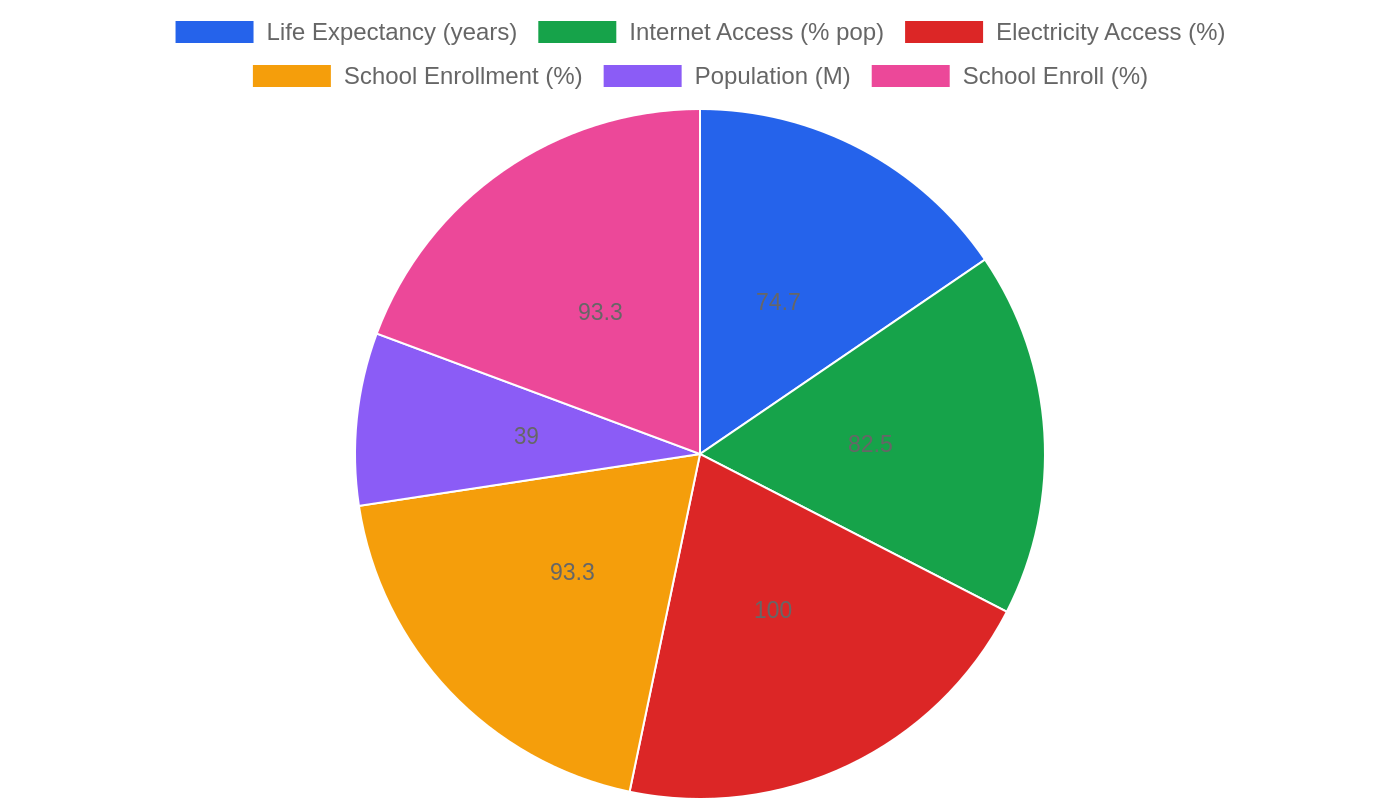
When looking at living standards through the lens of Purchasing Power Parity (PPP), the GDP per capita is estimated at $18,904.98, whereas the GNI per capita is lower at $5,510.0. This disparity between GDP and GNI often points to significant income outflows or transfers, underscoring the external dependencies of the Ukrainian economy. With a population of roughly 38.98 million, these figures illustrate an economy that is large in scale but faces intense pressure on per-capita resources.
Understanding these metrics requires recognizing that macroeconomic stability is currently prioritized over rapid growth, creating a environment where survival and gradual rebuilding are the primary economic themes.
The Cost of Living Dynamics
For residents and investors alike, understanding the cost of living in Ukraine is critical to assessing real economic health. While specific housing rent indices are not detailed in the current dataset, the high inflation rate of 12.73% serves as a proxy for the rising expense of daily necessities. This surge in consumer prices implies that basic goods, energy, and services have become significantly more expensive over the recent period, forcing households to adjust their spending habits.
The gap between the GDP per capita (PPP) of ~$18,905 and the GNI per capita of $5,510 suggests that local purchasing power is constrained by external factors, potentially including remittances or foreign aid that do not fully translate into domestic price stability. In such an environment, the decision to rent versus buy housing becomes highly sensitive to interest rates and currency fluctuations, which are indirectly influenced by the inflationary trend.
Daily expenses, from food to transportation, are likely absorbing a larger portion of household budgets, reducing disposable income for savings or investment. Compared to regional averages, which often see lower inflation in stable economies, Ukraine’s current price environment places a heavier burden on consumers, requiring careful financial management.
The lack of specific crime or safety indices further complicates the quality-of-life assessment, as security concerns can indirectly impact the cost of insurance, private security, and commercial operations. Ultimately, the cost of living in Ukraine is defined by resilience; citizens must navigate a landscape where nominal incomes may rise, but real value declines due to persistent price pressures.
Investment & Business Climate
The business landscape in Ukraine is dominated by a core set of industrial and financial conglomerates that drive much of the nation’s commercial activity. Major players such as the Bogdan group and Azovstal Iron and Steel Works anchor the Basic Materials and Industrials sectors, showcasing the country’s enduring strength in heavy manufacturing. Similarly, Antonov remains a key entity in the industrials space, leveraging historical expertise in aerospace and engineering.
In the financial sector, institutions like APEKS-BANK, ASKA Insurance Company, and BG Capital provide essential services, facilitating transactions and risk management in a volatile environment. Consumer services are also well-represented, with companies like ATB-Market and Amstor catering to the everyday needs of the population, ensuring that retail and service sectors remain active despite economic headwinds.
Other notable entities include Aeros and Berdichev machine-building plant, which contribute to the diversified industrial base. These top companies operate within a framework that requires adaptability, given the political structure of a semi-presidential republic with separate branches of government. This political setup provides a mechanism for checks and balances, though it also introduces complexity in regulatory navigation.
Investors watching these sectors should note that while the talent pool and industrial infrastructure exist, the business climate is shaped by the need for robust risk mitigation strategies. The presence of established firms like Azovstal and Bogdan indicates that there are reliable anchors in the market, offering potential opportunities for partnerships or supply chain integration.
However, the broader business environment demands a long-term perspective, as short-term volatility is likely to persist alongside the gradual economic stabilization.
Safety, Politics & Quality of Life
Assessing the quality of life in Ukraine requires a nuanced look at both political stability and personal security. The country functions as a republic under a semi-presidential system, featuring distinct legislative, executive, and judicial branches. This political architecture is designed to distribute power and provide governance continuity, which is crucial for maintaining institutional integrity during challenging times.
However, traditional safety metrics present a different picture; the Crime Index and Safety Index are currently listed as N/A. This absence of data does not necessarily imply high crime, but rather reflects the difficulties in conducting standard statistical surveys amid ongoing national circumstances. For expatriates and locals, this uncertainty can affect perceptions of safety, making informal networks and local knowledge more valuable than global indices.
The political landscape, therefore, plays a dual role: it offers a structured framework for state action while simultaneously reflecting the broader societal tensions. Happiness data or subjective well-being metrics are not provided in the current dataset, leaving the human dimension of the economic story partially unseen. Nevertheless, the existence of a functioning government with separated powers suggests a commitment to rule of law, which is a foundational element for long-term quality of life.
Residents must navigate a complex reality where political stability is maintained through institutional frameworks, even as day-to-day safety assessments remain opaque. This combination of strong political structures and undefined safety metrics creates a unique environment where trust in institutions is paramount.
What’s Happening Now / Current Affairs
The current economic narrative in Ukraine is defined by a delicate balance between recovery efforts and persistent inflationary pressures. As we look at the 2025 projections, the focus is on sustaining the 1.82% GDP growth without allowing inflation, currently at 12.73%, to spiral further. Policymakers are likely grappling with how to support the labor market, which sees 9.834% unemployment, while trying to stabilize the currency and manage public finances.
The industrial sector, anchored by giants like Azovstal and Bogdan, is likely receiving attention as a priority for modernization and efficiency improvements. In the financial realm, banks such as APEKS-BANK and BG Capital are adapting to higher interest rate environments and increased risk profiles. The semi-presidential political system continues to evolve, with debates likely centering on economic reforms, transparency, and international cooperation.
Recent trends suggest a shift towards consolidating gains made in earlier years, with an emphasis on fiscal discipline and structural adjustments. Businesses are responding by optimizing supply chains and focusing on core competencies, particularly in consumer services and industrials. The challenge now is to translate macroeconomic stability into tangible improvements for the population, whose purchasing power is still being tested by high CPI levels.
As the year progresses, all eyes will be on whether the growth figures hold steady and if inflation begins to moderate, providing relief to households and businesses alike.
The Bottom Line
Ukraine in 2025 is a case study in resilient adaptation, where macroeconomic indicators show slow but steady progress amidst significant challenges. Investors and observers should watch this country not for explosive growth, but for signs of structural stabilization and industrial endurance. The interplay between high inflation and modest GDP growth defines the current era, requiring patience and strategic foresight.
For those engaged with the region, focusing on established industrial leaders and navigating the semi-presidential political framework offers the best path forward.
Sources & Methodology
This article is authored by Economic Pulse Net for informational and research purposes. Economic Pulse Net sources its data from multilateral institutions, national statistics bureaus, and proprietary databases. All data is believed to be current as of the date of publication.
Published: October 02, 2026 | Category: Research — Ukraine
Use these signals in your own platform
Economic Pulse publishes its live signal feed through a documented, read-only API. Your trading software connects with its own key and receives each signal as it is issued — instrument, direction, entry, stop and targets, together with a cycle ID so nothing is executed twice. The feed is independent of this website and cannot change it.
Signals are informational only and are not financial advice.