Economic Pulse Net | Sources: World Bank World Development Indicators, Government Sources | 2026
Key Takeaways
– Turkey’s political landscape has shifted decisively toward authoritarianism, with the judicial system weaponized against opposition figures and dissidents, fundamentally altering the risk profile for investors and citizens alike.
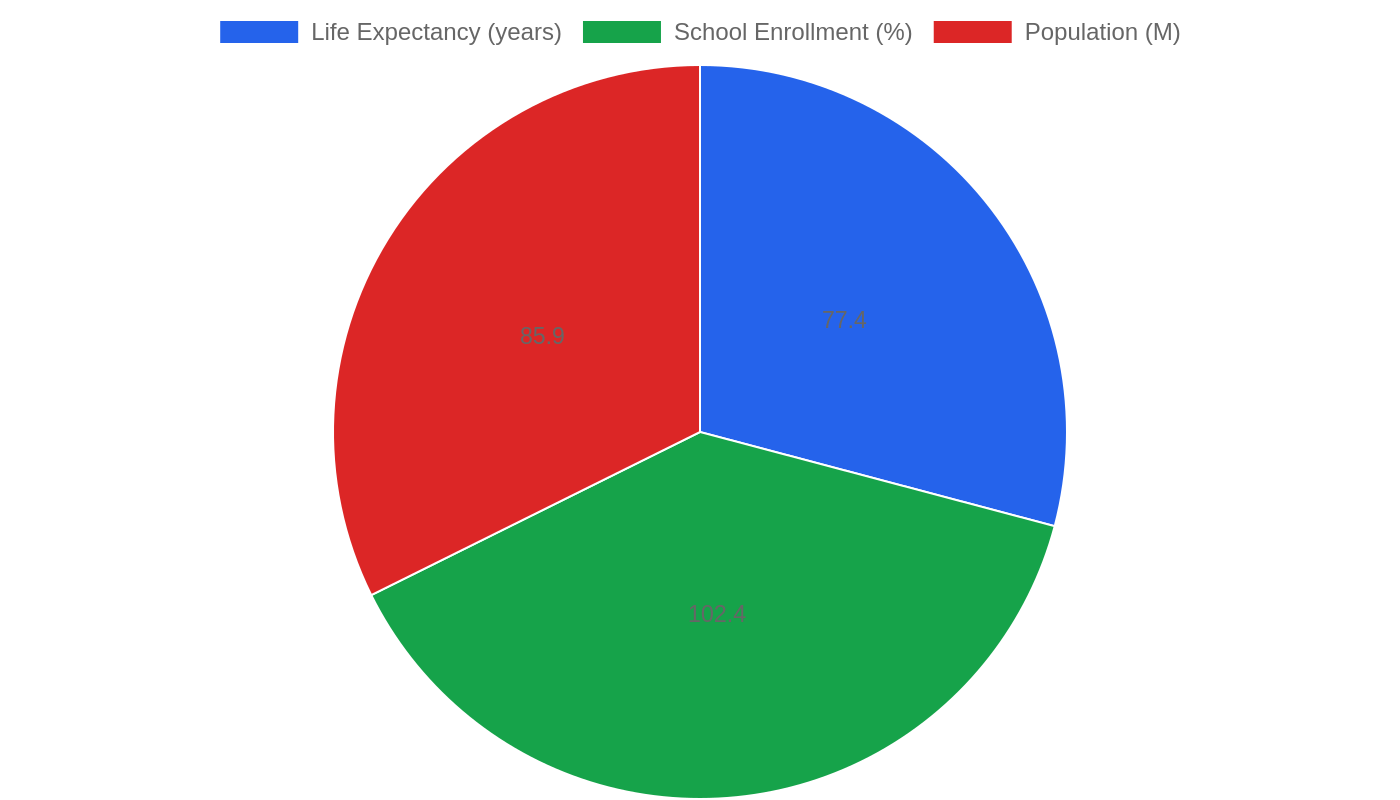
– The nation’s economic narrative is currently defined by data gaps, yet the structural picture is clear: a population of nearly 86 million represents a significant regional market, while its industrial base spans financial services, telecommunications, and heavy manufacturing.
– Major conglomerates like Arçelik and Aselsan anchor a diverse corporate sector, suggesting that beneath the political turbulence, Turkey retains formidable productive capacity.
– The absence of current GDP, inflation, and unemployment figures from the World Bank dataset creates an information vacuum that itself tells a story about institutional transparency and data reliability.
– Turkey’s constitutional framework, established by the 1982 referendum, continues to shape a governance model that international observers increasingly describe as competitive authoritarianism rather than functioning democracy.
The Economic Engine — Industrial Might Beneath the Political Fog
Turkey’s economic narrative is a study in contrasts. The World Bank’s latest data presents a frustratingly incomplete picture — GDP growth figures are unavailable, inflation numbers are absent, and unemployment statistics have not been updated. Yet the country’s economic footprint extends far beyond what the missing metrics might suggest.
With a population of 85,878,556, Turkey operates one of the larger domestic markets in its region, and its corporate landscape reveals a deeply diversified industrial base that has been decades in the making.
The country’s main industries, while not enumerated in the current dataset, can be inferred from the structure of its top publicly listed companies. The financial sector stands tall with Akbank, one of Turkey’s premier banking institutions, while telecommunications is represented by Avea, and the industrial heartland beats through companies like Aselsan, a defense electronics giant, and Alarko Holding, a diversified conglomerate with interests spanning energy and construction.
Consumer goods powerhouses such as Arçelik — known globally for home appliances — and Anadolu Isuzu in the automotive sector demonstrate that Turkish manufacturing remains competitive on international terms.
The absence of hard economic numbers matters for a specific reason: when a major economy’s fundamental indicators go unpublished or unreported, it typically signals either statistical infrastructure challenges or, more troublingly, a reluctance to expose uncomfortable truths. For a country that has historically positioned itself as a bridge between Europe and Asia, this data opacity complicates the narrative of a nation confidently striding toward developed-market status.
The structural reality, however, is that Turkey possesses genuine industrial depth, a young population, and strategic geographic positioning that continues to attract both trade and investment despite the political headwinds.
Housing and Daily Life — The Cost of Living Squeeze
Without current cost-of-living indices or housing price data from the World Bank, painting a precise picture of daily expenses in Turkish cities requires careful inference from available indicators. What we know is that Turkey’s urban centers — Istanbul above all — have historically presented a two-tiered reality: world-class amenities and commerce alongside significant affordability challenges for ordinary households.
The lira’s persistent volatility, a well-documented phenomenon in international financial circles, has eroded purchasing power for millions of Turkish families who earn wages in local currency while facing imported inflation across energy, food, and manufactured goods.
Rental markets in major Turkish cities have long been characterized by sharp regional disparities, with Istanbul commanding premiums that rival some European capitals while Anatolian cities remain comparatively affordable. The rent-versus-buy calculation has tilted dramatically in recent years as property values in prime locations have soared, partly driven by foreign buyers seeking refuge from their own currency troubles and partly by domestic investors fleeing lira depreciation.
For the average Turkish worker, housing costs consume a substantial share of household income, and the gap between wage growth and shelter inflation has become a defining feature of urban life. The broader regional context suggests that Turkey’s cost-of-living pressures, while severe, are not unique — neighboring economies face similar challenges — but the combination of currency weakness and political uncertainty creates a uniquely challenging environment for household financial planning.
Investment and Enterprise — Corporate Titans and the Search for Stability
Turkey’s corporate sector presents a paradox: world-class companies operating within a challenging governance framework. The roster of top firms reads like a who’s who of emerging-market success stories. Arçelik has established itself as a genuine global player in white goods, competing successfully against European and Asian rivals.
Aselsan, meanwhile, has carved out a reputation in defense electronics that transcends regional boundaries, making it a significant player in NATO-aligned military supply chains. Akbank represents a sophisticated financial services sector that has weathered multiple economic storms, while Aksa and Arkem in basic materials underscore Turkey’s strength in petrochemicals and energy-related industries.
The business climate, however, carries substantial caveats. International investors evaluating Turkish opportunities must weigh the evident industrial competence against a political environment characterized by what analysts describe as judicial capture and the repression of opposition voices. This governance deficit raises operational risks for companies that might otherwise be attracted by Turkey’s manufacturing capabilities, logistics advantages, and domestic market size.
The presence of diversified holdings like Alarko Holding, spanning multiple sectors, suggests that Turkish business has adapted to volatility through conglomerate structures that spread risk across industries. For foreign direct investment to accelerate meaningfully, the business environment would need greater regulatory predictability and a clearer separation between commercial and political considerations.
Security, Governance, and the Quality of Public Life
The political landscape in Turkey has undergone a profound transformation that shapes every aspect of daily existence. The country operates as a presidential republic within a multi-party system, yet international observers — as reflected in the World Bank’s contextual data — characterize the current regime as competitive authoritarian rather than democratic.
The 1982 constitution, approved by referendum, established the foundational framework, but it is the subsequent consolidation of power that defines contemporary governance. Judicial capture, the imprisonment of opposition politicians and dissidents, and the suppression of protest movements have fundamentally altered the relationship between the state and its citizens.
Crime and safety indices for Turkey remain unpublished in the current dataset, leaving a gap in our understanding of public security. What can be said is that the quality of life in Turkey extends beyond traditional safety metrics to encompass political security — the assurance that one can express dissent, participate in civic life, and engage in political activity without fear of reprisal.
The erosion of these democratic norms carries tangible consequences for social trust, institutional confidence, and the overall investment climate. For the Turkish people, the daily experience of governance under an increasingly centralized authority shapes everything from business decisions to family planning, creating an atmosphere of uncertainty that no economic statistic can fully capture.
The Current Moment — Data Silence and Democratic Drift
Right now, Turkey occupies an unusual position in the global economic landscape. The World Bank’s latest indicators show a complete absence of growth, inflation, and employment figures — a data silence that speaks volumes. In an era of unprecedented information transparency, a G20 economy failing to report fundamental statistics raises questions not just about economic performance but about institutional capacity and political will.
The implications extend beyond academic interest: businesses making investment decisions, international financial institutions assessing risk, and citizens trying to plan their futures all operate in an information vacuum that compounds uncertainty.
The political trajectory continues to generate concern among international observers, with the characterization of Turkey as a competitive or fully authoritarian system representing a significant shift from earlier assessments. The imprisonment of opposition figures and the repression of protest movements create a chilling effect that reaches into the business community, where executives must navigate an environment where commercial decisions and political loyalties increasingly intersect.
The constitutional framework established in 1982 remains in place, but its application has evolved in ways that concentrate power and diminish checks and balances. For those watching Turkey’s trajectory, the current moment feels consequential — a period when the choices made by political leaders will determine whether the country’s considerable economic potential can be realized or whether continued democratic erosion will exact an increasingly heavy price.
The Bottom Line
Turkey demands attention from anyone with serious interests in emerging markets, regional geopolitics, or the future of democratic governance. The country possesses genuine economic assets — a large population, industrial sophistication, and companies that compete globally — yet these strengths operate within a political framework that increasingly concerns international observers. Investors should watch Turkey for its corporate champions and market potential but must price in significant governance risk.
Democracy advocates should watch because Turkey’s trajectory offers a case study in how democratic institutions can erode even within established constitutional frameworks. The coming period will test whether Turkey can reconcile its economic ambitions with its political realities — or whether the current trajectory proves self-defeating.
Sources & Methodology
This article is authored by Economic Pulse Net for informational and research purposes. Economic Pulse Net sources its data from multilateral institutions, national statistics bureaus, and proprietary databases. All data is believed to be current as of the date of publication.
Published: August 06, 2026 | Category: Research — Turkey
Use these signals in your own platform
Economic Pulse publishes its live signal feed through a documented, read-only API. Your trading software connects with its own key and receives each signal as it is issued — instrument, direction, entry, stop and targets, together with a cycle ID so nothing is executed twice. The feed is independent of this website and cannot change it.
Signals are informational only and are not financial advice.