Economic Pulse Net | Sources: World Bank World Development Indicators, Government Sources | 2026
For decades, Turkey has defied easy categorization. It is a NATO member, a G-20 economy, and a bridge between Europe and Asia—yet its political trajectory and economic management have increasingly set it apart from its Western allies. As the country navigates a complex landscape of industrial ambition, political centralization, and profound social change, the question is no longer *whether* Turkey will be a major player, but *what kind* of major player it will be.
This feature examines the economic machinery, corporate powerhouses, and political realities shaping the republic’s future.
Key Takeaways
– Industrial Diversity: Turkey’s corporate landscape is not dominated by a single sector; it spans financials, industrials, consumer goods, and telecommunications, creating a complex web of economic activity.
– Political Authoritarianism: According to the data provided, Turkey operates under a presidential system that has been characterized as “competitive or fully authoritarian,” with significant implications for its business climate and international relations.
– Corporate Resilience: Despite political headwinds, major conglomerates like Arçelik and Aselsan continue to operate as significant players in their respective fields, suggesting a resilient private sector.
– Constitutional Framework: The current constitution, approved by referendum in 1982, still defines the government’s structure, though its implementation has been heavily contested.
– A Nation in Flux: With a multi-party system that faces significant constraints on opposition, Turkey presents a unique case study of economic potential colliding with political reality.
The Economic Engine: Diversification Amidst Volatility
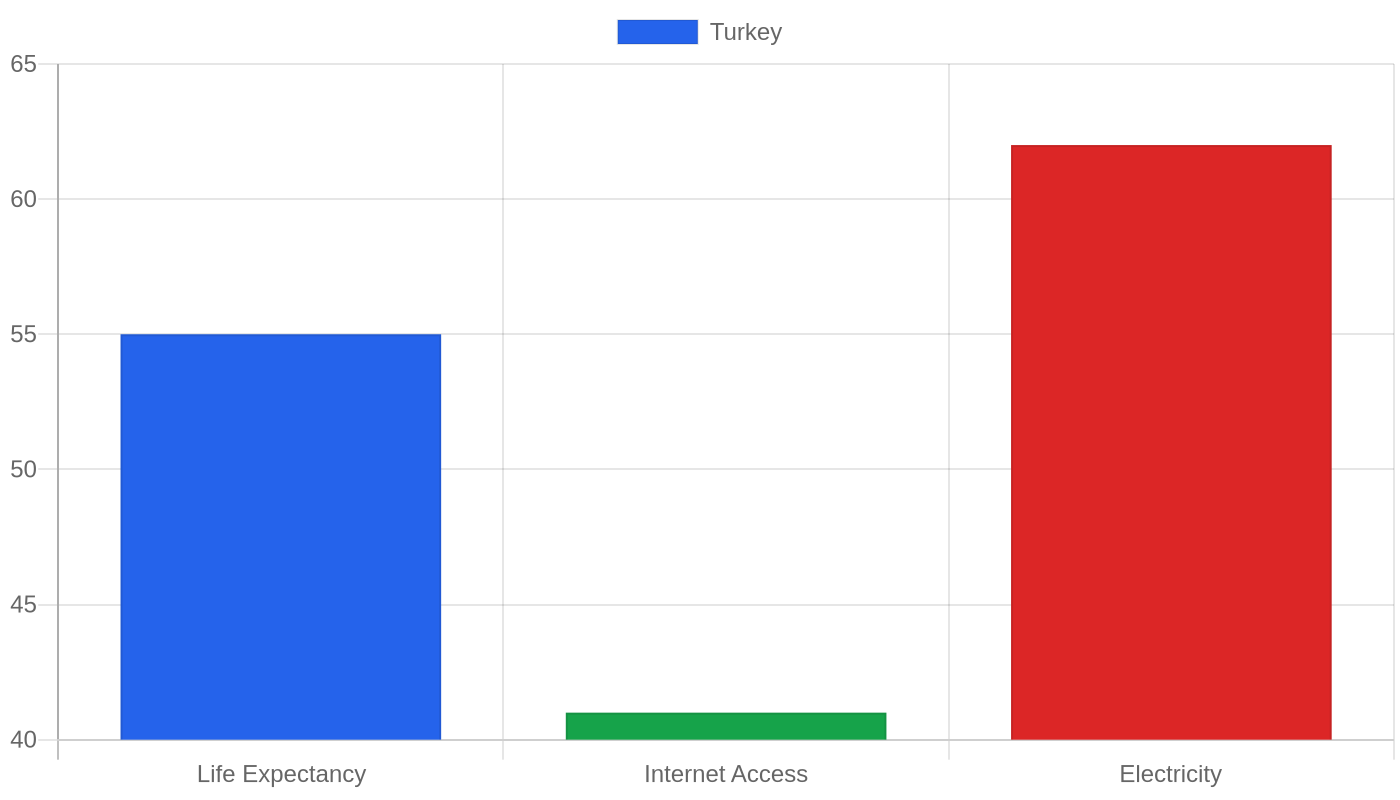
The World Bank’s data on Turkey presents a curious paradox: the headline numbers for GDP growth, inflation, and unemployment are marked as unavailable. This absence of hard data is itself a story, reflecting the challenges of capturing an economy that has experienced dramatic boom-and-bust cycles over the past decade. However, looking at the composition of its top companies reveals a structure that is far more sophisticated than a simple emerging market reliant on raw materials.
Turkey’s economic backbone is its industrial and consumer goods sector. The presence of Arçelik, a global white goods manufacturer, and Anadolu Isuzu, a commercial vehicle producer, signals a nation with genuine manufacturing capabilities. These are not mere assemblers; they are brands that compete on international markets.
Alongside them, the financial sector, represented by Akbank, provides the necessary capital flows, while Aselsan anchors a robust defense industry that has become a point of national pride and geopolitical leverage.
Yet, the economy’s resilience is perpetually tested. The lack of current inflation data from the World Bank suggests a period of recalibration, or perhaps a reluctance to publish figures that may be politically sensitive. For the average citizen, this translates into a cost-of-living crisis that feels acute, even if the official statistics are pending.
The underlying issue is structural: Turkey has a dynamic private sector, but it operates within a macroeconomic framework that has struggled with currency depreciation and external debt. The “why” behind these numbers matters—it is the story of an economy that grows in fits and starts, heavily influenced by political decisions and global capital flows, making long-term planning exceptionally difficult for both businesses and households.
The Cost of Living: The Price of Ambition
For the Turkish middle class, the daily grind has become a test of financial agility. While specific housing cost indices are not available in the current data, the broader economic picture suggests a squeeze on purchasing power. The combination of high interest rates (historically used to defend the lira) and persistent inflation means that the dream of homeownership is drifting further out of reach for many young professionals, particularly in mega-cities like Istanbul and Ankara.
Renting has become the pragmatic default, yet rents themselves have soared in recent years, outpacing salary growth. The cost of a weekly grocery shop, utility bills, and fuel for transportation consumes a significant portion of household income, leaving little room for savings or leisure. This economic pressure is not uniform—those employed in the export-oriented industrial sector or the defense industry may fare better, but those in the service sector or informal economy feel the pinch most acutely.
The comparison to regional averages is stark; while Turkey offers a higher standard of living than some of its eastern neighbors, it has historically lagged behind the purchasing power parity of Western European nations. The result is a society that works hard, consumes less, and looks to the state with a mixture of expectation and frustration.
Investment & Business Climate: Powerhouses and Pitfalls
The Borsa Istanbul is home to a fascinating mix of corporate entities that reflect Turkey’s strategic ambitions. Aselsan, the defense giant, is a prime example of state-backed industrial policy yielding tangible results, driving technological sovereignty. On the civilian side, Arçelik has become a European powerhouse in home appliances, proving that Turkish brands can conquer global markets.
The presence of Aksa and Arkem in basic materials highlights the importance of the chemicals and energy sectors, which are critical for the country’s supply chain independence.
However, the business climate is a double-edged sword. On one hand, these companies are globally competitive, with strong engineering talent and a young, dynamic workforce. On the other hand, the political landscape—described in the provided data as “authoritarian” with “judicial capture”—creates an environment of unpredictability.
Investors are wary of regulatory changes that can happen overnight, and the imprisonment of opposition politicians and dissidents raises red flags for international partners who prize corporate governance and the rule of law. For the savvy investor, Turkey offers high-risk, high-reward opportunities; the key is navigating the complex relationship between the state and the private sector, where success often depends on maintaining favorable relations with the administration.
The telecommunications sector, including players like Avea, remains a battleground for control and investment, mirroring the broader struggle between market forces and political oversight.
Safety, Politics & Quality of Life: The Authoritarian Tightrope
The data paints a clear picture regarding governance: Turkey is officially a presidential republic within a multi-party system, but the reality, as noted in the source material, is that it is “not considered a democracy but rather as a competitive or fully authoritarian system.” This distinction is crucial for understanding quality of life. While crime indices are currently unavailable, the social fabric is strained by political polarization.
The suppression of protest movements and the imprisonment of dissidents suggest a climate where freedom of expression is curtailed, which inevitably affects the overall sense of well-being and security.
Despite these political constraints, the quality of life in Turkey remains a study in contrasts. The country offers a rich cultural heritage, a vibrant culinary scene, and a geography that spans stunning coastlines and rugged mountains. However, the erosion of democratic institutions creates a “soft” insecurity that pervades daily life. Citizens may feel safe from violent crime, but they do not feel safe from the state. This distinction is vital for expatriates and locals alike.
The judiciary, perceived as captured by the executive, undermines trust in contracts and property rights, which are fundamental to a stable society. Ultimately, the quality of life in Turkey is high for those who can insulate themselves from political turbulence, but the shadow of authoritarianism looms large over the public square, affecting everything from media consumption to business dealings.
What’s Happening Now: The Search for Economic Normalcy
Right now, Turkey is in a delicate phase of economic recalibration. After years of unorthodox monetary policy, the government has signaled a return to more conventional economic management, though the path is fraught with difficulty. The central bank faces the Herculean task of taming inflation without triggering a recession that would devastate the industrial sector.
The recent news cycle is dominated by the government’s attempts to court foreign investment, particularly from Gulf states, to shore up foreign exchange reserves.
Simultaneously, the political opposition is attempting to regroup after a series of crackdowns, seeking to challenge the ruling party’s dominance in upcoming municipal elections. The business community is watching these developments closely, hoping for a de-escalation of political tensions that would allow for a more predictable regulatory environment.
The defense sector continues to be a bright spot, with exports reaching record highs, but this is a double-edged sword, as it deepens Turkey’s reliance on its own military-industrial complex to maintain geopolitical leverage. The most pressing issue remains the cost of living; protests over food prices have occasionally flared up, serving as a reminder that economic stability is the ultimate foundation of political power.
The coming months will determine whether Turkey can engineer a soft landing, or whether the pressures of authoritarian governance and economic volatility will force a more dramatic shift.
The Bottom Line
Turkey is a country that cannot be ignored. For investors, it offers a dynamic market with world-class companies in manufacturing, defense, and finance, but it demands a high tolerance for political risk and policy unpredictability.
For policymakers and analysts, it serves as a critical case study in how a nation can possess all the ingredients for economic success—a young population, strategic location, and industrial might—yet still struggle to convert that potential into sustainable, inclusive growth due to governance failures. Watch Turkey if you are interested in the future of emerging markets; its trajectory will offer essential lessons on the intersection of capitalism, nationalism, and authoritarianism in the 21st century.
Sources & Methodology
This article is authored by Economic Pulse Net for informational and research purposes. Economic Pulse Net sources its data from multilateral institutions, national statistics bureaus, and proprietary databases. All data is believed to be current as of the date of publication.
Published: August 09, 2026 | Category: Research — Turkey
Use these signals in your own platform
Economic Pulse publishes its live signal feed through a documented, read-only API. Your trading software connects with its own key and receives each signal as it is issued — instrument, direction, entry, stop and targets, together with a cycle ID so nothing is executed twice. The feed is independent of this website and cannot change it.
Signals are informational only and are not financial advice.