Economic Pulse Net | Sources: World Bank World Development Indicators, Government Sources | 2026
Key Takeaways
* Robust Expansion: Turkey’s economy is projected to grow by approximately 3.6% in 2025, driven by a large consumer base and diverse industrial output.
Inflation Challenge: Despite growth, the country faces significant price stability issues, with CPI inflation hovering near 34.9%.
Labor Market Dynamics: Unemployment remains relatively controlled at 8.52%, suggesting steady job creation despite economic headwinds.
Political Volatility: The nation operates under a competitive authoritarian system marked by judicial concerns and repression of dissent, creating a complex risk environment for long-term stability.
Industrial Diversity: Key sectors including financials, industrials, and consumer goods are anchored by major domestic conglomerates like Akbank and Arçelik.
Economic Momentum vs. Price Stability
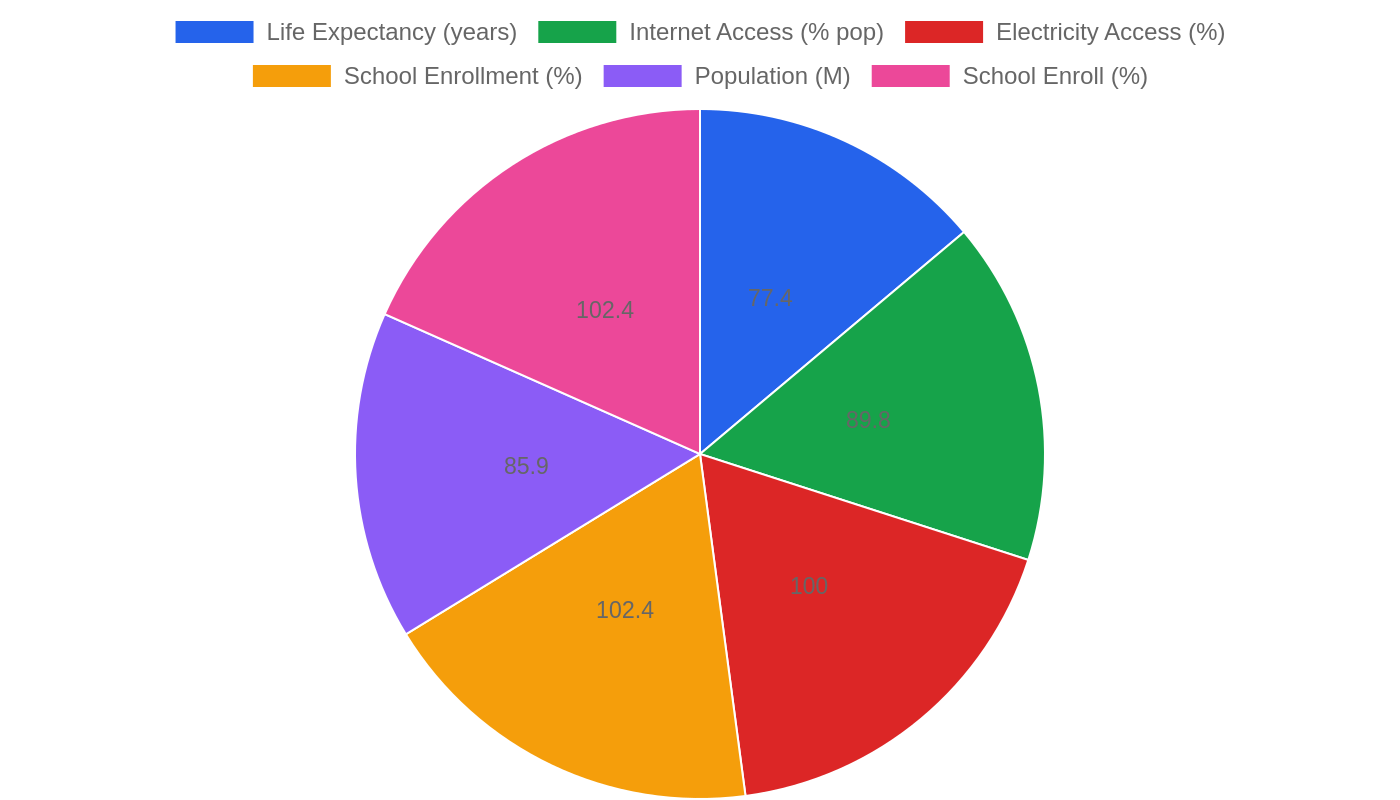
Turkey’s economic landscape in 2025 presents a paradox of strong nominal expansion paired with persistent monetary instability. According to World Bank data, the country’s GDP is valued at approximately $1.6 trillion, reflecting its status as a major emerging market economy. This substantial economic output is supported by a population of nearly 86 million, which provides a vast domestic market and labor force.
The annual GDP growth rate of 3.60% indicates that the economy is expanding steadily, outpacing many developed nations in terms of velocity. However, this growth occurs against a backdrop of high inflation, with the Consumer Price Index (CPI) recorded at roughly 34.88%. This level of inflation erodes purchasing power and complicates planning for both consumers and businesses.
Meanwhile, the unemployment rate stands at 8.52%, suggesting that while jobs are being created, they may not be keeping pace with the rapid entry of new workers or the needs of the growing population. The disparity between the robust GDP figure and the high inflation rate highlights the challenges of maintaining sustainable, inclusive growth when price levels are volatile.
For investors, this means that while the total economic pie is getting larger, the real value of returns must be carefully calculated against currency depreciation and rising costs. The GDP per capita at Purchasing Power Parity (PPP) of roughly $45,288 offers a more nuanced view of living standards than the nominal GNI per capita of $16,300, indicating that local purchasing power mitigates some of the pain caused by high headline inflation.
Ultimately, the economy is growing, but the quality and sustainability of that growth remain under scrutiny due to these diverging indicators.
Cost of Living and Housing Realities
The cost of living in Turkey is significantly influenced by the high inflation environment, which impacts everything from daily groceries to housing markets. While specific rental indices are not provided in the current dataset, the high CPI of 34.88% suggests that the general expense of living has risen sharply over recent periods. For residents and expatriates alike, budgeting requires careful consideration of how inflation affects essential services and utilities.
The gap between the PPP-adjusted GDP per capita and the nominal GNI per capita implies that while international benchmarks might suggest moderate wealth, local realities involve navigating steep price increases for imported goods and services. Housing affordability is likely strained, as construction costs rise alongside material prices in the basic materials sector. Consumers must adapt to a volatile pricing structure where savings lose value rapidly if held in local currency without hedging strategies.
Although detailed regional comparisons are limited by the available data, the national average points to a challenging environment for fixed-income earners. Businesses operating in the consumer goods sector, such as Arçelik and Anadolu Isuzu, face the dual challenge of maintaining supply chains while managing customer sensitivity to price hikes. The overall economic atmosphere demands fiscal prudence from households, who must balance the desire for consumption with the reality of diminishing real wages.
Investment & Business Climate
Turkey’s business environment is characterized by a mix of established industrial giants and dynamic sectors ripe for development. The corporate landscape is dominated by large holding companies and specialized firms that drive key parts of the economy. In the financial sector, Akbank serves as a critical pillar, facilitating capital flow for businesses and consumers alike.
The industrial sector features prominent players like Alarko Holding and Aselsan, which contribute to infrastructure development and technological advancement. Consumer goods and basic materials are also well-represented, with companies such as Arçelik, Aksa, and Arkem playing significant roles in both domestic supply and potential export markets. Avea leads the telecommunications space, ensuring connectivity that supports modern business operations.
These entities provide a stable foundation for investment, though the political climate introduces an element of uncertainty. The presence of diverse industries—from industrials to consumer goods—offers investors multiple avenues for engagement, whether through direct equity stakes or strategic partnerships. However, the competitive authoritarian nature of the government, as noted in recent political analyses, means that regulatory changes can occur with limited transparency.
Investors must navigate a landscape where market opportunities are abundant, but institutional risks require diligent due diligence. The strength of these top companies suggests that Turkey retains considerable industrial capacity and entrepreneurial spirit, even amidst broader macroeconomic turbulence.
Safety, Politics & Quality of Life
The social and political fabric of Turkey is currently undergoing significant strain, affecting the overall quality of life for its citizens. Politically, the country functions as a presidential republic within a multi-party system, yet it is increasingly classified as a competitive or fully authoritarian regime rather than a liberal democracy. This classification stems from reports of judicial capture, the imprisonment of opposition politicians, and the repression of protest movements.
Such political dynamics create an environment where civil liberties are restricted, impacting the freedom of expression and assembly. From a safety perspective, crime and safety indices are listed as N/A, which may reflect either data gaps or the complexities of measuring safety in a politically tense atmosphere. Regardless of statistical metrics, the political repression contributes to a sense of uncertainty among the populace and foreign observers.
The constitution, approved in 1982, continues to define the state’s structure, but its application in the current era is heavily scrutinized by international human rights organizations. Happiness and well-being data are not explicitly quantified in the provided text, but the combination of high inflation and political repression likely weighs on public sentiment. For residents, the interplay between economic hardship and political constraint creates a unique set of daily challenges.
The lack of democratic safeguards means that legal recourse for grievances may be limited, adding to the psychological burden on the citizenry.
What’s Happening Now / Current Affairs
The current affairs in Turkey are defined by a tense interplay between economic performance and political consolidation. The government continues to operate under a framework that prioritizes centralized control, as evidenced by the ongoing allegations of judicial capture and the marginalization of dissenting voices. Economically, the focus remains on sustaining the 3.6% growth trajectory while grappling with the persistent 34.88% inflation rate.
Policy shifts appear to be aimed at stabilizing the currency and controlling price levels, though the effectiveness of these measures is debated by economists. In the business world, major corporations like Akbank and Aselsan are adapting to the changing regulatory environment, often aligning their strategies with state priorities. The political landscape shows no immediate signs of democratization, with opposition figures remaining imprisoned and protest movements facing suppression.
This political rigidity contrasts with the fluidity of the economic sector, where companies like Arçelik continue to innovate and compete globally. Recent developments suggest that the administration is doubling down on its authoritarian tendencies to maintain stability, even at the cost of international reputation. Meanwhile, the population navigates daily life with heightened awareness of both economic pressures and political risks.
The coming months will likely see continued tension between the need for economic openness and the desire for political control.
The Bottom Line
Turkey remains a critical watchlist country for investors and analysts due to its large market size and strategic geographic position. The combination of solid GDP growth and high inflation creates a complex risk-reward profile that demands careful navigation. While the industrial base is strong and led by reputable companies, the political environment poses significant long-term risks.
Stakeholders should monitor inflation trends and political developments closely, as these factors will dictate the country’s future trajectory.
Sources & Methodology
This article is authored by Economic Pulse Net for informational and research purposes. Economic Pulse Net sources its data from multilateral institutions, national statistics bureaus, and proprietary databases. All data is believed to be current as of the date of publication.
Published: October 12, 2026 | Category: Research — Turkey
Use these signals in your own platform
Economic Pulse publishes its live signal feed through a documented, read-only API. Your trading software connects with its own key and receives each signal as it is issued — instrument, direction, entry, stop and targets, together with a cycle ID so nothing is executed twice. The feed is independent of this website and cannot change it.
Signals are informational only and are not financial advice.