Economic Pulse Net | Sources: World Bank World Development Indicators, Government Sources | 2026
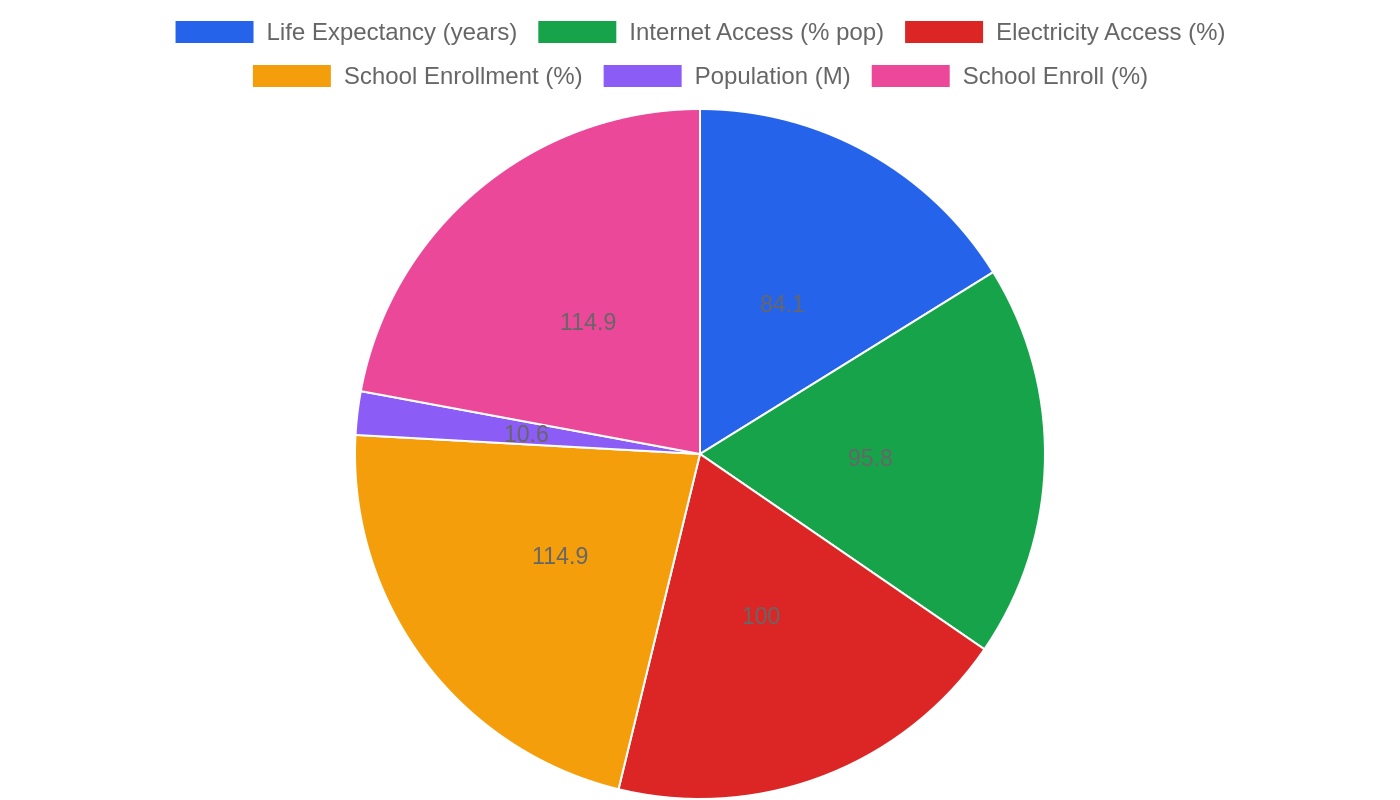
Sweden is often portrayed as a land of stark contrasts: midnight sun and long winter darkness, Viking heritage and cutting-edge tech, a generous welfare state and a fiercely competitive export economy. But beneath the surface, the Nordic nation is quietly navigating a profound economic transformation. With a GDP of approximately $669 billion and a GDP per capita of over $72,500 in purchasing power terms, Sweden remains one of the wealthiest nations on Earth.
Yet the latest inflation reading of just 0.68 percent tells a story of a country that has tamed price pressures faster than almost anyone expected. As the world watches Europe’s economic engines sputter, Sweden is proving that a small, open economy can still punch far above its weight.
Key Takeaways
– Remarkable Price Stability: Inflation has cooled to just 0.68 percent, giving Swedish households rare breathing room in a global cost-of-living crisis.
– A Wealthy Nation: With a GDP per capita above $72,500 (PPP), Sweden ranks among the world’s most prosperous economies, though population growth to nearly 10.6 million brings new challenges.
– Industrial Strength: From food production to biomedical engineering, Sweden’s top companies span diverse sectors, anchored by giants like AFRY in industrials and AGA in energy.
– A Political Culture of Participation: Sweden’s history of “popular movements” — from trade unions to the women’s movement — continues to shape its consensus-driven policy approach.
– Quality Over Quantity: While headline growth figures are unavailable, Sweden’s economic resilience is evident in its stable prices and robust corporate landscape.
The Price of Progress — Inflation, Growth, and the Swedish Model
The most striking number in Sweden’s current economic profile is its inflation rate: 0.68 percent, according to World Bank data. In an era where many advanced economies have struggled with price spikes well above central bank targets, Sweden has achieved something close to price stability. This is not merely a statistical curiosity; it has profound implications for ordinary Swedes. When inflation is low, wages go further, savings retain their value, and households can plan for the future with confidence.
For a country with a deeply ingrained social contract that prioritizes economic security, this is no small achievement.
The broader picture shows an economy of considerable scale. Sweden’s GDP stands at roughly $669 billion, a figure that reflects the output of a nation of 10.6 million people. The GDP per capita of $72,528 (PPP) places Sweden comfortably in the top tier of global living standards. This wealth is not accidental; it is the product of decades of investment in education, infrastructure, and a business environment that encourages innovation.
However, the absence of a current GDP growth figure from the World Bank data suggests a period of uncertainty, perhaps reflecting the global slowdown that has affected even the most resilient economies. The Swedish model, which balances market capitalism with a comprehensive welfare state, is being tested in real time.
What matters most is not the single snapshot but the trajectory. Sweden’s ability to maintain low inflation while preserving its high standard of living indicates an economy with strong underlying fundamentals. The challenge ahead lies in sustaining growth in a world where trade tensions, geopolitical instability, and demographic pressures are mounting. For Sweden, a country that exports everything from ball bearings to pharmaceuticals, the global environment is not a backdrop but a lifeline.
The Price of Living — Housing, Costs, and the Nordic Premium
Living in Sweden has never been cheap, and the data available paints a picture of a country where quality of life comes at a premium. While specific housing cost figures are not provided in the current dataset, the country’s high GDP per capita and strong social safety net suggest a cost structure that reflects the nation’s wealth. Rentals in major cities like Stockholm, Gothenburg, and Malmö are notoriously competitive, with waiting lists for apartments in the capital stretching for years.
The rental market is tightly regulated, which protects tenants but creates significant barriers for newcomers.
For those considering buying, the Swedish housing market has historically been a solid investment, though prices have cooled in recent years as interest rates rose. The daily cost of living — groceries, transport, dining out — remains higher than the European average, a trade-off many Swedes accept in exchange for excellent public services and a clean, safe environment.
The lack of detailed cost-of-living data in this profile means we cannot draw precise comparisons, but the broader economic indicators imply a country where disposable income is substantial, yet so are the bills. Sweden’s quality of life is often ranked among the best in the world, but that reputation carries a financial weight that residents feel every day.
The Engine Room — Companies, Sectors, and the Business Landscape
Sweden’s corporate landscape is as diverse as its geography. The top companies list reveals a nation that has moved beyond its traditional industrial roots into a knowledge-based economy. In the consumer goods sector, names like Abba Seafood and Acne Studios demonstrate the breadth of Swedish output — from humble canned fish to avant-garde fashion.
The technology sector is well represented by companies like Acast, a podcast platform that reflects Sweden’s digital savvy, and Adtraction, a marketing technology firm. Meanwhile, AFRY in industrials and AGA in oil and gas remind us that heavy engineering and energy remain foundational to the Swedish economy.
Perhaps the most intriguing entry is 3H Biomedical in health care, a sector where Sweden has long been a global leader. The presence of these companies suggests an economy that is not dependent on any single industry but rather draws strength from a portfolio of diverse enterprises. This diversification is a key reason why Sweden has weathered economic storms better than many of its peers.
The business climate is characterized by high levels of trust, transparency, and a collaborative relationship between the private sector and government. For investors, Sweden offers a stable, predictable environment, albeit with high labor costs and significant taxation. The challenge for the future is whether this model can continue to generate the innovation needed to compete on the global stage.
The Social Contract — Safety, Politics, and the Swedish Way of Life
Sweden’s political landscape is unique in its emphasis on popular participation. The country’s “popular movements” — trade unions, the Christian movement, the temperance movement, the women’s movement, and even the intellectual property pirate movement — have historically given ordinary Swedes a voice in shaping national policy. This tradition of grassroots involvement has created a political culture that values consensus and compromise.
Sweden was also the first country in the world to outlaw corporal punishment of children, a move that reflected its broader commitment to human rights and social welfare.
The available data does not include crime or safety indices for Sweden, which makes it difficult to assess current security conditions. However, the country’s broader reputation for safety and social cohesion is well established, and its political stability is a cornerstone of its economic success. The Swedish welfare state, with its emphasis on universal healthcare, education, and social security, remains popular despite debates over its sustainability.
For residents, the quality of life is measured not just in income but in the security of knowing that the state will be there in times of need. This social contract is both Sweden’s greatest achievement and its most significant challenge as the population ages and global pressures mount.
The Road Ahead — Navigating Uncertainty in Real Time
Right now, Sweden is at a crossroads. The remarkably low inflation rate of 0.68 percent is a double-edged sword. On one hand, it provides relief to households and allows the central bank to consider looser monetary policy. On the other hand, it could signal weakening demand, both domestically and internationally. Sweden’s economy is deeply integrated into global supply chains, and any slowdown in Europe or Asia will inevitably ripple through its export sector.
The World Bank’s data shows no current GDP growth figure, which may indicate that statisticians are still grappling with a volatile economic environment.
The political sphere is also in flux. The traditional dominance of the Social Democrats has been challenged in recent years by a more fragmented political landscape, with the Sweden Democrats gaining ground. This shift has made coalition-building more complex and has introduced new uncertainties into policy-making. However, the deep-rooted culture of negotiation and compromise that has defined Swedish politics for generations is likely to prevail.
The business community is watching closely, particularly in sectors like technology and green energy, where Sweden has the potential to lead. The coming months will reveal whether the country can maintain its economic stability while navigating a rapidly changing political and global landscape.
The Bottom Line
Sweden is a country that has mastered the art of balance — between state and market, tradition and innovation, individual freedom and collective security. For investors, it offers a stable, transparent, and innovative environment with world-class companies. For policymakers, it provides a model of how to manage the tensions inherent in a modern economy. For the casual observer, it is a reminder that small countries can achieve outsized success.
The low inflation rate and high GDP per capita are not just numbers; they are the fruits of a society that has made deliberate choices about how to organize its economy and its politics. Sweden may not be growing as fast as some emerging markets, but its steady, sustainable approach has proven its worth time and again. Those who watch Sweden will see a nation that is not merely surviving the global turmoil but quietly charting a course through it.
Sources & Methodology
This article is authored by Economic Pulse Net for informational and research purposes. Economic Pulse Net sources its data from multilateral institutions, national statistics bureaus, and proprietary databases. All data is believed to be current as of the date of publication.
Published: August 08, 2026 | Category: Research — Sweden
Use these signals in your own platform
Economic Pulse publishes its live signal feed through a documented, read-only API. Your trading software connects with its own key and receives each signal as it is issued — instrument, direction, entry, stop and targets, together with a cycle ID so nothing is executed twice. The feed is independent of this website and cannot change it.
Signals are informational only and are not financial advice.