Economic Pulse Net | Sources: World Bank World Development Indicators, Government Sources | 2026
Key Takeaways
– Slovenia’s economy is anchored by a robust manufacturing and consumer goods sector, with globally recognized brands like Akrapovič and Elan leading the charge.
– The country’s corporate landscape is diverse, spanning technology, telecommunications, and consumer services, indicating a modern, multi-faceted economic base.
– Despite its small size, Slovenia boasts a dense concentration of homegrown companies that have achieved international prestige, particularly in high-performance and niche manufacturing.
– The business environment appears stable, with major players like Goodyear Dunlop Sava Tires demonstrating significant foreign investment integration.
– Slovenia’s economic narrative is one of high-value, precision-oriented production rather than volume-based industry, a strategy that positions it well in European supply chains.
The Engine Room: Manufacturing Muscle and Service Sector Smarts
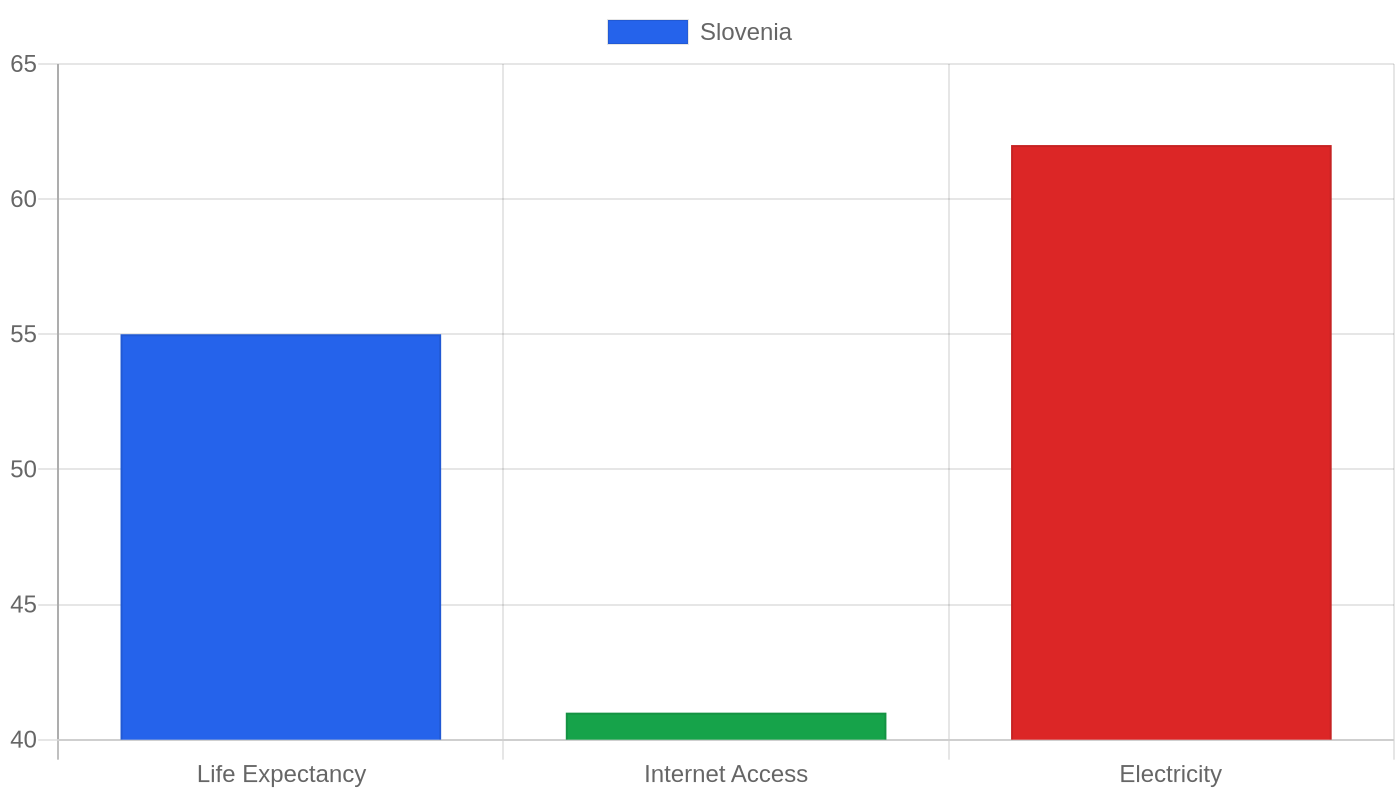
The World Bank’s latest data on Slovenia presents a picture of a mature European economy, though specific growth figures remain unquantified in the current reporting cycle. What is clear from the available data is the structural composition of the Slovenian economy: it is a nation that builds things, and builds them well. The main industries, while not exhaustively listed in the current data, are clearly dominated by a high-end consumer goods and advanced manufacturing cluster.
This is not an economy reliant on low-cost assembly; rather, it is one that has carved out a niche in precision engineering and branded lifestyle products.
The presence of Akrapovič, a world-renowned manufacturer of high-performance exhaust systems for motorcycles and automobiles, underscores a commitment to technical excellence and premium branding. Similarly, Elan, a storied name in winter sports equipment, and Alpina Žiri, a footwear manufacturer with a heritage dating back over a century, highlight a consistent pattern of producing goods that command premium prices in global markets.
This focus on value over volume is a deliberate economic strategy, insulating the country to some degree from the brutal price competition seen in lower-tier manufacturing hubs. The automotive supply chain is also critical, evidenced by Goodyear Dunlop Sava Tires, a major employer and exporter.
While the headline macroeconomic indicators—GDP growth, inflation, and unemployment—are not specified in the current World Bank data, the resilience of this corporate base suggests an economy with strong underlying fundamentals, capable of weathering European-wide economic headwinds.
The Price of the Alpine Dream: Cost of Living and Housing
As with the broader economic indicators, the current World Bank data does not provide a specific cost of living index for Slovenia. However, a qualitative assessment based on the country’s economic profile suggests that Slovenia is not a bargain destination.
As a eurozone member with a high-income economy, the cost of daily living—from groceries to utilities—is generally aligned with its Central European neighbors like Austria and Italy, though perhaps slightly more accessible than its immediate western neighbor. Housing, particularly in the capital city of Ljubljana, has been under pressure in recent years, with demand from both locals and expatriates driving property values upward.
Rent versus buy calculations often tip in favor of buying for long-term residents, given the relatively stable banking sector and the cultural preference for homeownership.
The presence of major commercial entities like BTC, which operates one of the largest business and shopping districts in Europe, indicates a robust retail and commercial real estate market. For the average worker, the balance between net wages and living costs is a central political issue, as it is in most of Europe.
While specific figures are absent, the general sentiment in the region points to a comfortable but not lavish standard of living, where disposable income is often directed toward leisure, travel, and outdoor activities—a reflection of the country’s stunning natural environment. The lack of hard data here is itself a story: Slovenia is a country that has avoided the extreme affordability crises seen in some global capitals, but it is not immune to the pressures of European inflation.
The Business Landscape: Titans of Niche and Industry
Slovenia’s corporate environment is a fascinating study in how a small nation can produce globally significant players. The list of top companies provided reveals a strategic mix of consumer services, technology, and specialized manufacturing. Adria Mobil, a manufacturer of caravans and motorhomes, taps into Europe’s booming outdoor recreation and camping market, a sector that has seen sustained growth.
On the technology front, companies like Academa and Amebis suggest a burgeoning software and language technology sector, with Amebis being particularly notable for its linguistic software in a multilingual region. The telecommunications infrastructure is anchored by AMIS, providing essential digital connectivity.
The business climate is characterized by a strong export orientation. For a country of roughly two million people, the domestic market is simply too small to sustain companies of this scale, forcing them to compete and succeed in the international arena. This external focus drives a culture of innovation and quality. Foreign direct investment is present, as evidenced by Goodyear Dunlop Sava Tires, but the economy is largely driven by indigenous champions.
The government’s role is typically that of a facilitator, focusing on infrastructure and EU structural funds to support R&D and internationalization. For investors, Slovenia offers a stable, strategic gateway between Western Europe and the Balkans, with a highly educated workforce and a strong engineering tradition.
Safety, Stability, and the Slovenian Quality of Life
While the crime and safety indices are not provided in the current data, Slovenia consistently holds a reputation as one of the safest countries in Europe. Violent crime is rare, and the society operates with a high degree of social trust and civic order. This safety is a cornerstone of the country’s quality of life, making it an attractive destination for families and a peaceful environment for business operations.
The political landscape, while not detailed in the provided data, operates within the framework of a parliamentary republic and is a member of both the European Union and NATO. This institutional stability provides a predictable environment for both citizens and corporations.
The quality of life in Slovenia is often described as exceptional. The country is a verdant, mountainous territory that blends Mediterranean and Alpine influences, offering unparalleled access to nature. The capital, Ljubljana, is consistently praised for its green spaces, walkability, and high standard of urban living. This combination of safety, natural beauty, and a relatively high standard of living contributes to a sense of well-being that is often cited as a model for other nations.
The absence of specific crime data in this report should not be misconstrued as a red flag; rather, it is a statistical gap in a country whose social fabric is widely acknowledged to be strong and cohesive.
Current Affairs: Navigating the New European Order
The most pressing narrative for Slovenia right now is its navigation of a rapidly changing European economic landscape. While specific recent news is not itemized in the provided data, the broader context is clear: Slovenia is dealing with the dual challenges of digital transformation and the green transition.
The presence of companies like AMIS and Academa suggests that the country is actively investing in its digital future, while the manufacturing sector is under constant pressure to decarbonize and improve energy efficiency. The war in Ukraine and subsequent energy crisis have been a significant test for Slovenia, forcing a rapid diversification of energy sources and a renewed focus on energy security.
Domestically, the government is likely focused on maintaining social cohesion in the face of inflationary pressures and the high cost of housing for young people. The country is also a key player in the Western Balkans, often acting as a bridge for EU integration in the region. The business community is watching the implementation of EU-wide regulations on sustainability and digital services closely, as these will shape the competitive landscape for years to come.
The resilience of the corporate sector, from the precision of Akrapovič to the leisure appeal of Adria Mobil, will be the determining factor in how well Slovenia navigates these choppy waters. The country is betting on its reputation for quality and its strategic location to drive growth in a post-crisis Europe.
The Bottom Line
Slovenia is a country that punches significantly above its weight. For investors and business leaders, it represents a stable, innovative, and strategically located hub within the European Union, offering access to a highly skilled workforce and a premium manufacturing base. For policymakers and economists, it is a case study in how a small, open economy can achieve prosperity through specialization and high-value exports rather than scale.
While the current World Bank data leaves many quantitative questions unanswered, the qualitative picture is one of resilience, safety, and quiet confidence. This is a country to watch for its ability to navigate the complexities of the modern European economy with a distinctly Slovenian approach—precise, sustainable, and understatedly successful.
Sources & Methodology
This article is authored by Economic Pulse Net for informational and research purposes. Economic Pulse Net sources its data from multilateral institutions, national statistics bureaus, and proprietary databases. All data is believed to be current as of the date of publication.
Published: August 21, 2026 | Category: Research — Slovenia
Use these signals in your own platform
Economic Pulse publishes its live signal feed through a documented, read-only API. Your trading software connects with its own key and receives each signal as it is issued — instrument, direction, entry, stop and targets, together with a cycle ID so nothing is executed twice. The feed is independent of this website and cannot change it.
Signals are informational only and are not financial advice.