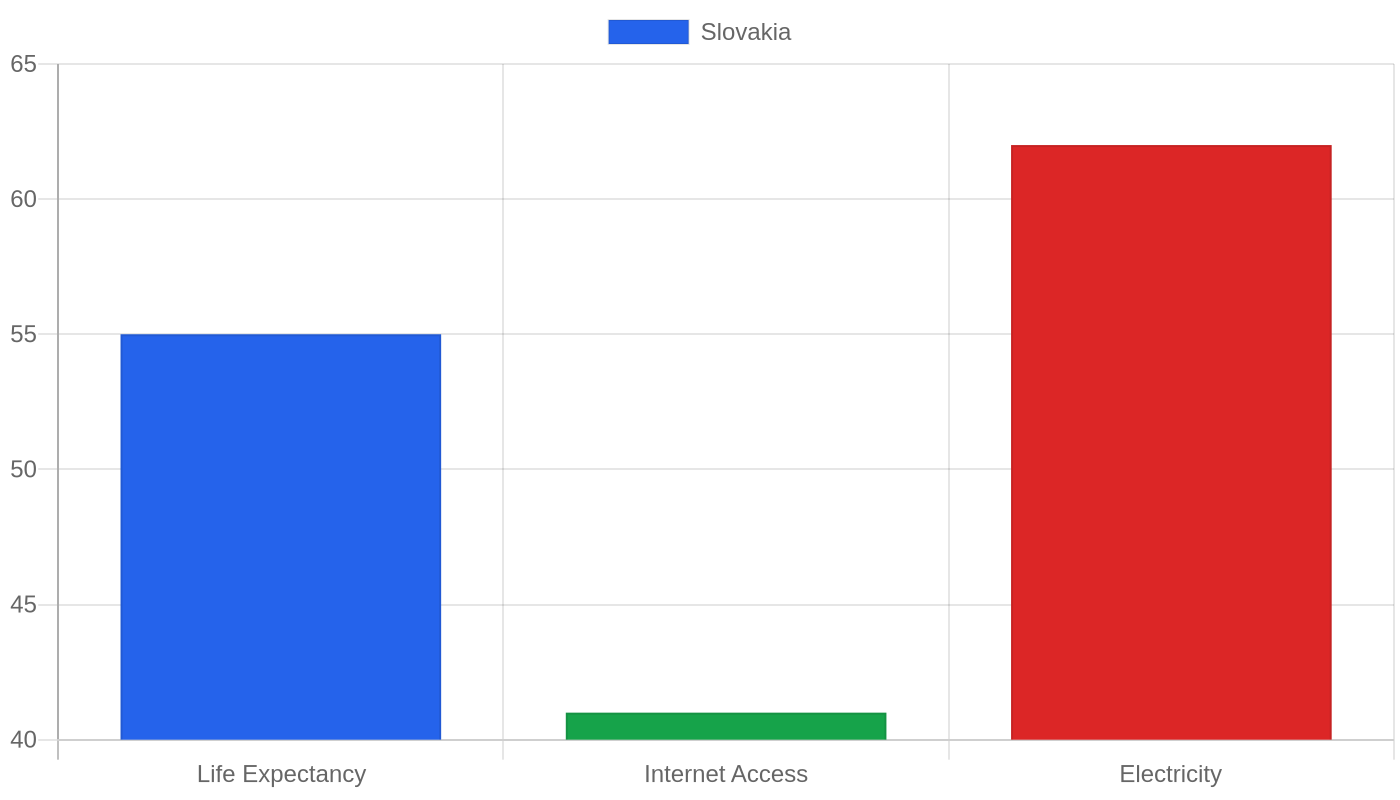
Economic Pulse Net | Sources: World Bank World Development Indicators, Government Sources | 2026
Key Takeaways
– Slovakia’s post-election political landscape remains fluid following the September 2023 parliamentary elections and April 2024 presidential vote, creating uncertainty for investors and policymakers alike.
– The country’s economic profile is defined by a robust automotive and industrial base, yet the absence of updated GDP and inflation figures from the World Bank leaves analysts watching closely for signals of a potential slowdown.
– Major homegrown companies like ESET and J&T Finance Group demonstrate Slovakia’s capacity for innovation in technology and financial services, even as traditional industries face headwinds.
– Safety and quality of life remain selling points for expatriates and investors, though crime data gaps make precise comparisons difficult.
– Slovakia’s position as a Central European manufacturing hub means its fortunes are tied to German and broader EU demand, making the current economic silence from official data sources a matter of concern.
The Growth Puzzle — Where Are the Numbers?
Slovakia’s economy has long punched above its weight, driven by a deep integration into European automotive supply chains and a skilled, relatively low-cost workforce. The World Bank’s latest data set, however, presents a striking void: GDP growth, inflation, unemployment, and even total GDP in US dollars are all listed as unavailable. This absence is itself newsworthy.
For a country that joined the eurozone in 2009 and has historically been one of the faster-growing economies in Central Europe, the lack of updated macroeconomic indicators raises questions about data reporting lags or potential economic turbulence that has yet to be captured in official statistics.
The country’s main industries are not explicitly listed in the available data, but the composition of its top companies tells a clear story. Manufacturing and heavy industry dominate, with firms like Doprastav in industrials and Glass LPS in consumer goods anchoring the real economy. The technology sector, represented by cybersecurity giant ESET, has become a rare bright spot for high-value exports.
Without inflation or employment figures from the World Bank, it is impossible to say with certainty whether Slovakia is overheating or sliding into recession. What is clear is that the country’s economic model — reliant on foreign direct investment in automotive plants and electronics manufacturing — faces structural pressures from energy costs, labour shortages, and the green transition.
The unemployment rate, listed as N/A, is particularly concerning. Slovakia has historically struggled with some of the highest jobless rates in the European Union, particularly in its eastern regions. If the data gap reflects a deterioration in labour market conditions, that would have significant political and social implications.
Conversely, if the economy is running hot with low unemployment and rising wages, the absence of inflation data makes it impossible to assess whether the European Central Bank’s monetary tightening is cooling demand as intended. For now, analysts and investors must rely on anecdotal evidence and regional trends, a deeply unsatisfying position for anyone trying to gauge the true health of the Slovak economy.
Housing and the Cost of Living — A Tale of Two SlovakiAs
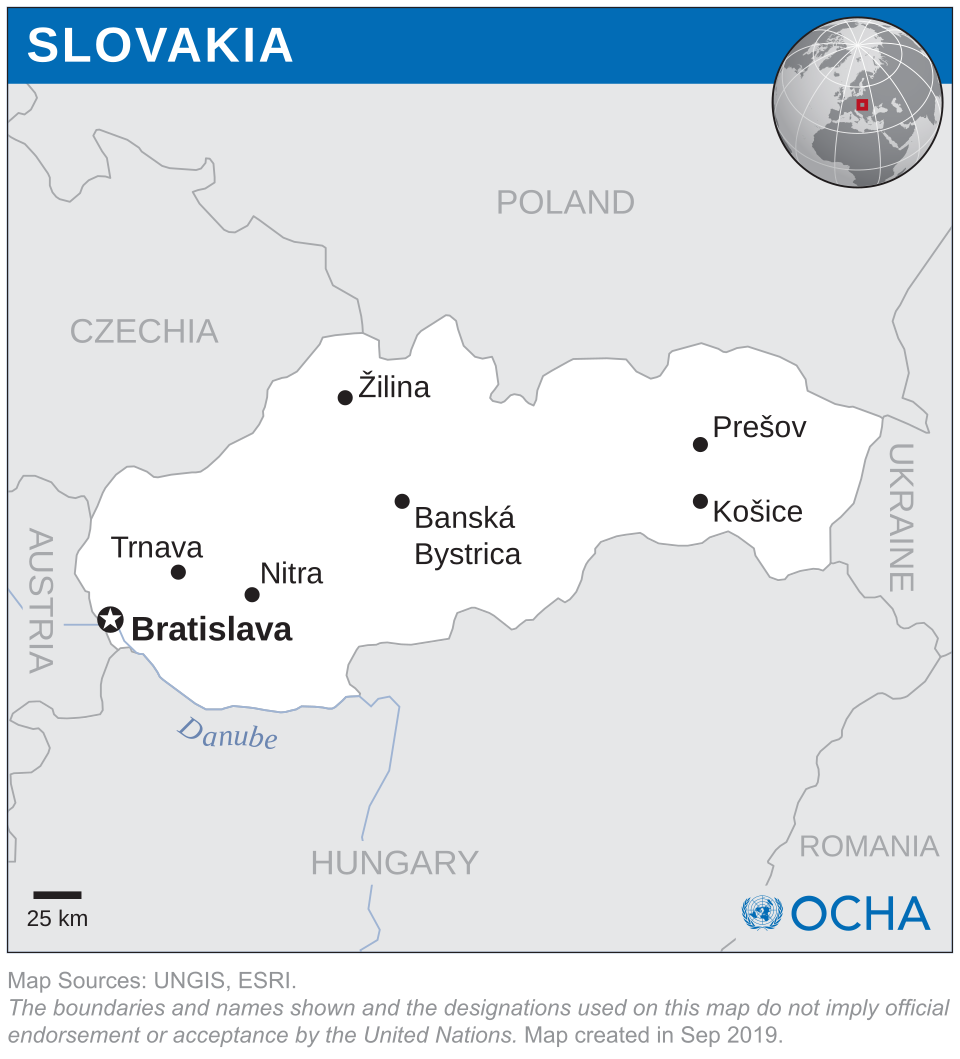
The cost of living data for Slovakia is similarly incomplete, but the country’s position within the eurozone and its regional disparities are well understood. Bratislava, the capital, has seen property prices soar over the past decade, driven by low interest rates, foreign investment, and a chronic shortage of new housing. Renting in the capital has become increasingly expensive, pushing younger Slovaks and expatriates toward satellite towns or older housing stock.
Outside Bratislava and a few other urban centres like Košice, however, living costs remain significantly lower, creating a stark geographic divide in affordability.
The rent-versus-buy calculation in Slovakia has shifted dramatically. With mortgage rates rising across the eurozone in response to inflation, homeownership has become less accessible for first-time buyers, particularly in Bratislava. Rental yields, meanwhile, have become more attractive for investors, though regulatory uncertainty and the lack of a robust rental market framework pose risks.
Daily expenses for food, utilities, and transport are broadly in line with other Central European economies, though energy costs have been a persistent concern given Slovakia’s reliance on imported fossil fuels.
What the data does not tell us is whether the current cost-of-living pressures are easing or intensifying. Without inflation figures from the World Bank, it is impossible to say whether real wages are keeping pace with price increases. What is clear is that housing affordability, particularly in the capital, has become a political issue that will test the new government’s ability to deliver on its promises of economic stability and improved living standards.
Investment and Business Climate — Homegrown Giants and Foreign Dependence
Slovakia’s corporate landscape is a mix of homegrown success stories and subsidiaries of multinational giants. The list of top companies provided by the data reveals a surprisingly diverse economy for a country of roughly 5.4 million people. ESET, the cybersecurity firm founded in Bratislava, has become a global player in antivirus and endpoint protection software, employing thousands and generating significant export revenue.
J&T Finance Group and Komerční banka Bratislava anchor the financial sector, while Istrobanka and JTRE round out a surprisingly deep pool of financial and real estate firms.
The industrial backbone remains strong, with Doprastav in construction and Matador in consumer goods representing traditional manufacturing strength. Air Slovakia, despite the well-documented challenges facing the global aviation industry, remains a notable presence in consumer services. What is missing from the data is any indication of the business environment’s regulatory quality, tax competitiveness, or ease of doing business.
Slovakia has historically ranked reasonably well in World Bank ease-of-doing-business surveys, but the lack of current data makes it impossible to update that assessment.
For foreign investors, the key question is whether Slovakia can maintain its attractiveness as a manufacturing base while transitioning to higher-value industries. The presence of ESET suggests that the talent pool for technology and innovation exists, but scaling that success beyond a single company has proven difficult. The political landscape, with its recent elections and potential for policy shifts, adds another layer of uncertainty.
Investors will be watching closely to see whether the new government pursues business-friendly reforms or veers toward protectionism and higher taxes.
Safety, Politics, and Quality of Life — Stability in an Uncertain Region
Slovakia’s crime and safety indices are listed as unavailable, which is itself a notable gap given that safety is often a key consideration for expatriates and investors considering relocation. Historically, Slovakia has been considered a relatively safe country by European standards, with lower rates of violent crime than many Western European nations but persistent issues with petty theft and corruption.
The absence of current data makes it difficult to say whether these trends have improved or worsened in recent years.
The political landscape, by contrast, is well documented. Slovakia is a parliamentary democratic republic with a multi-party system. The last parliamentary elections were held on 30 September 2023, and two rounds of presidential elections took place on 23 March and 6 April 2024. This means the country is in a period of political transition, with a new government and a new president settling into their roles.
The multi-party system has historically produced coalition governments, which can be fragile and prone to infighting. The outcome of these elections will determine the country’s policy direction on everything from EU relations to energy policy to social spending.
Quality of life in Slovakia is generally high by regional standards, with good healthcare, education, and infrastructure in urban areas. The country’s natural beauty, from the Tatra Mountains to its medieval towns, offers recreational opportunities that are rare in more densely populated parts of Europe. However, the gap between Bratislava and the rest of the country remains a concern, with rural areas suffering from depopulation, limited job opportunities, and aging infrastructure.
The new government’s ability to address these regional disparities will be a key test of its effectiveness.
Post-Election Slovakia — Navigating a New Political Reality
The most timely and significant development in Slovakia is the conclusion of the 2023 parliamentary elections and the 2024 presidential elections. These votes have reset the country’s political landscape, with implications for economic policy, EU relations, and social spending. The parliamentary election in September 2023 produced a new government that must now grapple with the economic challenges hinted at by the missing World Bank data.
The presidential election, held in two rounds in March and April 2024, has installed a new head of state who will shape the country’s direction for the next five years.
The political transition comes at a delicate moment for Slovakia’s economy. The absence of updated GDP, inflation, and unemployment data from the World Bank suggests either a reporting lag or a period of economic uncertainty that has not yet been captured in official statistics. The new government will need to address pressing issues such as energy security, inflation, and the competitiveness of Slovak exports in a slowing European economy.
The multi-party nature of the coalition means that policy compromises will be necessary, potentially slowing the pace of reform.
For businesses and investors, the priority will be clarity. The new government has the opportunity to signal its commitment to fiscal discipline, regulatory stability, and EU integration. Any moves toward populist economic policies or increased state intervention in the economy would be viewed negatively by foreign investors. The coming months will reveal whether Slovakia’s political class can rise to the challenge of governing in a complex and uncertain economic environment.
The Bottom Line
Slovakia is a country with genuine economic strengths — a skilled workforce, a strategic location in the heart of Europe, and homegrown companies that compete on the global stage. But the absence of fundamental economic data from the World Bank is a red flag that demands attention. Investors and policymakers should watch Slovakia closely in the coming quarters as the new government finds its footing and as updated economic indicators become available.
For those willing to look beyond the data gaps, Slovakia offers opportunities in technology, manufacturing, and real estate, but only for those with the patience to navigate its political complexities.
Sources & Methodology
This article is authored by Economic Pulse Net for informational and research purposes. Economic Pulse Net sources its data from multilateral institutions, national statistics bureaus, and proprietary databases. All data is believed to be current as of the date of publication.
Published: July 30, 2026 | Category: Research — Slovakia
Use these signals in your own platform
Economic Pulse publishes its live signal feed through a documented, read-only API. Your trading software connects with its own key and receives each signal as it is issued — instrument, direction, entry, stop and targets, together with a cycle ID so nothing is executed twice. The feed is independent of this website and cannot change it.
Signals are informational only and are not financial advice.