Economic Pulse Net | Sources: World Bank World Development Indicators, Government Sources | 2026
Key Takeaways
– Slovakia’s post-election political reset is reshaping its economic narrative, with a new parliamentary balance and a freshly elected president charting the course for 2025 and beyond.
– The country’s industrial backbone remains its most defining feature, with heavyweights in engineering, technology, and finance anchoring the corporate landscape.
– A dual-track economy is emerging: a sophisticated financial and tech sector sits alongside a cost-of-living reality that continues to test household budgets.
– Safety and quality of life remain quiet selling points, even as the political conversation grows louder and more polarized.
– For investors, Slovakia offers a gateway to Central European supply chains, but the window of opportunity is framed by political stability and regional integration.
The Engine Room: Industry, Growth, and the Numbers That Matter
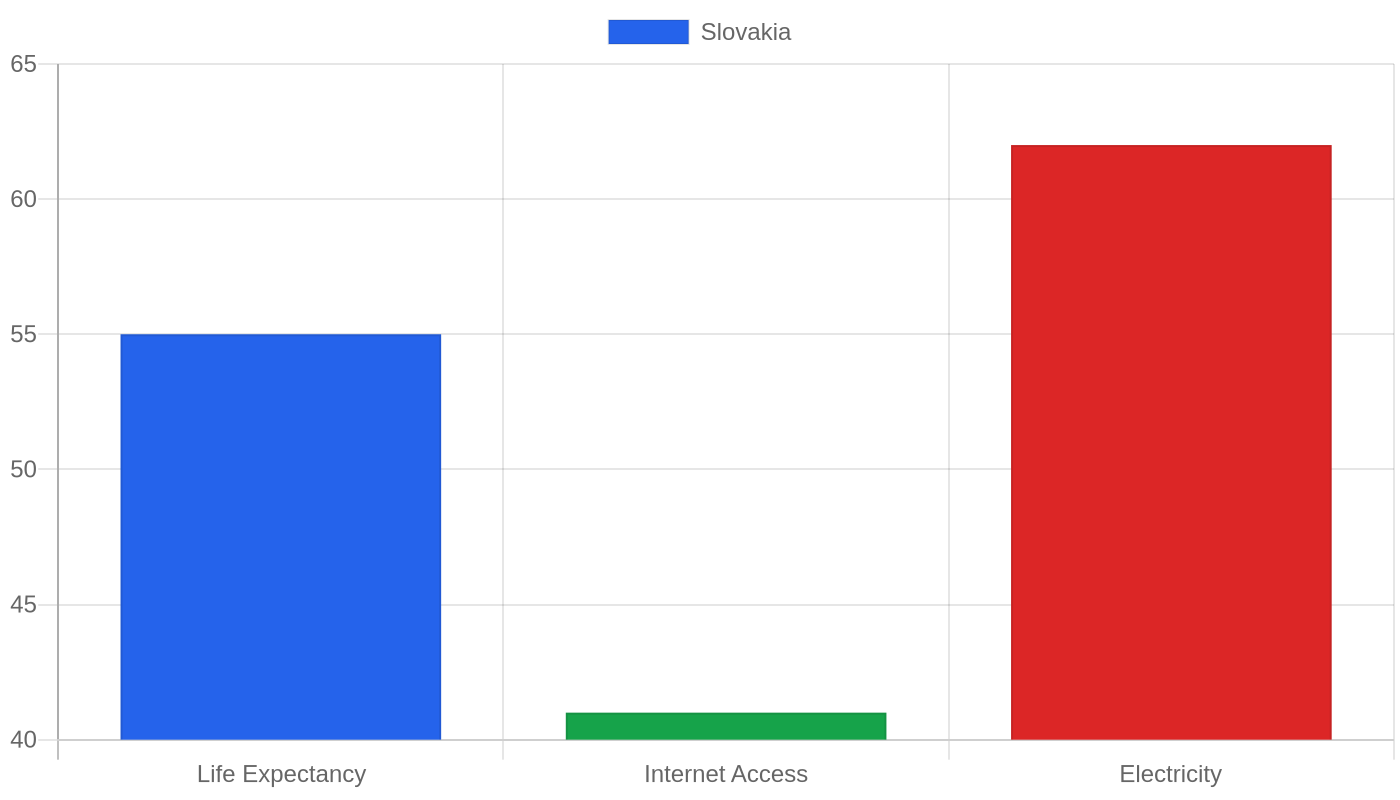
The World Bank’s latest data snapshot for Slovakia presents a curious paradox: the headline indicators for GDP growth, inflation, and unemployment are listed as unavailable, leaving analysts to read the broader contours of the economy through its industrial composition and corporate strength. What emerges is a picture of a mid-sized European economy that has built its modern prosperity on a foundation of heavy industry, precision engineering, and increasingly, high-value technology.
Slovakia’s industrial identity is unmistakable. The corporate roster reads like a masterclass in Central European manufacturing: Doprastav and Elnec in the industrials sector represent the construction and electrical engineering muscle that has physically built modern Slovakia. Matador and Glass LPS, both in consumer goods, speak to a tradition of manufacturing that survived the post-communist transition and globalized into competitive export operations.
These are not the flashy unicorns of Western tech hubs; they are the quietly efficient factories and design houses that supply European supply chains with components, machinery, and finished goods.
The financial architecture supporting this industrial base is equally telling. Istrobanka, Komerční banka Bratislava, and the J&T Finance Group form a banking sector that is sophisticated beyond what its population size might suggest. JTRE in real estate indicates a property market that has matured into a serious asset class. This is an economy with a functioning credit system, active capital markets, and a business elite that has learned to navigate both domestic politics and international finance.
The technology sector, anchored by ESET, is perhaps Slovakia’s most globally recognized success story. The cybersecurity firm has become a national champion, demonstrating that Slovak innovation can compete on the world stage. ESET’s presence signals a knowledge economy that exists alongside, and increasingly within, the traditional industrial base.
The unemployment and inflation figures may be opaque in this data set, but the composition of the economy tells a story of a country that has successfully industrialized and is now attempting to digitize.
The Price of Living: Housing, Costs, and the Household Squeeze
The cost of living data for Slovakia is not detailed in the World Bank snapshot, but the broader European context provides a framework for understanding household pressures. As a Central European economy that has converged significantly with Western European standards, Slovakia faces a familiar dilemma: wages that have grown impressively in nominal terms but a cost of living that has risen in tandem, particularly in the housing market.
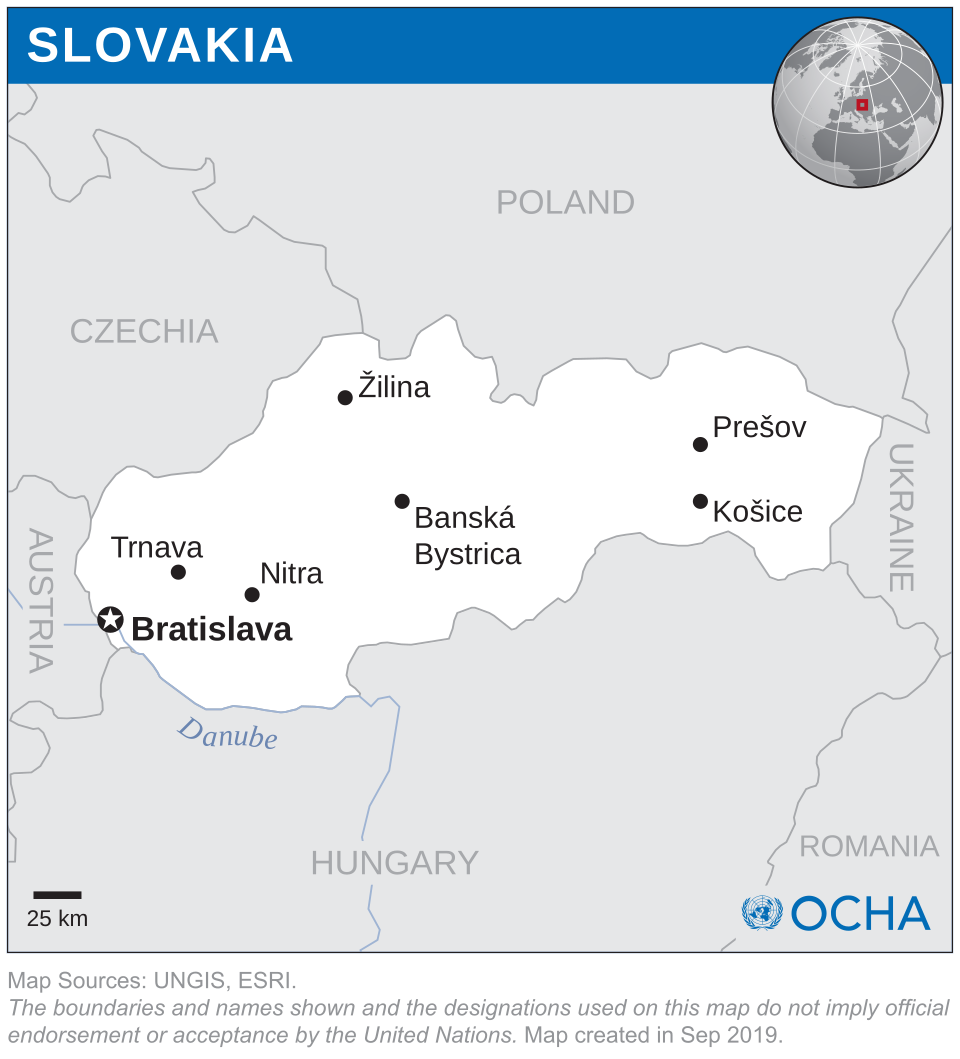
The presence of JTRE as a major real estate player suggests that property development has become a significant economic activity, particularly in Bratislava. The capital city has transformed from a post-socialist administrative center into a regional business hub, with modern office complexes and residential towers reshaping its skyline.
This development has brought with it the classic urban pressure points: rising rents, gentrification, and a growing divide between those who own property and those who are locked out of the market.
For the average Slovak household, the daily economy is defined by a careful calculus between food, energy, housing, and discretionary spending. The country’s position within European supply chains means that it is exposed to continental price pressures, while its wage levels, though rising, still lag behind the Western European core. The industrial strength of the economy provides employment, but the cost of living is a reminder that convergence is a process, not a destination.
Where the Money Moves: Investment, Business, and the Corporate Landscape
For investors looking at Slovakia, the landscape is defined by a handful of sectors that offer genuine opportunity. The technology sector, led by ESET, is the obvious growth play — cybersecurity is a global growth industry, and having a homegrown champion provides a halo effect for the entire startup ecosystem. The financial sector, with its mix of domestic banks and regional players like Komerční banka, offers stability and the kind of institutional depth that foreign investors look for when entering a market.
The industrial sector remains the workhorse. Companies like Doprastav and Elnec are deeply embedded in infrastructure and construction, sectors that benefit from European Union cohesion funds and the ongoing need for modernization. Matador’s consumer goods and Glass LPS’s specialty products show that Slovak manufacturing has found niches where quality and reliability matter more than low cost.
The real estate market, represented by JTRE, is another avenue for investment, particularly in Bratislava where commercial and residential development continues to attract both domestic and international capital. The business environment, while not without its bureaucratic challenges, benefits from Slovakia’s membership in the European Union, its adoption of the euro, and its strategic position between Western Europe and the Eastern markets.
For companies looking to establish a manufacturing or logistics foothold in Central Europe, Slovakia offers a compelling combination of skills, infrastructure, and cost.
The Politics of Prosperity: Safety, Governance, and the Quality of Life
Slovakia’s political landscape is in a state of active recalibration. The parliamentary elections of 30 September 2023 produced a new balance of power, and the two rounds of presidential elections held on 23 March and 6 April 2024 have completed the picture of a renewed political establishment. This is a parliamentary democratic republic with a multi-party system, which in practice means coalition politics, negotiation, and the occasional instability that comes with fragmented representation.
The crime and safety indices are not filled in for this data set, but Slovakia’s reputation within European rankings generally places it as a safe and stable country. Violent crime is low, and the capital, Bratislava, is considered a secure European city by regional standards.
The quality of life is bolstered by the country’s natural environment — the Tatra Mountains, the network of castles, and a rich cultural heritage that makes it attractive for tourism and for those seeking a lifestyle that balances urban convenience with access to nature.
The political shifts of 2023 and 2024 will have economic consequences. Changes in government typically bring changes in fiscal policy, regulatory priorities, and the tone of the business environment. For a country as integrated into European and global supply chains as Slovakia, political stability is not just a domestic concern — it is a signal to international markets about the predictability of the business climate.
The Moment Now: Slovakia’s Fresh Political Chapter and Its Economic Echoes
The most immediate story in Slovakia is the political transition that has unfolded over the past year. The September 2023 parliamentary elections reset the legislative agenda, and the April 2024 presidential election has now aligned the executive branch with a new mandate. This is not a cosmetic change; it is a fundamental shift in the country’s governance that will determine the direction of fiscal policy, social spending, and economic reform for years to come.
For businesses operating in Slovakia, the new political configuration brings both opportunity and uncertainty. On one hand, a fresh mandate can mean a clearer policy direction, faster decision-making, and the possibility of long-overdue structural reforms. On the other hand, coalition governments in a multi-party system often require compromise, which can dilute ambitious agendas and slow the pace of change.
The corporate sector is watching closely. ESET and the technology community will be looking for signals on digital policy, education investment, and support for innovation. The industrial giants — Doprastav, Matador, Elnec — will be monitoring infrastructure spending and labor market policy. The financial institutions, Istrobanka and J&T Finance Group, will be assessing regulatory stability and the government’s approach to banking and capital markets.
The broader economic question is whether Slovakia can maintain its competitive edge in an increasingly challenging global environment. The country’s success has been built on being a reliable, cost-effective manufacturing hub for Europe. That model is under pressure from automation, global supply chain shifts, and the green transition. The new government’s response to these structural challenges will define Slovakia’s economic trajectory more than any single policy initiative.
For international observers, the political changes in Bratislava are a reminder that even the most stable-looking economies are subject to the turbulence of democratic politics. The multi-party system, the coalition negotiations, and the shifting alliances are not signs of weakness but of a functioning, if sometimes messy, democracy. The question is whether the new political class can translate electoral mandates into economic outcomes that benefit the population.
The Bottom Line
Slovakia is a country that has come a long way in a short time, transitioning from a planned economy to a competitive European player. Its industrial base, financial sector, and emerging technology ecosystem provide a solid foundation for future growth. The political changes of 2023 and 2024 introduce a new variable — the direction of policy is now in the hands of a fresh mandate, and the outcomes will be measured in economic terms.
Investors, businesses, and policymakers should watch Slovakia closely not for its headline numbers, which are currently opaque, but for its structural strengths and the political will to build on them. This is a country where the fundamentals are sound, the challenges are clear, and the next chapter is being written now.
Sources & Methodology
This article is authored by Economic Pulse Net for informational and research purposes. Economic Pulse Net sources its data from multilateral institutions, national statistics bureaus, and proprietary databases. All data is believed to be current as of the date of publication.
Published: August 28, 2026 | Category: Research — Slovakia
Use these signals in your own platform
Economic Pulse publishes its live signal feed through a documented, read-only API. Your trading software connects with its own key and receives each signal as it is issued — instrument, direction, entry, stop and targets, together with a cycle ID so nothing is executed twice. The feed is independent of this website and cannot change it.
Signals are informational only and are not financial advice.