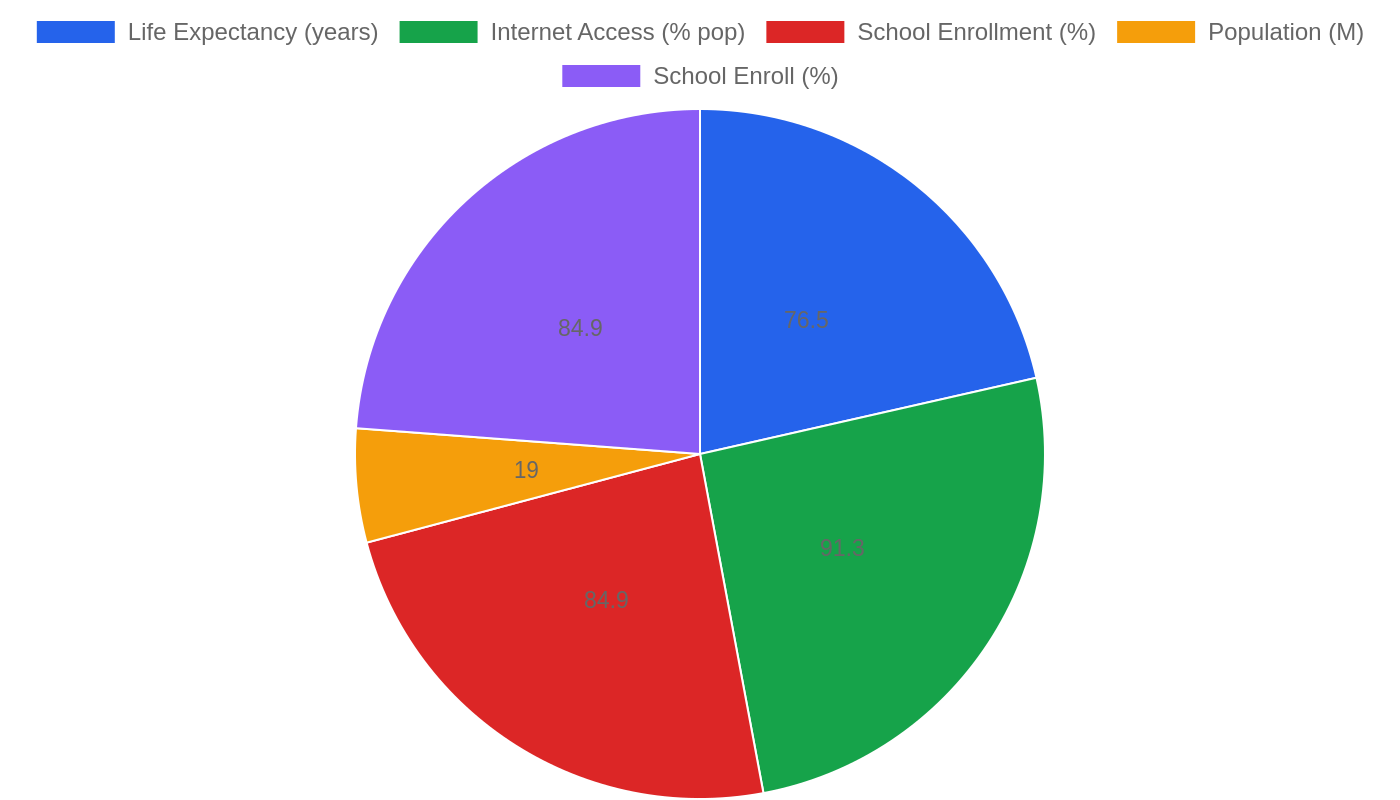
Economic Pulse Net | Sources: World Bank World Development Indicators, Government Sources | 2026
Key Takeaways
– Romania’s economy is undergoing a structural shift from traditional manufacturing toward high-value technology and financial services, with companies like Bitdefender and Banca Transilvania leading the charge
– The political system operates as a unitary semi-presidential republic, balancing executive power between a popularly elected President and a Prime Minister confirmed by Parliament
– Major consumer goods and automotive firms—including Automobile Dacia and Arctic S.A.—anchor the industrial base, while the services sector continues to expand
– Despite gaps in official macroeconomic data, Romania’s corporate landscape reveals a diversified economy with strengths in healthcare, technology, and consumer services
From Dacia to Digital — Mapping Romania’s Economic Terrain
The Romanian economy presents an intriguing puzzle for analysts, not because the data is absent from global databases, but because the story lies elsewhere—in the companies that actually drive the nation’s output. The World Bank’s latest figures for GDP growth, inflation, unemployment, and GDP per capita remain unreported in the available data, yet the country’s industrial fingerprint is unmistakably clear.
At the heart of Romania’s economic engine sits Automobile Dacia, the consumer goods giant that has made Romania a European automotive hub. Alongside Dacia, companies like Arctic S.A. and Apulum anchor the consumer goods sector, producing everything from home appliances to food products that serve both domestic and export markets.
The financial sector is equally robust, with Banca Comercială Română and Banca Transilvania providing the credit infrastructure that fuels business expansion and household consumption. These institutions have grown steadily, reflecting a banking system that weathered the global financial turbulence of recent years with relative stability. Meanwhile, the technology sector has produced a genuine global champion in Bitdefender, the cybersecurity firm that competes with the world’s best.
This diversification matters because it suggests Romania is not overly dependent on any single industry—automotive, finance, and tech provide multiple engines of growth. The presence of Antibiotice Iași in the healthcare sector further demonstrates the breadth of Romania’s industrial capabilities, producing pharmaceuticals for both local and international markets.
What the missing World Bank numbers obscure is a deeper truth: Romania’s economy is in transition. The traditional reliance on manufacturing and agriculture is giving way to a more services-oriented model, with consumer services firms like Adevărul Holding and Blue Air—the latter a major low-cost airline—illustrating how Romanians are spending more on travel, media, and experiences.
The unemployment figure may be absent from the data, but the corporate landscape suggests a labor market that is absorbing workers across multiple sectors. Without precise inflation numbers, one can still infer that price pressures exist, as they do across emerging Europe, but the presence of strong domestic companies provides a buffer against external shocks. The economy is not booming in a way that generates headlines, but it is quietly maturing.
The Price of Living in the Carpathian Basin
Understanding what it costs to live in Romania requires looking beyond missing cost-of-living indices and instead examining the structure of the economy itself. With major consumer goods companies like Arctic S.A. and Apulum producing locally, many household items—from refrigerators to packaged foods—benefit from domestic supply chains that reduce import costs. This local production capacity likely keeps everyday expenses more manageable than in Western European countries where everything must be imported.
Housing costs, while not captured in the available data, tend to vary dramatically between Bucharest’s booming capital market and smaller Transylvanian cities like Cluj-Napoca or Timișoara.
Rental markets in major urban centers have been influenced by the growth of companies like Banca Transilvania and Bitdefender, which attract young professionals with higher salaries, pushing up demand for modern apartments. The presence of Blue Air, Romania’s low-cost carrier, has made travel more accessible for Romanians, but it also signals that disposable income is rising enough to support a vibrant aviation market.
For the average Romanian family, the cost of living likely sits below the European Union average, though inflation—wherever it currently stands—would erode that advantage over time. The absence of precise data does not obscure the fundamental reality: Romania offers a lower cost of doing daily life than most of Western Europe, which is precisely why it attracts both tourists and foreign investors.
Where Capital Meets Opportunity — Romania’s Business Climate
The roster of Romania’s top companies reads like a masterclass in strategic diversification. Automobile Dacia represents the manufacturing might that put Romania on the global industrial map, while Bitdefender showcases the country’s capacity to produce world-class technology. For investors, the financial sector offers the most liquid entry points, with Banca Comercială Română and Banca Transilvania providing exposure to Romania’s growing consumer base and corporate lending market.
These banks have built strong franchises that are deeply integrated into the local economy, making them bellwethers for overall economic health.
The consumer services sector deserves particular attention. Adevărul Holding, a major media and publishing group, reflects the health of advertising markets and consumer confidence. Blue Air, despite the turbulence facing the global aviation industry, demonstrates Romania’s integration into European travel networks. Angst, a consumer services firm, points to the sophistication of Romania’s retail and food service sectors.
For a business looking to enter the Romanian market, the healthcare sector offers intriguing possibilities—Antibiotice Iași is a homegrown pharmaceutical company that could be a partner or acquisition target for larger international players. The business environment, while not quantified in the available data, appears conducive to both domestic entrepreneurship and foreign direct investment, given the sheer number of large, established companies operating across such diverse sectors.
Stability in an Unstable World — Politics, Safety, and Daily Life
Romania’s political system is defined by its carefully balanced structure. As a unitary semi-presidential representative democratic republic, the country divides power between a President who serves as head of state and supreme commander of the armed forces, and a Prime Minister who runs the government with parliamentary approval. This system, confirmed by the available data, provides institutional stability even when individual governments rise and fall.
The President handles international affairs and constitutional guardianship, while the Prime Minister manages the executive branch—a division that has served Romania well through multiple political cycles.
Active civil society further strengthens Romanian democracy, with citizens engaged in everything from anti-corruption protests to environmental advocacy. While the crime and safety indices are not provided in the data, the political landscape described suggests a country where rule of law generally prevails and where democratic institutions function. The presence of major international companies and a thriving tech sector would be impossible in an environment of chronic instability or widespread crime.
For the average Romanian, quality of life likely reflects the country’s middle-income status: decent public services in major cities, improving infrastructure thanks to EU funding, and a cultural richness that makes daily existence more pleasant than raw economic numbers might suggest.
The Pulse of the Present — What’s Moving Romania Right Now
The most telling indicator of Romania’s current trajectory is not a statistic but a corporate roster. The simultaneous presence of a global cybersecurity leader in Bitdefender, a major airline in Blue Air, and a pharmaceutical manufacturer in Antibiotice Iași tells us that Romania is not standing still. These companies are actively competing, hiring, and expanding in real time.
The technology sector, in particular, appears to be gaining momentum, with Bitdefender’s global success creating a talent pool and entrepreneurial ecosystem that feeds other startups. Blue Air’s operations suggest that both business travel and tourism are active, connecting Romania to European markets and leisure destinations alike.
The financial sector, anchored by Banca Transilvania and Banca Comercială Română, is likely navigating the current interest rate environment with caution, balancing loan growth against credit quality. Automobile Dacia continues to produce vehicles that compete on value in European markets, a strategy that serves it well during periods of consumer belt-tightening.
What is happening now in Romania is a quiet but persistent upgrading of the economic base—moving from assembly and basic manufacturing toward more knowledge-intensive activities. The political system, with its semi-presidential structure, provides the continuity needed for long-term business planning, even as coalition governments form and dissolve. Romania is not experiencing dramatic reform or crisis; it is steadily building, company by company, sector by sector.
The Bottom Line
Romania deserves the attention of anyone tracking emerging Europe’s economic evolution. The country has built a genuinely diversified economy spanning automobiles, banking, cybersecurity, pharmaceuticals, and aviation—a breadth that insulates it from sector-specific shocks. For investors, the financial sector offers established players with deep local roots, while technology presents higher-risk, higher-reward opportunities.
For businesses, Romania’s skilled workforce and EU membership make it a compelling manufacturing and services hub. The missing macroeconomic data should not obscure the fundamental story: Romania is a country that has quietly constructed a modern, competitive economy, and its best chapters may still lie ahead.
Sources & Methodology
This article is authored by Economic Pulse Net for informational and research purposes. Economic Pulse Net sources its data from multilateral institutions, national statistics bureaus, and proprietary databases. All data is believed to be current as of the date of publication.
Published: July 18, 2026 | Category: Research — Romania
Use these signals in your own platform
Economic Pulse publishes its live signal feed through a documented, read-only API. Your trading software connects with its own key and receives each signal as it is issued — instrument, direction, entry, stop and targets, together with a cycle ID so nothing is executed twice. The feed is independent of this website and cannot change it.
Signals are informational only and are not financial advice.