Economic Pulse Net | Sources: World Bank World Development Indicators, Government Sources | 2026
Key Takeaways
* Stagnant Growth Trajectory: Romania’s economy is projected to grow by a modest 0.68% in 2025, signaling a significant deceleration from previous highs and highlighting structural headwinds in the post-pandemic recovery phase.
Persistent Inflationary Pressure: With CPI inflation hovering near 7.19%, households continue to face elevated costs of living, challenging the real purchasing power of an average income that stands at $20,190 per capita.
Labor Market Resilience: Despite slower economic expansion, unemployment remains tightly controlled at roughly 5.99%, suggesting a labor market that is absorbing shocks but may be reaching capacity constraints.
Strategic Industrial Base: The nation leverages a diverse portfolio of top-tier enterprises ranging from global cybersecurity leader Bitdefender to automotive giant Automobile Dacia, anchoring its position as a key industrial hub in Eastern Europe.
Economic Headwinds: The Cost of Slower Expansion
Romania’s macroeconomic landscape in 2025 presents a complex picture of resilience tempered by stagnation. According to World Bank data, the country’s GDP growth is projected at a mere 0.6778%, a figure that underscores a notable cooling in economic momentum compared to the robust expansions seen in earlier years.
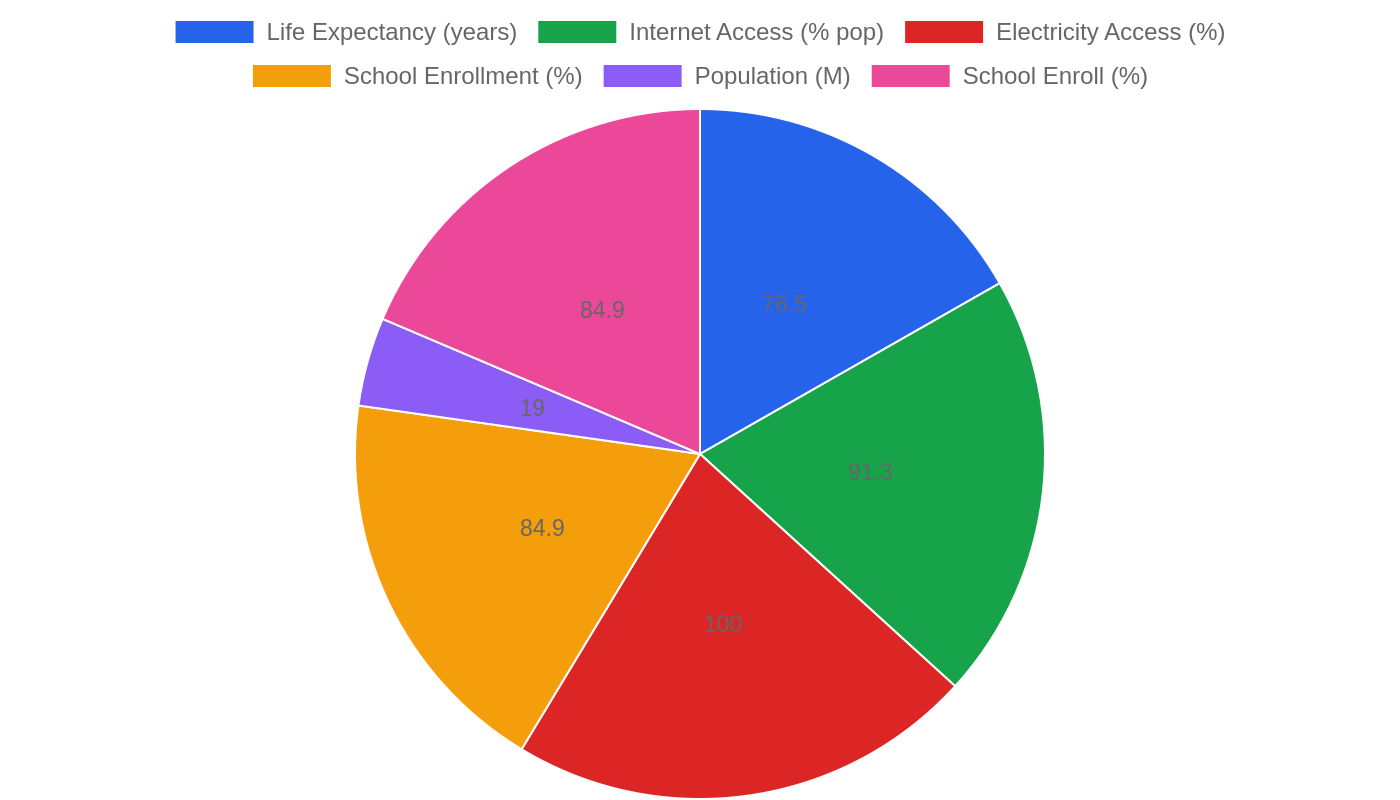
This slowdown is occurring against a backdrop of persistent price pressures; the Consumer Price Index (CPI) has registered at 7.189%, indicating that while the economy is growing, it is doing so in an environment where the cost of goods and services continues to rise significantly for consumers. For the 19 million citizens represented by a population of 19,020,271, this dynamic creates a delicate balancing act between income growth and affordability.
However, there are bright spots within the national accounts: the GDP per capita measured in Purchasing Power Parity (PPP) stands at a healthy $50,895, suggesting that when adjusted for local price levels, the standard of living remains relatively high compared to regional peers. Furthermore, the Gross National Income (GNI) per capita of $20,190 provides a baseline for household earnings, though this figure must be viewed in the context of the 7.19% inflation rate which erodes nominal gains.
The unemployment rate of 5.992% reflects a tight labor market, which typically supports wage growth but can also contribute to service-sector inflation if productivity does not keep pace with demand. Ultimately, these numbers suggest an economy that is stable but lacks the explosive growth drivers needed to rapidly close gaps with Western European counterparts, requiring careful policy management to sustain social cohesion.
Living Costs: Navigating the Inflationary Landscape
For residents and expatriates alike, the daily reality in Romania is defined by the interplay between moderate incomes and stubbornly high inflation. While specific housing indices are not provided in the current dataset, the broader cost-of-living environment is clearly under pressure, driven by the 7.19% CPI increase recorded by the World Bank.
This inflationary trend implies that essential goods, from energy to food, have become more expensive, directly impacting the disposable income of families relying on the average GNI of $20,190. In such an environment, the decision to rent versus buy becomes increasingly critical, as rising interest rates often accompany inflationary periods, potentially making mortgage financing less attractive or accessible for first-time buyers.
Daily expenses are likely to consume a larger share of the budget than in previous years, forcing households to prioritize spending and potentially leading to a decline in savings rates. Compared to other EU member states, Romania’s lower nominal income levels mean that while prices may be lower in absolute terms, the relative burden of inflation feels sharper for those earning closer to the median.
Consequently, consumer behavior is likely shifting toward value-oriented purchases, benefiting discount retailers while pressuring premium brands. The challenge for policymakers and businesses alike is to stabilize prices without stifling the already modest 0.68% economic growth, ensuring that the cost of living does not outpace the gradual improvement in national wealth.
Investment & Business Climate: Tech and Automotive Anchors
Romania’s business ecosystem is anchored by a sophisticated mix of traditional manufacturing and emerging technology sectors, creating a unique investment profile. At the forefront of this industrial diversity are major players like Automobile Dacia, which remains a cornerstone of the country’s manufacturing export engine, leveraging its integration into the Renault group to drive volume sales.
Complementing the automotive sector is the financial industry, dominated by giants such as Banca Transilvania and Banca Comercială Română, which provide the necessary credit infrastructure for both domestic consumption and foreign direct investment. Perhaps most notably, Romania has carved out a niche in the global technology arena through companies like Bitdefender, a world-leading cybersecurity firm that highlights the nation’s strength in high-value, knowledge-intensive services.
Other significant entities include Antibiotice Iași in healthcare and Apulum in consumer goods, demonstrating a broad-based industrial base that reduces reliance on any single sector. These top companies operate within a structured governance framework that includes an active civil society and a semi-presidential system, offering a degree of political stability that investors generally favor.
The presence of consumer services firms like Adevărul Holding and Angst further indicates a mature domestic market with developed media and retail channels. For international investors, the combination of a skilled workforce, established corporate leaders, and strategic geographic location makes Romania an attractive, albeit cautiously managed, destination for capital deployment.
Safety, Politics & Quality of Life: Stability Amidst Complexity
The quality of life in Romania is underpinned by a well-defined political structure that balances executive power with legislative oversight. As a unitary semi-presidential representative democratic republic, the country features a President elected by popular vote who serves as head of state and supreme commander of the Romanian Armed Forces, providing a layer of institutional continuity and international representation.
The Prime Minister, appointed by the President and confirmed by Parliament, manages the day-to-day executive operations, ensuring that policy implementation aligns with constitutional order. This structured system of governance fosters an environment where civil society plays an active role, contributing to transparency and accountability in public affairs. Regarding personal safety, current data does not provide specific Crime or Safety Indices, leaving the precise metrics of security undefined in this dataset.
However, the political stability inherent in the republican framework suggests a low risk of systemic upheaval, which is a key component of overall quality of life for residents. The interaction between a strong presidency and a parliamentary government creates checks and balances that help mitigate extreme policy swings, offering a predictable environment for long-term planning.
For citizens, this political maturity translates into a sense of civic engagement and national identity, even as they navigate the economic challenges of inflation and slow growth.
What’s Happening Now: Policy Shifts and Economic Adjustments
In the current economic climate, Romania is grappling with the immediate implications of slowing growth and persistent inflation. The projection of just 0.68% GDP growth for 2025 indicates that the government is likely implementing austerity measures or tightening fiscal policies to curb the 7.19% CPI inflation, which has become a central concern for voters and businesses alike.
This economic slowdown coincides with a labor market that remains resilient at 5.99% unemployment, suggesting that the government is prioritizing price stability over aggressive job creation programs in the short term. Major corporations like Bitdefender and Automobile Dacia are adapting to this environment by focusing on efficiency and innovation rather than rapid expansion, reflecting a broader corporate strategy of caution.
Meanwhile, the banking sector, led by Banca Transilvania, is likely navigating higher interest rates to combat inflation, which impacts lending standards and consumer credit availability. The political landscape remains active, with the President and Prime Minister working to maintain constitutional order while addressing public discontent over the cost of living.
These developments point to a period of consolidation, where the focus is on stabilizing the macroeconomic fundamentals before pursuing new growth initiatives. Stakeholders are closely watching how the government balances social welfare needs with the imperative to reduce inflationary pressures.
The Bottom Line
Romania represents a compelling case study in economic resilience, offering a stable political framework and a diversified industrial base despite facing significant near-term headwinds. Investors should watch this country not for explosive growth, but for steady integration into European supply chains and the continued rise of its tech and automotive sectors. The primary risks lie in the persistence of inflation and the potential social impact of stagnant wage growth, making prudent fiscal policy crucial.
For those seeking exposure to Eastern Europe’s emerging markets, Romania offers a balanced mix of opportunity and stability, provided one remains attuned to the evolving policy landscape.
Sources & Methodology
This article is authored by Economic Pulse Net for informational and research purposes. Economic Pulse Net sources its data from multilateral institutions, national statistics bureaus, and proprietary databases. All data is believed to be current as of the date of publication.
Published: October 31, 2026 | Category: Research — Romania
Use these signals in your own platform
Economic Pulse publishes its live signal feed through a documented, read-only API. Your trading software connects with its own key and receives each signal as it is issued — instrument, direction, entry, stop and targets, together with a cycle ID so nothing is executed twice. The feed is independent of this website and cannot change it.
Signals are informational only and are not financial advice.