Economic Pulse Net | Sources: World Bank World Development Indicators, Government Sources | 2026
Key Takeaways
* Portugal’s economy is projected to grow by approximately 1.86% in 2025, reflecting a steady but modest expansion within the Eurozone context.
Inflation remains controlled at roughly 2.3%, offering a stable environment for consumers and businesses despite global price pressures.
The nation boasts a high GDP per capita under Purchasing Power Parity (PPP) of over $53,000, indicating strong individual economic resilience.
A competitive multi-party political system established by the 1976 Constitution ensures institutional stability and universal suffrage.
Major industrial players in sectors ranging from basic materials to healthcare anchor the corporate landscape, supporting foreign direct interest.
Economic Engine: Growth Amidst Moderate Inflation
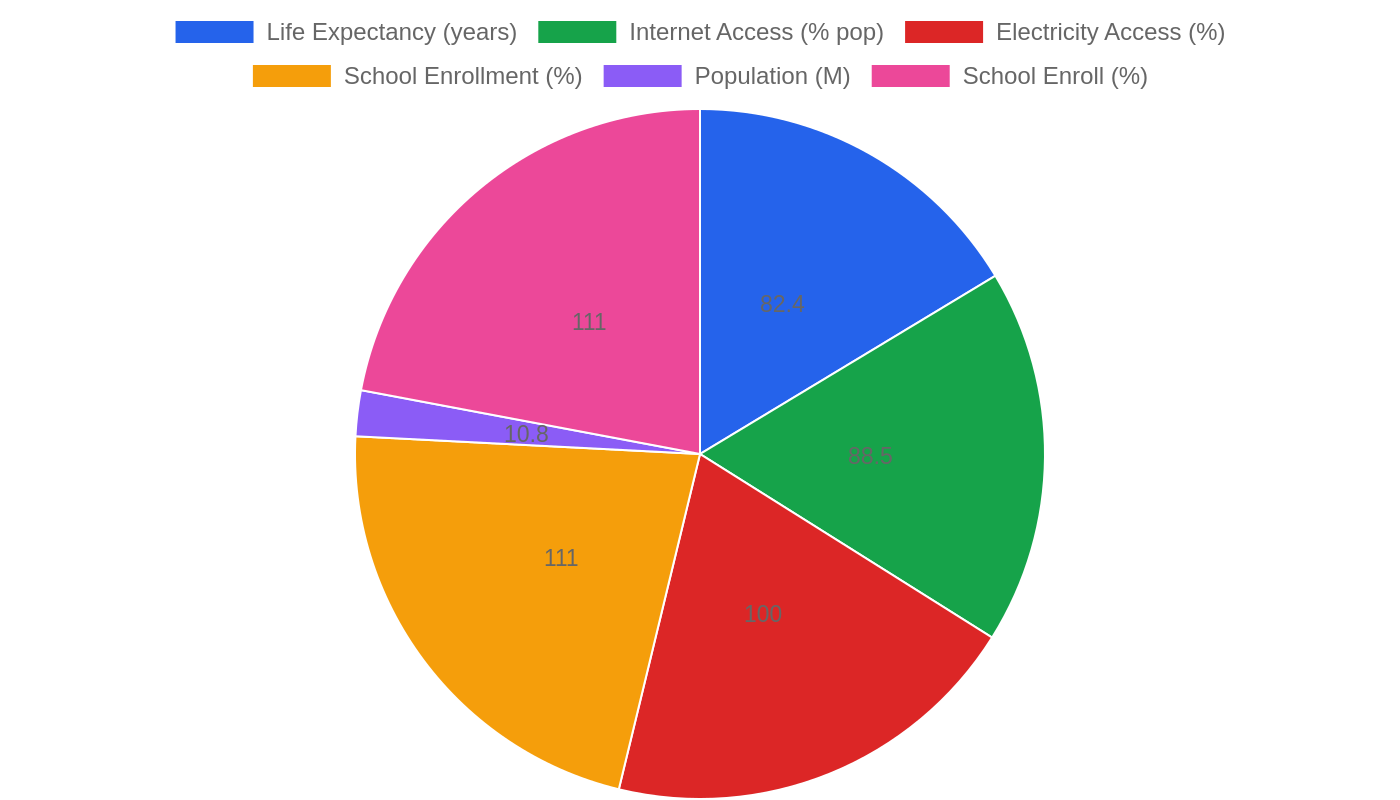
Portugal’s economic trajectory in 2025 presents a picture of cautious optimism, with the World Bank projecting a GDP growth rate of 1.86448007464475%. This figure suggests that while the country is not experiencing an explosive boom, it is maintaining positive momentum, likely driven by domestic consumption and tourism recovery rather than aggressive industrial expansion.
Concurrently, the inflation CPI stands at 2.33601620316701%, a level that central banks generally consider healthy and sustainable, preserving purchasing power for households without triggering wage-price spirals. With a total GDP of USD 346,639,825,141.821, Portugal ranks as a significant mid-sized economy in Southern Europe, leveraging its strategic Atlantic position for trade and logistics.
The human capital aspect of this economy is robust; the population of 10,804,871 supports a GDP per capita (PPP) of USD 53,145.7317498942, which is substantially higher than the nominal GNI per capita of USD 29,930.0. This disparity highlights the importance of local purchasing power and cost efficiencies in determining actual living standards.
However, the labor market shows signs of tightness, with unemployment sitting at 6.164%, suggesting that while jobs are available, full employment remains a challenge to address. These metrics collectively indicate an economy that is stabilizing after recent shocks, prioritizing quality of life and structural balance over rapid, potentially volatile, expansion.
Cost of Living: Balancing Affordability and Value
For residents and expatriates alike, the cost of living in Portugal offers a nuanced mix of affordability relative to Northern European counterparts and rising pressures in urban hubs. While specific housing indices are not detailed in the current dataset, the high PPP-adjusted GDP per capita implies that when adjusted for local prices, the average citizen enjoys a standard of living comparable to wealthier nations.
This suggests that daily expenses, from groceries to utilities, may be lower than what nominal income figures alone would predict. The interplay between the moderate inflation rate of 2.33% and the solid PPP income means that households are not facing severe erosion of their real wages, allowing for discretionary spending in services and leisure.
Compared to regional averages in the Eurozone, Portugal often serves as a value proposition for digital nomads and retirees, though this is increasingly being scrutinized by policymakers aiming to sustain local housing markets. The absence of extreme inflationary spikes allows for better long-term financial planning for families, fostering a sense of economic security that is rare in more turbulent emerging markets.
Ultimately, the data points to a environment where money goes further in terms of lifestyle quality, provided one navigates the specific regional variations in housing costs.
Investment & Business Climate: Industrial Diversity and Corporate Strength
The investment landscape in Portugal is characterized by a diverse array of established corporations that span critical sectors of the modern economy. Investors looking at the top companies will find exposure to Basic Materials through Altri, and Industrials via Ambar – Ideas on Paper S.A. and Cimpor, signaling a strong foundation in manufacturing and construction supplies.
The financial sector is anchored by giants such as Banco Comercial Português and Caixa Geral de Depósitos, providing stability and credit access to the broader economy. Meanwhile, innovation and consumer staples are represented by Chipidea in technology, Bial in health care, and Central de Cervejas in consumer goods, demonstrating a move toward knowledge-intensive and branded industries.
Churchill’s Port continues to uphold the nation’s traditional strength in wine making, blending heritage with global export demand. This diversification reduces systemic risk, as downturns in one sector, such as construction, can be offset by stability in healthcare or financial services. For foreign investors, these entities offer tangible entry points into the Portuguese market, backed by a legal framework that protects property rights and encourages competition.
The presence of these listed and major private firms indicates a mature business ecosystem capable of supporting both domestic entrepreneurship and international joint ventures.
Safety, Politics & Quality of Life: Institutional Resilience
Portugal’s political structure provides a bedrock of stability that underpins its social fabric and attracts long-term residents. Since the ratification of the Constitution of 1976, the country has operated as a semi-presidential representative democratic republic, dividing sovereignty among the president, the government, the Assembly of the Republic, and the courts. This separation of powers ensures checks and balances, preventing the concentration of authority and fostering a transparent governance model.
Universal suffrage for adults over 18, coupled with secret ballots for all elected offices, reinforces the legitimacy of the political process and civic engagement. The competitive multi-party system operates at national, regional, and local levels, allowing for nuanced representation of diverse public interests.
Although specific crime and safety indices are marked as N/A in the current data set, the political continuity and strong rule of law implied by this constitutional framework suggest a society where legal protections are robust. The combination of democratic stability and moderate economic conditions contributes to a high quality of life, making the country attractive for those seeking both safety and political predictability.
What’s Happening Now: Navigating Structural Adjustments
In the current economic climate, Portugal is focused on managing the delicate balance between growth and fiscal responsibility. With GDP growth pegged at nearly 1.86% for 2025, policymakers are likely prioritizing structural reforms to boost productivity rather than stimulating short-term demand. The control of inflation at 2.33% allows the government to maintain social programs without risking budget deficits associated with runaway price increases.
Recent discussions in economic circles center on how to reduce the unemployment rate of 6.164%, potentially through targeted investments in the tech and healthcare sectors led by companies like Chipidea and Bial. The business community is also adapting to a more regulated environment, with financial institutions like BC Portugal playing a key role in financing sustainable projects.
As the world moves past immediate post-pandemic disruptions, Portugal’s strategy appears to be one of consolidation, ensuring that the gains in GDP per capita are broadly shared across the 10.8 million population. This period is defined less by dramatic shifts and more by the careful calibration of policy tools to maintain competitiveness within the European Union.
The Bottom Line
Portugal represents a compelling case study for investors and observers seeking stability over hyper-growth. Its strong institutional framework, combined with a diversified industrial base and controlled inflation, creates a low-risk environment for long-term capital deployment. While the unemployment rate requires attention, the high PPP-adjusted income levels suggest a resilient consumer base.
For those interested in European markets, Portugal offers a unique blend of traditional industry and emerging technological sectors, making it a country worth watching closely in the coming years.
Sources & Methodology
This article is authored by Economic Pulse Net for informational and research purposes. Economic Pulse Net sources its data from multilateral institutions, national statistics bureaus, and proprietary databases. All data is believed to be current as of the date of publication.
Published: September 28, 2026 | Category: Research — Portugal
Use these signals in your own platform
Economic Pulse publishes its live signal feed through a documented, read-only API. Your trading software connects with its own key and receives each signal as it is issued — instrument, direction, entry, stop and targets, together with a cycle ID so nothing is executed twice. The feed is independent of this website and cannot change it.
Signals are informational only and are not financial advice.