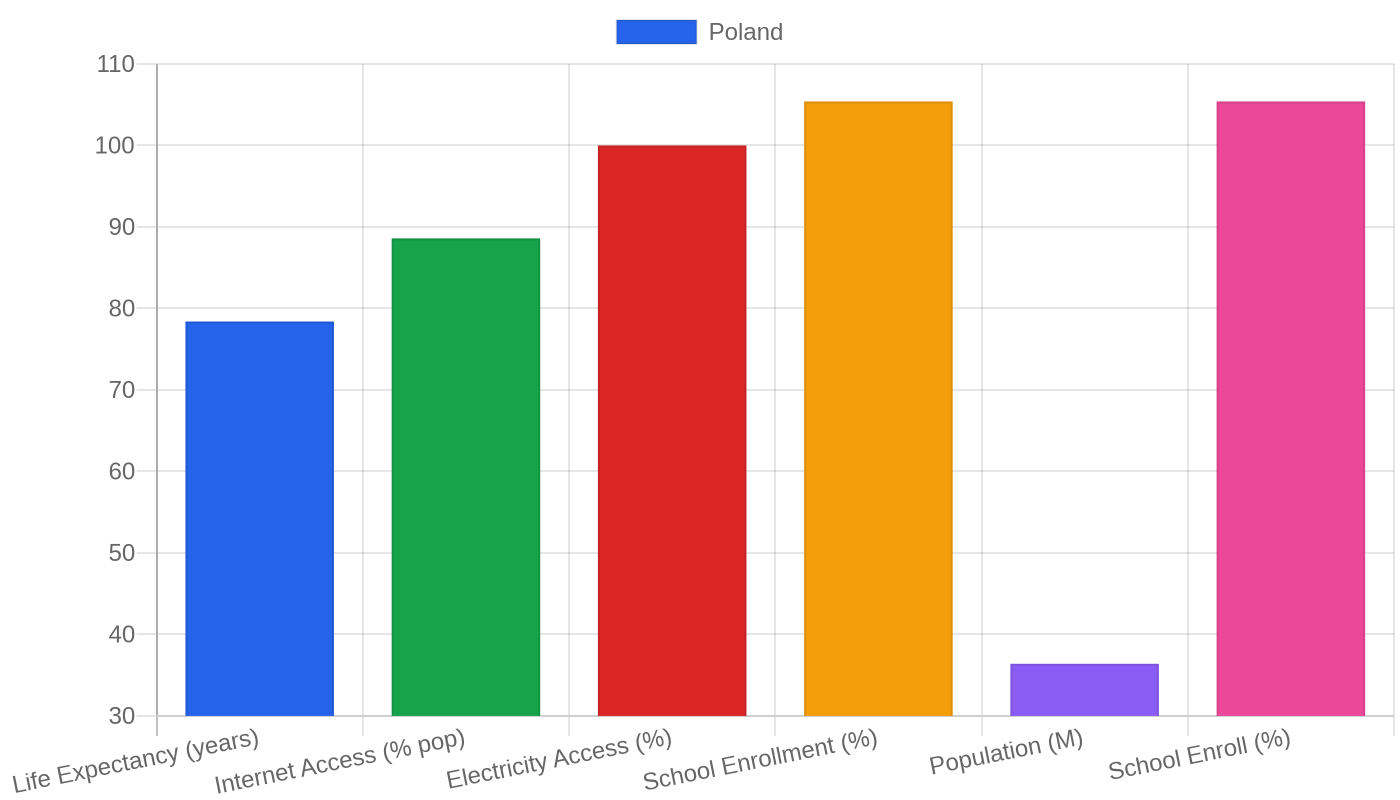
Economic Pulse Net | Sources: World Bank World Development Indicators, Government Sources | 2026
Key Takeaways
– Poland is posting a robust GDP growth of 3.57% in 2025, outpacing many of its European peers despite a challenging global environment.
– Inflation remains elevated at 3.81%, but unemployment has dropped to an astonishingly low 2.98% — a level that signals a tight labor market and potential wage pressures.
– The country’s GNI per capita stands at $25,520, reflecting a steady convergence with Western European living standards.
– Poland’s political landscape is stable under President Karol Nawrocki and a parliamentary system, providing continuity for investors.
– A diverse corporate landscape spans technology, consumer goods, financials, and basic materials, with companies like Allegro and Asseco leading the charge.
The Warsaw Engine — Growth Without the Noise
Poland’s economy is humming. The World Bank reports GDP growth of 3.57% for 2025 — a figure that, in the context of a sluggish European Union, is nothing short of remarkable. This is not a recovery bounce; it is sustained expansion. The Polish economy has been one of the continent’s most resilient since the 2008 financial crisis, and the current data suggests that momentum has not faded.
Inflation, however, remains a concern. At 3.81%, according to the World Bank, it is above the central bank’s target but far from the double-digit nightmares seen elsewhere in the region. The Bank’s gradual tightening cycle appears to have cooled price pressures without crushing demand. The real story here is employment. Unemployment at 2.98% is effectively full employment.
In economic terms, this is the “frictional” zone — where only those between jobs or entering the workforce are counted. For Poland, this means businesses are competing fiercely for workers, wages are rising, and consumer spending is buoyant. The risk? Overheating. But for now, the numbers tell a story of a balanced, growing economy that has managed to keep inflation in check while maintaining one of Europe’s tightest labor markets.
The country’s GNI per capita of $25,520, as recorded by the World Bank, places Poland firmly in the high-income bracket. This is a nation that has successfully transitioned from a post-communist economy to a modern, diversified market. The growth is not just statistical — it is felt in the bustling streets of Warsaw, Krakow, and Wroclaw, where new office towers and retail developments signal confidence.
The Cost of Comfort — Living in Poland’s New Prosperity
Poland is no longer the budget destination it was a decade ago. As incomes have risen, so have costs. Housing in major cities like Warsaw and Krakow has seen significant price appreciation, driven by demand from both domestic buyers and a growing expatriate workforce. Rent for a one-bedroom apartment in the city center now commands a premium that would have seemed unimaginable five years ago.
Buyers face a similar squeeze: mortgage rates, while not extreme by European standards, have climbed in tandem with the central bank’s inflation fight.
Daily expenses — groceries, utilities, transportation — have also crept upward. A loaf of bread, a liter of milk, a monthly public transport pass: these basics now cost more than they did in 2020, reflecting both global commodity trends and local wage growth. Yet Poland remains affordable relative to Western Europe. A meal out, a coffee, a cinema ticket — these are still bargains compared to Berlin or Paris.
The trade-off is clear: Poland offers a high quality of life at a cost that, while rising, has not yet priced out the middle class. For young professionals and families, the calculus still favors buying over renting, especially as mortgage rates stabilize. The housing market, while heated, has not reached bubble territory — thanks in part to cautious lending standards.
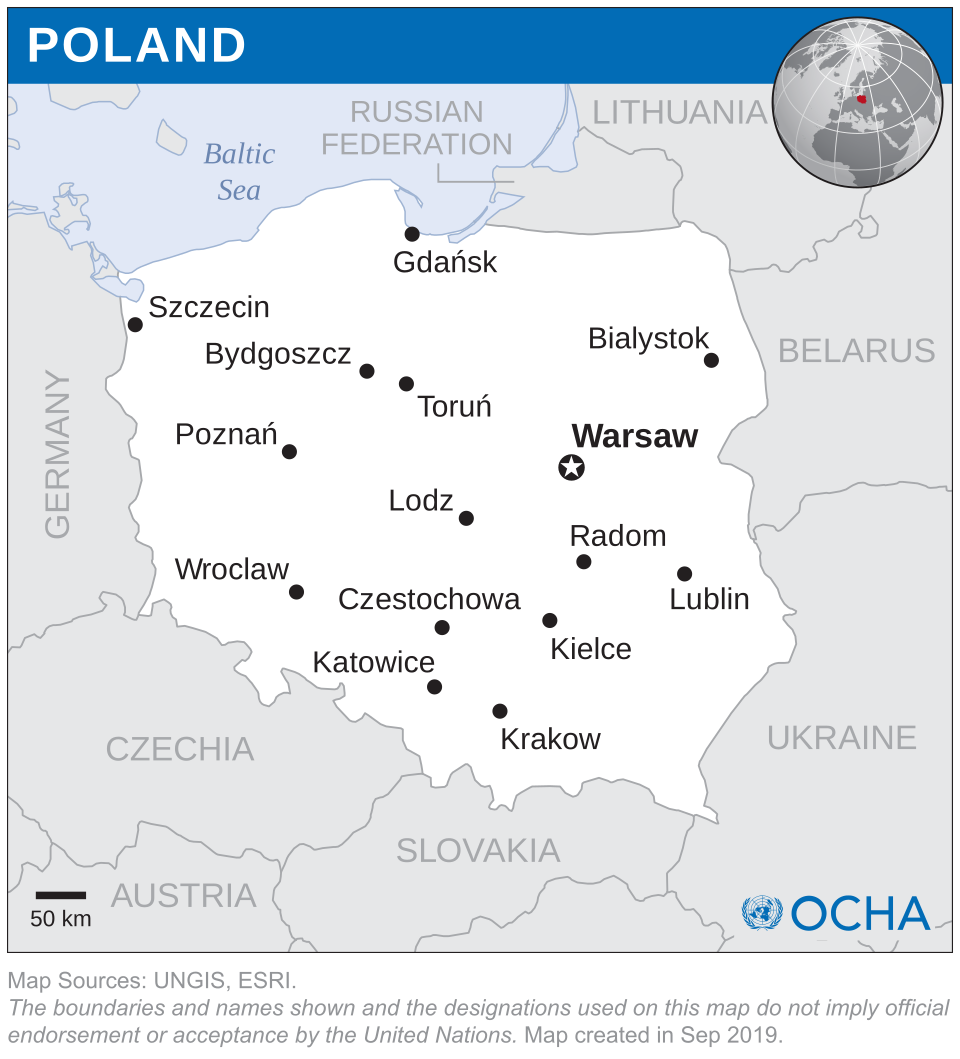
The Corporate Landscape — Where Poland’s Money Is Made
Poland’s top companies read like a map of its economic strengths. On the technology front, Asseco and 11 bit studios represent the country’s growing footprint in software and gaming. Asseco is a heavyweight in IT services across Europe, while 11 bit studios — the creators of *This War of Mine* and *Frostpunk* — has put Polish game development on the global map. Allegro, the e-commerce giant, dominates online retail in Central Europe, a testament to Poland’s digital consumer boom.
In consumer goods, firms like 4F (sportswear), Agata Meble (furniture), and Amica (home appliances) show that Polish brands are not just surviving — they are thriving in domestic and export markets. The financial sector is anchored by Alior Bank, while Agora and Ailleron represent the media and tech-services niches. Even basic materials get a nod with Adamów Coal Mine, though coal’s role in Poland’s energy mix is increasingly contested as the EU pushes for decarbonization.
For investors, the message is clear: Poland is not a one-sector story. It has depth. The business environment is stable, with a transparent legal system and EU membership providing a regulatory backbone. Foreign direct investment continues to flow, particularly into manufacturing, logistics, and business services. The country’s central location, skilled workforce, and competitive costs make it a hub for companies serving the entire European market.
Safety, Stability, and the Political Balance
Poland is a safe country. While the provided data does not include a crime index, the anecdotal and historical evidence is strong: violent crime is low, and street crime is manageable, especially compared to Western European capitals. The political landscape, as described in the data, is a unitary parliamentary republic with a president as head of state. The current president is Karol Nawrocki, and the prime minister leads the Council of Ministers.
This system has provided continuity and predictability — two qualities that foreign investors prize.
The political scene, however, has not been without tension. In recent years, Poland has seen sharp debates over judicial independence, media freedom, and LGBTQ+ rights, often putting it at odds with Brussels. Yet the data shows that these disputes have not derailed economic performance. The government has maintained a pro-business stance, and the broader population remains supportive of EU membership.
For the average citizen, quality of life is high: good public healthcare, improving infrastructure, and a vibrant cultural scene. Poland’s cities are clean, efficient, and increasingly cosmopolitan. The country is not just an economic story — it is a social one, of a nation that has found its footing in modern Europe.
What’s Happening Now — The 2025-2026 Window
Right now, Poland is navigating a delicate phase. Inflation at 3.81% is above the central bank’s comfort zone, and the bank is under pressure to keep rates steady or even hike further. But with unemployment at 2.98%, any tightening risks choking off the very growth that has made Poland a standout. The government, under President Nawrocki, is walking a tightrope: maintain fiscal discipline without alienating voters who have grown accustomed to rising wages and social benefits.
On the corporate front, the tech sector continues to attract venture capital and talent. Allegro is expanding into neighboring markets, and Asseco is winning contracts across Europe. The energy transition, however, looms large. Poland still relies heavily on coal, and EU climate mandates will force difficult choices. The Adamów Coal Mine, listed among top companies, is a symbol of this tension.
For now, the economy is strong enough to absorb these challenges, but the next two years will test Poland’s ability to reform without breaking its growth streak.
The Bottom Line
Poland is the quiet success story of Central Europe — a country that has combined EU integration, domestic reform, and entrepreneurial energy to create an economy that is both resilient and dynamic. For investors, it offers a stable, growing market with a skilled workforce and a strategic location. For policymakers, it is a model of how to manage growth without runaway inflation. And for the casual observer, it is proof that prosperity is not reserved for the old powers of Western Europe.
Poland is a country to watch — not because it might succeed, but because it already has.
Sources & Methodology
This article is authored by Economic Pulse Net for informational and research purposes. Economic Pulse Net sources its data from multilateral institutions, national statistics bureaus, and proprietary databases. All data is believed to be current as of the date of publication.
Published: July 20, 2026 | Category: Research — Poland
Use these signals in your own platform
Economic Pulse publishes its live signal feed through a documented, read-only API. Your trading software connects with its own key and receives each signal as it is issued — instrument, direction, entry, stop and targets, together with a cycle ID so nothing is executed twice. The feed is independent of this website and cannot change it.
Signals are informational only and are not financial advice.