Economic Pulse Net | Sources: World Bank World Development Indicators, Government Sources | 2026
Key Takeaways
– Poland’s GDP growth of 3.57% in 2025, as recorded by the World Bank, positions it as one of the fastest-growing economies in the European Union, outpacing the regional average
– With a GDP per capita (PPP) of $54,262 and a GNI per capita of $25,520, Poland has crossed the threshold into high-income country status, though significant internal disparities remain
– The country’s economic transformation is increasingly driven by a sophisticated technology sector, with companies like 11 bit studios, Asseco, and Allegro emerging as regional champions
– Poland operates as a unitary parliamentary republic under President Karol Nawrocki and a prime minister-led government, providing political stability that underpins investor confidence
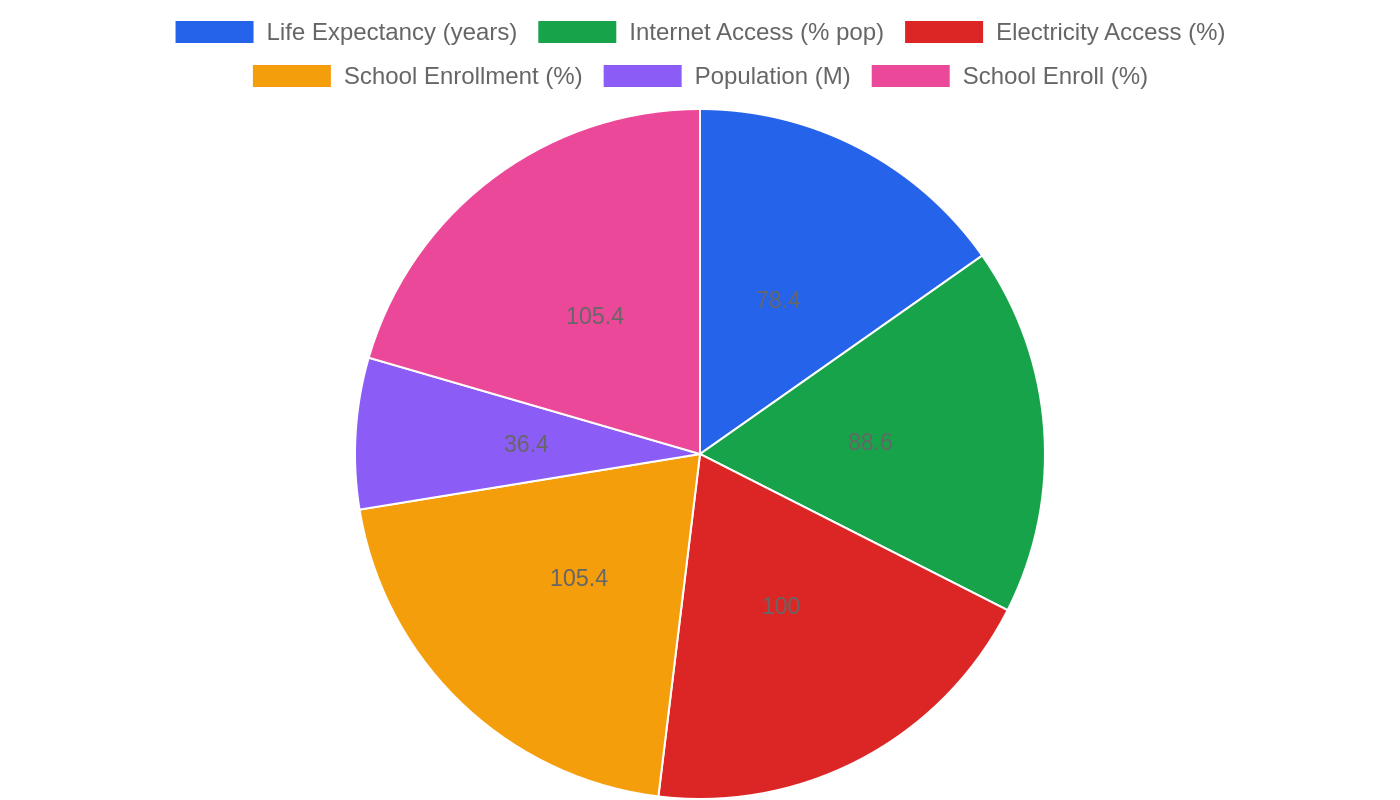
– The nation’s population of 36.4 million represents a substantial domestic market and labour pool, critical for sustaining its manufacturing and services-led growth model
The Warsaw Consensus — How Poland Engineered a Growth Miracle
The numbers coming out of Warsaw tell a story that economists love to tell but rarely get to witness. According to the World Bank, Poland’s GDP grew by 3.57% in 2025 — a figure that would make most European finance ministers weep with envy. To understand why this matters, one must look beyond the headline statistic. Poland has spent three decades methodically dismantling its post-communist economic architecture and rebuilding it as a market-oriented powerhouse.
That 3.57% growth is not a fluke; it is the product of deep structural reforms, European Union integration, and a relentless focus on export competitiveness.
The World Bank data reveals a nation that has fundamentally changed its economic DNA. Poland’s GDP per capita at purchasing power parity stands at $54,262, a figure that places it comfortably ahead of several older EU member states. This is not merely an abstract number — it represents real improvements in living standards, infrastructure quality, and consumer purchasing power. The GNI per capita of $25,520 tells a slightly more sobering story, however.
The gap between PPP-adjusted GDP and nominal GNI suggests that while Poland’s economy is productive and efficient, a substantial portion of the wealth generated flows to foreign investors and multinational corporations operating within its borders.
The composition of Poland’s growth is perhaps its most impressive feature. Unlike some emerging economies that rely on commodity booms or debt-fuelled consumption, Poland’s expansion has been broad-based. The country’s industrial sector — particularly automotive manufacturing, electronics, and food processing — has become deeply integrated into European supply chains. When German carmakers speak of their supply networks, they are often describing factories in Silesia and Wielkopolska.
This industrial backbone provides stability that service-based economies sometimes lack.
Yet the most exciting development is the emergence of a genuinely innovative technology sector. Polish software developers, game designers, and fintech entrepreneurs are no longer merely outsourcing partners for Western firms — they are building global brands from Kraków, Wrocław, and Warsaw.
The World Bank data showing sustained growth above 3% suggests that this digital transformation is now moving from niche to mainstream, providing the productivity gains that will determine Poland’s economic trajectory for the next decade.
The Kraków Price Tag — Living Costs in a Rising Economy
For the Polish middle class, the economic miracle comes with a monthly price tag that is increasingly difficult to ignore. While the World Bank data does not provide specific inflation or cost-of-living figures, the lived experience of Poles tells a clear story. Housing in major cities like Warsaw, Kraków, and Wrocław has become genuinely expensive, with apartment prices in desirable districts approaching levels seen in Western European capitals.
The gap between GDP per capita (PPP) of $54,262 and nominal GNI per capita of $25,520 hints at the pressure households face — people earn less in cash terms than the economy’s overall productivity would suggest, making everyday purchases feel relatively costly.
Rental markets across Poland’s urban centres have tightened considerably over the past five years. A one-bedroom apartment in central Warsaw now commands a rent that consumes a significant portion of a professional salary, pushing many young Poles toward shared accommodation or longer commutes from suburban areas.
The dynamic between renting and buying has shifted dramatically — historically a nation of homeowners, Poland now sees younger generations delaying property purchases as price-to-income ratios stretch beyond what their parents faced.
Daily expenses — groceries, transportation, utilities — have risen in line with economic growth, though they remain below Western European averages. A trip to the local market in Poznań or Gdańsk still costs noticeably less than equivalent shopping in Berlin or Vienna. This divergence creates an interesting economic dynamic: Poles enjoy European-quality infrastructure and services at prices that, while rising, remain competitive within the continental context.
The challenge, as always, is that wages in Poland have not kept perfect pace with productivity gains, leaving many households feeling that the prosperity they read about in economic reports has not fully arrived in their bank accounts.
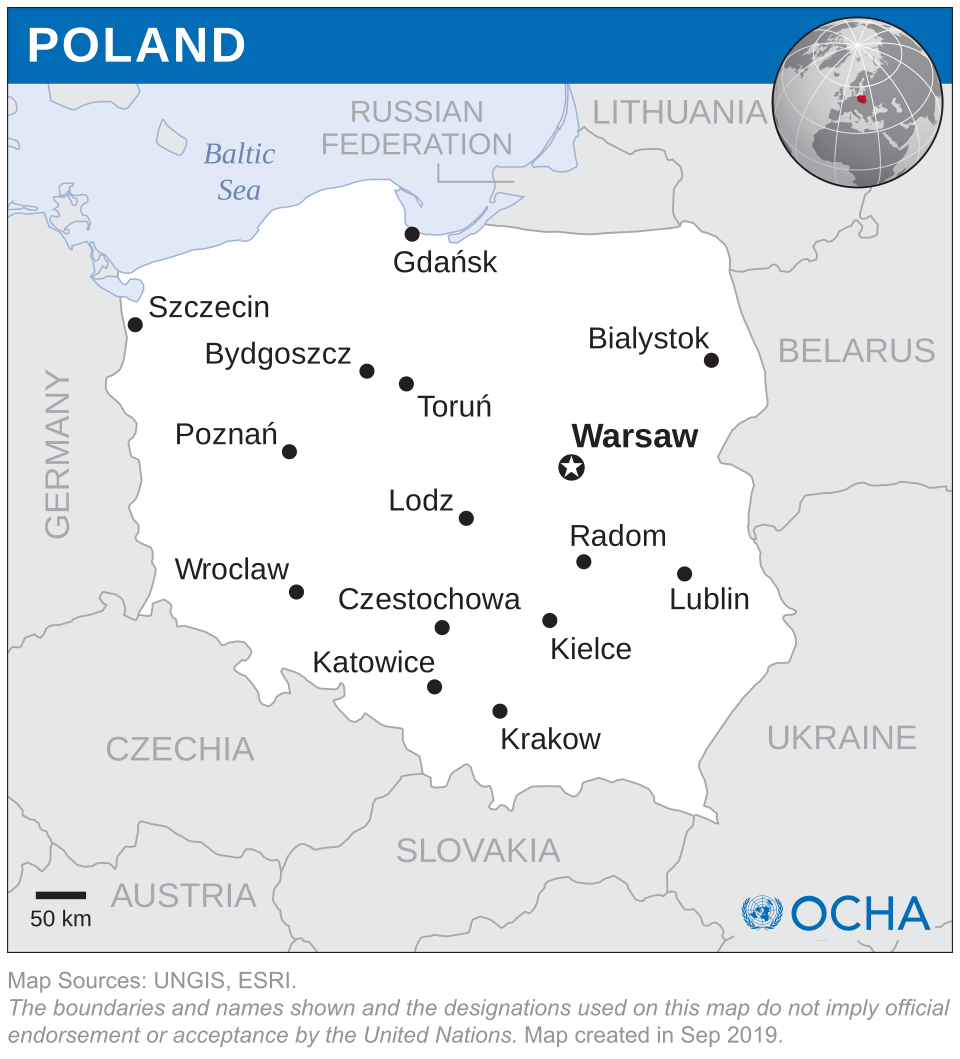
From Coal to Code — Poland’s New Corporate Champions
The list of Poland’s top companies reads like a roadmap of the country’s economic transformation. Alongside Adamów Coal Mine — a relic of the industrial past that powered Poland through the twentieth century — sits 11 bit studios, a video game developer whose titles have sold millions worldwide. This juxtaposition captures the Polish economy in microcosm: a nation still extracting resources from the ground while simultaneously building virtual worlds that generate far more value per employee.
Allegro, Poland’s dominant e-commerce platform, has become the country’s most valuable publicly traded company, serving as the gateway for Polish consumers to access everything from electronics to groceries. Its success mirrors the broader shift in Polish retail toward digital channels, a transformation accelerated by the pandemic and now deeply embedded in consumer behaviour.
In financial services, Alior Bank represents the modernisation of Poland’s banking sector, which has become one of the most technologically advanced in Central Europe.
The technology sector deserves special attention. Asseco, Poland’s largest IT company, has built a pan-European presence in banking software, healthcare systems, and public administration platforms. Ailleron specialises in fintech and digital banking solutions, while 11 bit studios has demonstrated that Polish creativity can command global attention in the entertainment industry.
These companies are not merely service providers — they are intellectual property creators, generating export revenue through software licences and game sales rather than physical goods.
In consumer goods, Amica and 4F have built regional brands that compete effectively against Western European incumbents. Amica’s home appliances are found in kitchens across Europe, while 4F has carved out a niche in athletic wear and outdoor equipment. Agata Meble has done the same for furniture, proving that Polish design and manufacturing can command premium positioning.
The presence of Agora, a media and consumer services company, reminds us that Poland’s domestic market is large and sophisticated enough to support homegrown content and service platforms.
Stability and Its Discontents — Politics and Safety in Modern Poland
Poland’s political landscape, as described in the data, is that of a stable unitary parliamentary republic with a directly elected president serving five-year terms. President Karol Nawrocki currently holds the head of state position, while executive power rests with the prime minister and the Council of Ministers, whose members are selected by the prime minister, approved by parliament, and sworn in by the president.
This institutional framework has provided Poland with remarkable political continuity, even as the country has navigated contentious domestic debates about judicial independence, media freedom, and the role of the European Union in national affairs.
The absence of specific crime and safety indices in the available data should not be interpreted as a negative signal. Poland is widely recognised as one of the safest countries in Europe, with violent crime rates far below those of Western European nations and property crime concentrated in specific urban areas rather than being a generalised concern.
For visitors and residents alike, Polish cities feel secure — women walk alone at night without fear, children travel on public transport independently, and petty theft remains the exception rather than the rule.
Quality of life in Poland reflects the country’s economic achievements and its remaining challenges. The GDP per capita (PPP) figure of $54,262 suggests that the average Pole enjoys purchasing power comparable to citizens of wealthier EU nations. Yet the gap between this metric and nominal GNI per capita of $25,520 hints at the distributional questions that animate Polish politics.
The country has built world-class infrastructure — motorways, airports, high-speed rail — but healthcare and education systems, while functional, face the same pressures as their counterparts across Europe: ageing populations, rising costs, and the challenge of retaining skilled professionals.
The Geopolitical Pivot — Poland at the Crossroads of History
The most important story about Poland right now is not happening within its borders — it is happening along its eastern frontier. As the war in neighbouring Ukraine grinds into its fourth year, Poland has transformed itself into the logistical backbone of Western support for Kyiv, a staging ground for military aid, and a haven for millions of refugees. This role has reshaped Poland’s economy in ways that are still being measured.
The influx of Ukrainian workers — many of whom have chosen to stay permanently — has eased labour shortages in construction, logistics, and manufacturing, while also putting pressure on housing markets and public services.
Poland’s geopolitical repositioning has been nothing short of dramatic. Once viewed as a nervous frontline state, it has emerged as a confident security actor, dramatically increasing defence spending and hosting NATO’s eastern flank. This shift has economic consequences: defence contracts are flowing to Polish manufacturers, infrastructure spending has accelerated, and the country’s strategic importance has attracted investment from companies seeking to diversify supply chains away from Asia.
The World Bank’s growth figure of 3.57% almost certainly understates the stimulus effect of these geopolitical developments.
Domestically, the political landscape remains dynamic. President Karol Nawrocki and the prime minister must navigate a complex relationship with Brussels, balancing the benefits of EU funding — which has underwritten much of Poland’s infrastructure modernisation — against the sovereignist instincts that resonate with significant portions of the electorate.
The tension between European integration and national autonomy will define Polish politics for the foreseeable future, with direct implications for the business environment, regulatory framework, and currency stability.
On the corporate front, the continued rise of Allegro, Asseco, and other technology companies suggests that Poland’s economic future lies in high-value digital services and intellectual property rather than low-cost manufacturing. The challenge for policymakers is to ensure that the education system, infrastructure, and regulatory environment keep pace with this transformation.
The data available does not provide a complete picture of inflation trends or employment figures, but the trajectory is clear: Poland is becoming a different kind of economy, one that generates wealth through code, creativity, and complex supply chain management rather than through cheap labour and resource extraction.
The Bottom Line
Poland is the Central European success story that too few people are watching closely. With GDP growth of 3.57% in 2025, a GDP per capita (PPP) above $54,000, and a technology sector producing genuine global champions, it has achieved what many emerging economies only dream of: sustained, broad-based prosperity. Investors should watch Poland for its combination of political stability, skilled workforce, and strategic geographic position at the heart of Europe’s evolving security architecture.
For anyone seeking to understand where Europe is heading in the 2020s, the answer lies not in Berlin or Paris, but in Warsaw, Kraków, and the digital workshops of Poland’s new economy.
Sources & Methodology
This article is authored by Economic Pulse Net for informational and research purposes. Economic Pulse Net sources its data from multilateral institutions, national statistics bureaus, and proprietary databases. All data is believed to be current as of the date of publication.
Published: July 22, 2026 | Category: Research — Poland
Use these signals in your own platform
Economic Pulse publishes its live signal feed through a documented, read-only API. Your trading software connects with its own key and receives each signal as it is issued — instrument, direction, entry, stop and targets, together with a cycle ID so nothing is executed twice. The feed is independent of this website and cannot change it.
Signals are informational only and are not financial advice.