Economic Pulse Net | Sources: World Bank World Development Indicators, Government Sources | 2026
Key Takeaways
– Poland’s economy is growing at a robust 3.57% in 2025, outpacing many European peers, according to the World Bank, driven by resilient domestic consumption and a tech sector that is punching well above its weight.
– Inflation remains a persistent challenge at 3.81%, forcing the central bank and the new government to walk a tightrope between price stability and maintaining growth momentum.
– The political landscape has shifted with President Karol Nawrocki now in office, presiding over a unitary parliamentary republic where the prime minister and Council of Ministers hold the real executive power, creating a complex governance dynamic.
– Poland’s corporate landscape is increasingly defined by technology firms like Allegro, Asseco, and 11 bit studios, signaling a structural shift away from traditional industries toward a knowledge-based economy.
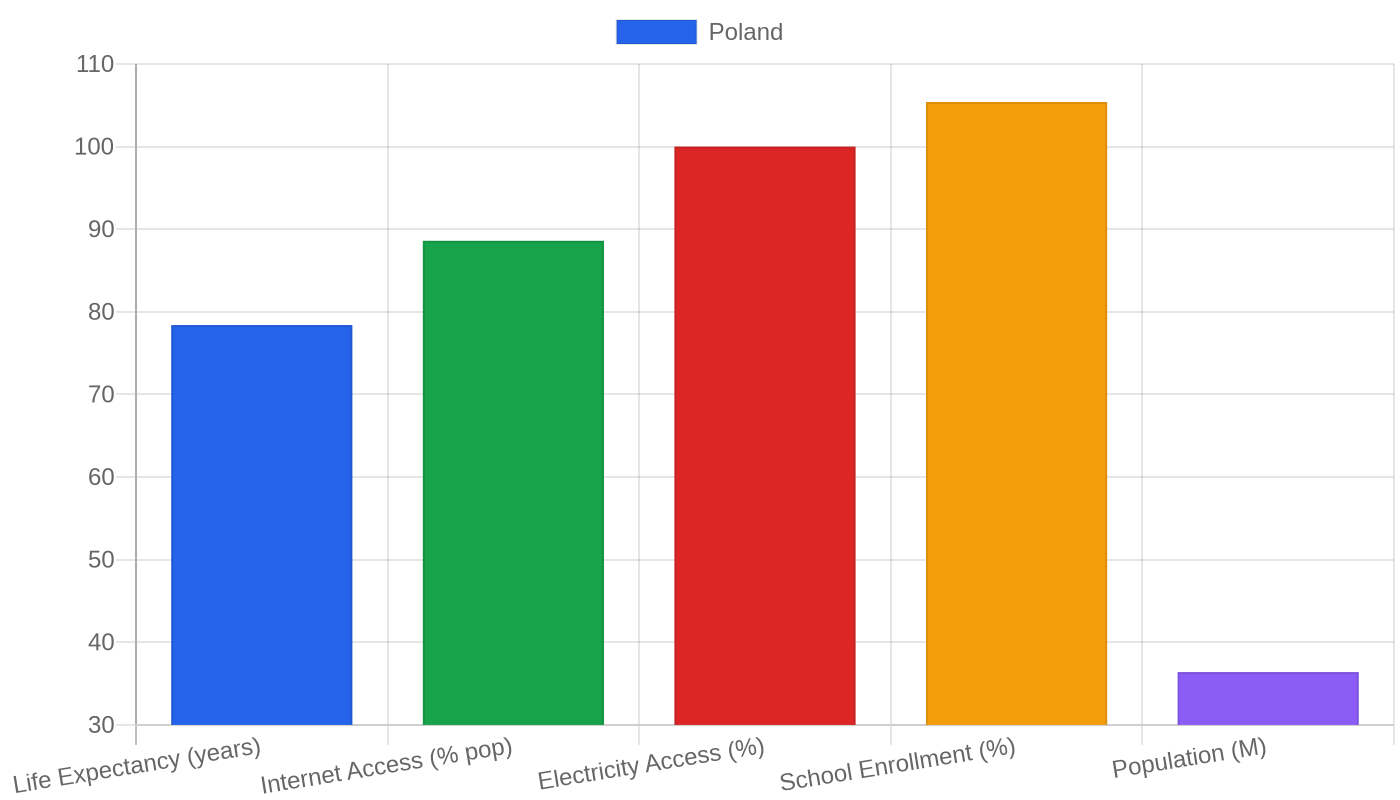
– With a population of 36.4 million and a GDP exceeding $1 trillion, Poland is the largest economy in Central Europe and a critical manufacturing and logistics hub for the continent.
The Growth Engine — Why 3.57% Matters More Than the Number
Poland’s economy is expanding at a rate of 3.57% in 2025, according to the World Bank, a figure that immediately signals something unusual. Most developed European economies are struggling to reach even half that pace. To understand why Poland is outperforming, you have to look beneath the headline number. The country’s GDP has crossed the $1 trillion threshold, standing at approximately $1.035 trillion, making it a genuine middle-weight champion in the global economy.
This growth is not a fluke or a one-time bounce; it reflects a decade-long transformation from a low-cost manufacturing base into a more diversified, innovation-led economy.
The inflation rate of 3.81% is the other side of the coin. It is elevated but not catastrophic — certainly not the double-digit nightmares seen elsewhere in the region in recent years. This level of inflation suggests an economy running hot, with strong domestic demand pushing up prices, but it also gives policymakers room to maneuver. The World Bank data shows a country that has achieved something rare: above-trend growth without runaway inflation.
The challenge now is whether the new administration under Prime Minister Donald Tusk and President Nawrocki can maintain this balance. Poland’s main industries — ranging from automotive manufacturing to food processing to information technology — are all running near capacity, and labor shortages are becoming a binding constraint. The 3.57% growth figure, in essence, is a testament to Poland’s successful integration into European supply chains and its growing prowess in high-value services.
The Price of Living Well — Housing, Groceries, and the Squeeze on Wages
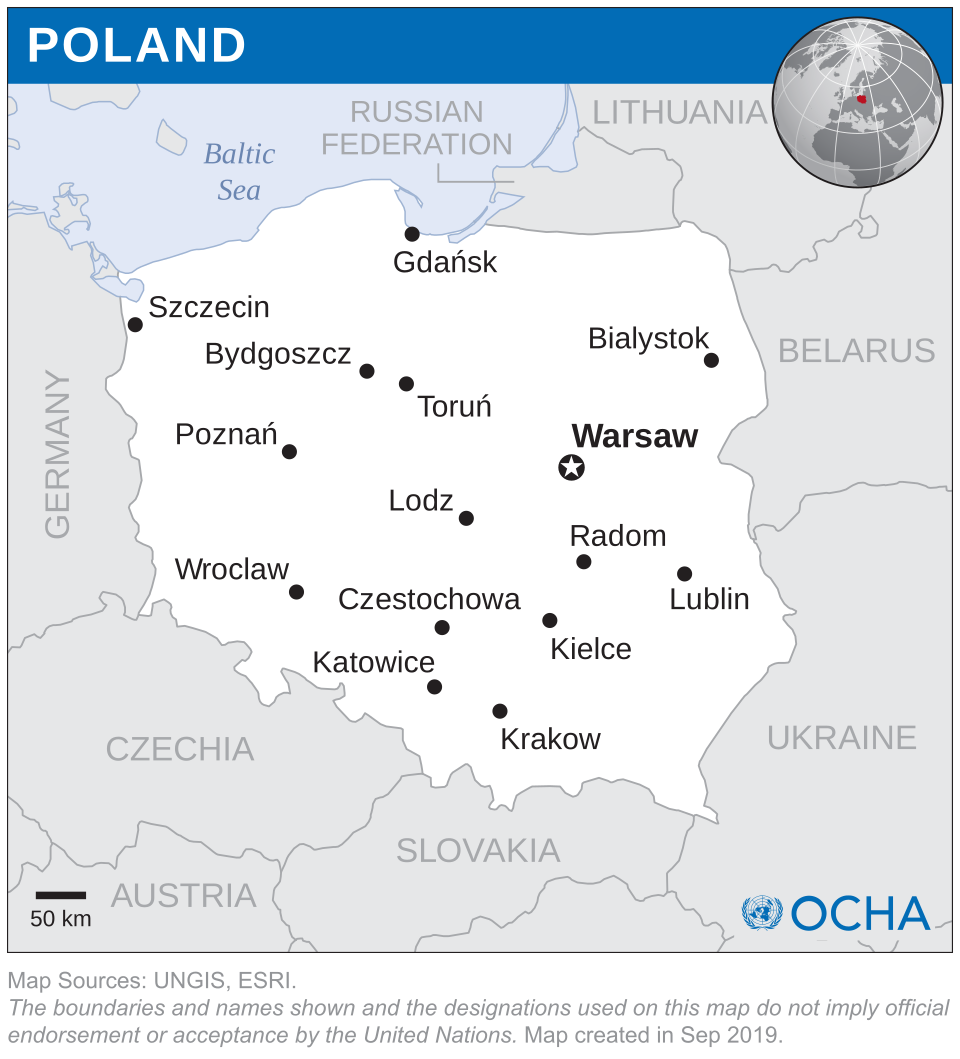
For the average Pole, the economic headline numbers translate into a daily reality that is both reassuring and stressful. The cost of living has risen markedly, driven by that 3.81% inflation figure from the World Bank, and nowhere is this more visible than in housing. Major cities like Warsaw, Kraków, and Wrocław have seen property prices climb steadily, fueled by strong demand from a growing professional class and a shortage of new supply.
Renting in central Warsaw now consumes a significant portion of a median salary, pushing younger workers toward shared apartments or longer commutes from suburban areas.
The rental market is particularly tight because Poland’s banking sector, dominated by institutions like Alior Bank, has tightened mortgage lending standards in response to the inflation environment. This has forced many potential first-time buyers to remain in the rental pool, keeping upward pressure on rents. On the positive side, daily expenses for food and transport remain relatively manageable compared to Western Europe.
Poland’s strong agricultural sector and competitive retail market, featuring companies like Agata Meble and Amica in consumer goods, help keep basic necessities affordable. The real squeeze is on discretionary spending — eating out, entertainment, and electronics — where the inflation bite is most keenly felt. For a country that has seen its standard of living converge rapidly toward Western European levels over the past two decades, this period represents a necessary but uncomfortable pause.
Where the Money Flows — Poland’s Corporate Powerhouses and Investment Appeal
Poland’s business landscape is undergoing a quiet revolution, and the evidence is in the list of its top companies. The presence of Allegro, the e-commerce giant, and Asseco, one of Europe’s largest software firms, signals that Poland is no longer just a place to assemble cars and furniture. The technology sector is now a genuine driver of economic value and employment.
Alongside them, 11 bit studios represents the country’s growing footprint in the global gaming industry, while Ailleron focuses on fintech and digital banking solutions. These are not low-margin manufacturing businesses; they are high-value, export-oriented technology firms competing on the world stage.
But the old economy is still very much alive. Adamów Coal Mine in the basic materials sector reminds us that Poland remains heavily dependent on coal for its energy mix, a fact that creates tension with the European Union’s green transition agenda. The consumer goods sector is well represented by 4F, a sportswear brand, and Amica, a home appliance manufacturer, both of which have built strong regional franchises.
Agora, a media and consumer services company, reflects the sophistication of Poland’s domestic market. For investors, the message is clear: Poland offers a rare combination of a large domestic market, a skilled and relatively low-cost workforce, proximity to Western Europe, and a rapidly maturing tech ecosystem.
The political risk has diminished with the return of a pro-European government, though the presence of President Nawrocki, who is aligned with the conservative opposition, introduces an element of checks and balances that investors will need to monitor.
Democracy in Action — Safety, Politics, and the Quality of Polish Life
Poland is a unitary parliamentary republic and a representative democracy, according to the political data, with executive power divided between the president and the Council of Ministers led by the prime minister. This structure has been tested repeatedly in recent years. The current president, Karol Nawrocki, occupies the head of state role, elected by popular vote for a five-year term. The prime minister, who heads the government, is drawn from the parliamentary majority.
This creates a potential for cohabitation, where the president and prime minister come from different political camps, leading to friction over policy direction.
For ordinary citizens, the quality of life in Poland is generally high by regional standards. The country is safe, with low levels of violent crime compared to Western Europe, and its cities are clean, well-organized, and culturally vibrant. The political landscape, while polarized, operates within democratic norms, and civil society is robust.
The biggest quality-of-life concern for most Poles is not safety but economics — specifically, whether the growth engine can keep running fast enough to deliver rising wages and affordable housing. The political system, with its checks and balances, is designed to manage these tensions, but it also means that major reforms require consensus that can be difficult to achieve.
The Nawrocki Era Begins — What the New Presidency Means for Poland’s Trajectory
The most consequential development in Poland right now is the election of Karol Nawrocki as president, a change that reshapes the country’s political landscape. Nawrocki’s victory, confirmed by the political data, places a conservative figure in the presidential palace at a time when the government is led by the pro-European coalition of Prime Minister Donald Tusk.
This sets the stage for a period of divided government, where the president can use veto powers to block legislation and influence foreign policy. The immediate implications are significant: the new government’s ambitious plans to liberalize abortion laws, reform the judiciary, and accelerate the green energy transition may now face presidential roadblocks.
On the economic front, the inflation rate of 3.81% will be a key test for the new administration. The World Bank data shows an economy that is growing strongly, but the central bank will be under pressure to keep monetary policy tight enough to prevent inflation from spiraling higher. President Nawrocki’s stance on economic policy is not yet fully clear, but his conservative base is skeptical of rapid European integration and the green agenda.
This could slow down the flow of EU recovery funds that Poland badly needs for infrastructure and energy transition projects. For businesses, the message is to expect a period of political gridlock, but also stability — neither side has an incentive to provoke a crisis that would spook investors. The coming months will reveal whether Nawrocki and Tusk can find common ground or whether Poland is headed for a prolonged political standoff.
The Bottom Line
Poland in 2025 is a country of immense potential constrained by political friction. Its economy is growing at a pace that most of Europe envies, its tech sector is thriving, and its people enjoy a quality of life that was unimaginable a generation ago. But the combination of persistent inflation and a divided government creates real risks. Investors should watch Poland closely — the opportunities are real, but the political calendar will determine whether they can be fully realized.
For anyone betting on Central Europe’s future, Poland remains the most important story to follow.
Sources & Methodology
This article is authored by Economic Pulse Net for informational and research purposes. Economic Pulse Net sources its data from multilateral institutions, national statistics bureaus, and proprietary databases. All data is believed to be current as of the date of publication.
Published: July 17, 2026 | Category: Research — Poland
Use these signals in your own platform
Economic Pulse publishes its live signal feed through a documented, read-only API. Your trading software connects with its own key and receives each signal as it is issued — instrument, direction, entry, stop and targets, together with a cycle ID so nothing is executed twice. The feed is independent of this website and cannot change it.
Signals are informational only and are not financial advice.