Economic Pulse Net | Sources: World Bank World Development Indicators, Government Sources | 2026
Key Takeaways
* Poland’s economy is projected to expand by approximately 3.57% in 2025, demonstrating resilience despite global headwinds.
With an unemployment rate hovering near 3%, the nation boasts a tight labor market that supports high consumer spending power.
The country possesses a robust GDP of over $1 trillion USD, driven by a diverse industrial base ranging from technology to basic materials.
Political stability remains anchored by a parliamentary republic structure, with Karol Nawrocki serving as the current president.
While inflation stands at roughly 3.8%, the cost of living and business environment continue to attract significant foreign and domestic investment.
Economic Momentum and Structural Strength
Poland’s economic trajectory for 2025 indicates a period of steady growth, with GDP expansion forecasted at 3.5727250346774% according to World Bank data. This growth rate is particularly notable given the challenging global macroeconomic environment, suggesting that domestic demand and industrial output are driving the engine forward. The total Gross Domestic Product is valued at approximately $1.035 trillion USD, underscoring Poland’s status as one of the largest economies in Central and Eastern Europe.
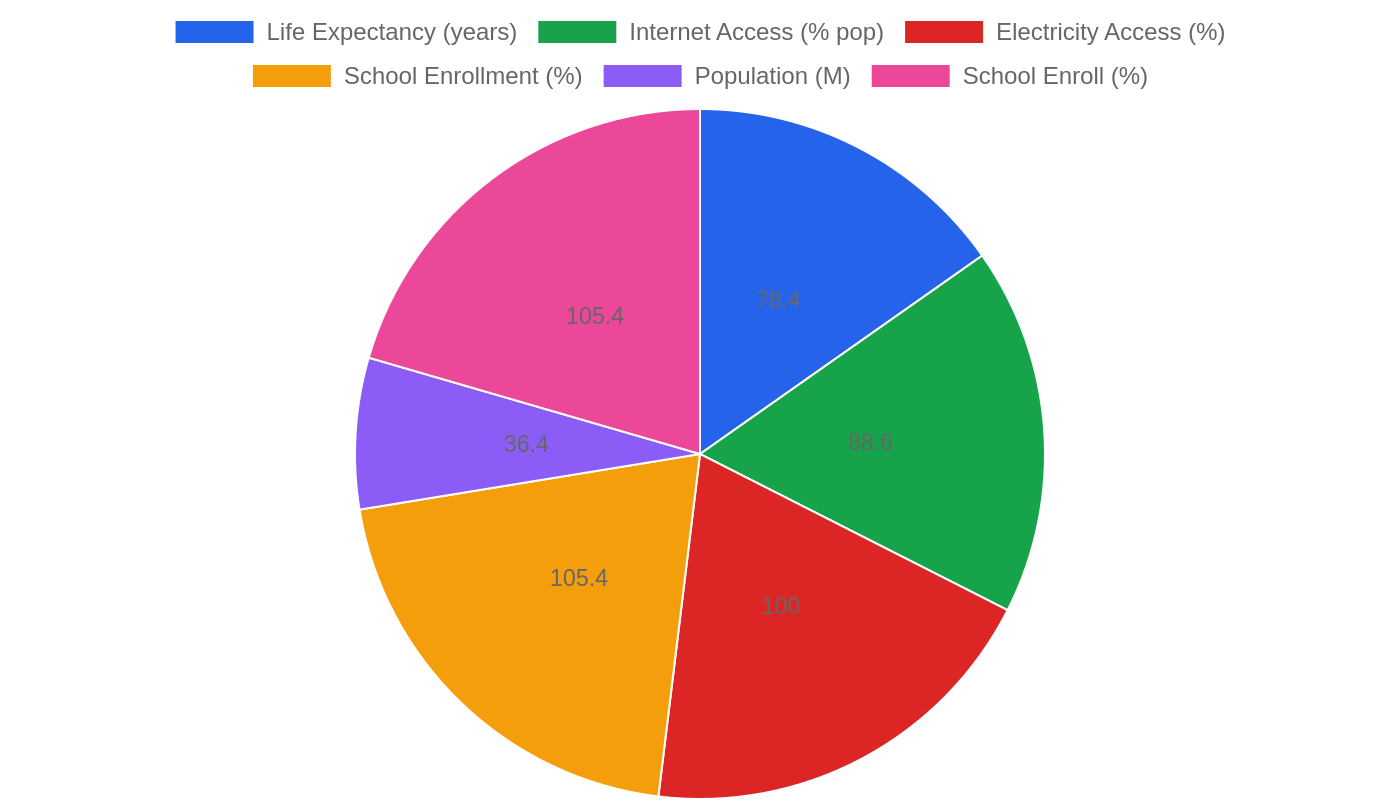
Per capita metrics further highlight the nation’s prosperity; the GDP per capita based on Purchasing Power Parity (PPP) reaches $54,262.40, indicating a high standard of living relative to many regional peers. Furthermore, the GNI per capita stands at $25,520.0, reflecting strong income generation across the population of 36.4 million people. However, this robust growth coexists with moderate inflationary pressures, as the Consumer Price Index (CPI) is recorded at 3.81419531520146%.
This level of inflation, while manageable, requires careful monetary policy attention to ensure that wage growth does not spiral out of control. Crucially, the labor market remains exceptionally tight, with unemployment sitting at a low 2.976%. This scarcity of available workers suggests that businesses may face rising labor costs, but it also points to a highly engaged workforce and strong consumer confidence.
Cost of Living and Housing Dynamics
For residents and expatriates alike, understanding the cost of living in Poland requires looking beyond headline inflation figures to the actual purchasing power available. With a GDP per capita (PPP) of over $54,000, the average citizen enjoys a level of disposable income that supports a comfortable lifestyle, even as daily expenses rise. The CPI of 3.8% implies that while prices for goods and services are increasing, they are doing so at a pace that allows for gradual adjustment rather than sudden shock.
Housing markets in major urban centers likely reflect this economic strength, with rent-to-price ratios influenced by the high demand from both local professionals and international firms expanding their footprint. Daily expenses, including food, utilities, and transportation, are shaped by the broader inflationary trend, yet remain accessible due to the strong underlying wage levels.
Compared to Western European counterparts, Poland often offers a more favorable balance between quality of life and expenditure, making it an attractive destination for those seeking value without compromising on modern amenities. The interplay between the 2.976% unemployment rate and these living costs creates a dynamic where wages are competitive, helping to offset the erosion of purchasing power caused by inflation.
Investment Opportunities and Corporate Landscape
The corporate sector in Poland is vibrant and diverse, offering investors a window into several key industries that drive national wealth. Major players such as Allegro and Agora dominate the consumer services space, leveraging digital platforms to connect millions of users with goods and information. In the technology sector, companies like 11 bit studios and Asseco are making significant strides, showcasing Poland’s growing reputation as a hub for software development and gaming innovation.
The financial sector is equally robust, with institutions like Alior Bank, Bank Millennium, and Bank Ochrony Środowiska providing essential capital flows that support both retail and commercial activities. Meanwhile, the basic materials industry is represented by entities such as the Adamów Coal Mine, highlighting the ongoing importance of traditional resources in the energy mix.
Consumer goods manufacturers, including 4F and Amica, benefit from strong domestic demand and export potential, contributing to the overall GDP figure of $1.035 trillion. These companies operate within a framework that encourages innovation and efficiency, supported by a political system that prioritizes economic stability. For foreign investors, the presence of these established giants provides a stable entry point into a market that is increasingly integrated with global supply chains.
Political Stability and Social Indicators
Poland operates as a unitary parliamentary republic, a structure that provides a clear framework for governance and policy implementation. The executive power is vested in the Council of Ministers, led by the prime minister who acts as the head of government, ensuring that legislative agendas are translated into actionable policies. The president, currently Karol Nawrocki, serves as the head of state, elected by popular vote for a five-year term, adding a layer of democratic legitimacy to the nation’s leadership.
This political landscape fosters an environment where individual members of the council are selected by the prime minister, approved by parliament, and sworn in by the president, creating a checks-and-balances system. Regarding safety, specific crime and safety indices are listed as N/A, which may reflect either data availability constraints or a general perception of security among residents. However, the low unemployment rate of 2.976% often correlates with lower social tensions and higher community stability.
The combination of a representative democracy and a strong economic foundation suggests that Poland remains a secure jurisdiction for long-term planning. Citizens benefit from a system where political representation is direct and accountable, contributing to the overall quality of life.
Current Affairs and Policy Shifts
As we look at the immediate horizon, Poland is navigating a complex period defined by its commitment to maintaining economic growth amidst inflationary pressures. The government is likely focused on managing the 3.8% CPI increase through targeted fiscal measures that protect vulnerable populations while sustaining investment. With unemployment near historic lows at 2.976%, policymakers may be considering reforms to address labor shortages, potentially through immigration policies or automation incentives.
The recent election of President Karol Nawrocki signals a new chapter in diplomatic and domestic relations, which could influence trade agreements and EU funding allocations. Businesses are adapting to the evolving regulatory environment, with tech firms like 11 bit studios leading the charge in digital transformation. The performance of major banks such as Alior Bank will be critical in determining how credit is allocated to small and medium enterprises during this growth phase.
Stakeholders are watching closely to see how the Council of Ministers balances budgetary responsibilities with the need for infrastructure development. These dynamics create a fluid news cycle where policy announcements can quickly impact market sentiment and consumer behavior.
The Bottom Line
Poland presents a compelling case for investors and economists alike, combining solid GDP growth with a highly employed workforce. The nation’s diverse industrial base, from coal mining to cutting-edge technology, ensures that it is not reliant on a single sector for its economic health. While inflation poses a minor challenge, the high PPP per capita suggests that the average citizen retains significant purchasing power.
For those seeking exposure to Central European markets, Poland offers a stable, democratic environment with clear pathways for business engagement. It is a country that rewards long-term vision and strategic adaptation in a rapidly changing global economy.
Sources & Methodology
This article is authored by Economic Pulse Net for informational and research purposes. Economic Pulse Net sources its data from multilateral institutions, national statistics bureaus, and proprietary databases. All data is believed to be current as of the date of publication.
Published: October 18, 2026 | Category: Research — Poland
Use these signals in your own platform
Economic Pulse publishes its live signal feed through a documented, read-only API. Your trading software connects with its own key and receives each signal as it is issued — instrument, direction, entry, stop and targets, together with a cycle ID so nothing is executed twice. The feed is independent of this website and cannot change it.
Signals are informational only and are not financial advice.