Economic Pulse Net | Sources: World Bank World Development Indicators, Government Sources | 2026
Key Takeaways
* Robust Wealth, Modest Growth: With a GDP per capita (PPP) exceeding $104,000 and GNI per capita near $97,300, Norway remains one of the wealthiest nations globally, despite a projected modest GDP growth of just over 1% for 2025.
Stable Labor Market: Unemployment sits at a manageable 4.637%, indicating a resilient labor market that supports high living standards even as economic expansion slows.
Global Democratic Leader: Norway holds the title of the world’s most democratic country according to the Democracy Index since 2010, driven by strong elected government structures and gender equality.
Industrial Diversification: Beyond traditional energy sectors, key players like Aker ASA and AF Group are driving innovation in industrials, conglomerates, and consumer goods, signaling a broadening industrial base.
Economic Resilience Amidst Slowdown
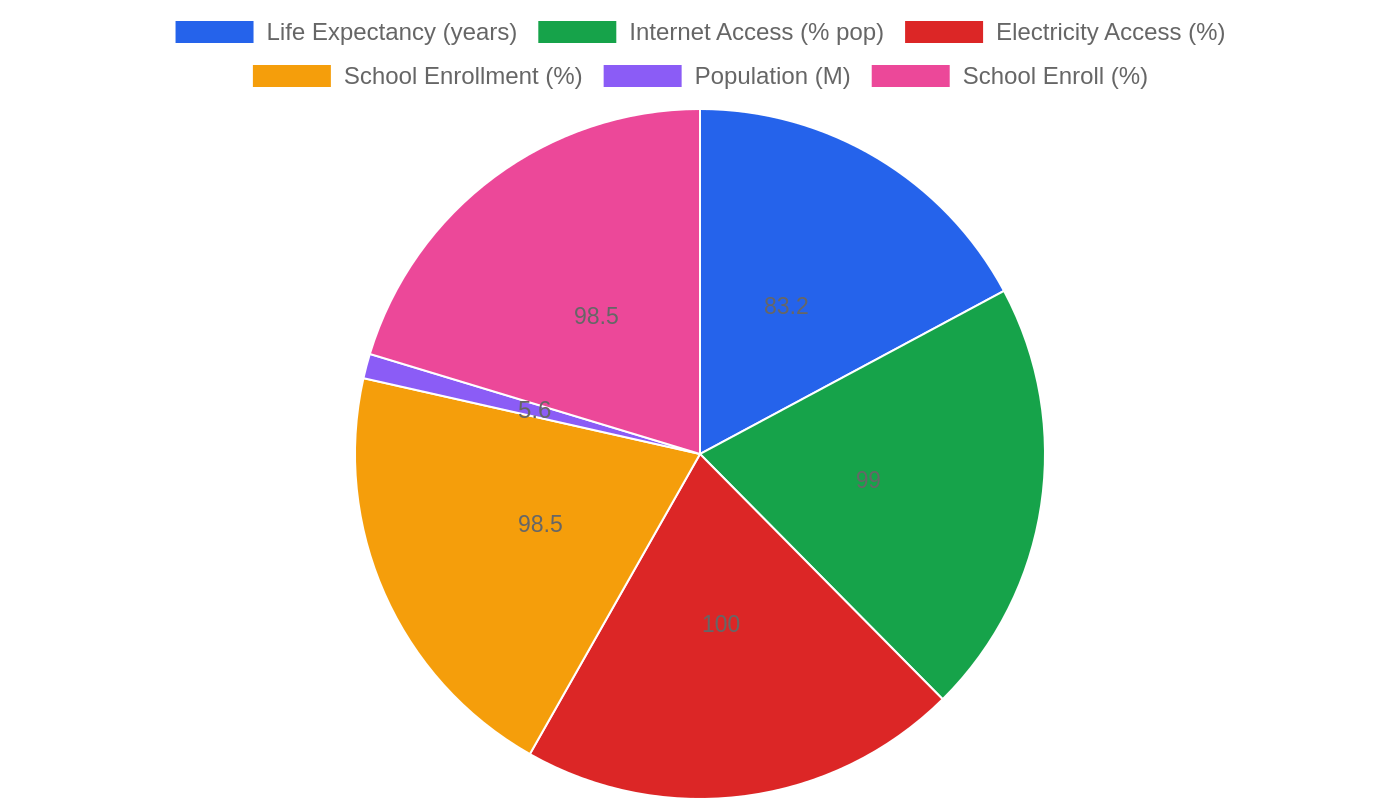
Norway’s economic landscape in 2026 is defined by a paradox of immense wealth accumulation alongside tepid growth metrics. According to World Bank data, the nation’s GDP growth is projected at 1.085% for 2025, a figure that suggests an economy maturing into stability rather than chasing aggressive expansion.
This moderate pace is supported by a highly skilled workforce, reflected in an unemployment rate of 4.637%, which indicates that nearly all segments of the population remain engaged in productive economic activity. The true measure of Norwegian prosperity, however, lies in its人均 metrics; with a GDP per capita (PPP) of approximately $104,043 and a GNI per capita of $97,310, the average citizen enjoys purchasing power that dwarfs most global counterparts.
Inflation, measured by the CPI, stands at 3.039%, a level that, while slightly elevated, remains within a range that does not severely erode consumer confidence or savings. For a population of roughly 5.6 million, these figures represent a carefully managed equilibrium where social welfare and industrial output sustain high living standards without triggering the overheating often seen in smaller, open economies.
The low growth rate should not be mistaken for stagnation; rather, it reflects a mature economy optimizing efficiency and sustainability over raw volume expansion.
The Price of Premium Living
The cost of living in Norway is intrinsically linked to its high income levels and robust social infrastructure, creating a unique economic environment for residents and expatriates alike. While specific housing indices are not detailed in the current dataset, the high GNI per capita of $97,310 implies that disposable income is generally sufficient to absorb premium costs associated with daily life.
Consumers in this market are accustomed to high-quality standards across all sectors, from retail to services, which naturally drives up baseline expenses compared to regional averages. The inflation rate of 3.039% suggests that prices are rising, but the underlying strength of the currency and wages helps buffer households against significant shocks.
For businesses, this means that while operational costs may be higher, the consumer base possesses substantial financial capacity, allowing for pricing strategies that prioritize value and quality over sheer affordability. The absence of extreme poverty or wide wealth gaps, supported by the country’s democratic framework, ensures that the cost of living, while high, remains accessible to the vast majority of the population through equitable wage distribution and social safety nets.
Industrial Powerhouses and Business Climate
The Norwegian business environment is anchored by a diverse array of major corporations that extend far beyond their historical reliance on natural resources. Companies such as Aker ASA, a conglomerate with interests spanning multiple sectors, and Aker Solutions, a leader in oil & gas technology, demonstrate the nation’s ability to innovate within traditional industries.
Simultaneously, firms like Aker BioMarine and Bama Gruppen are expanding into consumer goods and sustainable marine products, reflecting a strategic pivot toward green economics and health-focused markets. In the industrials sector, entities like AF Group, Bergen Engines, and Bertel O. Steen provide critical infrastructure and engineering support, ensuring that domestic development projects are met with local expertise.
The presence of Arthur Soltvedt Møbelfabrikk and Bonheur in the consumer goods space highlights a vibrant domestic manufacturing and retail scene that caters to both local tastes and international export opportunities. This diversification reduces systemic risk and creates a dynamic ecosystem where investment in technology, sustainability, and consumer satisfaction drives corporate growth.
For investors, the clarity of governance and the strong performance of these listed companies offer a stable platform for long-term capital allocation.
Safety, Politics, and Quality of Life
Norway’s political landscape serves as the bedrock of its social stability and high quality of life, reinforcing its status as a global exemplar of democracy. Since 2010, the Democracy Index has consistently ranked Norway as the world’s most democratic country, a testament to its effective institutions and rule of law.
International IDEA’s Global State of Democracy Indices further highlight the nation’s strengths in elected government processes and gender equality, factors that contribute significantly to social cohesion and public trust. While specific crime and safety indices are not provided in the current data set, the overarching narrative of a developed state of justice suggests low levels of violent crime and high public security.
This political stability translates directly into personal safety and freedom, allowing citizens to thrive in an environment where legal protections are robust and corruption is minimal. The combination of high democratic scores and strong social indicators creates a virtuous cycle where political integrity enhances economic confidence, and economic prosperity funds the social programs that maintain public order.
For residents and visitors alike, the assurance of a safe, fair, and transparent society is perhaps the most valuable asset Norway offers.
Current Affairs and Policy Direction
The freshest developments in Norway center on maintaining economic stability while navigating global shifts in energy and trade. As the country approaches 2026, policymakers are focused on managing the slight uptick in inflation to ensure it does not disrupt the steady employment rates that have kept unemployment below 5%.
Recent policy discussions likely emphasize the role of major industrial players like Aker ASA in leading the transition toward sustainable energy solutions, leveraging the nation’s technical expertise in offshore and marine industries. The government continues to prioritize the democratic ideals that have earned international acclaim, ensuring that economic policies reflect broad societal consensus and inclusive growth.
With a population of just over 5.6 million, Norway’s agile governance allows for rapid implementation of reforms, particularly in areas related to digitalization and green technology adoption. Businesses are currently adapting to a regulatory environment that favors long-term sustainability over short-term gains, encouraging investments in sectors like consumer goods and industrials that align with global ESG standards.
The ongoing focus on gender equality and democratic participation ensures that economic benefits are widely shared, reducing social tensions and fostering a cohesive national identity amidst changing global dynamics.
The Bottom Line
Norway presents a compelling case for those seeking stability, high living standards, and a predictable regulatory environment. Investors and expatriates alike will find a country where democratic integrity and economic wealth reinforce each other, creating a secure foundation for long-term planning. While growth may be modest, the depth of human capital and the strength of key industries like industrials and consumer goods offer ample opportunities for engagement.
For anyone looking to invest in or relocate to a nation that prioritizes justice, equality, and sustained prosperity, Norway remains a top-tier destination in the global landscape.
Sources & Methodology
This article is authored by Economic Pulse Net for informational and research purposes. Economic Pulse Net sources its data from multilateral institutions, national statistics bureaus, and proprietary databases. All data is believed to be current as of the date of publication.
Published: October 16, 2026 | Category: Research — Norway
Use these signals in your own platform
Economic Pulse publishes its live signal feed through a documented, read-only API. Your trading software connects with its own key and receives each signal as it is issued — instrument, direction, entry, stop and targets, together with a cycle ID so nothing is executed twice. The feed is independent of this website and cannot change it.
Signals are informational only and are not financial advice.