Economic Pulse Net | Sources: World Bank World Development Indicators, Government Sources | 2026
Key Takeaways
- Norway’s economy is projected to grow by approximately 1.09% in 2025, signaling a period of steady, low-growth stability rather than rapid expansion.
- With a GDP per capita (PPP) exceeding $104,000, Norway remains one of the wealthiest nations on Earth, underpinned by a robust industrial and conglomerate sector.
- Inflation is hovering around 3.06%, a manageable figure that suggests the central banking environment is stabilizing without crushing consumer spending.
- The nation continues to be recognized as the world’s most democratic country, offering a political landscape defined by high governance standards and gender equality.
- Major corporate players like Aker ASA and AF Group dominate the business landscape, focusing heavily on industrials, oil and gas, and consumer goods.
The Engine of Stability: A Deep Dive into the Macro Numbers
Norway’s economic trajectory for 2025 reflects the profile of a mature, high-income economy that prioritizes stability over speed.
According to the World Bank, the country’s GDP is projected to grow by 1.08528185031417% this year.
While this figure may appear modest compared to emerging markets, it represents a healthy, sustainable pace for an economy of this magnitude and maturity.
The total GDP stands at approximately $530.7 billion, a testament to the sheer scale of Norway’s productive capacity.
This growth is occurring in an environment where inflation, measured by the Consumer Price Index (CPI), is sitting at 3.05562484410077%.
This inflation rate is a critical indicator; it suggests that while prices are rising, the economy is not overheating, allowing for a gradual adjustment in real incomes rather than a sharp contraction.
Employment remains robust, with the World Bank reporting an unemployment rate of 4.637%.
This figure indicates a tight labor market where most of the population is engaged in productive work, providing a solid foundation for domestic consumption.
The wealth generated is substantial on a per-person basis, with GDP per capita (PPP) reaching $104,043.67, and GNI per capita at $97,310.
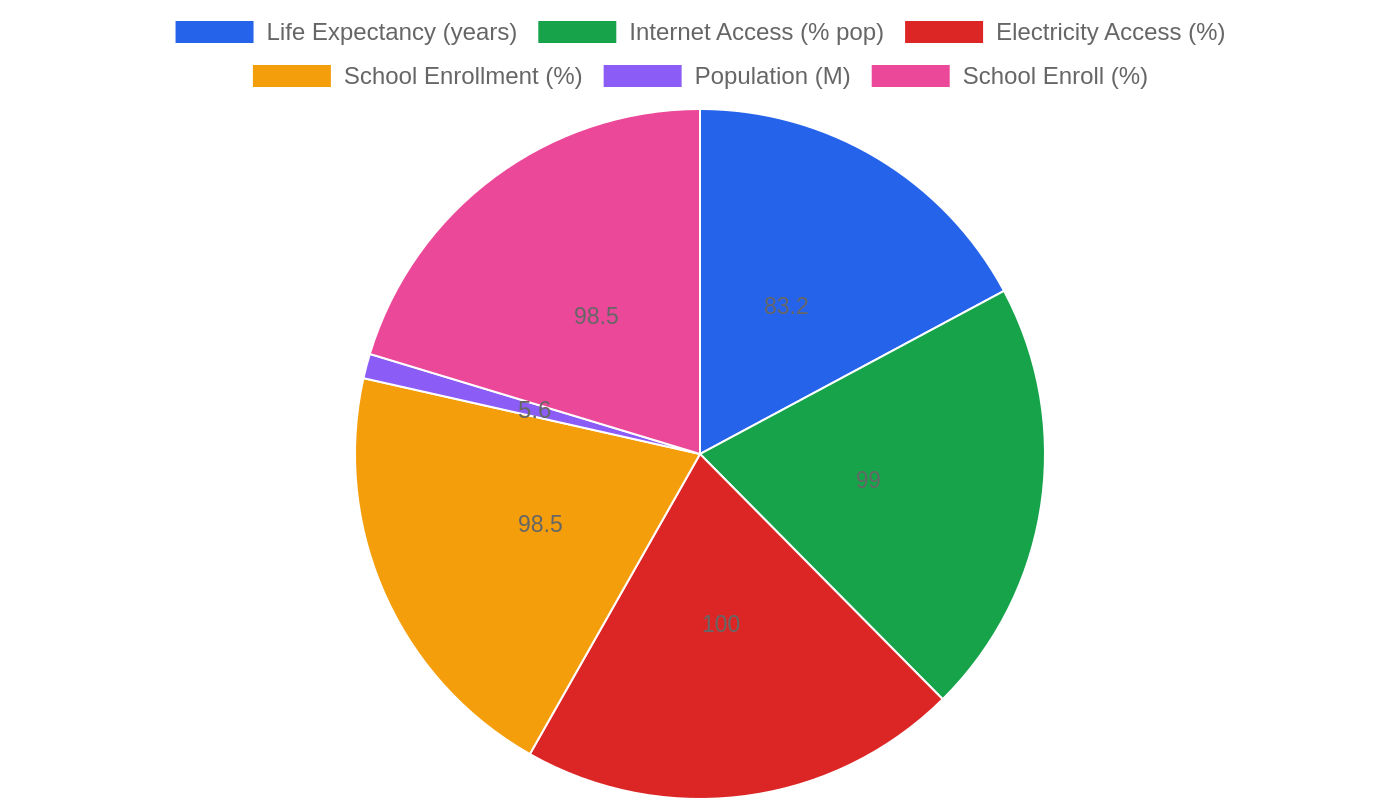
These metrics confirm that Norway’s economic model continues to deliver exceptional individual prosperity, supported by a population of approximately 5.6 million people.
The combination of low single-digit growth, controlled inflation, and low unemployment paints a picture of an economy that is resilient and well-managed, even if it is not booming.
Living in the North: The Price of High Living Standards
While specific data on housing costs and daily expenses is not detailed in the current dataset, the macroeconomic indicators provide a clear window into the cost of living environment.
A GDP per capita (PPP) of over $104,000 implies that the purchasing power of the average Norwegian is exceptionally high, which typically correlates with a higher baseline for essential goods and services.
In such economies, the cost of housing and daily necessities is often significantly above regional averages, reflecting the high wages required to sustain such a standard of living.
The inflation rate of 3.06% suggests that the cost of living is gradually increasing, meaning that households must maintain strong income growth or savings to maintain their standard of living.
Without specific rent or utility data, we can infer that the economic stability provided by the low unemployment rate of 4.637% helps households absorb these rising costs.
The high GNI per capita of $97,310 further supports the notion that the state has the fiscal capacity to maintain high public service standards, which are often part of the perceived “cost” of living in Scandinavian countries.
For residents, the economic environment is characterized by high costs but high rewards, a typical trade-off for one of the world’s wealthiest societies.
Corporate Powerhouses: The Pillars of Norwegian Industry
The Norwegian business landscape is dominated by a handful of massive conglomerates and specialized industrial firms that drive the national economy.
According to available data, top companies include AF Group, Aker ASA, and Aker BioMarine, each playing a distinct role in the industrial and consumer sectors.
Aker ASA, categorized as a conglomerate, and Aker Solutions, focused on oil and gas, highlight the continued importance of energy and heavy industry to the national GDP.
The presence of multiple Aker entities, including Aker Floating Production and Aker BioMarine, suggests a diversified corporate strategy that spans from traditional energy infrastructure to sustainable consumer goods.
In the industrials sector, companies like Bergen Engines and Bertel O.
Steen demonstrate a strong engineering and manufacturing base that supports both domestic needs and export markets.
On the consumer side, firms such as Cermaq, Bama Gruppen, and Arthur Soltvedt Møbelfabrikk indicate a vibrant domestic market for food and lifestyle products.
This corporate structure is not just about large firms; it is about a deeply integrated industrial ecosystem where different sectors feed into one another.
The diversity of these top companies, ranging from oil and gas to consumer goods, provides a buffer against sector-specific shocks, ensuring that the business climate remains resilient even if one industry faces headwinds.
Democracy and Safety: The Foundation of Social Trust
Norway’s political and social environment is a key component of its economic appeal and quality of life.
The country is widely regarded as one of the most developed democracies and states of justice in the world.
According to International IDEA’s Global State of Democracy Indices, Norway performs in the high range on overall democratic measures, with particular strengths in elected government and gender equality.
This high level of institutional trust is crucial for economic stability, as it reduces uncertainty for both citizens and investors.
Since 2010, Norway has been classified as the world’s most democratic country by the Democracy Index, a accolade that underscores the strength of its rule of law and political institutions.
While specific crime and safety indices are not provided in the current data, the strong democratic framework and high state of justice suggest a society that effectively manages public safety and social cohesion.
The emphasis on gender equality and strong elected government points to a society that is not only economically prosperous but also socially progressive and inclusive.
This political stability serves as a bedrock for the economic achievements discussed earlier, ensuring that wealth distribution and policy-making remain transparent and accountable.
For anyone evaluating Norway, the political landscape is as important as the GDP figures, providing a safe and predictable environment for long-term planning and investment.
The Current Pulse: Navigating 2025
As we look at the immediate economic landscape for 2025, the focus is on maintaining the delicate balance of growth and stability.
The projected GDP growth of 1.08528185031417% is not a sign of stagnation, but rather a managed adjustment in a high-income economy.
The inflation rate of 3.05562484410077% is a key metric to watch, as it indicates that price pressures are present but not out of control.
This suggests that policymakers are likely engaged in fine-tuning their monetary and fiscal policies to ensure that inflation does not erode the real value of wages.
The unemployment rate of 4.637% remains a positive indicator, showing that the labor market is resilient and capable of absorbing economic fluctuations.
With the major industrial players like Aker ASA and AF Group continuing to operate in key sectors, the business environment is likely focused on operational efficiency and sustainable growth.
The political stability, reinforced by Norway’s status as the world’s most democratic country, provides a consistent backdrop for these economic activities.
In 2025, the story of Norway is one of quiet confidence, where the nation leverages its strong institutions and diverse industrial base to navigate a complex global economy.
The key takeaway is that Norway is not chasing high growth for the sake of it, but rather preserving the high quality of life and economic stability that its citizens enjoy.
The Bottom Line
Norway remains a beacon of economic and political stability in an uncertain world.
For investors and observers, the country offers a low-risk environment with high rewards in terms of quality of life and institutional integrity.
The combination of strong democratic governance, a diverse industrial sector, and manageable inflation makes Norway a compelling case study in sustainable development.
While the growth rate is modest, the depth of the economy and the wealth per capita suggest that Norway is well-positioned for the future.
Watch this country for its ability to maintain its high standards of living and democratic values while adapting to the evolving global economic landscape.
Sources & Methodology
This article is authored by Economic Pulse Net for informational and research purposes.
Economic Pulse Net sources its data from multilateral institutions, national statistics bureaus, and proprietary databases.
All data is believed to be current as of the date of publication. Published: September 04, 2026 |
Category: Research — Norway
Use these signals in your own platform
Economic Pulse publishes its live signal feed through a documented, read-only API. Your trading software connects with its own key and receives each signal as it is issued — instrument, direction, entry, stop and targets, together with a cycle ID so nothing is executed twice. The feed is independent of this website and cannot change it.
Signals are informational only and are not financial advice.