Economic Pulse Net | Sources: World Bank World Development Indicators, Government Sources | 2026
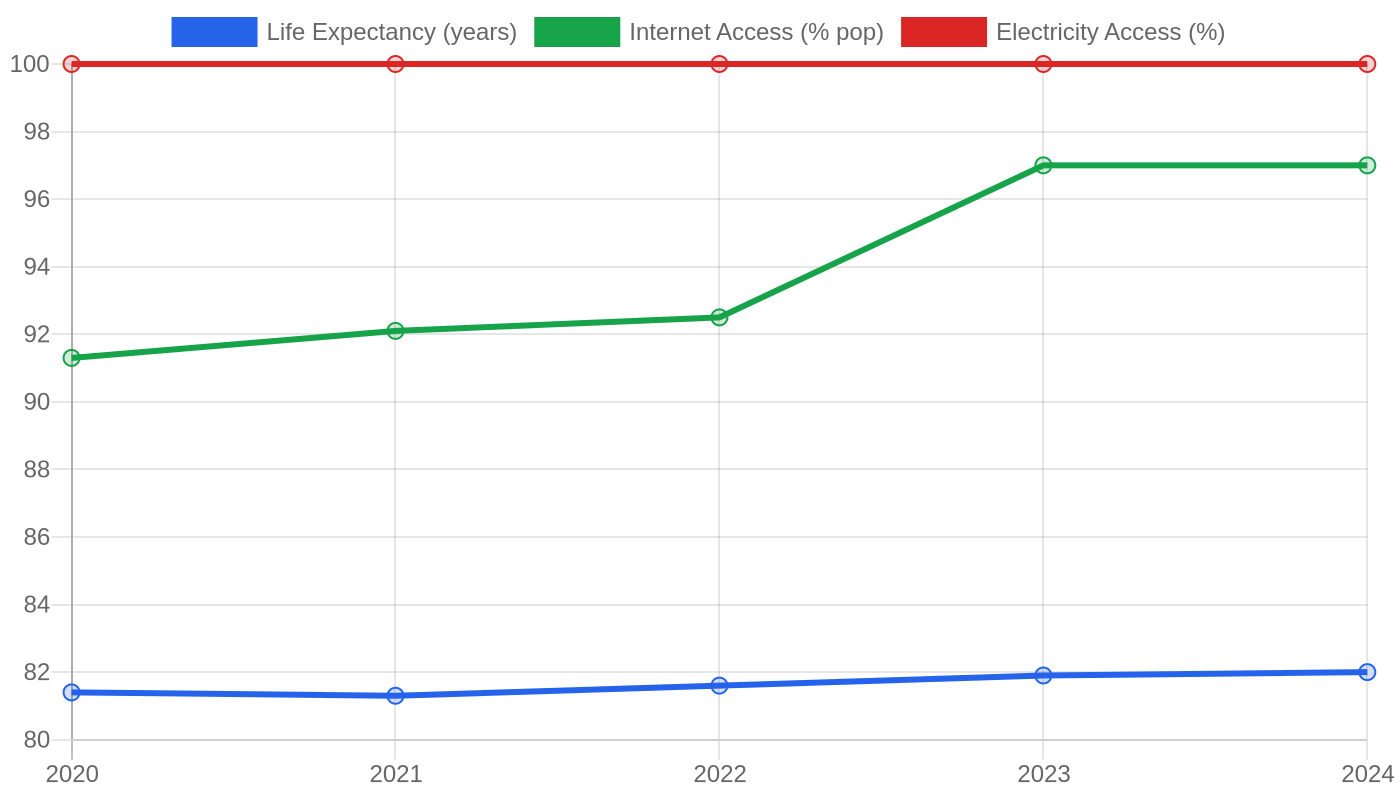
The Netherlands presents a fascinating paradox for the global observer. It is a nation that has perfected the art of consensus-building, a constitutional monarchy and parliamentary democracy since the mid-19th century, yet it stands as one of the world’s most dynamic and competitive trading economies. While the latest headline economic indicators from the World Bank are currently unavailable, the structural story of the Dutch economy remains one of high-value industrial sophistication and logistical prowess.
The country’s political framework, described as a consociational state, is engineered to bridge deep societal divides, ensuring that policy shifts are rarely abrupt but rather the product of broad, painstaking negotiation. For investors and policymakers alike, the Netherlands offers a masterclass in how a small nation with an open economy navigates the complexities of global trade, domestic welfare, and political stability.
Key Takeaways
– Political Stability as an Asset: The Netherlands’ consociational political model, which emphasizes broad consensus, provides a uniquely predictable environment for long-term investment and governance.
– High Democratic Performance: According to International IDEA’s Global State of Democracy (GSoD) Indices, the Netherlands ranks in the high range for overall democratic measures, with particular strengths in political representation.
– Economic Resilience: While specific World Bank data on GDP growth and inflation is currently pending, the Netherlands’ structural framework is designed to absorb external shocks through trade and logistics.
– A Developed Economy with Complex Challenges: The nation must continuously balance its historic role as a commercial hub with modern pressures related to housing and cost of living.
The Engine of a Small Nation: Trade, Logistics, and High-Value Industry
The Dutch economic model is not built on natural resources or a vast domestic market; it is built on position, infrastructure, and human capital. The Netherlands has historically served as the “Gateway to Europe,” leveraging the Port of Rotterdam and Amsterdam Schiphol Airport to facilitate an immense flow of goods.
While the World Bank’s latest figures for GDP and GDP per capita (PPP) are not available in this data set, the country’s status as a high-income, developed economy is a given in global economic literature. The main industries, though not specified in the provided data, are widely understood to be anchored in agri-food, chemicals, and high-tech engineering, with a significant financial services sector in Amsterdam.
The absence of fresh World Bank data does not diminish the importance of the structural factors at play. The Dutch workforce is among the most productive in the world, a factor that compensates for a smaller population base. However, the economy is currently navigating a period of “stagflation-lite” pressures seen across Europe, where supply chain disruptions and energy costs have squeezed margins.
The key economic question for the Netherlands is not whether it will grow, but how it will manage the transition to a more digital and sustainable economy while maintaining its competitive edge. The nation’s future growth hinges on its ability to upgrade its infrastructure and maintain the high skill levels of its labor force, ensuring that the “Gateway” remains relevant in a changing global trade landscape.
The Housing Paradox: Prosperity vs. Affordability
One of the most pressing domestic issues in the Netherlands is the cost of living, specifically the availability and price of housing. While specific index numbers are not provided in this brief, the narrative of a severe housing shortage in the major urban centers like Amsterdam, Utrecht, and Eindhoven is well-documented. The tension between a highly successful economy and the physical limits of a small, densely populated country creates a landlord’s market.
Rent versus buy calculations have skewed dramatically towards renting in recent years, but even rental prices have surged, putting pressure on middle-income earners. This is not merely an economic statistic; it is a social issue that influences voting patterns and quality of life.
The daily expenses for the average citizen in the Netherlands are characterized by high taxation, which funds a robust social safety net and infrastructure. However, this is offset by high wages in the competitive sectors. The housing crisis is the primary “leak” in the system, where the benefits of economic growth are being partially negated by the cost of shelter. For young professionals and expatriates, the cost of living in the Dutch “Randstad” region is a significant barrier to entry.
This affordability crisis is a direct challenge to the government’s ability to attract the foreign talent that its economy relies upon, creating a loop where economic success threatens the very sustainability of the workforce.
The Business Climate: A Hub for Headquarters and Innovation
For corporations, the Netherlands remains a premier destination, not just for its logistical advantages but for its business environment. The country is home to a disproportionate number of multinational headquarters. While a specific list of top companies is not provided, the presence of global giants in technology, consumer goods, and energy is a structural feature of the Dutch landscape.
The business climate is characterized by a highly educated, multilingual workforce and a legal system that is transparent and efficient. The Dutch government has historically used fiscal incentives to attract holding companies, making it a favored jurisdiction for international corporate structuring.
However, the investment climate is not without its friction. The aforementioned housing crisis impacts the ability to relocate staff, and the consensus-based political system can sometimes lead to slow decision-making on major infrastructural projects. Yet, the stability offered by the political landscape, as highlighted by the International IDEA indices, often outweighs these delays. Investors value predictability, and the Dutch system offers a high degree of it.
The focus for the future is on the “sectors to watch,” which are likely to include semiconductor equipment, sustainable energy, and bio-sciences—areas where the Netherlands has strong research and development capabilities.
Consensus, Safety, and the Quality of Life
The political landscape in the Netherlands is a defining feature of its national character. As a consociational state, it manages cultural and ideological differences through elite cooperation and a culture of “poldering”—sitting down and talking until a deal is reached. This system ensures that minority voices are heard, contributing to the high democratic performance scores from International IDEA. This political stability is a cornerstone of the nation’s safety and quality of life.
While specific crime and safety indices are not available in this data set, the Netherlands is generally perceived internationally as a safe, orderly country with a high standard of living.
The quality of life extends beyond safety into the realm of social progressivism and work-life balance. The Dutch are known for their part-time work culture, which allows for a high degree of personal time, contributing to high levels of life satisfaction. The emphasis on cycling infrastructure, green spaces, and a well-maintained public realm makes it an attractive place to live, despite the weather.
The political system, while sometimes criticized for being slow, ensures that radical shifts do not disrupt the social fabric. This creates an environment where citizens feel secure in their rights and their future, a significant intangible asset that is often undervalued in pure economic metrics.
The Politics of the Present: Navigating a Shifting Landscape
Right now, the Netherlands is grappling with the consequences of its own success. The most immediate political and economic discussions revolve around the cost of living crisis and the urgent need for housing. The government is under immense pressure to accelerate construction permits and address the nitrogen emissions regulations that have stalled major infrastructure and agricultural projects.
This is the “now” of the Netherlands—a period where the long-term consensus model is being tested by short-term urgencies. The agricultural sector is in a state of flux, with policies aimed at reducing emissions clashing with the powerful farming lobby, a debate that has reshaped the political map.
Furthermore, the conversation around immigration and labor shortages is becoming more prominent. The Dutch economy has a structural need for foreign workers, but this creates social and political tensions regarding integration and public services. The government is also actively working on policies to make the tax system less attractive for multinationals to retain only “real” economic activity, reflecting a global shift in tax policy.
These developments are happening in real-time, with the government navigating between its historical role as a trading nation and the modern demands for social equity and environmental sustainability. The coming months will be crucial in determining how the coalition government manages these competing pressures, with the upcoming budget cycle set to be a flashpoint for these debates.
The Bottom Line
The Netherlands is a country to watch for anyone interested in how advanced economies adapt to the 21st century. It is a test case for whether a nation can maintain its economic dynamism while addressing profound social and environmental challenges. For investors, it offers a stable, transparent gateway to the European market, albeit with rising operational costs. For policymakers, it provides a model of consensus governance that delivers long-term stability, even if it struggles with short-term speed.
The Dutch story is one of a nation that has built its wealth on openness and trade, and now must use those same tools to solve its internal bottlenecks. It is a high-stakes balancing act, executed with the calm, deliberate pace that defines the Dutch character.
Sources & Methodology
This article is authored by Economic Pulse Net for informational and research purposes. Economic Pulse Net sources its data from multilateral institutions, national statistics bureaus, and proprietary databases. All data is believed to be current as of the date of publication.
Published: August 04, 2026 | Category: Research — Netherlands
Use these signals in your own platform
Economic Pulse publishes its live signal feed through a documented, read-only API. Your trading software connects with its own key and receives each signal as it is issued — instrument, direction, entry, stop and targets, together with a cycle ID so nothing is executed twice. The feed is independent of this website and cannot change it.
Signals are informational only and are not financial advice.